|
THE WORKFORCE
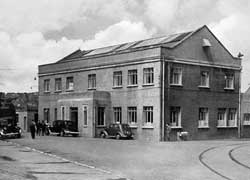 Any firm, whatever kind it is, is dependent on it’s leadership, and
in the case of Falmouth Docks, the General Manager, Company Secretary etc were found in the Main
Office as they are now. The Main Office
also housed the Drawing Office, Buyers Office, Estimators, Wages Clerks, Typists
and other professions. The photo shows the Main Office after refurbishment
(circa 1946). At one time it
had been a General Store and also, some form of generation station,
probably before the 1st World War. One
example of the office communications with customers is shown with a page from a
Postage Book of 1936. Any firm, whatever kind it is, is dependent on it’s leadership, and
in the case of Falmouth Docks, the General Manager, Company Secretary etc were found in the Main
Office as they are now. The Main Office
also housed the Drawing Office, Buyers Office, Estimators, Wages Clerks, Typists
and other professions. The photo shows the Main Office after refurbishment
(circa 1946). At one time it
had been a General Store and also, some form of generation station,
probably before the 1st World War. One
example of the office communications with customers is shown with a page from a
Postage Book of 1936.
In past years the other Yard Managers, Ship’s Managers, Outside Foremen were to
be
found in a wooden two storied building known as the Works Office. Also sited
there was the maintenance manager who was responsible for ordering
all relevant machinery, tools etc for keeping the yard on an even keel. It was
very occasionally discovered that he had bought 2nd hand material and therefore
he was affectionately known as “2nd Hand Rose” This office
was demolished in the late 60's/early 70's.
THE PLUMBERS
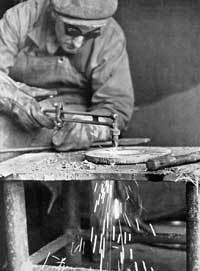 The photo shows a Plumber/Welder performing one of his many tasks
This shows the person burning a hole in a flange (circa 1946). His skill
and concentration helps him to perform his duties with perfection. He
would have spent many hours developing his craft and then to pass on the
same skills to people following, namely apprentices. Being a plumber, or pipe fitter he
would be expected to do other things appertaining to all types of
pipe-work. The hole he is burning in the photo would be able to house a piece of pipe.
This flange would be connected to another flange joining two pipes
together. These lengths of pipes would carry water or steam. The photo shows a Plumber/Welder performing one of his many tasks
This shows the person burning a hole in a flange (circa 1946). His skill
and concentration helps him to perform his duties with perfection. He
would have spent many hours developing his craft and then to pass on the
same skills to people following, namely apprentices. Being a plumber, or pipe fitter he
would be expected to do other things appertaining to all types of
pipe-work. The hole he is burning in the photo would be able to house a piece of pipe.
This flange would be connected to another flange joining two pipes
together. These lengths of pipes would carry water or steam.
The art of burning is performed by using a gas flame being produced
by the correct mixed levels of Oxygen and Acetylene with the aid of a hand held
torch. The same process can be used with gas welding except different
torch nozzles and pressures are used. Both these types of work are still
used today.
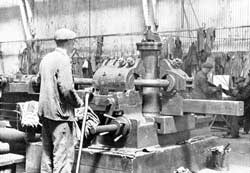 Pipe bending is another art of the plumber. The
large pipe, as shown
in the picture is bent in a special machine. The art is to make sure
that the angles are correct and the right length. A plumber will use
some form of template or guide to get these correct measurements. Their principle
is - “Measure twice and cut once”. Another job that was synonymous
with the dept was the art of "White Metalling". This was
the coating of various types of metals, alloys (Zinc, Antimony etc) onto
other metals - iron or brass, as a surface for main engine
bearings. These would then be taken to the fitting shop for machining. Pipe bending is another art of the plumber. The
large pipe, as shown
in the picture is bent in a special machine. The art is to make sure
that the angles are correct and the right length. A plumber will use
some form of template or guide to get these correct measurements. Their principle
is - “Measure twice and cut once”. Another job that was synonymous
with the dept was the art of "White Metalling". This was
the coating of various types of metals, alloys (Zinc, Antimony etc) onto
other metals - iron or brass, as a surface for main engine
bearings. These would then be taken to the fitting shop for machining.
RIVETERS
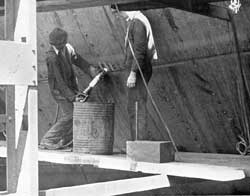 In early Steam ship
design the steel plates used in the construction of ships were riveted together.
For many years this was the only way of shipbuilding. Here is a riveter
using his skill. It was a very noisy and vibratory type of work.
However, it was
a comparatively well paid job and there wasn’t a shortage of people
wanting to learn this skill. As the man is performing his task, another
person would be behind the plate “Holding up”. He would be performing
the same type of feat until the rivet was correctly fitted and the plate
in place. In early Steam ship
design the steel plates used in the construction of ships were riveted together.
For many years this was the only way of shipbuilding. Here is a riveter
using his skill. It was a very noisy and vibratory type of work.
However, it was
a comparatively well paid job and there wasn’t a shortage of people
wanting to learn this skill. As the man is performing his task, another
person would be behind the plate “Holding up”. He would be performing
the same type of feat until the rivet was correctly fitted and the plate
in place.
Steel rivets were required to be heated to “Red Hot” before being
fitted. They would be heated in a mini furnace and when reaching the
desired colour and temperature, could be sent to the "holder
up" to push through to the riveter. Sometimes the rivets would be
sent via a pipe, and the furnace was usually kept away from the working surface.
WELDERS
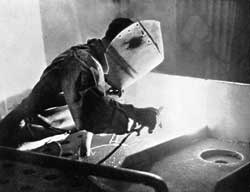 After the 2nd World War, welding came into it’s own. The ships that
were developed by the USA, namely the Liberty, Victory and T2 type
Tanker were all welded. After the success of these, the riveted
ship was gradually replaced. Some riveting was still maintained but
it was the beginning of the end for that trade. After the 2nd World War, welding came into it’s own. The ships that
were developed by the USA, namely the Liberty, Victory and T2 type
Tanker were all welded. After the success of these, the riveted
ship was gradually replaced. Some riveting was still maintained but
it was the beginning of the end for that trade.
The welder is dressed in a protective suit, a helmet with a special
lens to protect
the eyes from the arc that has been struck, and gloves to stop the sparks
burning the hands. These are all things that are associated with the
welder. There are many skills to learn in this trade. The picture shows Electric Arc welding,
where the correct amount of electrical
power and current to be used on each and every application needs careful
calculation. That would
determine the type of welding rod to be used. The high temperatures caused
by the high currents could distort the metal and so that is another
facet of their work.
Various confined areas caused the worker to need extra ventilation and there
would be supply fans and extraction fans. In some cases, 2 welders would
work in relay, and after a certain amount of time they would swap
places to enable the work to continue successfully.
MOULDERS
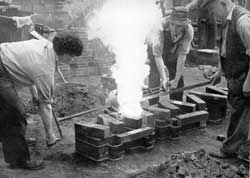 The photo shows the pouring of metal into a mould that has been
prepared. On the long
supporting rod that holds the cupola, there is a turning handle.
It was taken in the 1940’s and this is why there
is no sign of the wearing of gloves, protective face masks or
safety helmets. In previous
years there was no Health and Safety Executive to protect workers. Everything was covered
by Factories Acts and visits by the Factory Inspectors. The photo shows the pouring of metal into a mould that has been
prepared. On the long
supporting rod that holds the cupola, there is a turning handle.
It was taken in the 1940’s and this is why there
is no sign of the wearing of gloves, protective face masks or
safety helmets. In previous
years there was no Health and Safety Executive to protect workers. Everything was covered
by Factories Acts and visits by the Factory Inspectors.
Sand
was always found over the floor of the shop as that was the main
ingredient of moulding. Walking in the workshop was like a visit to the
Sahara.
FITTER MACHINIST
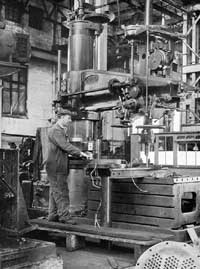 The photo
shows a machinist working on a piece of equipment
which has had a broken stud or bolt in it and needs to be drilled out
accurately. Awkward shapes and various sizes are all taken in the
person's
stride. He would have served a regular apprenticeship as a Marine Fitter and
he would have done a certain time on various machines. After finishing
his “Time”, would transfer to the Machine Shop. In the photo he is using a “Radial
Drill”, which means that the job would be bolted down and the drill
would be moved around it. Aligning up and correctly clamping the job
so it does not move, choosing the correct drill or reamer, switch
on and “Hey Presto”, the job
is completed. Sometimes a variety of machines would be used.
Although, after a period of time, it was a known fact
that each person would be effective on their "own machines".
Apprentices would be expected to be able to perform all these tasks
before their training was completed. The photo
shows a machinist working on a piece of equipment
which has had a broken stud or bolt in it and needs to be drilled out
accurately. Awkward shapes and various sizes are all taken in the
person's
stride. He would have served a regular apprenticeship as a Marine Fitter and
he would have done a certain time on various machines. After finishing
his “Time”, would transfer to the Machine Shop. In the photo he is using a “Radial
Drill”, which means that the job would be bolted down and the drill
would be moved around it. Aligning up and correctly clamping the job
so it does not move, choosing the correct drill or reamer, switch
on and “Hey Presto”, the job
is completed. Sometimes a variety of machines would be used.
Although, after a period of time, it was a known fact
that each person would be effective on their "own machines".
Apprentices would be expected to be able to perform all these tasks
before their training was completed.
CIVIL ENGINEERING
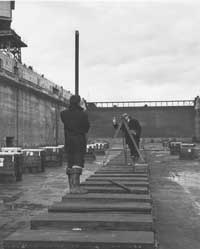 Whether the works concerned the building of a Dry Dock, putting up a
new building, altering a road, a Civil Engineer was in attendance. He
would have an office of his own and would be responsible for all
surveying and some design. The photo shows the Engineer (using the
Theodolite) with an Assistant helping him line up the end of one of the dry docks. We mustn't forget the man with the
stick. Without him the surveyor would need extremely long arms. Civil
Engineering has been, over the years, a
very responsible job and only an engineer of the highest type of
qualifications would be employed. In fact, the person shown in the
photograph took over the job that was previously held by his father.
When one considers the amount of civil engineering that has been carried
out over the years, it is not a strange thing to learn that the job was
held by one man for long periods. No 2 dock is the scene of the
operation being carried out. Whether the works concerned the building of a Dry Dock, putting up a
new building, altering a road, a Civil Engineer was in attendance. He
would have an office of his own and would be responsible for all
surveying and some design. The photo shows the Engineer (using the
Theodolite) with an Assistant helping him line up the end of one of the dry docks. We mustn't forget the man with the
stick. Without him the surveyor would need extremely long arms. Civil
Engineering has been, over the years, a
very responsible job and only an engineer of the highest type of
qualifications would be employed. In fact, the person shown in the
photograph took over the job that was previously held by his father.
When one considers the amount of civil engineering that has been carried
out over the years, it is not a strange thing to learn that the job was
held by one man for long periods. No 2 dock is the scene of the
operation being carried out.
DIVERS
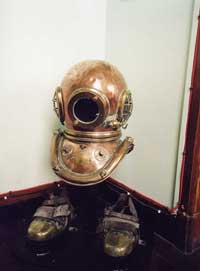 Whether it was the building of a
wharf, working on a
dry-dock entrance or various underwater tasks, the Diver was called upon
for his assistance. Today, in the vestibule of the Main Office at the Docks, can be found some
remnants of the Divers. The photo shows the helmet and boots that would
be worn. Whether it was the building of a
wharf, working on a
dry-dock entrance or various underwater tasks, the Diver was called upon
for his assistance. Today, in the vestibule of the Main Office at the Docks, can be found some
remnants of the Divers. The photo shows the helmet and boots that would
be worn.
Cliff
Roberts, Paul Franklin and Bobbie George were very synonymous with this
job. Cliff, apart from being a very good diver was an excellent Rugby
player- as most Welsh people are - as well as being a very
competent Rugby Referee. Paul Franklin eventually
became Foreman on the civil engineering side of Falmouth Dock Co. Bobbie
George
retired to his allotments. Below is a list of equipment that a diver would use in addition
to the helmet and boots.
-
Lead soles 14lbs (6.4kg)
-
Waterproof suit- Heavy Canvas
-
Copper Corselet
-
Lead Breast and back-plates- 28 lbs each (12.7kg)
-
Leather diving belt with the all important knife.
At the moment any diving work is carried out by contracting
firms.
LOCOMOTIVE PERSONNEL
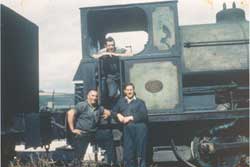 A photo of
a fireman and two loco drivers- Sam Rosevear, Jim Tarry and Cyril Thomas. These were very important men in the transport system.
The men were employed
by Falmouth Docks and Engineering Co. who were responsible for running
the Locos and steam cranes. Jim was in the docks during the 2nd World
War and tells stories of delivering Diesel fuel to so called "fishing
boats" on the outer jetties ferrying people across to occupied
France. He also talks about taking gold bullion to the Eastern Breakwater from
a delivery from the Royal Mint. Then loading it onto a military vessel
for an unknown
destination. He was awarded with a newly minted Half Crown piece each
time he performed this task. Cyril went into the Royal Engineers but after the war came back and
was one of the men responsible for the re-development of No 2 dock.
Sam, the Fireman was a popular figure- always seen running to unhitch
wagons from the Locos and changing points- never out of breath. All
retired and enjoying life. A photo of
a fireman and two loco drivers- Sam Rosevear, Jim Tarry and Cyril Thomas. These were very important men in the transport system.
The men were employed
by Falmouth Docks and Engineering Co. who were responsible for running
the Locos and steam cranes. Jim was in the docks during the 2nd World
War and tells stories of delivering Diesel fuel to so called "fishing
boats" on the outer jetties ferrying people across to occupied
France. He also talks about taking gold bullion to the Eastern Breakwater from
a delivery from the Royal Mint. Then loading it onto a military vessel
for an unknown
destination. He was awarded with a newly minted Half Crown piece each
time he performed this task. Cyril went into the Royal Engineers but after the war came back and
was one of the men responsible for the re-development of No 2 dock.
Sam, the Fireman was a popular figure- always seen running to unhitch
wagons from the Locos and changing points- never out of breath. All
retired and enjoying life.
ELECTRICIANS
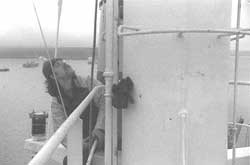 This Department
is responsible for Keeping the
Lights On and a lot more than that. Any type of electrical machinery
is looked after, repaired and maintained. Whenever a breakdown occurs
in the yard, the phone will ring or in today's atmosphere, the Walkie
Talkie will sound. There is an immediate response and soon the breakdown will be
rectified. When the yard was in full flight, there were over 100
electricians in the Department. The yard, because of its complexity, was split
into 2 parts for convenience and so 2 electricians would look after all
the electrical systems on the Eastern side and 2 electricians would look
after the Western side. It was something that worked very well. The
workshop held a group of men who usually worked in there on a permanent
basis, repairing equipment from the yard and also the ships. An
apprentice spent the first year in the shop and then progressed to the vessels.
Electricians were responsible for all of the welding equipment
around the yard, opening of the electrically operated dock gates and
operating the winches in assisting the removal of a ship’s propeller.
Temporary portable lighting on a ship for other trades and the installation of
shore power was and still is a priority with the Department. Many more things
are covered by the Department. This is just to give the reader a
brief idea. This Department
is responsible for Keeping the
Lights On and a lot more than that. Any type of electrical machinery
is looked after, repaired and maintained. Whenever a breakdown occurs
in the yard, the phone will ring or in today's atmosphere, the Walkie
Talkie will sound. There is an immediate response and soon the breakdown will be
rectified. When the yard was in full flight, there were over 100
electricians in the Department. The yard, because of its complexity, was split
into 2 parts for convenience and so 2 electricians would look after all
the electrical systems on the Eastern side and 2 electricians would look
after the Western side. It was something that worked very well. The
workshop held a group of men who usually worked in there on a permanent
basis, repairing equipment from the yard and also the ships. An
apprentice spent the first year in the shop and then progressed to the vessels.
Electricians were responsible for all of the welding equipment
around the yard, opening of the electrically operated dock gates and
operating the winches in assisting the removal of a ship’s propeller.
Temporary portable lighting on a ship for other trades and the installation of
shore power was and still is a priority with the Department. Many more things
are covered by the Department. This is just to give the reader a
brief idea.
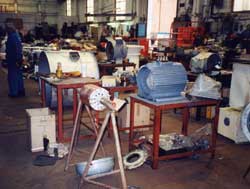
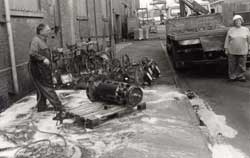
The photo above shows a part of the Electrician's Workshop taken in 1999. This building was originally the Foundry but in the mid 1960's it was decided to relocate the
electrical Department to a much larger premises without constructing a new workshop. The photo shows some of the electrical equipment being overhauled; namely motors of various sizes.
These would be used in many applications e.g. pumping and ventilation.
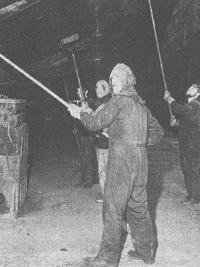
This photo shows one of the electrical staff explaining the principles of steam and chemical cleaning. In performing this task, the operator would be wearing: a facial visor, protective gloves, waterproof overalls and boots. In this process, high pressure water becomes steam and cleans away the oil and grime that has accumulated in motors and generators. The equipment would then be stoved, (heated to a high temperature in an oven), to dry out.
 Other
departments include the Fabrication trades, Platers,
Boilermakers, Caulkers, Drillers, and in the Wood trades would be the
Joiners (Carpenters) and Shipwrights. The Shipwrights were the original Boat
Builders in wood. They were responsible for building a boat - from the drawing until
it had been fitted out. Of course this all changed when the steel
ship came into existence and the fabricators with their metal working
skills took over. Shipwrights are still
involved in the docking of a vessel and the fitting of staging around
the ship and the yard. Other
departments include the Fabrication trades, Platers,
Boilermakers, Caulkers, Drillers, and in the Wood trades would be the
Joiners (Carpenters) and Shipwrights. The Shipwrights were the original Boat
Builders in wood. They were responsible for building a boat - from the drawing until
it had been fitted out. Of course this all changed when the steel
ship came into existence and the fabricators with their metal working
skills took over. Shipwrights are still
involved in the docking of a vessel and the fitting of staging around
the ship and the yard.
Riggers are another trade that still exists.
They look after all the wire ropes on ships, the ropes on the cranes,
and everything that is associated with lifting.
The Labouring section in the
yard has diminished over the years. Each department had a large force
and these men were known as Mates or Helpers. Most heavy types of
lifting jobs were taken
over by them. The painting of a ship’s hull was one of their many tasks.
Tank Cleaners and Boiler Scalers were two of the unenviable jobs - very
dirty but necessary. Labouring even came down to the unusual sight of a person riding
around the yard on a bicycle laying down poison to get rid of the rat population.
There were so many different types of workers but this will give some
idea of the complexity of running an efficient Ship Repair yard.
|