|
INDUSTRIAL RELATIONS
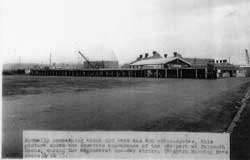
Above is a photo taken in 1953 that no-one really wants to see. It is a scene of the Docks car park taken on the day of a National One Day strike. Industrial relations between management and the workforce were and are very good but there are times when an impasse occurs and at the last resort strike action comes into play. Falmouth has had a very good record in Industrial Relations and in fact much of the running of the yard depends on good relations between management and the workforce. Wages were agreed in the yard by local agreements and with various rules to adhere to for both management and the respective work force. This went along very well without many hitches. The Media, whether newspapers, radio or in later years TV were somewhat guilty in implying that the docks were in a strike mode whenever there were disputes in operation. Yes, we know that disagreements occurred which meant that at times the workforce worked to rule and embargoes to overtime came into the picture, but strike action was not taken. Because of the complexity of the number of Unions in the yard, it was necessary to have Works Committees which contained a selection of different unions working for a common cause. 1979 N0, it's not a title for a film or anything that is associated with Science Fiction. It was the year that dramatically changed the face of Falmouth Docks. In June of that year, over 900 men were made redundant and the yard almost came to complete closure. The docks were part of the Nationalised British Shipbuilding and the Government at that time decided to close the yards that were not profitable. It was a strange thing for the workforce to find out this news in a casual newspaper report rather than an official announcement. However this was the decision but a little help did arise and so a group of 175 people were kept on in a Care and Maintenance basis. At the helm of this restructuring was local man, Dennis Pascoe, (now deceased). He had served his apprenticeship in the yard as a marine fitter and eventually rose to the position of Commercial Manager. However, he was eventually put in charge as the yard manager and had the unenviable task of trying to keep the docks going. In the long term, with the dedication of this small workforce, the Docks went into profitability. Of course, the government did help with grants and at that time, a large community of fishing boats and factory ships were in Falmouth Bay, and so any work that needed to be done, was done. In addition berthing charges were always there. At last, in the mid 1980's commercial vessels started to return and so a great deal of financial profits were made in that area. !979 is now in the past. Redundant workers eventually found new jobs. In the following years Falmouth Docks became a privately owned yard again. One man who certainly must be remembered in this area was the entrepreneur Mr Peter de Savery. With his input and his connections around the world shipping started to return for major repairs. He was responsible for setting up what is now a very successful luxury yacht building company- Pendennis Shipyard, and Falmouth Oil Services. The latter is responsible for the supply of fuel to ships arriving in Falmouth (ie bunkers). At present, the yard is financed by the Royal Bank of Scotland, and is part of a large company A&P which has repair yards throughout Great Britain and parts of Europe.
|
| Home | Time | Energy | Workforce | Movement | Further Work | Dry-docks | Alterations | Aerial Photos | Buildings and Workshops | Personalities | Flow of the Job | Engine Room | War Work | Re-cycling | Sports | Docks Tours | Thoughts on the Docks | The Future | Credits and Bibliography | Links | |