|
BUILDINGS FEATURED IN THE DOCKS
One of the most important original buildings to be seen at Falmouth
Docks is the Grain Store built in 1861. In the early days of the
dockyard many different types of firms made their way into this newly
developed area and grain was one of the products that was delivered and
unloaded by ship. Nowadays, the internal part of the building is
monopolised by the luxury yacht business of Pendennis
Shipyard. Pendennis builds and repairs yachts to very high specifications
which are ordered by many wealthy
people. The idea stemmed from Mr Peter de Savary who came into the docks
at a critical time and helped to bring a new "New broom to
sweep clean" policy. Whilst there , he had dreams of building a
yacht to challenge for the "America's Cup". The yacht- Blue
Arrow, was developed and built but the dream of competing never came
about.
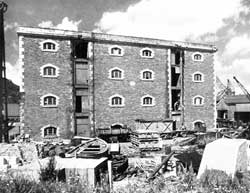 Getting back to our original subject, the grain Store. Over the
years, many different firms took over the building, D.G.Evans, suppliers
of ships stores and British Ropes, for example. Even today, a local Brass Band gets
permission to use part of the building for rehearsals. Getting back to our original subject, the grain Store. Over the
years, many different firms took over the building, D.G.Evans, suppliers
of ships stores and British Ropes, for example. Even today, a local Brass Band gets
permission to use part of the building for rehearsals.
Quite close to
this place is another granite built building, smaller in size but still
important. This was used as a drying house in the event of any grain
arriving in a damp state. Originally, the damp grain would be placed in this building and below
fires were lit to dry out the cargo. This little building was used in the 1970's for some
scenes for the TV series, "The Onedin Line". The photo
above shows the rear of the Grain Store with it's conglomeration of rowing boats, railway wagons, steam
crane jibs in the background and the almost inevitable weeds.
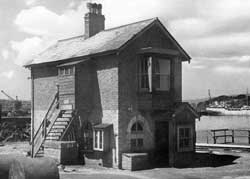 We move onto the
Dockmaster's Office. Originally, this
was a terminal building for a passenger ferry service which called into
Falmouth either coming or going to Dublin. They were called the British
and Irish Steam Packet Co. The building was taken over later by the
Dockmaster. This was the communication
centre between the Harbour Pilots and the docks. The Dockmaster would be
in charge of the tying up of a ship as it arrived in the port. He would
have a squad of mooring up men and would be in communications with the
tugs. These men were on call twenty four hours a day, in all kinds of
weather conditions. One particular occasion arose on Christmas Day 1956.
A BP tanker, the British Reliance was alongside the Eastern Breakwater
tank cleaning before
going into dry-dock. Terrible weather conditions caused the mooring
ropes to break and the ship was held only by one rope. It could have
caused a major problem if the ship were to break away. However, all this
was averted by the arrival of the tugs and the mooring up gang. They all
had their Christmas Turkey - but a little later than most. We move onto the
Dockmaster's Office. Originally, this
was a terminal building for a passenger ferry service which called into
Falmouth either coming or going to Dublin. They were called the British
and Irish Steam Packet Co. The building was taken over later by the
Dockmaster. This was the communication
centre between the Harbour Pilots and the docks. The Dockmaster would be
in charge of the tying up of a ship as it arrived in the port. He would
have a squad of mooring up men and would be in communications with the
tugs. These men were on call twenty four hours a day, in all kinds of
weather conditions. One particular occasion arose on Christmas Day 1956.
A BP tanker, the British Reliance was alongside the Eastern Breakwater
tank cleaning before
going into dry-dock. Terrible weather conditions caused the mooring
ropes to break and the ship was held only by one rope. It could have
caused a major problem if the ship were to break away. However, all this
was averted by the arrival of the tugs and the mooring up gang. They all
had their Christmas Turkey - but a little later than most.
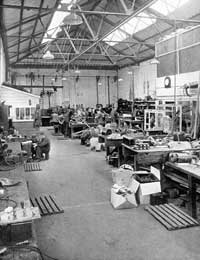 Photo of the Electrical workshop
circa 1947. A small but very efficient department with a small store
in one corner. Next door was the Coppersmith's Shop. The small office on the left was shared between the
Electrical Manager and Foreman. Behind it was the shop chargehand's or
supervisor's office opposite. Ships'
chargehands were in another office. Notice the pulley wheels in the
background! These were able to drive a large lathe, a drill
and a buffing machine. They were always in use. A rather large beam,
running the length of the shop with a 1
ton chain block enabled people to transport quite heavy loads from one
end of the shop to another. A department run by reliable staff. Photo of the Electrical workshop
circa 1947. A small but very efficient department with a small store
in one corner. Next door was the Coppersmith's Shop. The small office on the left was shared between the
Electrical Manager and Foreman. Behind it was the shop chargehand's or
supervisor's office opposite. Ships'
chargehands were in another office. Notice the pulley wheels in the
background! These were able to drive a large lathe, a drill
and a buffing machine. They were always in use. A rather large beam,
running the length of the shop with a 1
ton chain block enabled people to transport quite heavy loads from one
end of the shop to another. A department run by reliable staff.
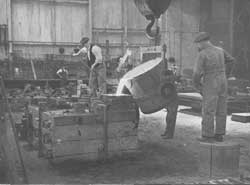
The association between the next photo and previous one is that in
the 1960's, the Electrical Dept relocated to the old Moulder's Shop. It
was a major breakthrough. The Electricians now had a workshop with an
overhead crane. A couple of other features was a huge bath that could
accommodate large pieces of equipment to be chemically cleaned and most
of all a big gas fired oven, necessary in drying out electrical motors
etc after fresh water washing.
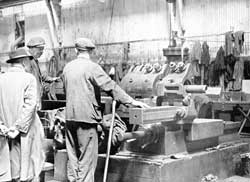 The
Plumber's shop was and still is an important workshop. The photo shows advice
being given before a pipe is bent Over the years more modern equipment became available and a new
bending machine- made in France- was
bought. When the word got around that the docks had this type of
machine, many enquiries came in. Stainless Steel was the product that caused most
trouble to firms and since this new bender was able to tackle this type
of work enquiries became orders. In one particular instance work even came from
America. The plumbers also specialised in making up White Metal
Bearings. These could be various sizes and are always needed in the main bearings in a
large marine engine. The white metal bearing acts as a softer
cylindrical surface that wears before the revolving shaft material. They
are lubricated by oil or, in some cases, by grease. The
Plumber's shop was and still is an important workshop. The photo shows advice
being given before a pipe is bent Over the years more modern equipment became available and a new
bending machine- made in France- was
bought. When the word got around that the docks had this type of
machine, many enquiries came in. Stainless Steel was the product that caused most
trouble to firms and since this new bender was able to tackle this type
of work enquiries became orders. In one particular instance work even came from
America. The plumbers also specialised in making up White Metal
Bearings. These could be various sizes and are always needed in the main bearings in a
large marine engine. The white metal bearing acts as a softer
cylindrical surface that wears before the revolving shaft material. They
are lubricated by oil or, in some cases, by grease.
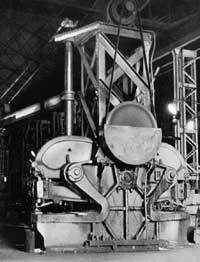 Finally
we have a photo of the punching machine that was installed and worked
for many years in the plater's shop. People might say it looked old fashioned, but
ask a plater or fabricater. It grunted and groaned whilst performing it's duties but
it was very accurate. It came into its own in the days of riveting. Shell
plates would be marked off, tied to an overhead crane with the
aid of wire ropes and special clamps and held in line whilst the operator would punch out the
rivet holes. Finally
we have a photo of the punching machine that was installed and worked
for many years in the plater's shop. People might say it looked old fashioned, but
ask a plater or fabricater. It grunted and groaned whilst performing it's duties but
it was very accurate. It came into its own in the days of riveting. Shell
plates would be marked off, tied to an overhead crane with the
aid of wire ropes and special clamps and held in line whilst the operator would punch out the
rivet holes.
Apart from a propeller, another important part of the
steering of a ship is the rudder. This
photo shows the shaft that fits in a rudder and is known as a rudder
stock. This one is being machined in the Fitting shop, circa 1974.
|