|
RECYCLING This word that is now thrust on to us most days is something that the Docks have been associated with for many years. Not so much, newspapers, plastic bottles, tin cans etc but "good old oil".
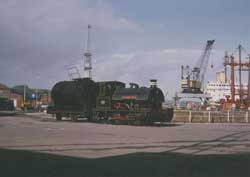
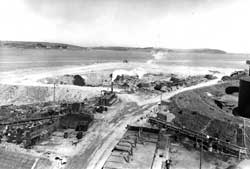
The Photo shows "Dirty Dick" being towed by one of the firm's locos (No. 3) to the Eastern side of the docks (circa 1980's). It would go to a Boiling Plant. This was situated on land that had been reclaimed by using the rock and soil from the enlargement of no2 dry-dock and the cliff. The Locos have not been used since 1986.
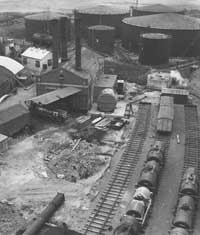
The photo above shows the Boiling Plant. The residue from "Dirty Dick" would be pumped into this unit and after the boilers had reached a certain temperature, the oil would float to the surface, be filtered, separated from other fluids and finally pumped to an oil settling tank.
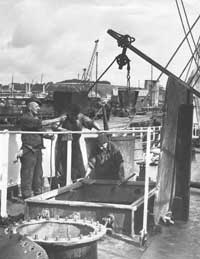
So from the Tank Cleaners to the final supply of steam, this was and is the docks assistance to recycling. One very interesting point to make here concerns the effort made by the docks in the early 1950's to start a complete Tank Cleaning facility for tankers. It was known as the "Victor" oil / water separating plant. Surplus residue from the ship's oil tanks would be pumped ashore, passed through a separating plant after which the oil would be eventually stored in local tanks. Meanwhile, the ship's cargo tanks would be given a hose wash with a special 3 nozzle headed unit, preferably with hot water. After this exercise, the ship would be given the "All Clear" to confirm that it was gas free and able to go either alongside one of the wharves or into dry-dock. This process was copied by various other ship repair docks throughout the world.
|
| Home | Time | Energy | Workforce | Movement | Further Work | Industrial Relations | Dry-docks | Alterations | Aerial Photos | Buildings and Workshops | Personalities | Flow of the Job | Engine Room | War Work | Sports | Docks Tours | Thoughts on the Docks | The Future | Credits and Bibliography | Links | |