|
ENERGY
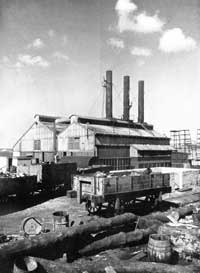
In the photo of the power house (above, circa 1946), the first thing of note are the three chimney stacks making their journey skywards. Beneath them was a boiler room which housed 3 boilers which were originally coal fired and later on oil fired.
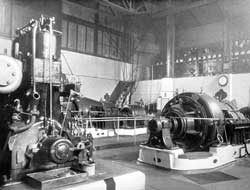
There were two diesel engines. They were 5 cylinder Polar Atlas units. Very noisy and efficient but one of them in particular was “a Devil to Start”. In fact many "Anglo Saxon" words were used to coach it into life. The generators were the open class of machine which meant that all forms of dust and dirt could accumulate in them. It was therefore essential to have a routine maintenance programme for these machines.
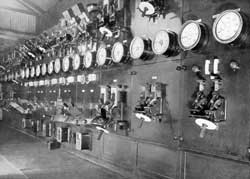
A 3 shift pattern was worked between 3 watch-keepers and also a roster of stand-by electricians was maintained to cover sickness and holidays. Mechanical work was carried out by a team of mechanical fitters. An electrical apprentice would spend a period of 6 months as a watch-keeper. His duties would include: controlling the sharing of power on each generator; keeping records of power used; temperatures etc on all generators; pumping up of both fuel and lubrication oil tanks. The switchboard in turn would supply the electricity to various parts of the yard and as the Power House was built after the 1st World War, the type of power supplied was 500 volts direct current with a drop down feature to 110 volts. Alternating current, which is now universally used in the world came into the yard many years later. Many people gained valuable experience from working in this area of the dockyard especially if they had the intention of making a career in the Merchant Navy. This Power House was demolished in the late 1950's after No 2 dry-dock was refurbished The Docks now draws it's power from the National Grid.
|
|
| Home | Time | Workforce | Movement | Further Work | Industrial Relations | Dry-docks | Alterations | Aerial Photos | Buildings and Workshops | Personalities | Flow of the Job | Engine Room | War Work | Re-cycling | Sports | Docks Tours | Thoughts on the Docks | The Future | Credits and Bibliography | Links | |