|
ALL WORK AND NO PLAY MAKES JACK----? It is Monday, the weekend is over. The experts are in discussion. The subject is sport. Yes, Falmouth was and still is the same as anywhere else. Who scored what? Who should have won? What I would have done if I was the Skipper. They are all there. The Experts. The Post Mortems have begun. One of the most important acquisitions that the docks made was the purchase of land which eventually turned into a wonderful sports field. During the winter it held two football pitches which in summer reverted to two good cricket pitches. All due to the work of a wonderful ground staff. A tennis court and bowling green were added in the 1960's. There was also the Annual Sports Day. Inter departmental matches were a highlight in all types of sports. This sporting arena was the envy of many sports clubs in the county. Football and cricket were the two things associated with the docks. At one time, three football sides could be put out on a Saturday and during the summer, two cricket sides would be fielded. Committees were not a problem and there were always a surplus of ladies to help to make and serve teas. Eventually a licence was granted and beer and spirits were available at the club house. Other sports included table tennis and many players got to high standards, playing in the County Leagues. Rowing and sailing were other sports associated with Falmouth and its wonderful harbour. One particular gentleman who served his time as a fitter left to teach at a college. He was a very good swimmer and eventually became one of the numbers to swim the English Channel.
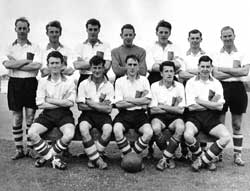
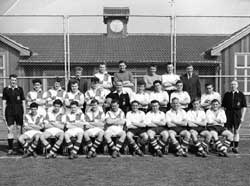
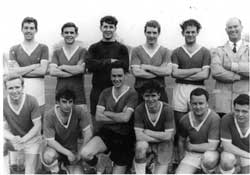
Here follows three photos on the theme of football.
The photo above shows the Docks Team in the 1950's.
Photo no2. shows the representatives of Falmouth and the London Yard- Green and Silley Weir, who played each other at football each year. One year at Falmouth and the following year in London. The photo was taken at the London Ground in the 1950's.
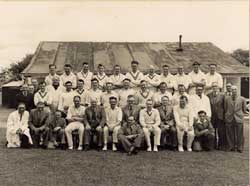
Photo no.3. As mentioned previously Inter departmental matches were very important. Here is a photo taken in the 1960's of the Outside Fitters. These matches drew great crowds, with many observers coming out of the woodwork to watch and enjoy the celebrations of their team , celebrating in the bar after the matches. We must not forget also, a young man who served his apprenticeship as an electrician and eventually played league football for Exeter City and Blackpool, Tony Kellow. Cricket also takes a prime spot in the history of the docks sporting life. This photo, taken at the Docks Ground in 1948, represents the meeting of Falmouth and a team from London. There are four interesting gentlemen in the photo sitting in the middle in suits.
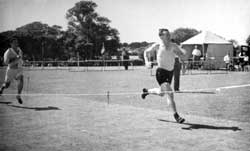
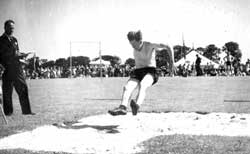
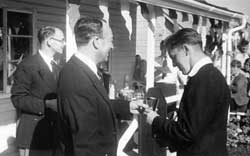
Mr D Dunne, General Manager Mr A. Evans, President of the Cricket. Joiner Foreman. Mr A.E. Underwood, General Manager of Falmouth Dock Co. Sitting on the floor was Major S.E. Fairclough. He was the Welfare Officer and well respected. In today's terms he would be referred to as the "Human Resources" manager. His speciality was looking after all the personnel but most of all the welfare of the apprentices. As an ex military figure he knew how to approach men and get a good response. There was always a good rapport between the teams, whether playing at home or away. Interdepartmental matches were also in great demand and some of the excuses that were made after being out were wonderful e.g. "The binding cord around the bat became undone. It went under my boot and I couldn't lift it!" "The sun was in my eyes!" "Didn't you hear me call!". In 1955, the Docks team were invited to play the warders at Dartmoor Prison. An enjoyable time was had by all and although the docks won quite handsomely there were no reprisals taken by the prison authorities We now come to, possibly, the Highlight of the summer - the Annual Sports Day. This event started in 1948 and involved the Inter-departmental Challenges. A Cup was awarded to the Department which achieved the most success in the various athletic events. There were also open events for local children. In the first few years the Shipwrights were the dominant department owing to the fact that they had three very good athletes who strangely enough were playing members of Falmouth Rugby Club. The Sports day was run for a number of years and it was very strange that whenever the date was set, a fine day always occurred. Mr Silley was nearly always present and there would be a special guest to present prizes. Mr Silley flew over the ground on one occasion in his private plane. He made himself very popular in the 1950's by going around the ground taking photographs of different people and within a minute giving the person his or her photograph. This was the first time that most people had seen a Polaroid camera. The three photos below shows one well known local athlete (Alan Ahrens) who represented the Shipwrights Department He was a constant winner and a very talented athlete who would put fear into all other runners before the races started. He was also a very good rugby player who represented his county.
Photos 1 & 2 show Alan competing in a sprint race and also the long jump. The official in the long jump is Mr Underwood who was greatly responsible for the extension of no2 dock and so he wouldn't be an inch out in his measurements! The third photo shows Alan being presented with a cup from one of the dock's guests, Sir Hartley Shawcross MP (St Helens) He rose to fame as one of the head prosecutors at the Nuremberg War Trials and was also Attorney General. Behind is the ever faithful organiser of the sports day, Maj. Fairclough. One very important "off the cuff" event at one of the earlier sports days was a challenge race between two of the local athletes and Harold Tarraway. He was a Falmouth athlete who had competed in the 1948 Olympic Games in London as an 800 meters runner. He ran successfully enough to reach the semi-finals of that event. However the challenge was out and he ran the full 880 yards and the other two athletes ran 440 yards each. It was a closely contested race which ended in Mr Tarraway winning in the home straight. He was subsequently surrounded by autograph hunters.
|
| Home | Time | Energy | Workforce | Movement | Further Work | Industrial Relations | Dry-docks | Alterations | Aerial Photos | Buildings and Workshops | Personalities | Flow of the Job | Engine Room | War Work | Re-cycling | Docks Tours | Thoughts on the Docks | The Future | Credits and Bibliography | Links | |