X-51A
Scramjet Engine Demonstrator-WaveRider (SED-WR)
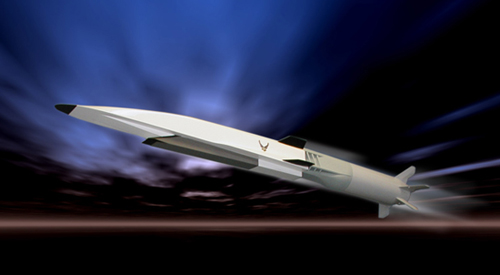 Specifications Company-
The Boeing Company; Pratt & Whitney
Type-
Scramjet engine demonstrator.
Goals- The
goals of the program are (1) to acquire ground and in-flight test data
of an operating, actively cooled, self-controlled prototype scramjet
engine, (2) demonstrate the viability of the HyTech endothermically
fueled engine in flight, and (3) prove the practicality of a free-flying
scramjet powered vehicle.
Primary Testing Facility
Research- Unknown
Dimensions- N/A
Max Speed- N/A
Range-
N/A
Service Ceiling- N/A
Power Plant- N/A
Thrust- N/A
Weights-
N/A
Payload- N/A
Flights- N/A
Number of Prototypes Built-
N/A
Project Tenure- 2004-????
Project Status-
Ongoing Information
In a letter dated 27 September 2005, the US Air
Force (HQ USAF/XPPE) officially granted the US Air Force Research
Laboratory (AFRL) Propulsion Directorate�s scramjet flight test vehicle
the designation X-51A. Since the introduction of the legendary X-1 in
1946, scientists have used the X-plane designations to identify
experimental aircraft and rockets used to explore new aerospace
technologies. The Propulsion Directorate was working with Pratt &
Whitney (P&W)/Rocketdyne�s Space Propulsion Division and Boeing�s
Transformational Space Systems Division to design the X-51A scramjet
powered flight vehicle to explore the airbreathing system-level
potential of scramjets.
The military-oriented endothermically fueled,
scramjet engine flight demonstrator (EFSEFD) was initiated in early
2003. At that time the first test flight was planned for late 2006. If
successful, 5-11 flights could be performed, with as many as four more
following over a roughly 18-month period, and the rest, 18 months after
that. These test flights differ significantly from those of NASA's
X-43C. In the latter, a three-flowpath scramjet module featuring
variable-geometry inlets will be flown, with the flowpaths mounted in a
side-by-side configuration. In contrast, the test vehicles used to
explore scramjet military uses will each be powered by a single scramjet
sporting a fixed-geometry inlet.
In January 2004 a team consisting of Pratt &
Whitney (P&W) and Boeing Phantom Works was selected by the U.S. Air
Force Research Laboratory (AFRL) to flight test the Endothermically
Fueled Scramjet Engine Flight Demonstrator (EFSEFD), also known as the
Scramjet Engine Demonstrator - WaveRider (SED-WR). The first year
contract, which is valued at $7.7M (total program value is estimated at
approximately $140M), was awarded to the team to explore the
airbreathing system-level potential of scramjets through multiple flight
tests that will begin in the 2007-2008 time frame.
The 26-ft.-long, 4,000-lb. stack that will be used
in the single engine demonstration includes, from front to rear, a
scramjet-powered free-flying vehicle incorporating a compression
forebody, a transition section and a booster from an ATACMS missile.
Each flight vehicle will consist of one Pratt & Whitney scramjet engine,
based on technology developed under AFRL/PR�s Hydrocarbon Scramjet
Engine Technology (HySET) Program, integrated by Boeing into an
expendable WaveRider configured air vehicle. During the flight
demonstrations, a B-52 will carry the SED-WR vehicle to an altitude of
about 35,000 ft and then release it. Initially propelled by an Army
tactical missile system [ATACMS] solid rocket booster, the scramjet will
take over at approximately Mach 4.5, and the vehicle will accelerate to
a flight speed between Mach 6.0 and 7.0+. Applications for this
propulsion concept include space access and fast-reaction military
systems.
The use of an other transaction agreement on
09 September 2003 allowed two traditional defense contractors to form a
consortium rather than having a prime/subcontractor relationship under
the traditional FAR based contract. The Scramjet Engine
Demonstrator-Wave Rider Consortium is comprised of Pratt & Whitney and
Boeing, Advanced Space and Launch Systems. By forming the consortium,
the Government will obtain significant additional prototype development
effort by converting the customary indirect costs associated with a
prime/subcontractor relationship into additional government funded
direct costs. This also fosters an agile business partnering
relationship between the consortium and the Government, who will utilize
a team approach to enable the Government and consortium to be flexible
in their program management decision making process.
The use of an other transaction agreement [OTA]
resulted in the participation of non-traditional defense contractors
which are as follows: (1) Ormond LLC, Kent, WA (providing intricate
water-jet milling of heat exchanger patterns), (2) Dynamic Gunver
Technologies LLC, Manchester, CT (providing laser welding of engine
panels without impinging on heat exchanger patterns) (3) Jansen�s
Aircraft Systems Controls, Tempe, AZ (providing integration of valve
sealing technologies with electronic controls at elevated temperatures
and pressures), (4) Pioneer Aerospace, South Windsor, CT (providing the
recovery system), (5) Starfire Systems, Malta, NY (providing the carbon/SiC
nose and tail assembly), (6) Veridian Engineering, Buffalo, NY
(providing wind tunnel testing), (7) Howmet Castings, Hillsboro, TX
(providing vehicle body structural casting). Use of an OTA facilitates
the use of subcontractors for fabrication of prototype hardware and/or
services whose accounting and quality systems need not be subject to
standard Government FAR/DFAR contract requirements.
The Propulsion Directorate�s Scramjet Engine
Demonstration (SED) Program, which started in December 2003,
successfully completed a Preliminary Design Review (PDR) in December
2004. A follow-on contract was awarded on 7 January 2005 for the
detailed design of a flight demonstrator using the Hypersonic Technology
(HyTech) scramjet engine design. The SED-WaveRider Consortium contract,
valued at approximately $70 million, will take the program through the
detailed design phase culminating with a Critical Design Review (CDR) in
January 2007.
A priced option was also negotiated, valued at
approximately $60 million, to enable fabrication and flight test of the
SED with a first flight scheduled for December 2008. The SED Program
will acquire ground and in-flight test data of an operating, actively
cooled, self-controlled prototype scramjet engine.
As of early 2006 it was planned that the Scramjet
Engine Demonstrator-WaveRider program would execute multiple flight
tests of the SED-WR vehicle in 2009. The technical objective of this
effort is to flight test the United States Air Force (USAF) Hypersonic
Technology (HyTech) scramjet engine, using endothermic hydrocarbon fuel.
The goals of the program are (1) to acquire ground and in-flight test
data of an operating, actively cooled, self-controlled prototype
scramjet engine, (2) demonstrate the viability of the HyTech
endothermically fueled engine in flight, and (3) prove the practicality
of a free-flying scramjet powered vehicle.
** Information provided by GlobalSecurity.org** |