... to my Brewing Cider page.
Making Cider
For those who are
wanting to make some great cider (apple, pear, cherry and peach),
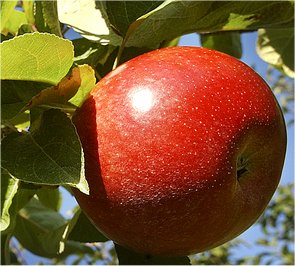
let's review some of the basics. Pick the desired fruit, they should
be fully ripe, with little bruising or as little damage as possible.
Apples and pears should be stored in a cool place for 1 week to soften
the skins and ensure maximum juice extraction.
-
Be sure to wash
remove any damaged or bruised parts of the apples or pears prior to
chopping and juicing them. Keeping the fruit and allowing them to
mature will ensure that the fruit will be at its peak of sweetness. A
top quality fruit juicer will is probably the best thing you could
invest in to aid you in the process of juice extraction. Some people
are very strict about juice extraction and prefer mashing and pressing
the fruit pulp.
-
Once you have
freshly pressed juice it can fermented immediately or it is sometimes
sulfited to kill off any wild yeast and bacteria. Fresh pressed juice
can be fermented in two different ways: NATURAL FERMENTATION - wild
yeast is allowed to ferment the cider. AUXILIARY FERMENTATION - where
the juice is sulfited and a specific yeast is introduced. Yeast plays
an important part of the finished product. There are many yeasts that
you can chose from like champagne, ale, epernay or even cider yeast
from the UK.
-
The addition of
sugars to ciders gives the finished product a unique flavor as well as
increasing the alcohol content. Plain white table sugar does not add
much flavor while brown sugar (light or dark) presents an pleasing
flavor due to the molasses. You can use light flavored honey and maple
syrup in small amounts to increase the gravity without changing the
overall flavor. If you use a lot of honey as the controlling
fermentable factor, the cider is no longer considered a cider but
becomes an apple mead or cyser.
-
The addition of
another type of fruit can also be used as a flavoring agent. I suggest
not to use over 2 pounds of fruit per 5 gallons of juice, using more
than 2 pounds of fruit will over power the delicate flavor of the
juice. Typical types of fruit that can be added are: raisins,
cranberries, raspberries, blueberries, peaches, pineapple,
blackberries and currants just to name a few. Just add the 2 pounds of
fruit (in a nylon bag) at the beginning of fermentation and remove it
after 1 week.
-
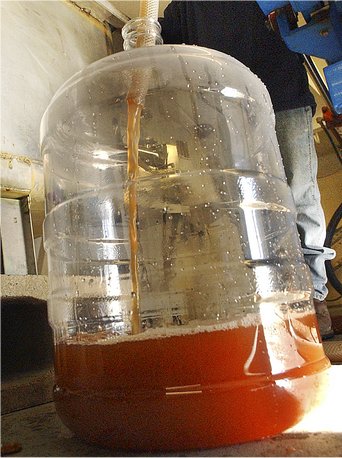
Once you have
your juice and possible added sugars or fruit added, it is time to
start the fermenting process. Add the yeast of your choice to the
juice and stir the mixture ensuring that you are aerating of the
juice. Cover the fermenter and allow it to ferment to completion (if
you have added fruit, be sure to remove it after 1 week). Ciders have
the tendency to ferment aggressively so you will need to watch it
incase you have an overflow.
-
Once the
fermentation is complete, you may need to rack the cider to aid in
clearing your cider.
-
Once you cider is
clear, you will need to bottle or keg it. Most British traditional
ciders are often served completely flat and are sometimes cloudy. In
American, ciders are served as a naturally-conditioned cask cider,
that resemble beers. Depending on how you like your cider, you can add
2/3 cup of corn sugar (or dissolve 1 cup of honey) to your racked
cider and bottle it. This will carbonate your batch of cider like
beers are carbonated.
-
If you have added
sugar or honey to your cider, you will need to wait about 3 to 4 weeks
for the carbonation process to be at its best. If you have not added
sugar or honey, skip this step.
-
And finally - pop
open a cider and enjoy.
NOTE: The
addition of spices to ciders is a great way to either enhance a great
tasting cider OR to make a bland cider more palatable. Many purists do
not agree with spicing-up a cider but I would rather add spices than
dispose of it. Some of the more common spices that can be added are:
woodruff, cloves, cinnamon, allspice, and nutmeg work very well in
enhancing a flavor.
If you notice any problems, or
have any suggestion on how I can further improve this site, please
feel free to send me an e-mail
[12 November 2006].
|