Side Effects
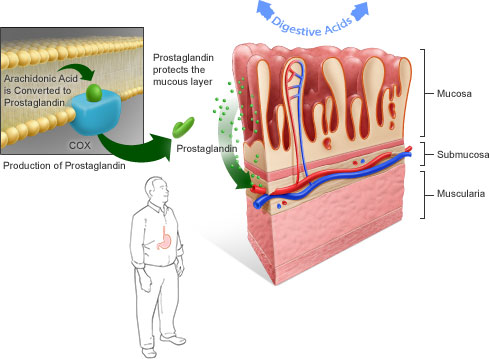
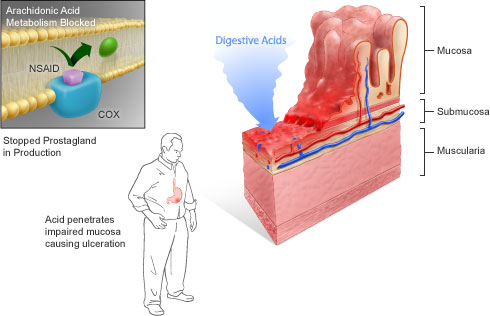
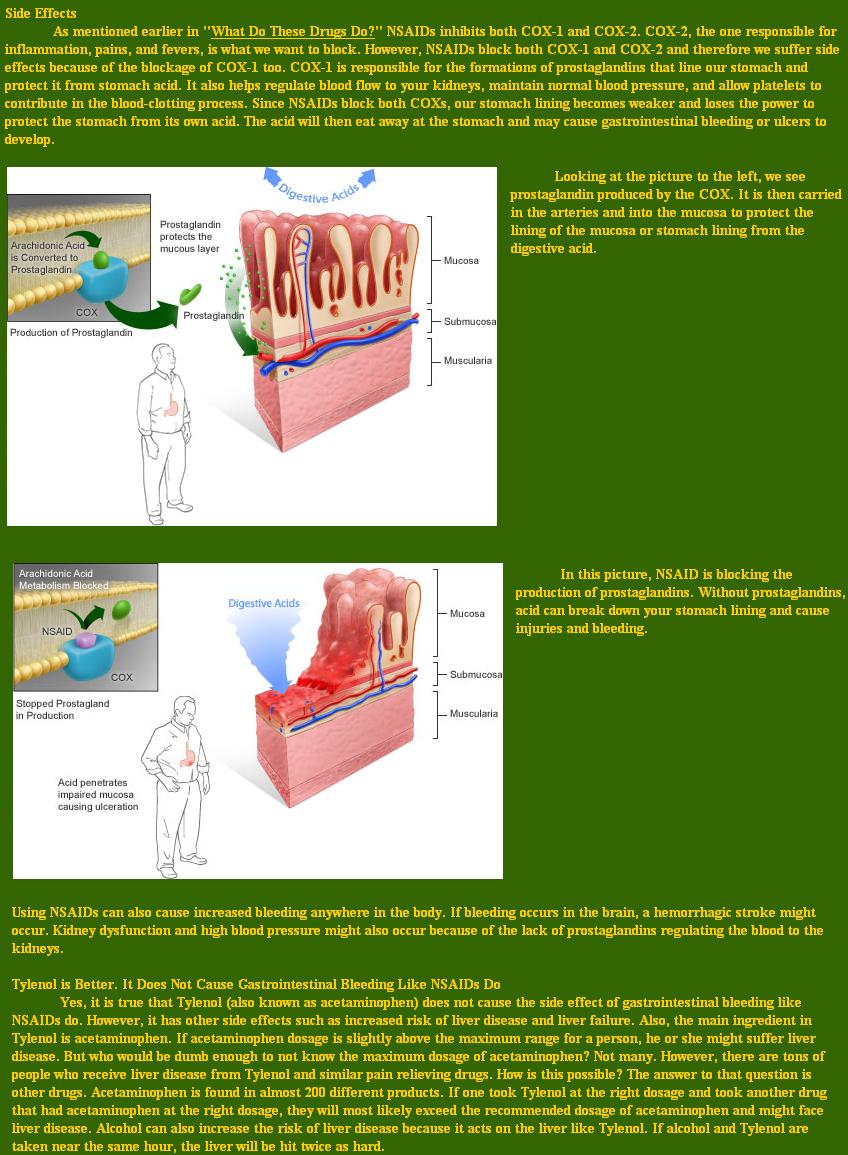
As mentioned earlier in "What Do These Drugs Do?" NSAIDs inhibits both COX-1 and COX-2. COX-2, the one responsible for inflammation, pains, and fevers, is what we want to block. However, NSAIDs block both COX-1 and COX-2 and therefore we suffer side effects because of the blockage of COX-1 too. COX-1 is responsible for the formations of prostaglandins that line our stomach and protect it from stomach acid. It also helps regulate blood flow to your kidneys, maintain normal blood pressure, and allow platelets to contribute in the blood-clotting process. Since NSAIDs block both COXs, our stomach lining becomes weaker and loses the power to protect the stomach from its own acid. The acid will then eat away at the stomach and may cause gastrointestinal bleeding or ulcers to develop.
Using NSAIDs can also cause increased bleeding anywhere in the body. If bleeding occurs in the brain, a hemorrhagic stroke might occur. Kidney dysfunction and high blood pressure might also occur because of the lack of prostaglandins regulating the blood to the kidneys.
Tylenol is Better. It Does Not Cause Gastrointestinal Bleeding Like NSAIDs Do
Yes, it is true that Tylenol (also known as acetaminophen) does not cause the side effect of gastrointestinal bleeding like NSAIDs do. However, it has other side effects such as increased risk of liver disease and liver failure. Also, the main ingredient in Tylenol is acetaminophen. If acetaminophen dosage is slightly above the maximum range for a person, he or she might suffer liver disease. But who would be dumb enough to not know the maximum dosage of acetaminophen? Not many. However, there are tons of people who receive liver disease from Tylenol and similar pain relieving drugs. How is this possible? The answer to that question is other drugs. Acetaminophen is found in almost 200 different products. If one took Tylenol at the right dosage and took another drug that had acetaminophen at the right dosage, they will most likely exceed the recommended dosage of acetaminophen and might face liver disease. Alcohol can also increase the risk of liver disease because it acts on the liver like Tylenol. If alcohol and Tylenol are taken near the same hour, the liver will be hit twice as hard. |