| Drugs and Arthritis |
 |
 |
 |
 |
 |
 |
 |
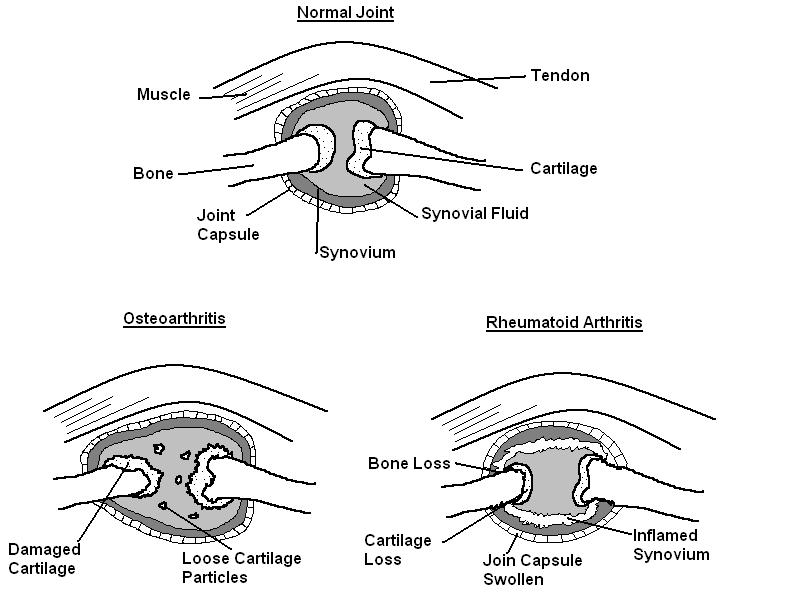
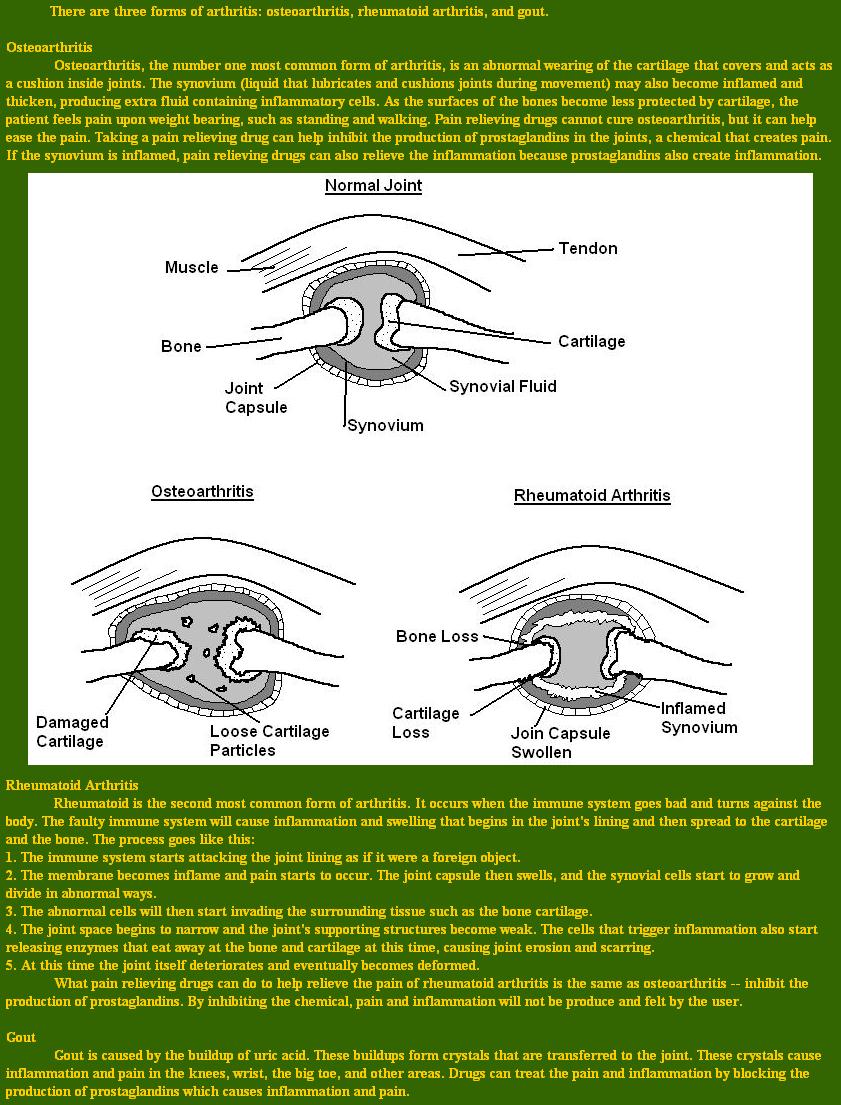
| There are three forms of arthritis: osteoarthritis, rheumatoid arthritis, and gout. Osteoarthritis Osteoarthritis, the number one most common form of arthritis, is an abnormal wearing of the cartilage that covers and acts as a cushion inside joints. The synovium (liquid that lubricates and cushions joints during movement) may also become inflamed and thicken, producing extra fluid containing inflammatory cells. As the surfaces of the bones become less protected by cartilage, the patient feels pain upon weight bearing, such as standing and walking. Pain relieving drugs cannot cure osteoarthritis, but it can help ease the pain. Taking a pain relieving drug can help inhibit the production of prostaglandins in the joints, a chemical that creates pain. If the synovium is inflamed, pain relieving drugs can also relieve the inflammation because prostaglandins also create inflammation. Rheumatoid Arthritis Rheumatoid is the second most common form of arthritis. It occurs when the immune system goes bad and turns against the body. The faulty immune system will cause inflammation and swelling that begins in the joint's lining and then spread to the cartilage and the bone. The process goes like this: 1. The immune system starts attacking the joint lining as if it were a foreign object. 2. The membrane becomes inflame and pain starts to occur. The joint capsule then swells, and the synovial cells start to grow and divide in abnormal ways. 3. The abnormal cells will then start invading the surrounding tissue such as the bone cartilage. 4. The joint space begins to narrow and the joint's supporting structures become weak. The cells that trigger inflammation also start releasing enzymes that eat away at the bone and cartilage at this time, causing joint erosion and scarring. 5. At this time the joint itself deteriorates and eventually becomes deformed. What pain relieving drugs can do to help relieve the pain of rheumatoid arthritis is the same as osteoarthritis -- inhibit the production of prostaglandins. By inhibiting the chemical, pain and inflammation will not be produce and felt by the user. Gout Gout is caused by the buildup of uric acid. These buildups form crystals that are transferred to the joint. These crystals cause inflammation and pain in the knees, wrist, the big toe, and other areas. Drugs can treat the pain and inflammation by blocking the production of prostaglandins which causes inflammation and pain. |
 |
 |
 |