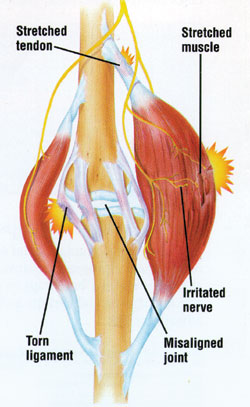
Muscle pain is most frequently related to tension, overuse, or muscle injury from
exercise or physically-demanding work. The most common causes of muscle pain are injury or
trauma including sprains and strains
, overuse and tension or stress. All these causes result in
pain and some results in both pain and inflammation. A sprain for example, occurs when
ligaments are overstretched suddenly. This causes inflammation and pain to develop along with
other symptoms such as swelling and loss of function. Another example is a strain which is an
injury to a muscle in which the muscle fibers tear as a result of overstretching. Symptoms are
pain, inflammation, stiffness, and bruising. By simply taking pain relieving drugs, a person with
muscle pain can feel less to no pain and inflammation because of the blockage of prostaglandin
production (See "What Do These Drugs Do?" section for more information on prostaglandin). |