| Drugs and Colds |
 |
 |
 |
 |
 |
 |
 |
 |
| Drugs and Colds
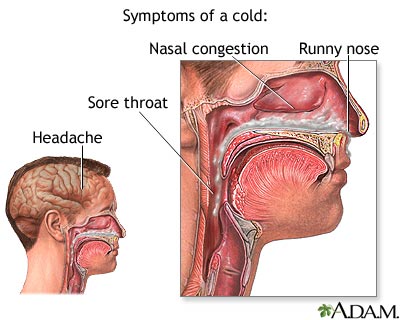
Everyone experiences colds all their life. In fact, an average person gets 2-5 colds per year and children who attend school get 7-10 colds per year. These colds are caused by a virus that enters through your nose where it then inflames your upper airway. Symptoms include: - Sore throat - Blocked nose - Headaches - Fever - Muscular pain - Runny nose - Coughing - Sneezing - Sinus pain - Ear pain Pain relieving drugs can only treat the top five symptoms on the list above. The first one, sore throat, is an inflammation of the pharynx. From the "What Do These Drugs Do?" section, we know that pain relieving drugs can stop the production of prostaglandins. By blocking the production in our throat, inflammation decreases because prostaglandins create inflammation and pain. As for the other four symptoms, they can be found in the other sections to the left (blocked nose is an inflammation of the sinus and can be found in the "Drugs and Headaches" section). A cold usually last for a week. Some symptoms such as coughing might stay for longer. |
 |