| Drugs and Headaches |
 |
 |
 |
 |
 |
 |
 |
| There are many causes for headaches, but the ones that this website is only focusing on are ones that can be relieved by pain relieving drugs. The ones that can only be relieved are tension headaches, migraine headaches, and headaches from sinus infection.
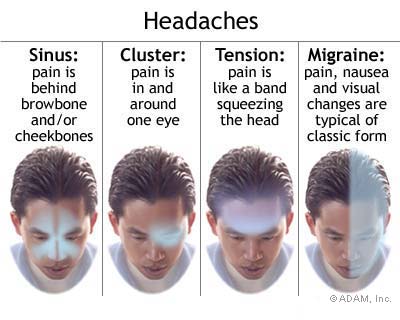
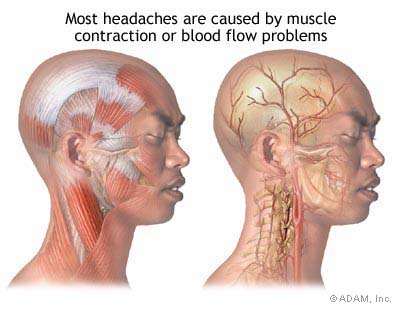
Tension Headaches Tension headaches are the most common headaches found on humans. They occur when your muscles in your scalp, jaw, neck or shoulders become tight. Things that can trigger tension headaches are stress, depression, a head injury, or anxiety. Other triggers include: - Little sleep or sudden changes in sleep patterns - Smoking - Dehydration - Taking a long trip in a car or bus - Not moving your head (using the computer or watching TV for a long time) - Menstruation - Skipping meals - Change in hormone levels - Consuming too much caffeine - Consuming certain foods When your muscles become tight, COX-2 will start producing prostaglandin to create pain which we feel as a headache. If you look in the "What Do These Drugs Do?" section of the website, you will find out that pain relieving drugs can block the production of prostaglandin. In other words, pain relieving drugs blocks the production of prostaglandin that creates the pain in headaches. Migraine Headaches Unlike tension headaches, migraine headaches consist of symptoms other than pain. Other symptoms are: - Pain on one or both sides of the head - Nausea and/or vomiting - Stomachaches - Dizziness - Seeing spots or halos - Sensitivity to light, noise, and/or smells Another difference between the two is that migraine headaches are caused by blood vessel abnormalities while tension headaches are caused by muscle contraction. So how do pain relieving drugs help relieve migraines? To answer that, we have to know that when people have migraines, their blood vessels dilate and the pain fibers in the walls of our vessels become irritated and the nerves surrounding the blood vessels release prostaglandin which produces the pain. Now that we know prostaglandin plays a role in migraines just like tension headaches, we can conclude that pain relieving drugs can also be used to stop the production of prostaglandin and in the result of that, stops pain too. Headaches From Sinus Infection Sinuses are the air chambers in the bone behind your cheeks, eyebrows and nose. They make mucus that drains out of your nose to clean bacteria and other unwanted particles in the air we breath. Sinusitis (inflammation of the sinus) is caused by a bacterial or viral infection and will produce pain in the areas mentioned earlier (cheeks, eyebrows and nose). Pain relieving drugs can help relieve this pain by blocking the production of prostaglandin that is causing the inflammation and pain in the sinuses. |
 |
 |
 |
 |