| Drugs and Toothaches |
 |
 |
 |
 |
 |
 |
 |
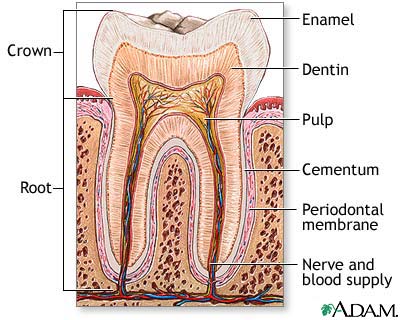
| There are many causes that can cause a toothache. Some examples of causes are cavities, gum disease, the appearance of wisdom teeth, a cracked tooth, infected dental pulp, jaw disease, or exposed tooth root. Pain around the teeth and the jaws can also be symptoms of diseases of the heart (such as angina or heart attack). Many of these examples cause the nerve root of a tooth to become irritated and thus create pain. Using a pain relieving drug can relieve pain from many of these causes by inhibiting the production of prostaglandins (chemical that creates pain, fever, and inflammation). |
 |
 |
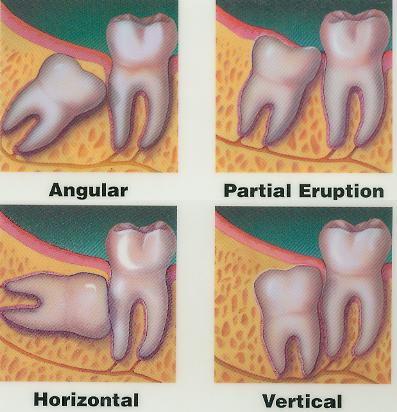 |
| The reason why wisdom teeth cause problems and pain for us is because there is no room for them to grow. In the past, our jaws were big enough to accept these teeth, but now that our diets contain less coarse food, we developed smaller jaws. With less room our wisdom teeth can grow in unusual ways shown in the picture to the left. This makes wisdom teeth more difficult to clean, which then leads to bacteria, plaque, and food debris build up. This then can cause gum disease or decay in the wisdom tooth and other molars. Taking pain relieving drugs can help relieve the pain from problems involving your wisdom teeth such as an infection on a decaying wisdom tooth by blocking the creation of prostaglandins, a chemical that creates pain. |
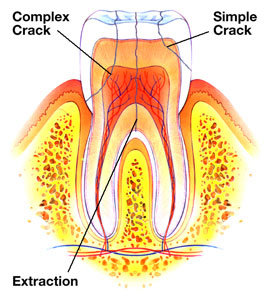
| Simple cracks can be fixed by putting on a temporary crown. Complex cracks might need a permanent crown. A split (a crack that has gone into the root of the tooth) will require an extraction of the tooth. Pain relieving drugs can help ease the pain by stopping the production of prostaglandins that causes pain in or around the tooth. |
 |