

Home Preface Summary Discussion Conclusion MECEEO System Hydraulic Book


Home
Preface
Summary
Discussion
Conclusion
MECEEO System
Hydraulic Book

Manufacturing Stage

The hydraulic motor is manufactured by Sauer-Danfoss in Nordborg, with the exception of a few items made by subcontractors. The manufacturing part of the hydraulic product is fully mapped with information of consumption of materials on each part, electrical energy consumption, and emission to air, water and soil from the ancillary substances and quantity of waste from the manufacturing processes. Further processes occurring at Sauer-Danfoss and subcontractors on all parts are summarized and included in the inventory.  

The manufacturing parts of the hydraulic motor are divided into two main groups: parts manufactured by Sauer-Danfoss and parts (semi-products) manufactured by subcontractors.


0.1.1.1.1.1.1         Geographical coverage: 

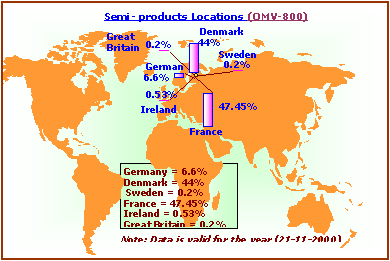
The externally involved companies in the lifespan of the hydraulic motor are located throughout the world. The figure (3.12) should be seen as an expression of where supplies come from at time of data collection, and the picture will change when Sauer-Danfoss occasionally changes suppliers. The suppliers’ addresses are recorded in appendix AA, table (AA.1). The materials are counted with respect to weight from the different countries of origin. As evident from figure (3.12), most of the components come from different parts of the Denmark i.e. Screws (034&065), Shaft seal, Spaces (017&031), Nut OMV, Parallel key, wasters (016&020), Washer (011), Guide pin, O-rings, spring washer, seal plug, balls, spring and name plate, amounting to 44% of the total semi-products.  In weight 47% component material is supplied from France, i.e. the bearing set. 6.6% components are supplied from Germany i.e. Nut K, O-Rings112X3 and guide pin. 0.2% components are imported from Sweden i.e. Dust seal and Conical seal. 0.53% parts material is imported from Ireland, i.e. Drain plug ¼. 0.2% parts material is imported from Great Britain i.e. Plug. All transport is by lorry and ship. It was not possible to collect information on third party subcontractors. The third party geographical locations are not considered in this study, for example, the shaft seal is supplied from Herlev, Denmark, but the Herlev supplier buys it from Germany. So the Herlev, Denmark location is considered, not the German one in this study.      

0.1.1.1.1.2               Parts manufactured by Sauer-Danfoss

Manufacturing at Sauer-Danfoss consists mainly of the manufacturing of the main parts (illustrated in table (3.4)) and of the assembly. Sauer-Danfoss manufactures eleven main parts (89% material) of the hydraulic motor OMV/W-800. Full data on manufacturing processes occurring in Sauer-Danfoss are collected e.g. all parts, processes, electricity consumption, ancillary substances etc. Most of the data was not available in the company’s electronic database system and therefore collected from the machines, workers and controllers. Used strategy for data collection is elaborated in a later section (3.1.3).

Included manufacturing parts and processes in the inventory are marked (Ö) in table (3.2). The data collection on electricity consumption and ancillary substances is illustrated below:  


0.1.1.1.1.2.1         Electricity consumption:

The electricity consumption for the manufacturing processes is calculated on the basis of per kg manufacturing materials. Data are collected per month electricity consumption and per month “kg” (kWh/kg) material manufacturing. Electricity consumption data from seven different departments (which manufacture different parts) is collected and further ranked on the basis of per kg of manufacturing material in each department (see in detailed, appendix B, chapter 2). Data is collected on the basis of hydraulic motor manufactured pieces from the company’s electronic database system, and further converted into kg per month (see appendix B chapter2, table (B2.1)) and electricity consumption on per part is calculated with respect to weight of the part and recorded in table (3.4). It should be noted that data on the hardening process was available in the unit of per kg material already, which is not added in the calculation. It is separately recorded in the PC database on those parts, which go through hardening process (see appendix B, chapter 2, table (B2.4).

Comments: It is not possible to adopt data collection methodology as mentioned in the in the “Life Cycle check draft 2.” The electricity consumption data is not able to calculate from the manufacturing machines, because:

¨            The machines are old and information missing from the motors.

¨            It is not possible check per machine electricity consumption.

¨            One machine is used to manufacture different parts of the hydraulic motor and other products; therefore it is not possible to calculated electricity consumption from the machines.

Further performing a sensitivity analysis on the electricity consumption in the manufacturing stage (see appendix B, chapter 5, section (5.4.2), the electricity consumption in the manufacturing stage is found to be significant and is therefore included in the environmental diagnosis and discussion in later sections.


Parts Name

Pos.

Electricity consumption

Weight

Front cover

23

1,5255

1,0800

Spacer

17

0,2736

0,1937

Cardan Shaft

64

2,0905

1,4800

Tapered Shaft Ø60

13

4,2657

3,0200

Bearing House OMVW

21

14,7462

10,4400

Gearwheel Set

63

10,0927


 Gear Rim

7,1471

5,0600

 Gear Wheel

1,6568

1,1730

 Rollers (9)

1,2887

0,9124

Valve Drive

29

0,5641

0,3994

Channel Plate

28

2,2317

1,5800

Disc valve

27

0,9900

0,7009

Balance Plate

26

0,9232

0,6536

Valve Housing

24

10,2263

7,2400

Table (3.4): The main parts manufactured by Sauer-Danfoss and electricity consumption per part.


0.1.1.1.1.2.2         Ancillary substances:

As mentioned above, a detailed investigation is made on used ancillary substances (oil products) and their impacts on the environment. The hydraulic oils (mineral oils), greases and bonders are used in the manufacturing processes for lubrication and polishing of the parts. Most of them are used with water in a 3-10% concentration for lubrication in manufacturing processes, to polish the parts and removing burrs from the parts and to make them smooth.

Detailed data on each process related to parts that are manufactured by Sauer-Danfoss is reported in appendix B, chapter 1 and further calculation and estimated data are reported in sub appendix BB, where sub appendix BB contains all detailed methodology, which is adept for the ancillary substances data collection. On the basis of collected data on different oil products, a data sheet is prepared, where the same oil products are added and the total amount of each oil product mapped as shown in table (3.5). Collected data on (ancillary substances) oil products is further ranked on the basis of (ancillary substances) oil products quantity used in the manufacturing processes and toxicity by engineering knowledge on substances behavior on the environment (Michael Hauschild) as shown in appendix B, table (B4.1). Ranked insignificant ancillary substances are not included in the further analysis study.

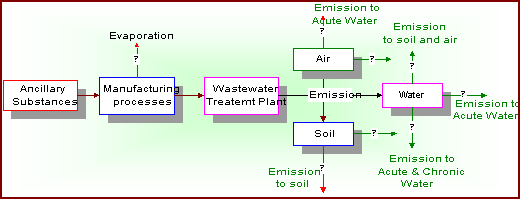
The emissions from the ancillary substances that are included in the LCA are assessed. As shown in table (3.5), most of the ancillary substances (oil products) are emitted into the wastewater after use. The wastewater is treated in a municipal wastewater treatment plant near Nordborg. Some of the ancillary substances are incinerated after use i.e. petroleum and Tellus Oil are incinerated after use in the lapping process. The substances that are emitted with the wastewater are distributed into different compartments (water, air, and soil) after being treated in the wastewater treatment plant as shown in figure (3.13).

Furthermore, the substances included in the different oil products (ancillary substances) are aggregated and ranked as illustrated in appendix B, table (B4.2). The irrational substances are excluded from the study.

The eco-toxicity factors for the different substances, that are included in the LCA, are calculated on the basis of the given methodology in the EDIP book, volume 2 to the compartments (water, air and soil). A detailed data and calculation methodology are reported in appendix B, chapter 4 and found values, emissions to departments, quantity of ancillary substances used to manufacture per piece of hydraulic motor OMV/W-800 and comments are recorded in the table (3.5) below:

Figure (3.13): The ancillary substances distributions to the different compartments after being treated in a wastewater treatment plant.


Human toxicity is not calculated, because of data delay and the time limitations of the project.         

By performing a sensitivity analysis on semi-products in the raw material stage (appendix A chapter 5 section (5.4)) and products manufactured by Sauer-Danfoss in the manufacturing stage (appendix B, chapter 5, section (5.4.1)), the ancillary substances are found to be significant in toxicity impact potential categories and therefore included in the environmental diagnosis section and discussed in a later section titled “discussion”.

Note: Please note that the ancillary substances (Oil products) names are replaced with data obtained from the supplier because it is confidential and not to be exposed to Sauer-Danfoss employees, and other shareholders in the LCA. For detailed information about the oil products’ real names, contact Tom Tychsen, project leader (Sauer-Danfoss). 


0.1.1.1.1.3               Parts manufactured by subcontractors (semi-products)

11% of the material (parts) are manufactured by externally involved companies. The manufacturing parts by subcontractors were fully mapped, with information on consumption of raw materials, electrical energy consumption, emissions and quantities of waste. Data was collected on parts material and occurred processes on semi-products from externally involved companies, but very few responses were obtained. In order to complete the target, assumptions are made:

¨            Electricity consumption in the manufacturing processes on semi-products manufactured by subcontractors is assumed to be similar to Sauer-Danfoss manufacturing electricity consumption per “kg” material, and found electricity consumption per semi-product are recorded in table (3.6). Further data on electricity consumption is considered from the EDIP-database system with respect to the semi-product (part) manufacturing location. For example, if the part is imported from Germany, the electricity generation data on the German level is recorded in the database system. Data is not available in the EDIP database system on American electricity production. Global data is assumed to be valid for the USA. A sensitivity analysis is performed on the raw materials + semi-products stage. By reducing 25% of the electricity consumption, it is found that the electricity consumption is insignificant on semi-product manufacture in the hydraulic product system, (see appendix B, chapter 5, section (5.4)). But electricity consumption in the manufacturing stage on manufacturing parts is significant, therefore this assumption is also discussed in the later sections.  

¨            The processes on semi-products are estimated on the basis of questionnaires with externally involved companies by phone calls and estimations by Sauer-Danfoss engineers (Detailed data on each part is reported in appendix B, chapter 1 and a detailed calculation is reported in sub appendix BB). Furthermore the processes and used ancillary substances are assumed to be similar to Sauer-Danfoss’ and data on used ancillary substances are calculated on the basis of collected information from Sauer-Danfoss’ manufacturing processes. The calculated ancillary substances are also added in the total amount of substances in table (3.5) above. The calculated eco-toxicity is also recorded in the semi-products manufacturing stage. By performing a sensitivity analysis on the semi-products by removing 100% of the ancillary substances in the raw materials + the semi-product stage, the ancillary substances are found to contribute to toxicities but are insignificant in comparison with other parameters. But used ancillary substances in the manufacturing parts at Sauer-Danfoss are important therefore all are discussed in the later sections.   


 Semi-products

   Components

Pos.

Electricity (kWh/kg)

Part Weight (kg)

Screws M16

34

0,1071

0,0758

Dust Seal Ring

70

0,0120

0,0085

Shaft Seal 80x60x7mm

71

0,0626

0,0443

O-Ring 112x3mm NBR

75

0,0145

0,0103

Spacer

17

0,2736

0,1937

Nut OMV

18

0,2140

0,1515

Roller

19

2,9464

2,0860

Conical Seal

81

0,0023

0,0016

Parallel Key 16x10x40

14

0,0662

0,0469

Nut K Type

15

0,3951

0,2797

Washer

16

0,2102

0,1488

Washer 12,2

20

0,0013

0,0009

Drain Plug ¼

10

0,0333

0,0236

Washer 13,5

11

0,0016

0,0011

Guide Pin Ø4

2

0,0013

0,0009

Guide Pin

3

0,0017

0,0012

O-Ring 70x2mm NBR or FPM

74

0,0013

0,0009

O-Ring 45x2mm NBR or FPM

73

0,0008

0,0006

Spacer

31

0,1079

0,0764

Spring Washer

45

0,0027

0,0019

Seal Plug

33

0,0162

0,0115

Balls

9

0,0028

0,0020

Spring

7

0,0020

0,0014

Plug

8

0,0124

0,0088

Screw M16

65

1,7163

1,2151

Name Plate

12

0,0030

0,0021

Table (3.6): Estimated electricity consumption of semi-products.


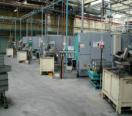
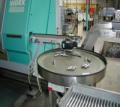
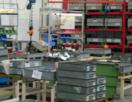
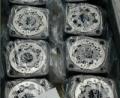
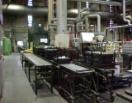
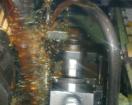
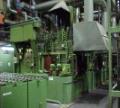
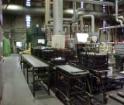
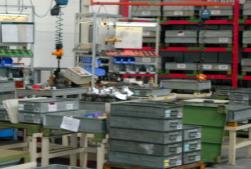
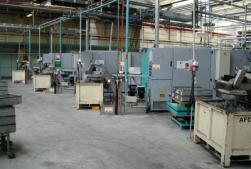
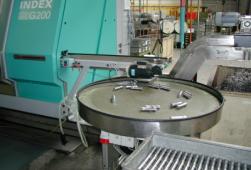
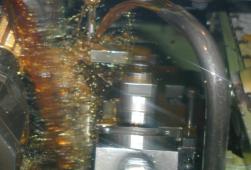
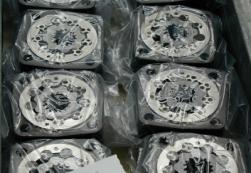
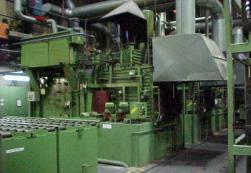
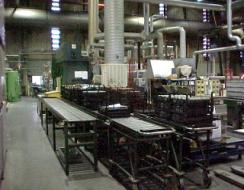
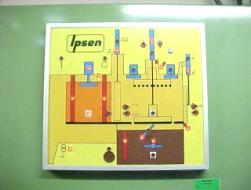
Photos:  Sauer-Danfoss Manufacturing Machines.


Home ] Introduction ] Theory ] Goal And Scope ] System Boundaries ] Scope Definition ] Parts List ] Raw Material Stage ] [ Manufacturing Stage ] Use Stage ] Disposal Stage ] Transportation ] MECO Table ] Data Collection Source ] Inventory ] Environmental Impact Potentials ] Normalization ] Weighted Profile ] Stages Comparison ] Senstivity Analysis ] Recommendation and models information ] References ] GREEN CHALLENGE ] LCE Model ] Carbon Equilibrium ]


Send mail to [email protected] with questions or comments about this web site.
Copyright © 2001 LCE Software Inc.
Last modified: October 13, 2001
Hosted by www.Geocities.ws

1