Thursday, January 15, 2009

The 'Book and the tree

I have been conspicuously (and by conspicuously, I mean in my own mind) from the blogosphere for a while now. I start blog entries and then forget about them. I wonder what there is to say that anyone could possibly care about. I still get comments on old blog posts and start writing but lose interest. Facebook and Ancestry.com have tightened their grip on me.

My friend Michelle invited me to join Facebook almost a year ago. I resisted at first, but I thought it would be a good way to research social networking, since my department was looking into building virtual communities. I thought the best way to study them was to become a member. Now I'm hooked on Facebook, and like the Internet itself, I can't imagine what my life was like before it. Well, actually, I know what my life was like before it. It wasn't full of poking, flair, and status updates by the nanosecond.

I've always felt somewhat alone in the blogosphere; Facebook, on the other hand, lets me connect with any of the currently 140 friends I have. I had no idea I knew 140 people, but they are, in fact, people I know, from work, school, the neighborhood, blogging, the gym, the past, my family. Some are casual acquaintances; some are people I've known for many years. In many ways my contact with them mirrors how I would interact with them in real life, but in other ways I've gotten to know people better by observing and interacting with them virtually. For instance, a colleague of mine is in the hospital recovering from a serious illness and was unable to speak on the phone. His wife, through Facebook, was able to keep us all up to date on his condition and relay messages to him. It was better than wondering how he is and having her be bombarded with phone calls and e-mails.

On our recent trip to London, I saved money on cell phone calls by contacting my cousins on Facebook to set up places and times to meet. I saw photos of our friends' new baby who was born while we were away. I correspond with my friend Michelle, who lives in Mongolia and is already living tomorrow. To me Facebook is not a substitute for human contact, and if someone lives hundreds or thousands of miles away, this kind of interaction makes sense. Oh yes, and many of my loyal readers are on Facebook!

But Facebook is only part of the reason why I've put aside blogging. The other part is my genealogical pursuit, which has grown considerably since I started 3 years ago with about 20 people in my tree. Now there are almost a thousand. I've gone back 6 or 7 generations on all four sides, taking me, in some cases, to the late 1700s. I've expanded across generations to almost 700 blood relatives, 400 of them living! I've uncovered cousins in Ireland, England, Scotland, Canada, Australia, Italy, and many parts of the US. I've met dozens of new cousins both in person and through e-mail (and Facebook). And so far I've helped solve three family mysteries. But that's another blog entry. Stay tuned...

Labels: , , , , ,


Continue reading...
Saturday, August 09, 2008

A world away

Luis took me with him on a real estate listing today to a six-story building in the Flatbush section of Brooklyn, the neighborhood I was born and raised in. When I saw the building again, it brought back to me an extraordinary incident that happened there, coincidentally 33 years ago to the day, an incident that for me symbolized the end of my innocence.

I vividly and fondly remember my childhood in Flatbush in the 1960s and 1970s. I wouldn't have traded the experience for anything else. We lived in a six-story building on Ocean Avenue called Ethel Arms (which Luis likes to call "Ethel Flabby Arms"). Ocean Avenue was once a sleepy path leading to Sheepshead Bay, but in the 1920s, as immigrant waves kept rolling in, high-rise apartment buildings sprouted all along the avenue, urbanizing it. When I was growing up, Ocean Avenue was a four-lane street, and the most popular sport was dodging cars to get to the other side. Once across, you entered Ditmas Park, where the scenery changed markedly and you felt like you were in the country.

The side streets were--and still are--lined with shade trees and stately Victorian homes dating from the early 1900s. The nearby Pink Palace in Sophie's Choice exemplifies those homes. Erasmus Hall High School, alma mater of Barbra Streisand, Susan Hayward, and Donny Most, was the closest public high school. Movie stars such as Douglas Fairbanks and Mary Pickford lived in Flatbush around the time it urbanized. By the early 1970s the only famous local residents I knew of were Tiny Tim and Miss Vicki, a few soap actors, and Barry Manilow and his mother. The giant, fenced-in house across from my building was purportedly the home of a porn director, but I never knew whether that was true.

I always felt safe growing up in Flatbush, and evidently so did my parents, since they let me play unsupervised out on the big, open dangerous street. We weren't really unsupervised, as hundreds of invisible pairs of eyes somehow managed to report unseemly activity to our respective parents. Assaults and thefts were rare, but there did seem to be a fair amount of arson. On Hallowe'en my mother and some friends' parents would escort us to select homes around the neighborhood, including the Ebinger house on E. 19th Street. For those unfamiliar with Ebinger's, it was a family-owned bakery famous for its chocolate blackout cake.

The local movie palaces were the spectacular Loew's Kings (Baroque) and Rialto (Beaux-Arts) theatres, both now houses of worship. I realize now how magnificent some of the local architecture was. I remember old ice-cream parlors like Karp's on Flatbush and Newkirk, where my mother would get me a little cup of Coke syrup to combat an upset stomach.

At the time, I was unaware that the rest of the world was not like mine. Mine was what would be categorized today as "diverse"--a concept that is now enforced politically rather than organically. My building was like a mini-United Nations of different races, religions, and family status. The Pavlicases were a middle-aged Greek couple whose apartment smelled of cardamom, anise, and cumin. Our Jewish neighbor Miriam was a housebound single hemophiliac living with her 80-year-old widowed mother. My best friend, a black girl named Angela Barnes, had a white mom and a black dad. Glenn was a soft-spoken Jamaican man who I think was probably gay. I had friends who were Argentinian, Chinese, Haitian, Italian, Irish, Norwegian, Puerto Rican, Russian. I started studying Spanish on my own when I was 11 by sitting with El Diario and a Spanish dictionary so I could try to understand the Hispanics around the corner. Later, when we moved to an all-Irish block in Sunset Park in my late teens, I realized that worlds like mine were the exception rather than the rule.

In the summer of 1975, I was in love with a beautiful Trinidadian girl named Allison whom I'd been hanging out with for 6 months. When people ask me whether that wasn't a sign that I was straight, I remind them that we were both 12 and neither of us had gone through puberty yet. When we'd watch "Gidget" movies together, I was far more interested in James Darren than Sandra Dee.

Every Sunday morning I went to 10:00 mass at Our Lady of Refuge Church. I sometimes served as a lector, reading from the New Testament before the priest delivered the Gospel reading. I was a faithful churchgoer, a good little Catholic boy who never questioned authority, at least not until much later.

That was the first summer I had been allowed to cross Ocean Avenue by myself and play at my friend Chris's house on E. 19th Street between Ditmas and Newkirk avenues. I had a pretty large group of friends of different ages and backgrounds, and we all hung out together, forming cliques and clubs and factions but in the end always coming back together. Ditmas Park was like living in a suburban community without the sameness. On summer nights a big group of our friends would divide into teams and play Ring-o-levio for hours, using the 16-block grid of Ditmas Park as our playing field.

On August 9 of that year, the news broke that Sam Bronfman, a son of Seagram's heir Edgar Bronfman, had been kidnapped. At first there were reports that Bronfman was tied up in a cave somewhere, but then it was discovered that he was being held in an apartment building right around the corner from our building! My friends and I stood on the corner for long periods, trying to see if there was any action, but all we saw were black cars with tinted windows waiting for something.

One night, a news reporter said that one of the kidnappers was Dominic Byrne, the father of one of my classmates, Tommy. Everyone in the area knew Mr. Byrne, a small, slight Irishman who used to own a liquor store on Newkirk Plaza and then became a limo driver. No one could believe that he could be involved in such a caper because he was so unassuming. There was hushed talk of homosexual activity between Tommy's father and the other kidnapper, a fireman named Mel Lynch. (Lynch later claimed in court that he and Sam Bronfman had met at a gay bar and had been lovers and that Sam was a co-conspirator in the kidnapping, an allegation that was never proved.)

At church the following Sunday, the priest asked everyone to pray for Mr. Byrne, an upstanding usher known to everyone in the community. It was all anyone talked about for weeks. When school started a month later, Tommy wasn't there, though I think eventually he returned after the publicity had died down. Tommy's father went to prison for 3 years, for extortion, not kidnapping.

When I saw the building that was the scene of the crime yesterday I felt a little sad. It was the first time I realized that the kidnapping symbolically signaled the end of the Flatbush I had known and loved, or maybe I'm just older and more cynical.

In October 1975, New York City went bankrupt, and the federal government refused to bail the city out. Garbage piled up on the streets, and crime spiked as cops became scarcer. In 1976 the brand-new 10-speed bike I got for graduation was stolen from me at knifepoint in broad daylight on Ditmas Avenue, half a block from my building.

By 1977, the burning of Bushwick during the NYC blackout and the Son of Sam shootings were further emblems of the city's ailing health. Many of my friends and their families were moving to the suburbs or to other states to escape the worsening climate. My mother was mugged in the vestibule of our building, and my father had his wallet stolen several times. And then, the coup de grace: some random teenager picked up my 8-year-old brother and dropped up him on his head on the grass down the block for no apparent reason. In September 1977, we said goodbye to Flatbush.

It was strange walking around the area. I found a faded patch of concrete where a bunch of us had etched our initials in the then newly paved sidewalk. And there was the fence--or was it the fence?--we climbed over to get to our favorite hiding place during Ring-o-levio. Everything looked the same as it did 30 years ago, only smaller and less magical. Today I live only 3 miles from my childhood home, but in so many respects it's a world away.

Labels: , , , , , , , , ,


Continue reading...

Friday, August 01, 2008

Decade(nce)

With endless debate about same-sex marriage swirling around us, Luis and I have managed to build a nice life together over the past 10 years. He has health insurance through my employer, and we have tons of paperwork to protect us in case one of us gets sick or dies. Yeah, we still don't have the same protections as our parents, but I can't say we're hurting. If you really want to show your commitment to someone, buy property with them.

We celebrated our 10th anniversary at River Cafe in Brooklyn. Even though I'm a native Brooklynite, I had never been there. I was in high school when it opened in 1977, and it was too hoity-toity for my family to ever go there. In college my idea of gourmet was a cup o' ramen noodles, and then I moved away for 13 years. When I came back to New York almost 10 years ago, the price of a fancy dinner was still out of reach. Now, as we enter what could be hard times, we figured we should try it before the price of a fancy dinner slips out of our reach.

One thing I love about Luis is his adaptability to any situation. He is not snobbish in the least. When we first met, I was afraid to bring him to my parents' house because our dishes are Corian, we use paper napkins, and my mother uses one cooking technique: Boil The Hell Out Of [insert name of food]. His mother, on the other hand, uses English china and cloth napkins and makes some of the best French food I've ever eaten. Every time I visited their home I'd keep my hands on my lap for fear of breaking something.

Over the years I've learned to appreciate fine dining, and Luis has learned to like Flintstones cuisine. For our 10-year anniversary we decided we should live a little.

Luis asked the reservations person for a nice table for our anniversary. We were both eager to find out what the place was like, especially because the adjoining Fulton Ferry Landing is my favorite spot in all of New York. Now host to Asian wedding photo ops and ice-cream- and pizza-seeking tourists, it no longer feels like the Special New York Place it once did, but I still love it.

I wanted to find out beforehand what others think of River Cafe. Not surprisingly, there are plenty of people with plenty to say. I try to read restaurant reviews with a jaundiced eye, and I realize that everyone has a different experience. On many review sites axe-grinders gleefully dice up their victims and display the entrails in public forums. But overly sugary reviewers cause tooth decay, so I like to find a middle ground. In this case that was difficult. Diners either love it or hate it. The first people I dismissed were those who whined about small portions, high prices, or long waits. Really, just go to McDonald's, where you can drive through and supersize for mere ducats. One reviewer said, "I have had better steaks at Applebees." So, there you go.

Another reviewer complained about the waiters having phony French accents and said he would appreciate a disclaimer that you are not welcome here "unless you're worth a minimum of $5MM, speak French, drive a Porch [sic], have 5 maids and or wear designer suits & have 3 portfolio managers on speed dial." And then there was the reviewer who said "staff NOT gay friendly." Does that mean the maitre d' didn't offer a hand job? Two men celebrating an anniversary: would The River Cafe disappoint?

Before dinner our friend Andrea came with us to the cafe for drinks. Even though it's steps away from the ferry landing, the inside of the cafe feels like another world. The restaurant sits right on the water, under the Brooklyn Bridge, with a spectacular view of the East River. It was still light out when we arrived at 8:15, and we got to see the sun set as boats sailed by. We drove in air conditioning but were still a bit moist in our suits. The dress code is business casual, so we didn't have to wear ties. (Another "shocking" epiphany in reviews: "I had to wear a jacket!" Go...to..the...Web...site.)

Andrea ordered us a bottle of Prosecco, and we toasted and chatted as the last rays of light faded from the East River just in time for dinner. Andrea left us, and we approached the maitre d' to be seated. He looked at me and Luis and then behind us as if looking for someone else. He seemed surprised that it was just the two of us.

We were seated at a great table near the river side, not right up at the window but close enough. Our Brazilian server was very friendly (not at all "snooty," "rude," or "neglects basic courtesy," as others' experiences with staff were). She presented us with a card from our friends J & F, who had sent us a bottle of Prosecco. We'd already gone through one bottle. What was one more?

The room itself is nothing special but pleasant--and really, the view is the selling point. The room is intimate, with enough space to comfortably enjoy dinner without having to overhear others' conversations or shout over music or bad acoustics. The clientele seemed to be a bridge (and tunnel) mix with a smattering of Europeans. There was a considerable amount of plastic surgery. The magnificent Manhattan skyline was the only reminder we were in Brooklyn.

Some reviewers complained about the inordinate number of people who served them. Besides our Brazilian server, only two other people came near our table to serve us bread and water and clear our dishes. That's a lot compared with Shoney's. You can choose either a 3-course prix fixe dinner or a 6-course tasting menu. We went with the first, which costs a little under $100 a person. For a special occasion this did not seem unreasonable. Some reviewers disagreed: "outrageous prices," "bottomless pockets," "overpriced," "high society," "Trump living." My advice: Do some homework first. Or go to Grimaldi's.

I had two types of foie gras, a Cape Code monkfish/suckling pig ravioli entree, and a sticky toffee pudding--all delicious. Luis had lobster risotto, lamb chops, and a chocolate marquise with a miniature chocolate Brooklyn Bridge sitting atop a floating barge of vanilla ice cream. Each of our desserts had a little chocolate wafer that said "Happy Anniversary." The portions were just right, so I must disagree with "very little food for alot of money."

As we left, we said good night to the maitre d', who looked a little sheepish. "We tricked you," Luis said, laughing. The maitre d' seemed a little embarrassed and said, "It's just that you came in with the lady and I thought she was with one of you. I was just surprised." Then he added, "I hope you had a happy anniversary." So, I don't know, was that NOT gay friendly?

"I just had to say that," Luis said to me later, "because the look on the guy's face was priceless." After 10 years, Luis can still surprise me. He's still as handsome and sweet as the day we met, and anyone that can make me laugh as much as he does deserves to stick around another 10 years...and another 10 years...

Labels: , , , , , , , , ,


Continue reading...
Sunday, May 11, 2008

Getting on the same page

I called mom earlier this week to see if she wanted to have dinner on Mother's Day.

"Oh, hon," she said, "it's not worth it. You can't get in anywhere, it's so expensive, and the food's not all that great."

At least she won't have to worry about restaurateurs knocking down her door to promote Mother's Day meals.

In most families, a statement by your mom to this effect would be construed as passive-aggressive: What mom's really saying is that you and your brothers had better have already made reservations at a nice restaurant that's not too loud. And a gift would be nice.

But we're not most families.

This was supported by the fact that my middle brother was spending Mother's Day taking his son to the airport to go to Disney World. My youngest brother didn't even return my calls. My mother's sister was celebrating both Mother's Day and her birthday today, and her daughter was having a big brunch at 2:00. My mother was planning to go. There was no way my mother was going to want to have dinner.

I was about to call my mother to wish her a happy Mother's Day, but she beat me to the punch.

After giving her my best wishes, she proceeded to get to the point of her call.

"Honey, I'm having a hard time printing out a Web page on Paul Harvey. The first page prints, but then I can't get the rest of it to print."

I knew then I should have booked a reservation for dinner.

"Ma," I said, already realizing that patience was not going to be my Hallmark gift this year, "tell me what you're trying to do."

"Well, I typed in 'Paul Harvey commentator' and got the page," she said, as if there was only one, "and his wife just died and I'm trying to print it but only the first goddamned page comes out. I must have printed it 15 times yesterday. I wasted so much paper."

"OK, Ma," I said, taking a deep breath, "now tell me what page you're on."

"The one where you type 'Paul Harvey commentator' and it comes up. I want to send it to Ronnie."

I know now why tech support people are hated; it's because they have to listen to things like this all day and after a while they simply can't contain their contempt. My mother has been using a computer for 15 years, and she still acts like conspiracy theorists and hamsters are running it. There's always some implied Communist plot to thwart her efforts to use the computer correctly. So I always have to put on my Encyclopedia Brown hat and try to figure out what's going on in that brain.

Now, before I continue, I tried to ignore that mom was printing out some right-wing drivel to send to her right-wing monk boyfriend in California. But that's a whole other story. We'll save that story for some pagan holiday.

"Ma," I said, "go to the top of the page and tell me what the name of the Web site is."

"It says WGN."

"Beautiful," I said, as I searched Google results. At least now we could be on the same page. "Why do you want to print this out?" I asked, looking at the scary picture of Paul Harvey, who looks like a cross between Dick Clark and Howdy Doody.

"His wife died last week and I want to print it out and send it to Ron."

I shook my head, wondering why, in this day and age, anyone would have to print out an article and send it by snail mail to anyone else in the United States. Then I remembered that mom's "boyfriend" lives in a cloistered abbey, where apparently he does not get news about the real world. Except that he does interact with lay people and can freely move about when he wants to, including going to newsstands. I remember once my mother asked me to scour the earth to find a book for Ron that was banned by the Church in the 1950s. The book was called "Satan."

Back to the task at hand. On the Web page was the waxy figure of Paul Harvey, and at the bottom was the obituary of his wife Lynne. It was all so sweet: Paul and "Angel," as he called his wife, had been married for 68 years, which is almost as long as my mother's been alive. Mom had an awful marriage to my father that lasted 41 years, and her one true love was a cloistered monk. So I think of her romantic idealism with some bemusement. But now my main goal was to get her damn story to print.

"OK, Ma, go down to the end of the page and look for the beginning of the story on Lynne Harvey."

"OK, got it."

"Now, to the right of that, do you see a little icon--uh, picture that looks like a printer." She said yes. "Click on that little printer."

She clicked on the printer. "OK, now it says, Close Window."

When you click on the printer icon, a separate window with the full story opens and immediately scrolls to the end of the story, where a Close Window button appears.

"Yes, you're right, it does say that," I said, "but click in that window and go to the top....You see the picture of Paul and Lynne?" I said, as if we were old friends. "They're holding a sign up?"

"Yes, yes, I see it."

"Now go to File Print."

"Where?" Ay ay ay.

"Where you usually go to print documents," I said, hoping she'd understand that.

A few minutes later, I heard the printer clicking away.

"Oh!" mom said, "it came out!" Praise Jesus. "I've never seen that printer thing before. I would have been here till kingdom come trying to print that out. Thanks a million, hon, you're a genius."

I would have preferred "saint," but "genius" will do.

"Oh, yeah, about dinner. I think we'll do it another time," she said. "It's gonna be so crowded and we'll have to wait for a table." I was going to explain that not all restaurants in my neighborhood would be crowded, but I've learned from experience that when mom says she doesn't want to go out, that's what she means. As corny as it sounds, getting her document to print was probably the best gift I could have given her today.

Labels: , , , ,


Continue reading...
Thursday, February 14, 2008

Who are you? Einstein?

I had lunch with mom a few weeks ago at Hinsch's in Bay Ridge, one of the truly last bastions of the Brooklyn of my teens. After the wood paneling was installed many decades ago, Time had one last burger there and decided never to return.

Whereas I like Hinsch's for nostalgic (and, admittedly, camp) reasons, for Mom it's a comfort zone where she can be with people like her--aging, freshly blue-rinsed white ladies eating bland, heavily salted meat and whispering about how the [Chinese] [Mexicans] [radical Islams] [yuppies] [Godfather's Pizza chains] have ruined the neighborhood. Sometimes I wonder if this place is some Magic 8-Ball window into my future, and I lose my appetite.

Mom has been doing well since her mini-stroke last June. She claims to have not smoked since she left the hospital. I think she sneaks one every now and then, but I concede it's better than her former pack-a-day habit. Still, the effects of 55 years of smoking are etched in every cell, particularly her brain. Her short-term memory is all but gone. She has to write down everything the second you tell her or she doesn't remember. Her long-term memory is still intact, though, which is good if I'm stuck on a name from 30 years ago.

But there's something going on her brain that, to my knowledge, doesn't have a name. I call it Reverse Jeopardy! Tourette's. The game starts with my mother asking a question, immediately followed by an answer that is almost always incorrect.

At lunch at Hinsch's, for instance, the conversation turns to Andrea's boyfriend.

"I'm so glad Andrea has a boyfriend," mom said.

"Me too," I said. "And he's a chef."

"Whereabouts? SoHo?" mom said.

My little kid self takes over at moments like this, and I become insolent.

"Now, Ma," I said, "what made you say SoHo?"

"I don't know. I heard there are a lot of restaurants in SoHo."

"But there are restaurants everywhere...even on your block," I reasoned. Then, realizing that I was being an idiot, I calmly said, "He's a chef at a place in downtown Brooklyn."

On some subconscious level, I'm both afraid and irritated. No one likes seeing their parents age, especially when they're walking around with misinformation in their heads.

This was not an isolated incident. A month earlier, I'd brought mom to the office to meet my co-workers. "Mom, this is Lou. He lives in Bay Ridge, too."

"Oh, whereabouts? 91st and 3rd?"

Now, Bay Ridge consists of about 300 blocks. Why Mom chose that specific block was baffling.

Lou didn't quite know what to say but matter-of-factly said, "No, 72nd and Ridge."

There's something going on in mom's head where she reaches into her database of stored information and pulls out something that fits with the situation. Her answer is partly correct, in that she understands that 91st and 3rd is in Bay Ridge, but somehow she doesn't realize the key is still in the ignition and the car door is locked. She can't quite tell her brain to stop in time before it's too late. Or maybe she doesn't realize that she's even answering her own question aloud.

A few years ago, while in Tipperary, we met a British couple at a pub. The first words out of mom's mouth were "Where are you from? Manchester?" Why London, where the couple was actually from, didn't occur to her first was a mystery to me. Then, a few days later, while having a drink at Bunratty, an American we met mentioned that he'd gone to school on Long Island. "Where'd you go? Chaminade?" While Chaminade is a school on Long Island, there must have been something about the guy that made mom automatically answer. Turned out the guy was Jewish and did not go to Chaminade, a Catholic school.

The other day I told mom I was going to Andrea's boyfriend's house for dinner.

"Where does he live? Windsor Place?" I tried to figure out why on earth she chose that particular block. It must have been because she knows her boyfriend is Irish-American and Windsor Place is in Windsor Terrace, which is an Irish-American neighborhood.

I took a deep breath, and instead of getting annoyed, I said, "No. He lives in Carroll Gardens."

"Oh, that's what I meant," she said.

Who knows? Maybe that was what she meant.

Labels: , , ,


Continue reading...
Thursday, December 27, 2007

A bad way to diet

This is only the second day since our arrival that it's rained. It hardly ever rains when I come to London, so I don't know why there's such a hoo-ha about London being rainy. I suspect it's a myth Londoners like to perpetuate to keep tourists away.

It's been 12 days since my last workout, and my new diet of alcohol, tea, meat, and chocolate is working just fine. I feel lighter than when I left and know it's just a matter of time before the scales start to tip the other way.

One of my favorite places to eat in London is Giraffe, conveniently located downstairs from our friends' flat. Their motto is "Love Eat Live." I decided I should eat something healthful. I always order the same "brekkie" item, smoked salmon and scrambled eggs. Giraffe has a funky vibe; some Putumayo compilation is always playing in the background. I've already had two cups of tea this morning, which is already more than I ever drink at home. Tea is a way of life here. On a previous trip to London I worked out at a boxing gym and the trainer served me a cup of tea afterwards.

After lunch we took the DLR (the New York equivalent of Long Island Railroad) to the quiet Maida Vale section of London to meet my relatives at the Queen's Arms Pub: Jackie and her friend Billy, Sandra and her daughter Sandy (the ones who visited New York in October), Shonette and Jim and their son James, and Aunt Gladys. Willie and his son William (one of the boxing brothers) came later.

It's early, about 2:00, and I'm already having a Guinness. At home I would never drink before 5, but with the time difference I feel like it's OK. The pub menu has a cheese and tomato sandwich that looks tempting. When it comes, it is literally some hunks of cheese and a slice of tomato shoved between two pieces of white bread--no other condiments. Even my cousins are horrified.

It's strange how at ease I feel with them, as if I've known them all my life. I wonder if my grandmother would have approved of our meeting. But, as I've written before, I feel that she had a hand in this meeting from the great beyond.

Cousin Sandra is already giving me a hard time for not seeing them more often during the trip. Yes, we're definitely family.

"I'm trying to find a pantomime for us to go to on New Year's Eve," Sandra said.

"Great," I said, thinking, oh my God, is this what the English do for fun? And isn't Marcel Marceau dead? I figured I'd better ask, since I had no clue what a pantomime was.

"Well, it's like a fairy story, really," Sandra said. I looked puzzled.

"Like a gay story?" I said.

"No, silly, like Cinderella or Peter Pan."

"Oh, that kind of fairy story."

Shonette added, "All the female roles are played by males."

"Like a drag show?" I said.

"No, not really," Shonette said.

In the US, pantomime conjures up images of slim, white-faced clowns in berets and suspenders who play charades for a living. In th UK, pantomime has an entirely different meaning in the US. In the UK, a pantomime (or panto) is a holiday theatrical performance of a fairy tale (or fairy story, as my cousins call it). It's geared toward both adults and children, so innuendo and double entendre work much like in a Bugs Bunny cartoon. Female roles are played by men, not for camp value (allegedly) but in the Shakespearean or commedia dell'arte tradition. There's slapstick and audience participation (for instance, "Look out! The villain is behind you!") The pantomime is more desirable if a B celebrity (like Gavin McLeod or Joyce DeWitt in the US) is in it. The hot ticket this year is Stephen Fry's adaptation of Cinderella at the Old Vic Theatre (which is now under the direction of Kevin Spacey).

On the way back, Luis got a text message from Niamh saying there had been a murder in Islington, either on the Tube or near it. When we get out at Angel station, the whole area is cordoned off. The mist-filled streets are eerily quiet, and people line the streets to watch the forensics experts in hazmat suits look for clues. They look overdressed. I mean, Khandi Alexander on CSI: Miami just throws on some Prada when she examines dead bodies.

More sad news as we return to the flat: Benazir Bhutto has been assassinated. The murder scene we just passed was a double stabbing of two teens. London has been having a wave of gang-related killings, and no one knows what to do about it.

All four of us are off to bed early tonight. We have a 7:30 a.m. flight to Perugia to visit Luis's mom and stepdad at their new pied-à-terre. We have to get up at 4:00 a.m. That should be fun.

In Italy my new diet will be challenged by the easy availability of pasta and wine. The scales are sure to tip the other way, but I won't mind. Abbondanza!

Labels: , , , , , , , , , ,


Continue reading...
Friday, December 21, 2007

What's done is Dunne

On the way back to the guesthouse last night I lamented my lost opportunity to meet my cousin Eileen Dunne. I don't know why it nagged at me so much, but I had convinced myself it was better not to. Then, I thought, well, Billy Splatts! introduced himself to both Keira Knightley and Natalie Portman--and they were perfectly nice about it. I wanted to be that guy.

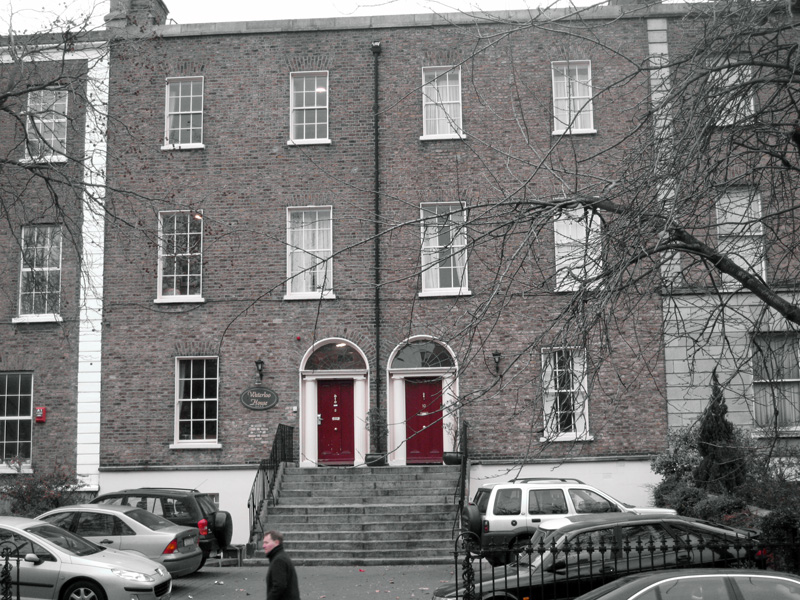
Today was the most beautiful of the three days I spent in Dublin. After a full Irish breakfast (also known as Atkins Delight), I checked out of Waterloo House. I highly recommend this place if you're looking for lodging close to the center in a quiet neighborhood. The lovely proprietor, Evelyn, has spent much of life living between Dublin and San Francisco. The guesthouse is a converted Georgian mansion. The rooms are spotless, with heat and hot water and a great breakfast. I'd read some negative reviews on Trip Advisor and, really, some people just suck, because I don't know what they could possibly complain about.

Dublin is still in the middle of a boom. Construction sites abound, and the face of architecture is due for change, with buildings like Bono's controversial expansion of the Clarence Hotel near Temple Bar, which will feature a dome hanging off the side. A taxi driver said that Dublin is going to get its first 7-star hotel (currently there is only one in the world), but I couldn't find anything about it.

The records office was fairly empty today. The staff was itchy to leave early, but overzealous Yanks bent on finding that one record held them back. I had planned to do only an hour's worth of work but got sucked in and ended up spending the afternoon. I'm at a point where research is getting harder. The further back I go, the fewer sources I have to validate the information. I end up using superpowers like Deduction and Reasoning, when often Guessing is just as effective. My biggest score was the death record of my great-great grandfather. He died in 1937 (the year my father was born) at 93. His cause of death: old age.

By 4:15 I was the only person left, and the office closes at 4:30. The manager said, "We're not trying to rush you..." So I got my last few records and packed up to go. One of the clerks said that vital records are due to go online in the next 5 years, adding "but they said that 5 years ago." That would be a big deal. In the US my only hope is poring over microfilm at Mormon houses and then ordering certificates from Ireland. It's hit or miss if you don't know what you're looking for.

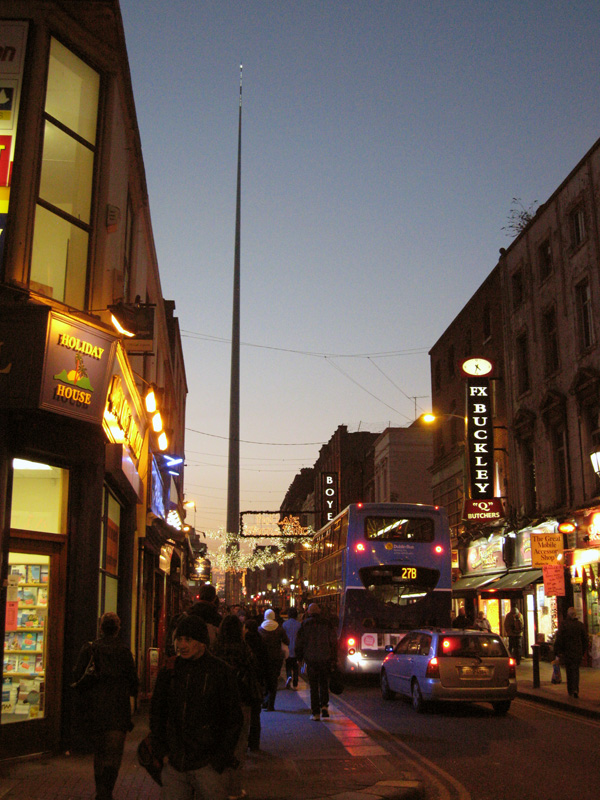
I collected my things and walked to Talbot Street. The street was teeming with shoppers and workers on their way home. I struggled against the crowd while looking for a place to eat. Dubliners seem to have no pattern to their walking. They walk on the right, or on the left, or on the right and the left, or diagonally, or in the middle--and most of it is not attributable to drunkenness. There's just no pattern at all.

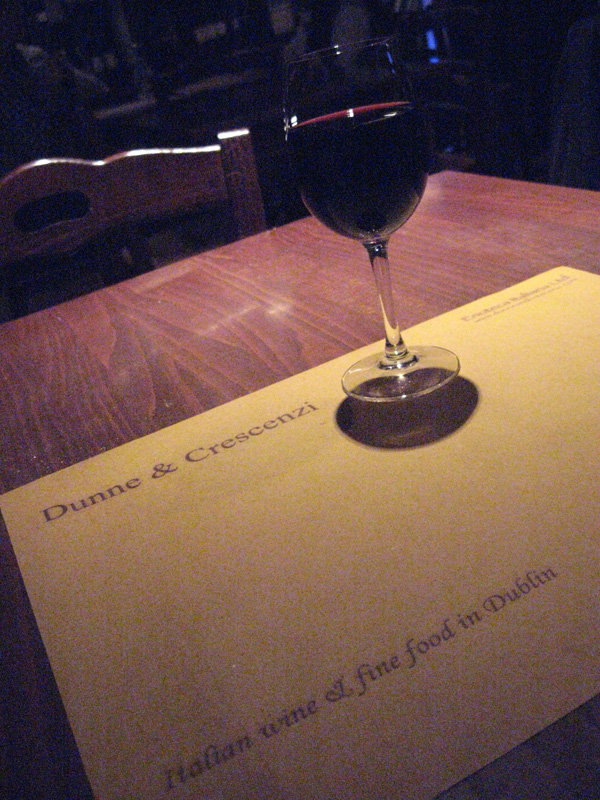
I had 3 hours to kill before my flight. I walked up to Grafton Street and thought about eating at Bewley's. Maybe I could go to a pub and have a nice fish and chips. The crowd was much thicker here, and I was dizzy with hunger and carrying all my belongings. I ended up moving with the flow just to avoid being run down. And then, like being on a Ouija board, I found myself on South Frederick Street, home to Dunne & Crescenzi.

Ah, what the hell, I thought. My conscience obviously dragged me here. I might as well go through with it.

As I mentioned in my last post, Eileen Dunne and I are second cousins. My aunt Eileen is named after her grandmother Eileen. Younger Eileen's father and my grandfather were both named Fred. For many years, my Aunt Eileen said that her father's sister Eileen was the only sibling she knew her father to have and that she had spoken to her as a child once on the phone. My aunt and mother thought, for some reason, that she was a nurse on Ward's Island in New York City, but that has since been debunked. Last March, Aunt Gladys had given me Eileen and Billy Dunne's wedding picture, which was a treasure because it showed my grandfather as well as both my great-grandparents. Aunt Gladys had also told me the names of the Dunne children, all of whom had the same names as my grandfather's siblings. So I was already quite armed with a lot of information about Eileen Dunne the proprietor's family. The trick was to not scare her away.

I walked into the restaurant about 5:00. It was already mostly full. The Italian waiter from last night remembered me from the previous evening and shook my hand. He led me to a table in the back, away from the crowd. Perfect. As he seated me, I asked if the owner, Eileen Dunne, was around and if I could have a word with her.

He gestured to a ginger-blonde woman standing at the bar. She was not the same ginger-blonde woman I'd seen last night, so good thing I had been spared the embarrassment of accosting the other woman. She came over to my table and with a smile said, "Someone said you asked to see me?"

I used the Alison strategy, starting with how much I enjoyed the food, that I was doing my family research and had discovered the Dunne connection and the sibling relationship between Eileen and Fred. I wasn't sure if she believed me, but when I mentioned their common last name, her eyes lit up and I knew she knew I was for real.

She was very warm and listened intently as I mentioned the family in London, that she knew about Gladys but not much else. It seems her grandmother Eileen, Fred's sister, was disowned by the family for marrying a Catholic. (Our great-grandparents were Presbyterian.) I said that my grandfather outdid her by marrying two Catholics. We chatted for about 15 minutes. I told her that I had been hesitant about approaching her with this information in case she thought it was creepy. She laughed and said, "Not at all."

She introduced me to her son, who looks in his early 20s. She asked for my e-mail address and gave me hers and said she would love to hear all about the family history. We shook hands, and they left. It was then I noticed that the card she'd given me was blank, so I have to hope she contacts me and that in the end I didn't scare her off.

But if I don't hear from Eileen again, it's OK. The enoteca's reputation as one of Dublin's finest is well earned. The Italian philosophy of "slow travel" is that to truly experience a place, you must immerse yourself in it. As I savored every bite of my delicious stew of borlotti beans and every sip of red wine there, it felt like the perfect moment to me. And then too soon it was time to go to the airport. It was time to move on.

Labels: , , , , , , , , , ,


Continue reading...
Thursday, December 20, 2007

Another journey

It didn't rain today, but it felt cold, even though it was in the low 40s (or 6 if you're not American). Dublin cold, though, is not the same as New York cold, which can make you cry. Without the Gulf Stream, Ireland would be around 15 degrees cooler. And days are much shorter here: today there was only 9 hours of light, and much of that was dimmed.
Still, though, it was a great day for walking, and since the guesthouse where I'm staying (which by the way, is fantastic) is a block from the Grand Canal, I walked along it to the quays. The Grand Canal connects the River Liffey in Dublin and the River Shannon in the west. Were it not for the canal, Arthur Guinness would have had a tougher time transporting his delicious brew to other parts, since roads (and trucks) were not yet common. Like the Gowanus Canal in Brooklyn, near the site of our new building, the Grand Canal was heavily used for industry, then fell into disuse and became a sewage dump. Now it is being revived through government efforts.

It took me about half an hour to get to the Research Office at the Irish Life Centre. I spent the better part of the day there. When I started my family tree 2 years ago, it had about 35 people; now it has 620. The hard part is going back before the 1860s. Ireland didn't institute civil registration until 1864, so if someone was born before that you have to go to the National Library of Ireland and look at parish registers. Some dioceses, including Cashel and Emly, where my dad's mom's family is from, require written permission from the bishop to view the registers. I'm not sure if this is a ploy to make money or if there's some reason to hide the information, but I can tell you that it's excruciating to pore over hundreds of handwritten, faded documents written in Church Latin (on microfilm), so it's not like people are breaking down doors to view them. I did manage find some records in Limerick for the O'Leary family. Knowing what townlands your ancestors came from is critical. I found this out when researching my mom's mom's Boyle family. Just when you think you've found a match, you see several other people with the same name, in the same place, with the same birth date. The degree of consanguinity in some of these places makes you think about the Habsburgs.

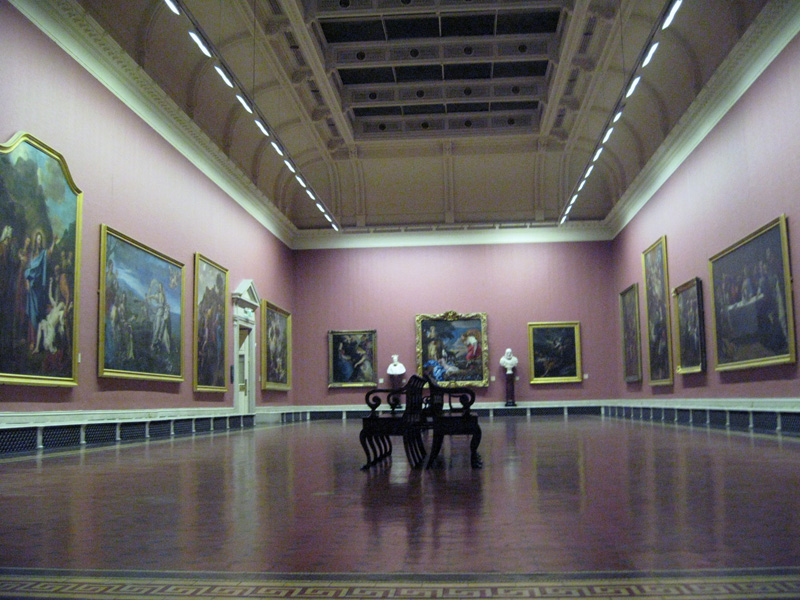
By about 4:00 I'd had enough research for the day. It was already dusk. The Liffey looked spectacular all lit up. People were already geared up for the holidays. The pubs were already filling up. I had some time to kill before meeting my friend Alison, so I went to the National Gallery of Ireland. I'm a huge fan of 16th and 17th century masters such as Rubens, Titian, and my all-time favorite, Caravaggio. The National Gallery has one Caravaggio, The Taking of Christ, which for centuries was thought to be lost but was found hanging in a Jesuit house of studies in Dublin a little over a decade ago. To get to the painting, you have to walk through about 10 rooms of Flemish and Italian paintings. As you walk through the rooms you can see the Caravaggio waiting for you at the other end. I wasn't disappointed.

Alison and I met up around 8:30 and went to Dunne & Crescenzi, an Italian restaurant just south of Trinity College. The restaurant is owned by Dubliner Eileen Dunne and her husband Stefano Crescenzi. There was quite a line at the door, but it lasted only about 10 minutes. I was excited about going to the restaurant, but not only because I'd heard the food was great.

"Eileen Dunne doesn't know this," I said to Alison, "but we're cousins." She looked at me for an explanation. "Eileen's grandmother and my grandfather were brother and sister."

"Does she know you're here?" Alison said.

"She doesn't have any clue who I am. I've been debating whether to introduce myself to her. I don't know whether she'd be freaked out or what."

"Yeah," Alison said, "you'd have to really ease into it."

"Well, this is a good question, then," I said. "Since you're Irish, what would be the best way to approach her?"

Just then, I looked to my right and saw a blonde-ginger haired woman smoking a cigarette outside and tapping on the window to say hello to someone. She looked to be in her 50s.

"Oh my God," I said. "I think that's her."

"Jesus," Alison said. "The family resemblance is unmistakable."

I looked up at a review of the restaurant posted on the window. The woman in the photo looked exactly like the woman outside.

"What are you gonna do?" asked Alison.

"I don't know," I said. I really had thought about it, but now I was having second thoughts.

"Well, look," Alison said, "you have to be cool about it. You start with how much you heard about the place and decided to come try it. You say that you have family in Dublin and that while doing your family research you found that one of your aunts was named Dunne and that you think there might be some relationship."

"I know, but I KNOW there's a relationship."

"Well, if you start pulling out photos of her family and trees and stuff..."

"Yeah, she'll just call a garda and have me arrested."

"Right."

Before I could do anything, the woman disappeared inside the restaurant. We were seated next. The place was noisy and crowded but pleasant. We sat right near the door.

"This must be good," Alison said, "or there wouldn't be a queue. Usually in Dublin if a place is full people just go elsewhere."

We ordered two glasses of prosecco and a special pasta dish of cannaroni with eggplant, tomatoes, and peppers. When our orders came, they looked like orecchiette.

"I don't think this is the cannaroni," I said.

We sent the dishes back and the waiter, who was Italian, was very apologetic. The cannaroni arrived, and it was quite delicious.

"Maybe after dinner you can go up to the bar and ask if an Eileen Dunne works here," Alison said.

"She's not an Eileen Dunne, she's the Eileen Dunne."

"Do you know what you're going to say to her?"

"Well, now I'm not so sure," I said. "Maybe this isn't the right time."

At the end of the meal, I finally got the courage to ask the Italian waiter if Eileen Dunne were here tonight.

"She was here earlier in the evening," he said, "but she's gone now."

My heart sank. Oh well, perhaps another time. Knowing too much about one's family may be one of the pitfalls of doing genealogy.

At least the pasta was delicious.

Labels: , , , , , , ,


Continue reading...
Wednesday, December 19, 2007

Getting into the spirit

People ask why I'm delving so deeply into my family history. The simple answer is, "Because I like it." But it's really deeper than that. I've learned more about myself, and unearthing family history is far more entertaining than watching a telenovela.

At Heathrow today I sat across from an Irish-American family from one of the red states waiting to board a plane to Dublin. They wore excessive amounts of kelly green and shamrocks and harps and the word "Ireland." I'm sure they had no idea of the drubbing awaiting them in the motherland.

Displays of ethnic pride like this was one reason I distanced myself from being Irish--oh, and having a family of raging alcoholics. If singing "Danny Boy" and eating Lucky Charms best represented Irish culture, then kill me with a shillelagh. So that's why I've embarked on this journey, to find out what my grandmother meant when she said, "What's bred in the bone comes out in the marrow."

After checking in at Waterloo House, a wonderful guesthouse in a converted Georgian mansion in Ballsbridge, I had lunch at Eddie Rocket's, the Dublin cousin of American 50s retro diner chain Johnny Rocket's. The place looks and the food tastes pretty much like it does in the States, except all the wait staff are Eastern European.

With about an hour before closing, I headed to the General Register Office on East Lombard Street, only to find that it had moved two weeks ago. The new office is in the Irish Life Centre, around the corner from where we stayed in 2006. I hurried over there, but still I was almost trampled. Dubliners walk as though they are on fire. They walk like New Yorkers used to walk before they got lazy and large.

I had only 15 minutes to do research but didn't get far. The office was closing, and I headed over to the National Library of Ireland, which was open until 9. I had plans to meet my half-cousins Val, Sean, and Stephen at a local pub. But first I had to go to a touristy souvenir store to buy my mother a set of mugs that say "Himself" and Herself" for the woman she babysits for. I asked one of the Eastern European store clerks if they had such a thing, but she had no idea what I was talking about. Such is the changing character of Ireland.

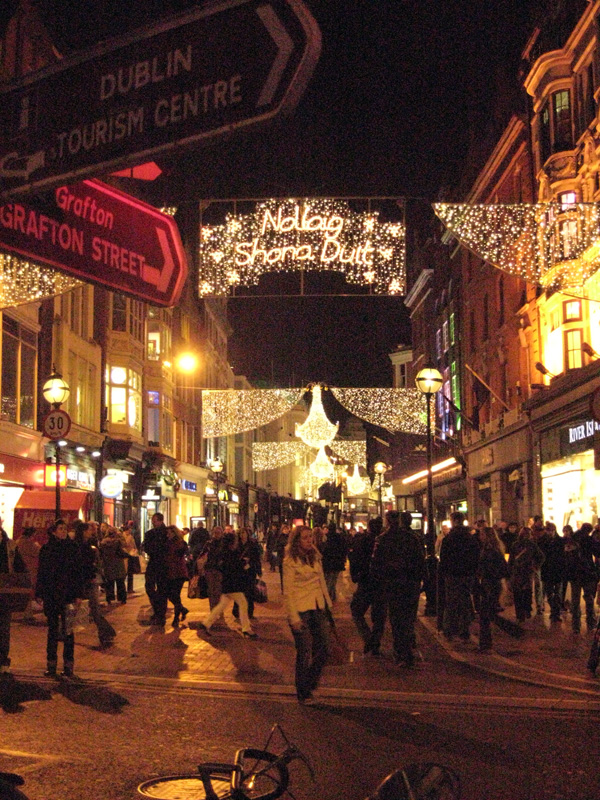
I walked over to Grafton Street, the main shopping area, which was all lit for Christmas, with "Nollaig shona duit" displayed everywhere.

I met the cousins at Fitzgerald's, in the heart of Dublin at Aston Quay and Westmoreland Street. As I had never met them before, I asked Val how I would find him. He said, "I know what you look like from your Web site." Chalk up another reason to keep a blog.

Val and Sean are brothers, and they are related to me in the same way that my British cousins who came to New York are related, only through a different branch. I've corresponded with Val and Sean's son Stephen, nicknamed Chucky, for a few months. They were great fun, and I was worried because at first I had a hard time understanding their accents. But after several rounds of Guinness, that problem cleared right up.

Val had read a lot of the blog and knew quite a bit. I forget I sometimes have more than 11 die-hard readers. Both he and Stephen knew about Luis and my mother ("she's a ringer for Gladys"). Val had been to Las Vegas and New York last year. Sean was not much of a traveler. Stephen wants to go to the States. Next year the family is planning a trip to the Bay Area.

It was interesting hearing people I'd never met telling me what they know about me. In addition to having some mighty craic with some great guys, what I learned about myself is that I can down four pints of Guinness and still manage to find my way back to my hotel on foot at midnight in an unfamiliar part of Dublin without asking directions.

My only regret is that I didn't get a photo of us together. Happy Birthday, Sean!

Labels: , , , , , , ,


Continue reading...
Wednesday, December 12, 2007

Naughty or nice?

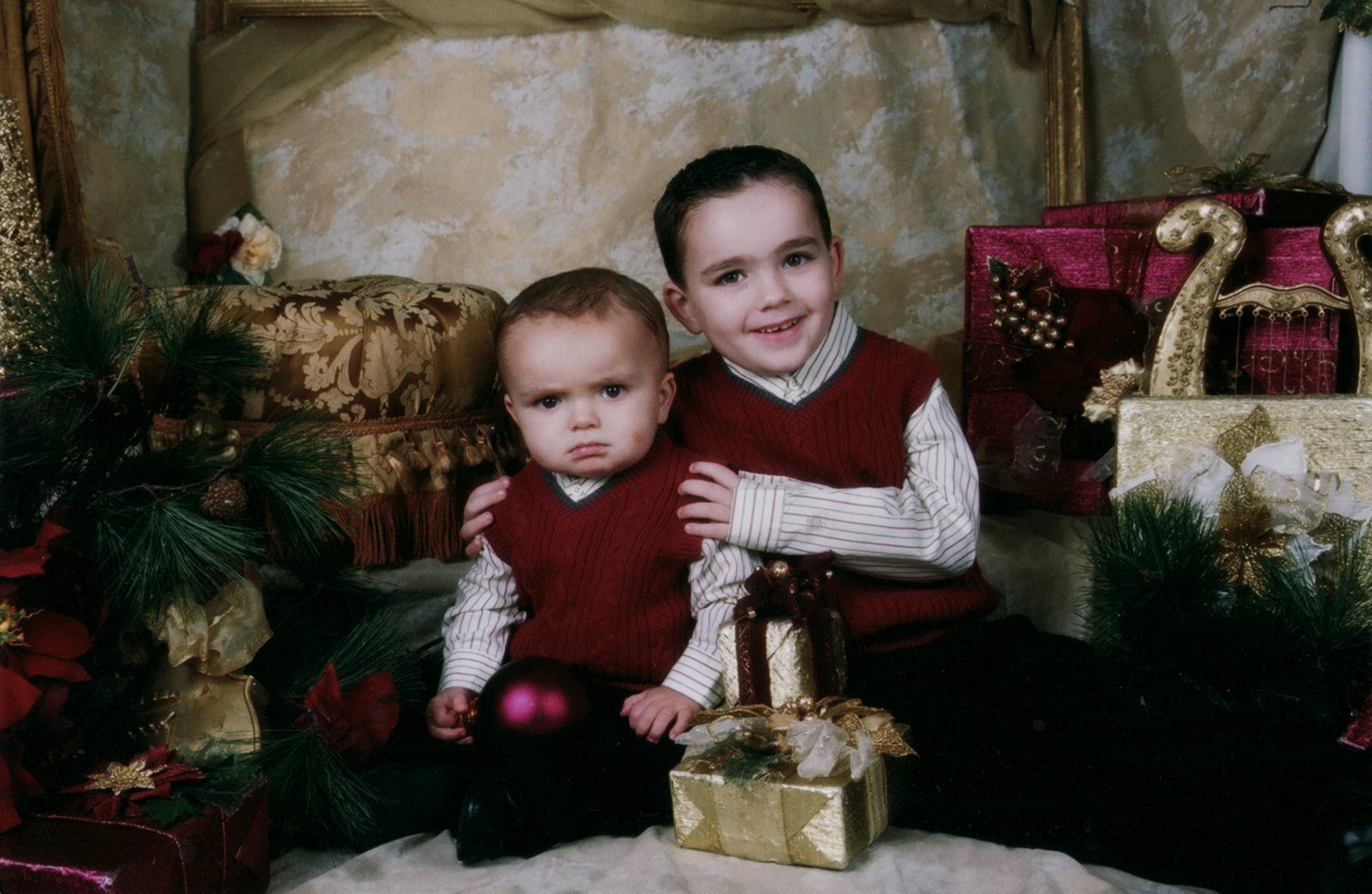
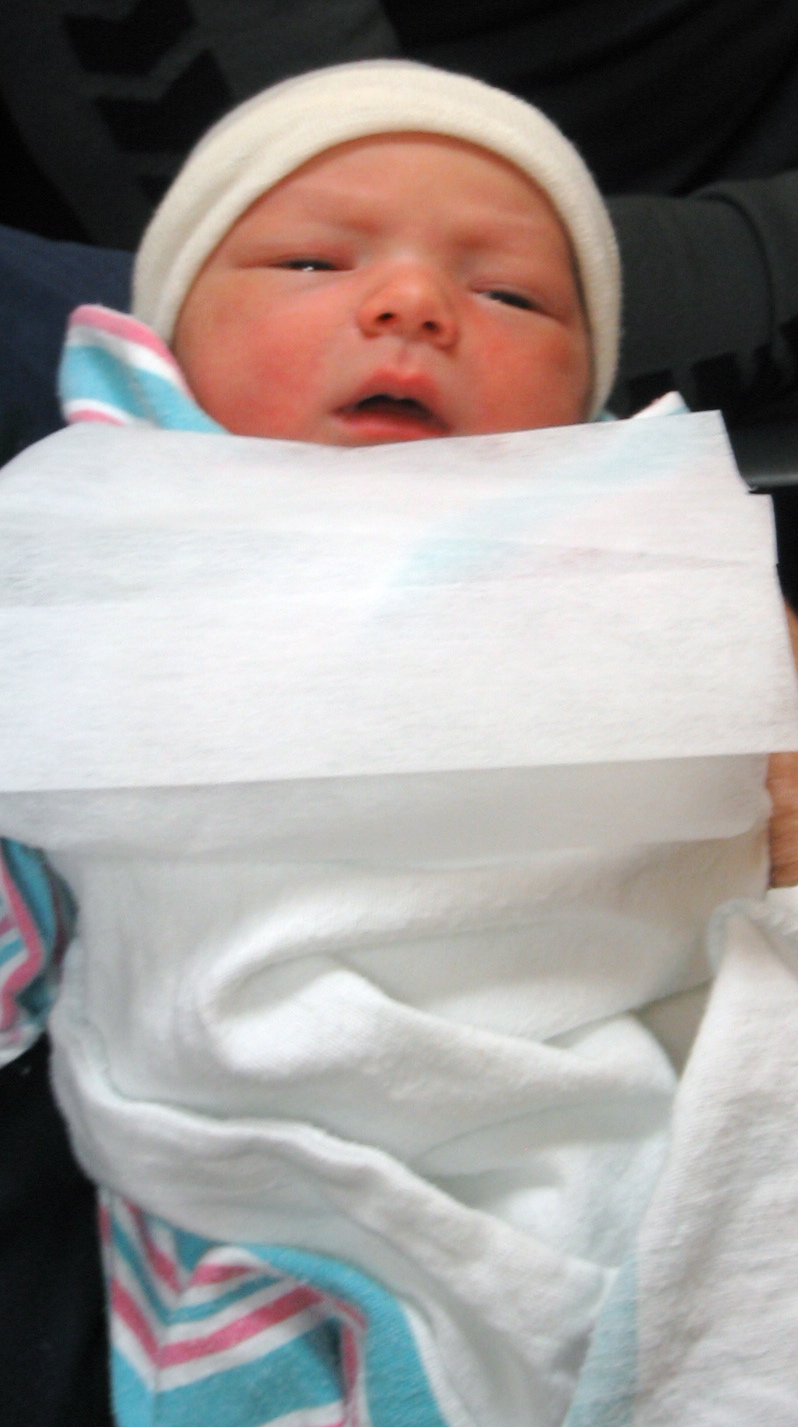
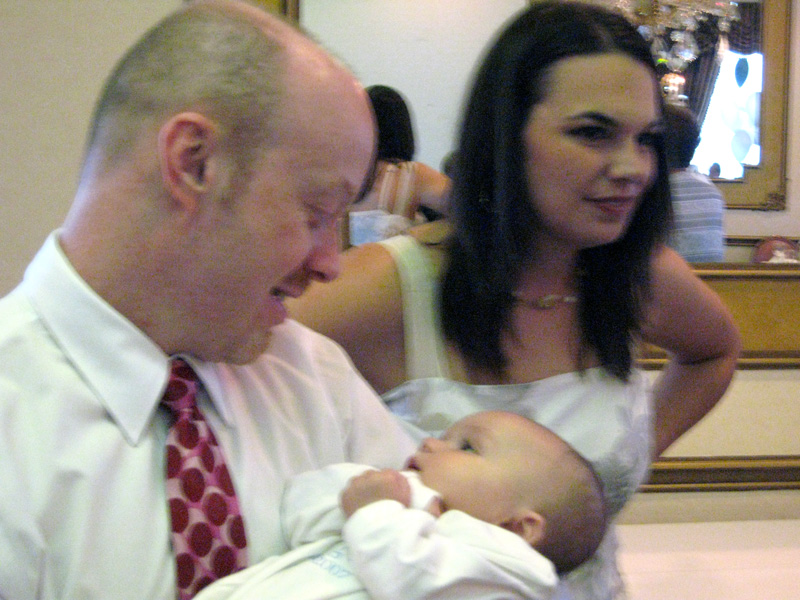
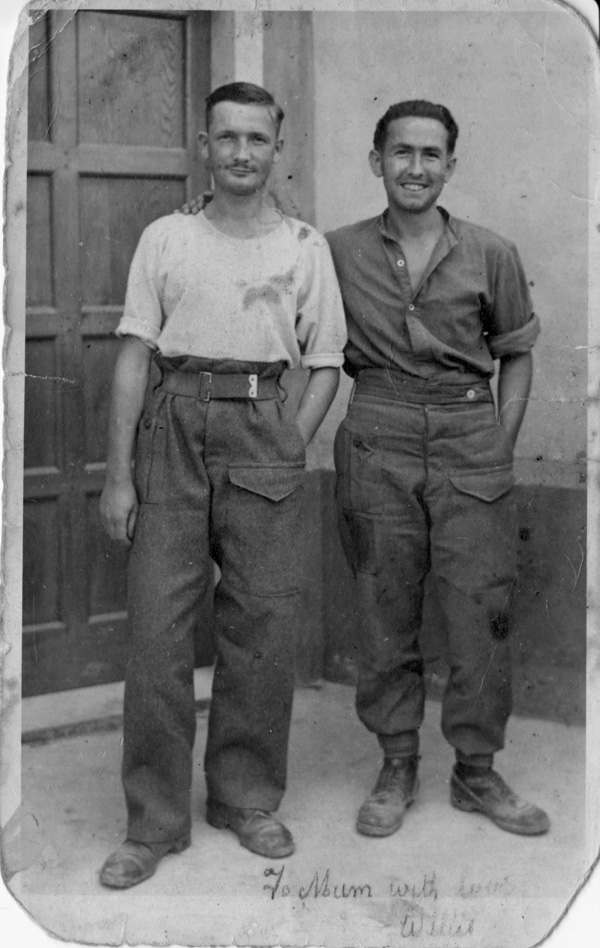
As godfather of 10-month-old little D (left), I'm responsible for shaping his moral character. Judging from the photo, if he turns out to be anything like Stewie Griffin, I'll have my work cut out for me.

Labels: , , , ,


Continue reading...

Friday, November 30, 2007

A difficult cell

While I was running errands a few weeks ago, mom called. She was at a Verizon store in California. Her cell phone battery was dying, and she was buying a new one. The salesperson told her she was eligible for a phone upgrade as part of Verizon's "New Every Two" campaign. Mom was very excited because she could get a brand new phone more cheaply than she could get a battery.

However, I'm the one who ended up paying for that decision several weeks later.

A few years ago I put mom and myself on a family plan at Verizon. Neither of us uses a lot of minutes, so it made sense to consolidate air time. I got her a basic LG phone with no bells and whistles, the simplest phone they had. It still took weeks to show her how to program numbers and retrieve voice mail. I often wonder what technologies I'll be mystified about when I'm 70.

Mom finally got the hang of her LG phone, which she had for about 2 years before the battery problems started. I learned the hard way that you're not supposed to leave your phone charging overnight, especially the first time you charge it. Although lithium-ion batteries don't suffer from "memory effect" as older nickel-cadmium ones do, you still have to do some things to preserve the life. Plus, you don't want any surprises.

Given her comfort with the LG, I was surprised to find that she had gotten a different phone. "It's a camera phone," mom said, surprised to find that two formerly unrelated things had now been squeezed into one teeny device. "What the hell am I gonna do with a camera phone?" she said. "Will you show me how to use it when I get home?"

"No, ma," I said. "Focus on the fact that it's a phone. It will make your [read: my] life easier. Most cell phones today come with a camera."

"OK, hon," she said, "because the girl here said that..."

"Mom," I said, "trust me. You don't need to learn how to use the camera."

So, things went off without a hitch. The next day, mom called me on her new phone. She called to tell me that the Verizon store where she'd bought the phone wasn't able to transfer her numbers from her old to her new phone. She'd go to the store in Bay Ridge when she got home and do it. Sounded good.

A week later I was just about to drop off my shoes at old Italian cobbler Joe's on Fifth Avenue when mom's cell number came up. I debated whether to answer, since it was early for her to be calling.

"Hon," I'm out at the Verizon store on 86th. They won't transfer my numbers to my new phone. They're telling me I have to activate my old phone so they can get the numbers off it." I blinked my eyes and shook my head. What the hell...? "Something about I'm not authorized to do it and they want to talk to you." Before I could say I had 30 seconds to live and this was not a productive use of my time, a Verizon clerk got on the phone. I asked what the problem was. The man said he couldn't transfer the numbers because the phone was in my name. They would have to activate the old phone, but I would have to be present to authorize the transaction. This made zero sense to me, but I played along.

"Can't I authorize it over the phone?" I asked.

"No, sir," the man said. I hate being called "sir." "Since the account is in your name, you have to be here to authorize it. There have been problems with these things in the past."

"I don't understand," I said. "I clearly authorized a new phone in a different state, and that went through just fine. Don't you show this in your records?"

"Yes, sir," the man said in his nothing-you-can-say-can-faze-me voice. "But it's like having a bank account where you have to be present to verify that someone is who they say there are."

"No, it is not," I said, getting agitated. "It is nothing like that. This is the most ridiculous thing I've ever heard. She obviously has a new phone and all she wants is to transfer the numbers!!" I realized that people on the street were looking at my free hand flailing, and I took a deep breath and said, "Well then, what do I have to do to get this straightened out?"

"You'll have to come to the store with her to have the phones switched."

Now we were switching phones? I felt like I was at the Mad Hatter's tea party. I thanked the man for his help, said I would deal with the problem, and hung up.

Mom called me later on her new cell phone.

"Sorry about before, hon," she said. "Those people are so unhelpful there."

"Well, more than that," I said, "they just weren't making any sense. Why don't you meet me for lunch one day and we'll go to the Verizon store on Wall Street. They always come through for me."

"All right, dear," she said. "I still can't figure out how this camera works," she said. "

"And you never will," I said, and hung up.

So, the day after Thanksgiving, mom met me and we went to the Verizon store at Wall Street. It turned out that neither the old phone nor the new phone worked.

"When were you going to tell me?" I asked patiently. My God, how the parent-child tables turn quickly.

"I figured you were busy," she said. "And what could you do anyway? I figured we'd get it straightened it out." I wanted to say, yeah, but that's a very different issue from getting your numbers transferred from one phone to another. But I didn't.

The Verizon Store on Wall Street was not a Black Friday hub of activity, and we immediately got a tech support person. I explained that neither phone was working and handed the two over.

"Where did you get this phone?" the woman, whom I'll call Gloria, asked.

"She bought it in California," I said.

"We don't even sell this phone," Gloria said. "When did she buy it?"

"About a week ago."

"Do you have a receipt for it?" Thankfully mom had brought the receipt, which I handed over.

"Ah," Gloria said, "she bought this from an authorized retailer."

"What does that mean?" I said.

"It means that we sell phones to places like them that we authorize to program."

It made sense to me now why the Bay Ridge store wouldn't do anything. They couldn't vouch for the authenticity of the new phone.

"So what do we do?" I asked.

"Take this to Kally at Customer Service and tell her the problem and see what she can do."

Kally, a very early 20-ish, model-worthy woman of color, did not really seem in the mood for problem customers today. She and her two similarly configured colleagues were extremely busy making plans for the evening. But Kally mustered up enough customer service energy to help us. I'm sure if I have been Usher I would have been helped with more enthusiasm.

I crossed my fingers and hoped for the best, and the best was that Verizon replaced the new phone for free. The old phone did not hold a charge at all, and they could not transfer the numbers. But mom had like 30 numbers, so I said I would transfer them. The new phone, a Samsung, very, very basic, had, unfortunately, a camera in it.

"Thanks for all your help, hon," mom said. "I don't know what I'd do without you."

"Just don't go to authorized retailers anymore," I said. "Only go to a place that has red, black, and white."

"I guess that was a stupid thing to do," she said.

"Well, I guess, how could you know?" I said. "Those places will sell you anything. They're great for accessories, but I wouldn't buy my phone from them. I learned the hard way, too."

"So you'll transfer the numbers for me?" she said.

"Of course I will."

"But I still don't know how to work that goddamn camera," she said.

Labels: , , , ,


Continue reading...
Wednesday, November 28, 2007

Adding on the pounds

While relaxing by the pool at Luis's mom's over Labor Day weekend, Luis and I had a brilliant idea: let's avoid the holiday madness and go somewhere to avoid family drama. Several Cosmos later, we had economy tickets to London on Virgin. Granted, they were very cheap (under $300), but that won't make up for our hemorrhagic spending once we land. With the dollar at more than 2 to 1 to the pound, we're leaving plenty of room in our luggage for ramen noodles.

Lodging is not a worry, since we'll be staying with our friends. We decided that our trip was our mutual Christmas present. I plan to go to Dublin for 2 days to do some genealogical research and possibly meet up with some cousins. Two weeks ago hotel and airfare would have cost me about $300, but I waited a week too long and ended up paying $500. The euro is no bargain either.

We thought we might escape family gatherings altogether, but Luis's mom and stepdad are living temporarily near Perugia in Umbria, and what the heck, we'll already be on that side of the ocean. The Brits and Luis and I are going the weekend before New Year's. We'll be within drinking distance of wine regions Montepulciano and Montalcino. Ironically, the wine there will be more expensive than it is here!

The only thing more intimidating than the exchange rate is the prospect of flying from London to Perugia on Ryanair, a low-budget Irish airline that has fewer frills than a Mennonite church. The fares are so inexpensive I'm envisioning a Flinstones-like plane where everyone flaps their arms to make the plane run. I can't seem to find a good word about the airline; their bad-boy image makes Colin Farrell look like St. Patrick. France is in a lawsuit with Ryanair, customer complaints are rampant, and the EU is threatening to shut down its Web site for bogus pricing. Earlier this year, Ryanair unsuccessfully attempted to take over Aer Lingus, the national airline of Ireland, earning it the airline's enmity. I don't know if it's good or bad that I share the same last name as the airline's president. It will be anyone's guess whether we'll actually make it to Italy. I feel an I Love Lucy episode coming on.

Having said all this, I'm very excited about the trip. I haven't had a vacation since my last trip to London in March, and that was a trip to remember. At least I'll have stories to tell about this one. And if worse comes to worst, I have plenty of healthy organs to sell when the bills start coming in.

Labels: , , , , , , , , , , ,


Continue reading...
Monday, October 29, 2007

Tour de force

I haven't blogged in over a month, not for lack of things to say, but for lack of time in which to say them. Work has tested the limits of my sanity many times over the past few months, and I've been working late hours and barely making it to the gym, so by the time I get home I usually retreat into a catlike state, or, more accurately, catatonic state, and the last thing on my mind is writing. If I weren't able to hit something, I just might be making license plates in a Mexican prison. My idea of fun now is tracking down long-dead ancestors and trying to figure out how many degrees separate me from Jonathan Rhys-Meyers. Just out of curiosity, you know.

As my faithful readers know, my late grandfather, Fred, whom I never knew, was a bit of a cad--OK, a big-ass cad. By "accidentally" reading a letter she thought was addressed to her, my grandmother found out that my my grandfather had abandoned another wife, whom he was still married to, and their three kids in Dublin. Although they stayed together till grandpa's death in 1948, the marriage was effectively over. For the rest of her life, my grandmother shoveled bushels of Catholic shame and guilt onto herself, and the mystery of the other family was supposed to remain a secret forever.

Then I was born.

I always liked the Nancy Drew mysteries (although really I was just interested in the Hardy Boys), starring soon-to-be Dynasty heiress Pamela Sue Martin. Nancy would use her teenage powers of deduction to solve a perplexing situation. As soon as she'd say something like "Professor, do ghosts leave footprints?" I knew the mystery was solved. In my case, I started sleuthing about a year ago to track down Fred's Dublin family. One clue led to another clue to another clue, and finally I had all the pieces of the puzzle--except one: the married name of the only person I could track down. That was the only clue that escaped me. And then, miraculously, this year, Nancy Drew came to the rescue in the form of Anne-Marie, who found all the puzzle pieces online and gave me the last clue I needed for the picture to emerge.

In March I met the Dublin family, who now lives in London. I felt as if I'd known them all my life. And in some way, I felt that my grandmother, Fred's second wife, wanted me to know them.

Sandra, one of the London half-cousins, called in September to say she and her two girls, Sandy and Cass, were making their first trip to New York at the end of October. It so happened I had a few days off coming up, so I decided to meet them at the airport and play tour guide for 4 days.

A few days before their arrival, I asked my mother if she wanted to meet us in Manhattan for lunch. Her voice had a hedgy quality, as if I had just asked whether she would prefer cow lips or pig's ears. Finally I said, "You're not really interested in meeting them, are you?" She hesitated, then said, "No, not really." I asked why, and again she hesitated. "I don't know. I just don't think I have anything in common with them." No, I said sarcastically, I guess not--except for one little thing: your father.

I could understand her feeling that what's past is past, but I was nonetheless bothered by her attitude. My aunt called me a few hours later, and she was bothered too. "I told her how selfish she's being," my aunt said. "You've done so much for her, and you put all this work into finding them. The least she could do is give you an hour." My mother had even asked my aunt when "Kieran's relatives" were arriving.

Obviously I couldn't force my mother to do anything, so I just let it go. My aunt was excited about meeting them and had even bought them welcome gifts. Why was my mother so ambivalent? Was she jealous? Resentful? Bitter? I mean, after I found the other family's names, mom was the one who handed me the page of the Dublin phone book she'd ripped out so we could start calling all the Masons who lived there.

Maybe it was one thing for her to wonder about the other family all these years, quite another to know they were real--and that my grandmother's shame might be validated. But, really, all I wanted from mom was for her to show up for lunch for an hour, say hello, and, leave. After all, if anyone should have have been jealous, bitter, and resentful, it's the family overseas who had been abandoned.

Luis and I picked up Sandra and the girls at JFK on Wednesday night. I hadn't seen them since March, but it felt like I saw them yesterday. We keep in touch by e-mail regularly, so I really feel like I know what's going on with them. Sandra's mother, Gladys, my mother and aunt's half-sister, was unable to come. She was recovering from an infection caused by a spider bite on her leg, and at 83 years old her recovery time is slow. Although a meeting of my mother and aunt and Gladys would have been a big Oprah moment, it will have to wait for another day.

The look of awe on the faces of Sandy, 12, and Cass, just 17, as they walked through the terminal was priceless. As a birthday present, Cass pleaded with her mom to come to New York. As we passed through Queens on the way to Manhattan, Cass said excitedly in her British accent, "I can't believe I'm in America." We drove through Jamaica, and I pointed out that we were in Queens. "That's where 50 Cent is from," Cass said. Indeed.

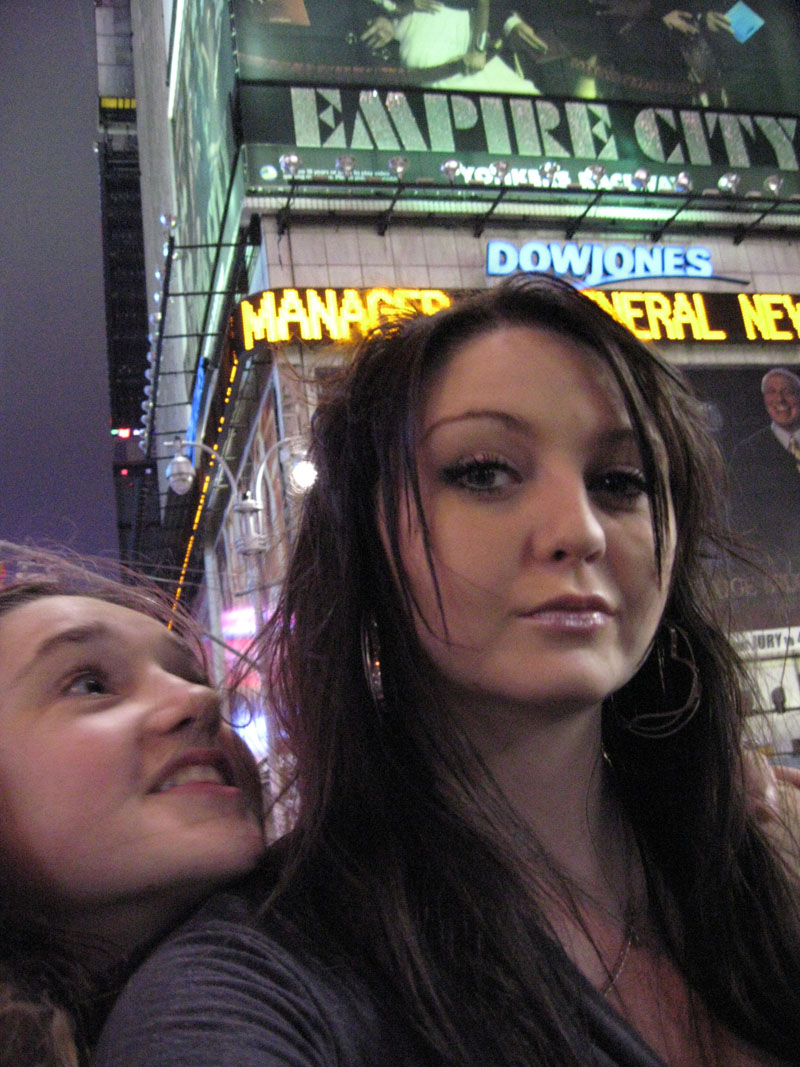
As we drove to their hotel, they chattered away about what they wanted to do. Number one on their list was shopping, which was wise given the strength of the pound. But that was not all: the Empire State Building, Madame Tussaud's, Ground Zero, Macy's, the Statue of Liberty, Central Park, a helicopter ride. I pointed out the Empire State Building, the Brooklyn Bridge, and the Chrysler Building to them. Their heads whipped around, trying to drink it all in while drowsily battling the effects of an 7-hour plane ride and a 5-hour time difference. They were staying 4 full days. If they were going to see all those things, I was going to have to get a good night's sleep and pull out my good walking shoes.

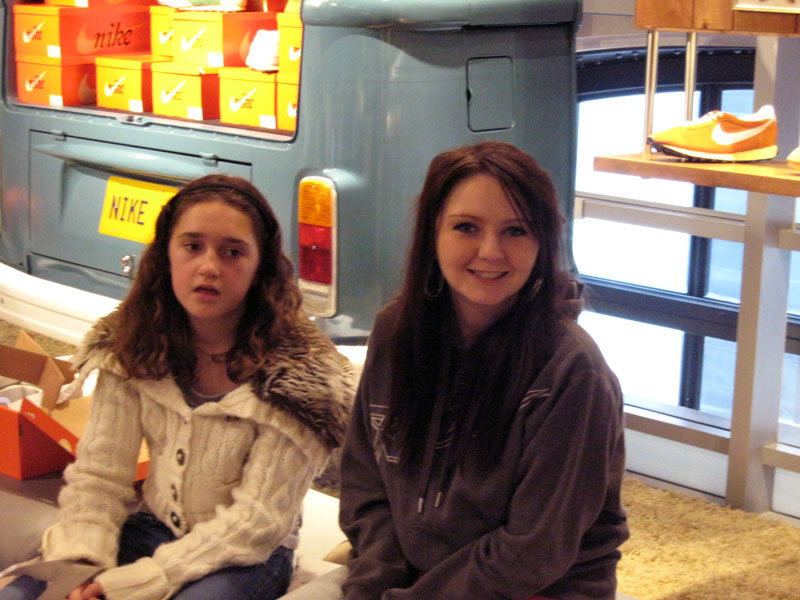
On Thursday I met them at Niketown in Manhattan around noon. The girls were busy trying on every pair of trainers in the store. Sandra's cell phone wasn't working, so I had to use my intuition to find them. Once the salesperson told the girls that they could order custom-made trainers, well, it was like an early Christmas for them. This option wasn't even available to them in London. They made an appointment with a "custom shoe specialist" for 2 pm.

Despite my repeated warnings to not eat at their hotel, they ignored them and had breakfast there. "The bacon was inedible," Sandra said, "and the pancakes were rubbery. And it cost $60 for the three of us!" I looked at Sandra. "I know," she said, "you warned us." Eating in a hotel isn't so bad--if that's your only option. When we dropped them off from the airport I pointed out a perfectly respectable, inexpensive diner right next door to the hotel. "We learned our lesson," she said. "Good," I said, "because there's no reason to eat crappy food in New York City."

We had some time to kill. What would they like to do? Empire State Building! Madame Tussaud's! Macy's! they cried. "Hold your horses!" I said. "We only have an hour until your appointment." Plus, it was rainy and chilly, and there wasn't much outdoors we could comfortably do. We went into St. Patrick's Cathedral and Rockefeller Center. I showed them where the Christmas tree would soon be and said that several TV shows like "Scrubs" were filmed there. We went to the Sony building to see we if we could find PlayStation games for their 13-year-cousin James. Then it was time to go back to Niketown.

We met my aunt at 3 at Ellen's Stardust Diner, which I thought would be fun but turned out to be irritating. I wondered what was going through my aunt's head as she met her half-niece for the first time. No worries. They started chatting away, competing with the singing waiters who tried to engage us in their performances. The food was pretty bad. I had chosen the restaurant poorly, but it didn't seem to matter. Later my aunt called me to say she felt like she'd known them her whole life. Sandra said the same thing about my aunt.

After lunch I checked my voice mail. Mom had called during our lunch: "I just talked to your uncle, and he said my sister was having lunch with the cousins in Manhattan. I knew nothing about it. I'm sorry. OK, dear, bye."

I scratched my head. Hadn't I asked her to join us? Hadn't my aunt told her when we were meeting? Was this a pang of guilt, or was mom's memory that bad? I decided to not call her back. I'd deal with it later.

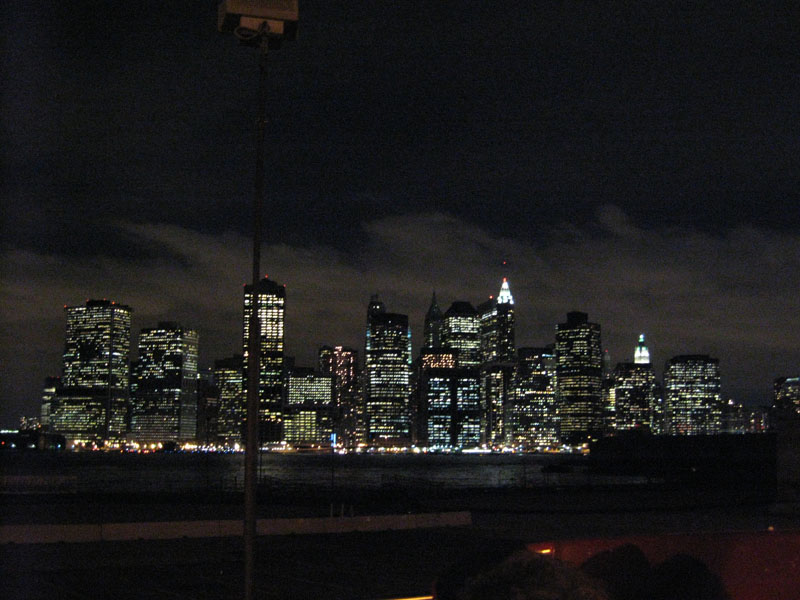
Taxi rides for four are much cheaper than four subway fares. The girls were inclined to cab it everywhere, but I said if they wanted the New York experience, they should get used to walking. Their mother agreed. Still, I knew we wouldn't be able to squeeze everything into four days, so I got 2-day passes for those ubiquitous red Gray Line double-deckers. I'd never been on one before. As we sat on the upper deck of the night loop bus, I looked around at the dazzling lights of Times Square and felt awed myself. So often I dismiss touristy things, but seeing the city from above was pretty thrilling. The girls practically got whiplash trying to take it all in. When we got to Brooklyn and passed through Fulton Ferry Landing (in my opinion the finest view of Manhattan you'll ever get), the girls gasped. "Oh my God!" said Cass, who had not been demonstrably effusive about anything so far, "That's a view I'll never forget. It's brilliant!"

After the 2-hour tour, I put them in a cab at Times Square and took the subway back to Brooklyn. I thought, being a tourist in New York is grueling. And that was just day one.

Friday was wet and cold, a perfect day for shopping. Sandra's cell phone still wasn't working, and I had train problems. When I got to their hotel they had left. I asked the bellman if he'd seen them. He recalled that they had gone to their left. Great. How was I going to find them? Then I remembered the diner. I passed by the window and didn't see them. Then, as I turned away, I spotted them in the furthest corner.

"Better?" I said.

"Much better," Sandra said. "You were right."

"Don't ever second-guess a New Yorker," I joked.

We spent about 5 hours at Macy's, which is more time than I've collectively spent there in my life. The girls were superexcited to find their favorite brands, Jay-Z's line Rocawear and Baby Phat, headed by Russell Simmons' wife Kimora. Sandra was on the hunt for boots.

Macy's offers an 11 percent discount to anyone showing an out-of-town license or passport. The pass lasts 30 days. Coupled with a fantastic exchange rate, that meant big saving for the Brits.

Sandy was eager to eat at the McDonald's at Macy's. Her sister wasn't so keen on it, but their mom caved in. I couldn't believe they would want to eat the same food they could get at home, but I guess if I had traveled abroad at 12 I would have wanted something familiar.

When we left Macy's it was dark and still wet. We took a cab back to their hotel. Sandra still hadn't been able to get her cell phone to work. I discovered that she hadn't changed the band to work in the US. Once I changed the band, the phone worked.

I asked them what they wanted to do. The nice thing about New York is that everything stays open late. They decided on Madame Tussaud's. It was open until about 1:00 a.m., and when we arrived, the place was virtually empty.

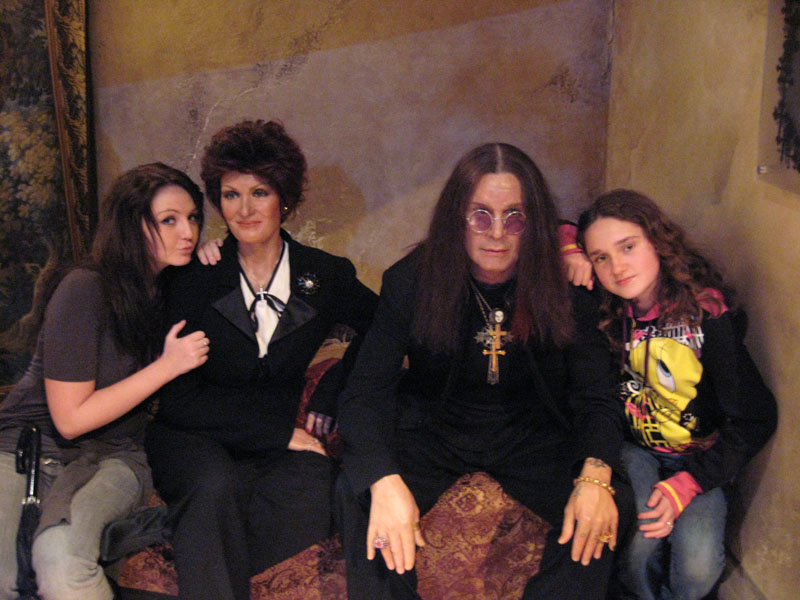
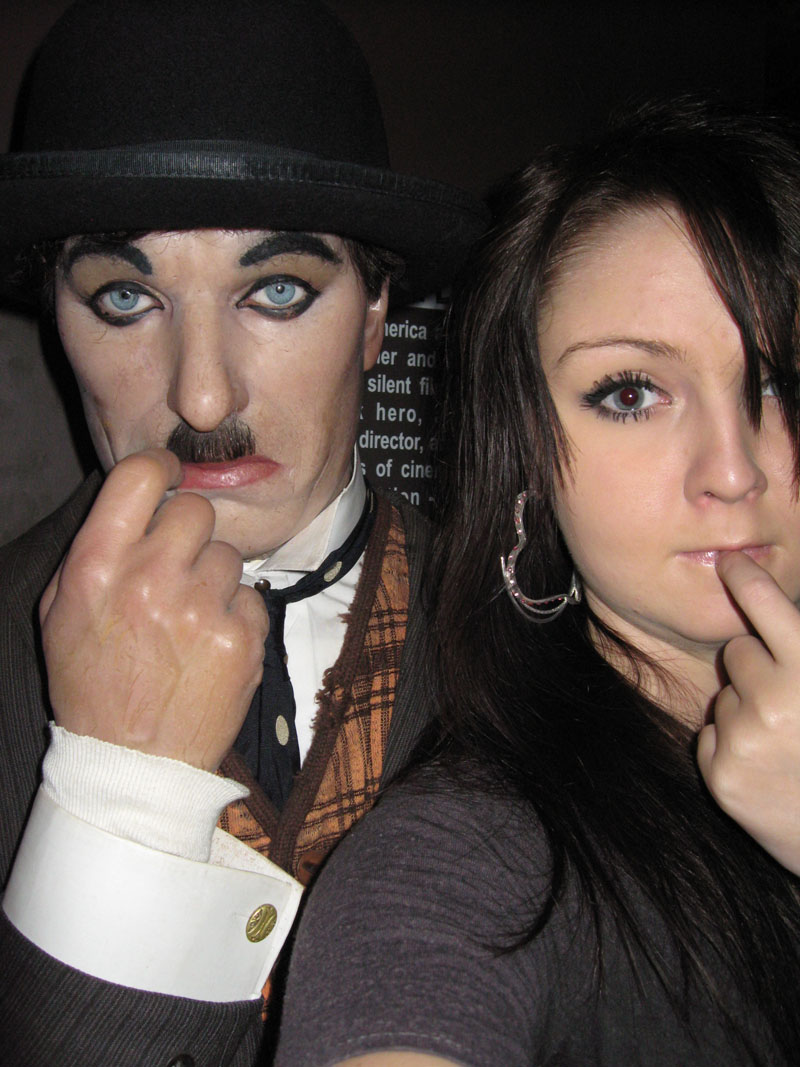
I wasn't sure I was going to enjoy a wax museum, but the girls got right into the fun, posing with just about every figure, starting with The Hulk. I took pictures of them with Oprah, the Osbournes, Jessica Simpson, The Rock, and Charlie Chaplin. (Cass said she used to be scared of him.)

Two days down, two to go. I wondered how we would fit all the things they wanted to do into 48 hours, especially with the bad weather.

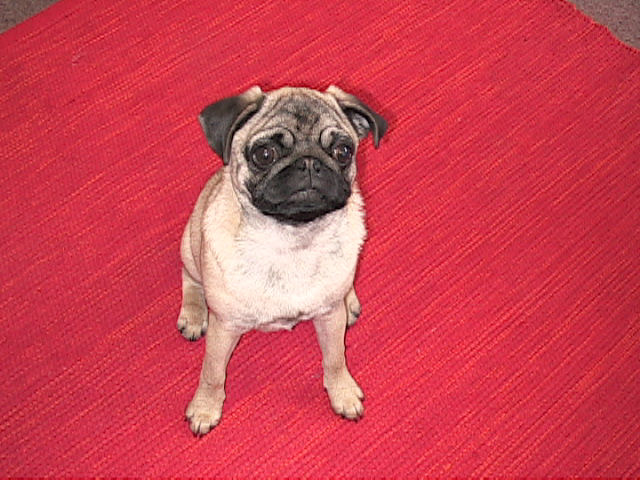
On Saturday Sandra and the girls went off to find things for their pug, Muffin. Sandy missed Muffin terribly and had brought with her a Muffin photo album. I met them in the afternoon at Century 21, a shopping must for natives and out-of-towners alike. Century happens to directly face Ground Zero. It's still a shock to finish shopping and enter the street to a giant void where the world's tallest buildings used to stand. Cass was visibly stunned. Sandy spotted Burger King on the corner, where, it occurred to me, we had a bird's-eye view of the construction site. Cass took a lot of photos of the site, which is now starting to take shape. For years it was literally empty, and now that cranes and bulldozers are working on the new structures, the site looks somewhat like it did after 9/11. I started getting a little teary myself looking at it. I guess that feeling may never go away.

It was getting late, and the Statue of Liberty was now out of the question. But suddenly I had an idea: We could take the Staten Island Ferry, for free, to Staten Island and back. That's about as close as you can get to the statue without going to Liberty Island. The timing was perfect. We got on the 6:00 boat, just as the sun was starting to set over Jersey skyline. The girls were fixated on the shoreline as the boat moved further away from The Battery. We also passed Ellis Island, the gateway to America for millions of immigrants, and it was easy to imagine their excitement and anticipation as they headed toward a new life in a foreign land. We sat on the outer deck facing the statue, and even I felt a sense of awe. There are so many things I take for granted as a native New Yorker. Sometimes it takes a fresh pair of eyes to lend a new perspective to familiar surroundings.

The boat landed at St. George in Staten Island, and we immediately got off and got on the next boat. We were far from alone. A tour guide holding up a magazine shepherded a whole gaggle of people back onto the same boat.

It was dark and chilly as we headed back, and the city took on a whole different aspect. So many bright lights imbued the island with a sense of mystery and excitement. "You guys ready for some walking?" I asked. Sandra was very excited about our next leg of the journey; the girls were not so keen, but they soon warmed up.

We took the subway up to City Hall and began our half-hour walk over the Brooklyn Bridge. It was nippy, in the 40s, but still a beautiful, clear night. The girls were buzzing about the views. "I will remember this view for my whole life," Cass said. She would say the same thing once we got to Fulton Ferry Landing in DUMBO.

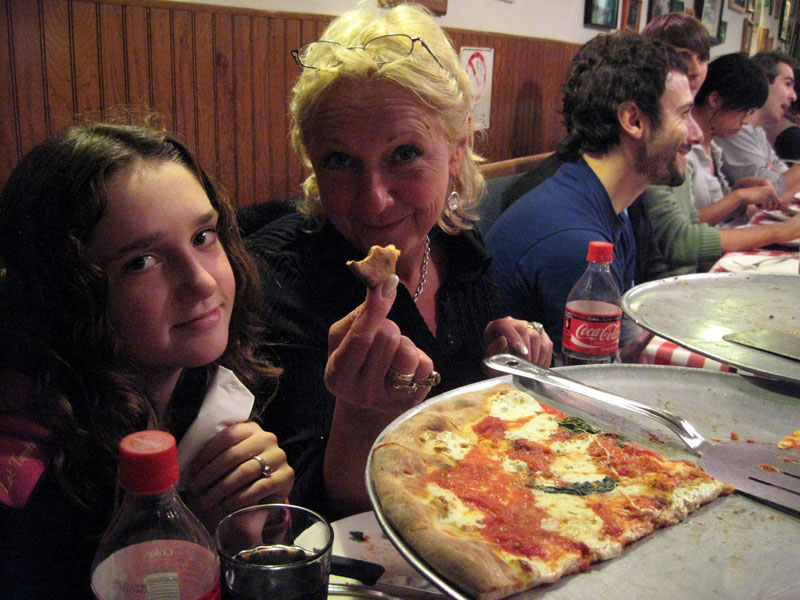
To make up for all the bad fast food we'd been eating, a trip to Grimaldi's Pizza in Brooklyn was in order. One third of the Holy Triumvirate of Cheeses and Marinara (along with Lombardi's and DiFara's), Grimaldi's makes a simple, tangy, chewy pie baked in a coal-fired oven, something that's hard to come by in Manhattan (new coal-fired ovens are prohibited, and existing ovens were grandfathered in years ago). Luis said he would meet us about 8:15. The line was not terrible. Normally on a Saturday night it can snake around the block, but there were only three parties ahead of us. After about 10 minutes it was our turn, and Luis hadn't shown up. I texted him, "batter up," and then we were ushered inside. Normally we wouldn't have been seated without the whole party, but some miscellaneous person entered with us and the host figured he was with us. Just as we sat down, Luis burst through the door, just in time.

The pizza didn't disappoint. The Brits said it was the best pizza they'd ever had. I nodded in a told-you-so sort of way. I couldn't help myself.

After dinner we headed to the Brooklyn Ice Cream Factory, another hidden treasure, for some decadent handmade scoops. It was around 9:30 and Luis suggested that we should go to the Empire State Building, which is open until 2:00 a.m. He even said he'd wait for us. Again I was thankful for the clear weather. The previous night we had tried to go to Top of the Rock at Rockefeller Center, the second best choice for a panoramic view of the city. Visibility was so poor they wouldn't even let us go up.

We drove into Manhattan and took a little spin before going to the ESB. Scores of people were dressed in Halloween costumes, on their way to parties. The girls were tickled, since Halloween is not as big a deal in London as it is here. Some costumes were really lame, but others, like a guy dressed up as tissue box labeled "Blo Me," were pretty clever. Then there were costumes we couldn't really identify, and in some cases those weren't costumes. "Some people just slap a pair of heels onto anything and call it a costume," Luis said.

I'd bought tickets to the ESB online, so we breezed right in past the ticket line. The line wasn't that bad, but it would have added an extra half hour or so to the visit. I'd only been to the top once before, in the mid-1990s. It's another one of those things I'd never do myself, but when accompanied by excited newbies, it's a giddy experience.

We spent about an hour in the building. Luis very sweetly waited for us, then drove them back to their hotel. I felt like we had put a very big dent in the list of sights. The next day we were going to see "Chicago," courtesy of our family friend Steven, who's the stage manager.

On Sunday morning I got a call from Mom, asking what we were up to today. I said we were going to see a show and then having an early dinner at Junior's in Midtown. Mom asked if she could come. I was shocked.

"I thought you wanted nothing to do with them," I said.

"I never said that," she said.

"You may not have used those words, but you didn't seem the least bit interested."

"Well, it's..." she struggled for the words, "I don't know. I can't even explain it....But I would like to meet them."

"OK," I said. "It's up to you. We're meeting at Junior's around 5. If you want to join us, you're more than welcome. After dinner we're going to take a horse and buggy ride around Central Park, and you can come on that, too."

I met the lovely ladies at the Ambassador Theater at 2 to see "Chicago." The male dancers were brutally hot. "Dressed" in fishnet and leather or spandex, they looked like they'd come straight from Folsom East. During the show I started to wonder if the adult content was too risque for a 12-year-old and 17-year-old. I mentioned this to Sandra at intermission. "Are you kidding?" she said. "They could tell you a thing or two."

After the show we went back to Fifth Avenue and did some shopping, then met my mother at Junior's. As with my aunt, things went very well. There was no awkwardness, and it was as if they'd known each other forever. After dinner my mother stopped a pedicab driver to ask where we could get a horse-and-buggy rides. He, of course, wanted to take us there, but we would have had to rent two pedicabs and it would have taken forever to get there. We took a cab instead, and the cab driver took us right up to a line of available carriages on Central Park West. I hadn't taken a carriage ride since senior prom night 30 years ago. Our hopes were almost dashed when the driver said he couldn't take 5 people in one carriage; the law allows no more than 4. But since Sandy and Cass were small, he finally relented. We took the long route, up through Strawberry Fields, Tavern on the Green, and Wollman Skating Rink. I'm embarrassed to say that I know little or nothing about Central Park. I live right near sister Prospect Park, so I have little reason to go to Central. It was chilly and we were all wrapped up in a heavy blanket. It was the perfect way to end the visit. About an hour later, we ended up where we started and thanked our horse, Walter, and his driver, Jose, for the ride. We said our goodbyes and put the Brits in one cab, while mom and I took another back to Brooklyn.

On the ride home, we talked about everything I'd done with them during their visit. "We did pretty much everything they wanted to do," I said. "It was exhausting, but fun."

Mom said, "I had such a good time. I'm so glad I met them. They're really nice."

"See?" I said. "Look at what can happen when you open your mind."

Parenting is such a hard job.

Labels: , , , , , , , , , ,


Continue reading...
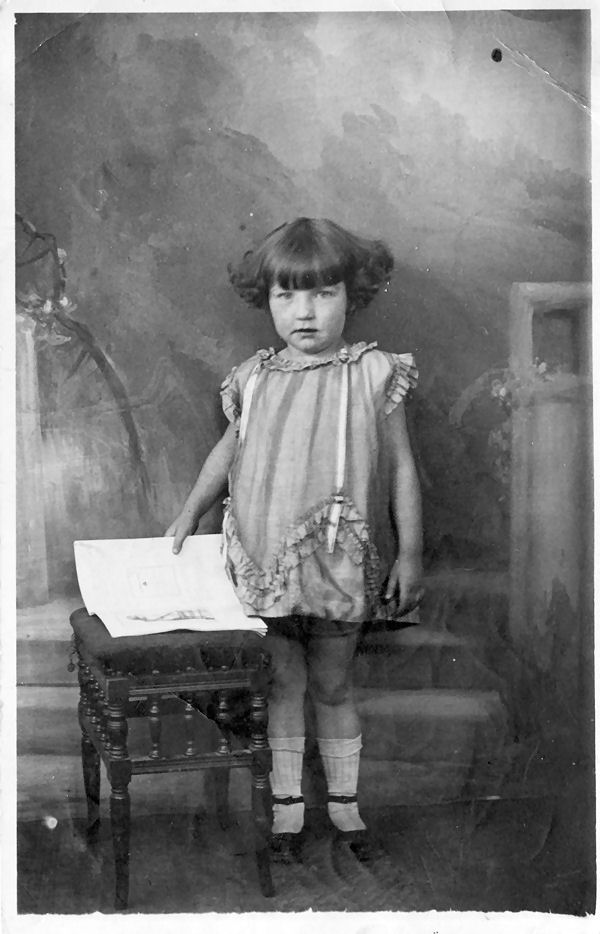
Sunday, September 16, 2007

The road rose up to meet me

When I was a wee lad my parents showed me a brochure from Aer Lingus that gave bios of various Irish saints, among them St. Kieran. Aer Lingus had just unveiled its first fleet of Boeing 720s and named them after Irish saints, as they still do today. That, and my mother's corned beef and cabbage, was pretty much the extent of my knowledge of Irish culture. And yet, only one generation stood between me and the motherland. Dad's parents were "right off the boat," arriving a mere 30 years before I was born. Dad met mom while working as an Aer Lingus reservations agent. He was the black sheep of his family, and I never knew whether he wasn't interested in his heritage or whether his strained relationship with his abusive father estranged him. Aside from my family, the only Irish people I knew were my friends Jimmy and Mary Lee, new arrivals from Limerick with brogues and scrappy demeanors. Being Irish meant witnessing my father's hazy drunks and enduring the pungent odor of cheap, stale beer in the dark corners of the local pub.

My cousins Joanie and Denise were Irish stepdancers, and for a few summers I watched them dance at feisanna in East Durham. My aunt and uncle were charter members of their local AOH, and family gatherings often involved a wistful rendition of "Danny Boy." One of my aunts would usually go on about the anti-Papist laws, but I just thought she was crazy. I was American, through and through, and no one was trying to stop me from being Catholic. While my cousins were off spending their summers in Ireland with our relatives, my exposure to Irish culture consisted of eating Irish sodabread made by my Scottish grandmother.

I saw my dad's side of the family fairly often as a child. We lived in Brooklyn, and the rest of the family lived in Astoria and on Long Island. Summers I spent at my cousins' sprawling ranch house in Deer Park, where I learned how to ride a bike and breathed more easily away from the city and the family. At least once a month we had Sunday dinner at my grandparents' apartment in Long Island City. They were of the lace-curtain variety, certainly not the shanty variety--a distinction I would later discover is razor-thin.

Dad's mom died in 1980 of complications from arteriosclerosis, before anyone knew it as Alzheimer's, and Grandpa died 7 years later. By that time I had moved away to DC, partly to get away from my family, particularly my dad. I was terrified of ending up a repressed, belligerent drunk like him, so I became a teetotaler.

But as I came to learn, as much as you fight against the things you hate, you somehow end up being drawn to them. I didn't become a drinker, but I did like to fight. It must have been innate, because gay boys are not supposed to like fighting. I gave up Catholicism and embraced boxing as my religion. It didn't occur to me that I was following a long line of Irish boxers. Irishness was never in my consciousness. I just knew I liked it.

The year before Grandpa died he began losing his battle with emphysema. We all knew he had little time to live. My aunts and uncles organized a family reunion in a public park in Sunnyside, Queens. It's one of the few times we were all together, my grandfather, his five kids, and their fifteen kids, in one place. I came up from Washington, in the middle of summer, to see my aunts and uncles and cousins. In the pecking order of cousins, I'm number 5. I had fun, but I wasn't quite sure I fit in with them. For one thing, there was lots of drinking, which made me uncomfortable, and talk of sports, which, as a newly minted out homo didn't interest me. There was talk of trips to Ireland and Irish music and dance, and the bombs in Northern Ireland and the bloody Protestants. I remember someone talking about Irish performer Carmel Quinn, who I thought was cheesy. I didn't identify with anything Irish. Being Irish was quaint and backwards. It was leprechauns and green beer and four-leaf clovers. Now, when I think back on it, it's ironic: I was a foreign language major interested in every culture but my own.

After Grandpa died, I lost touch with dad's family. Grandpa was the glue that kept us all together. My cousins, who lived towns apart in Long Island, saw each other regularly. E-mail and cell phones were not common in the 1990s, so contact was sporadic at best. And there was one more thing: I was afraid to tell them I was gay.

Every year the family held a reunion, mostly in Long Island, but I never went. The next one I attended was in the mid-1990s. Many of my cousins had married and started having kids of their own. They owned houses and swimming pools and cars. I was still living in Virginia and renting a house. My "secret" still kept me at bay. During the reunion that year I confided in my cousin Joanie. "I was wondering when you were going to say something," she said. Turns out everyone in the family knew, had known for years, and it just wasn't an issue. It made me realize that fear is largely a figment of our fertile minds.

When dad died 7 years ago, it liberated me. No longer would I witness his bloated dramatic performances at family functions. I could be myself, on my own terms. Through the years, every alcoholic in the family had sobered up and stayed that way. My cousins were adults with interesting lives and families.

For years Luis tried to persuade me to apply for Irish citizenship, and I paid it lip service. When I finally decided to do it, I started talking to my dad's family to find out if anyone had done it. Some of them had thought about it but no one had actually applied. I decided to try, but I realized I didn't even know where by grandfather had been born. As it turned out, no one else knew for sure either. When I applied for his birth record from Ireland, the seed had been planted: I realized that I knew only a watered down version of Ireland. I wanted to know where I came from. A big driver was the realization that I am the end of my line. If I couldn't leave a child, at least I could leave the legacy of the family history.

I started reading Irish history, learning the Irish language, and applying for citizenship. I took my first trip to Ireland, became a member of the Irish Arts Center and the Irish Repertory Theater. I built my family tree and have now gone back almost six generations on both sides. (Oh, and I love the Guinness.) Plastic Paddy though I may be, I don't consider myself any more Irish than I was growing up. I just have a different perspective. I still find it ironic that I am descended from a long line of dairy farmers and I'm mildly lactose intolerant.

This year I went to my family reunion on Long Island. I hadn't gone in 4 years, as I'd had other plans when the reunion was held. My cousin PJ proudly announced that his daughter Julia is a world-ranked Irish stepdancer. My cousin Tommy told us stories of visiting our great-grandmother when he was a kid. I showed my aunts the family tree; Aunt Helen, my best source of family information, said she was so thankful that I had done this. I showed off my new Irish passport, which I will christen on our trip to London in December. Now all my cousins want to get theirs.

At the end of the day, PJ gathered us all in his basement to watch Julia perform a few Irish stepdances for us. I watched her raptly, feeling a tear come to my eye, and was glad for the journey I had made.

Labels: , , , , , , ,


Continue reading...
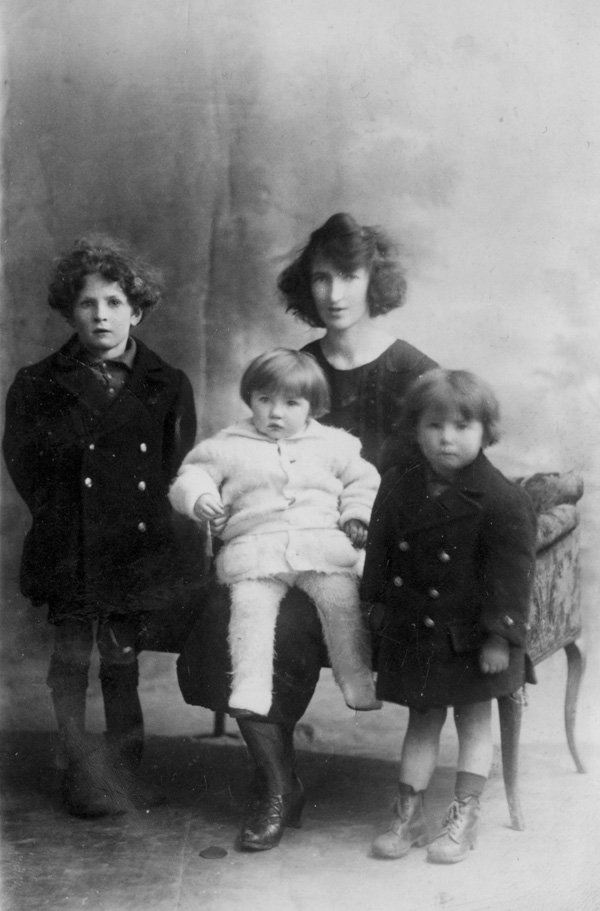
Saturday, August 25, 2007

Sweating in my genes

I've always felt that I got short shrift in the genes department relative to the general population. For instance, left-handedness, which I possess, occurs in a small percentage of the population. It has been associated with schizophrenia, increased risk of breast cancer, shorter lifespan, Satanic influence, homosexuality, wiping yourself after defecation, Ronald Reagan, and Osama bin Laden. It's not a trait you'll find much support for in a debate on eugenics.

Red-headedness is a "complicated" gene, according to researchers at the University of Edinburgh. It, too, is linked to devil worship, as well as to melanoma, hotheadedness, and moral degeneration. In the UK, and yes, even in Ireland, "ginger," as a red-head is called, is a derogatory term. One hilarious South Park episode featured Cartman railing against red-headed kids afflicted with "gingervitis," only to be converted to their side by the end. I don't have enough hair to qualify as a redhead anymore, but with my boxing skills I should be able to fend off any ginger haters.

I suppose I could go on about my male pattern baldness, blue eyes, and cleft chin, but they are not the cause of any problems. The one trait, if you can call it that, that I wish I could turn off, literally, is my, for lack of a better term, sudoriferousness. Translation: I'm sweat a lot. I don't know whether my Irish forebears had this problem or whether it manifested itself in the mists of the Emerald Isle ("Heavens, Paddy, yer lookin' like the springs in Wicklow today"), but on an oppressively humid day like today, my Celtic pores opened up, well, like the springs in Wicklow.

Don't get me wrong: I'm thankful for having this auto-cooling mechanism. But it would be nice to have an off switch. After a vigorous workout at my airless boxing gym, I sat down for 20 minutes to cool down before jumping in the shower. Now, mind you, there's no air conditioning in the gym, so the heat and humidity levels stay at a near-sauna level most of the time. After a cold 15-minute shower, I got my body temperature to a level where I could at least put on my clothes without sticking to them. But once out on the sultry streets, the spigots resumed their effusive perspiration through my forehead, arms, shoulders, back, knees, and feet. I looked like a walking fire hydrant.

I could only imagine what passersby thought as they saw this spectral, folliclely challenged mobile sprinkler ambling along. I tried to think cool thoughts, find a vent or grating where I could stand and dry off, anything, but there was little relief, least of all from the subways.

Luckily that day I was wearing shorts, so the sweat didn't seep through the knees of my pants as they do on a work day, and I was wearing a tank top, so the rivulets didn't form a Y shape down the front of my shirt.

I finally made it to the esplanade at Battery Park City to cool off by the water. Cooling down was difficult with all the buff, shirtless runners passing by. I noticed that many of them didn't appear to have even broken a sweat, and I hated them.

About 50 feet from me, sitting on a railing overlooking the water was an attractive shirtless guy playing his saxophone. He was sweaty, and balding, and from the way he was holding the instrument, possibly left-handed. Ah, another recessive gene collector. As I closed my eyes and strained to listen to the brassy notes he coaxed out of his sax, I realized he was playing the opening theme from Dynasty. That was the exact moment I stopped sweating.

Labels: , , ,


Continue reading...
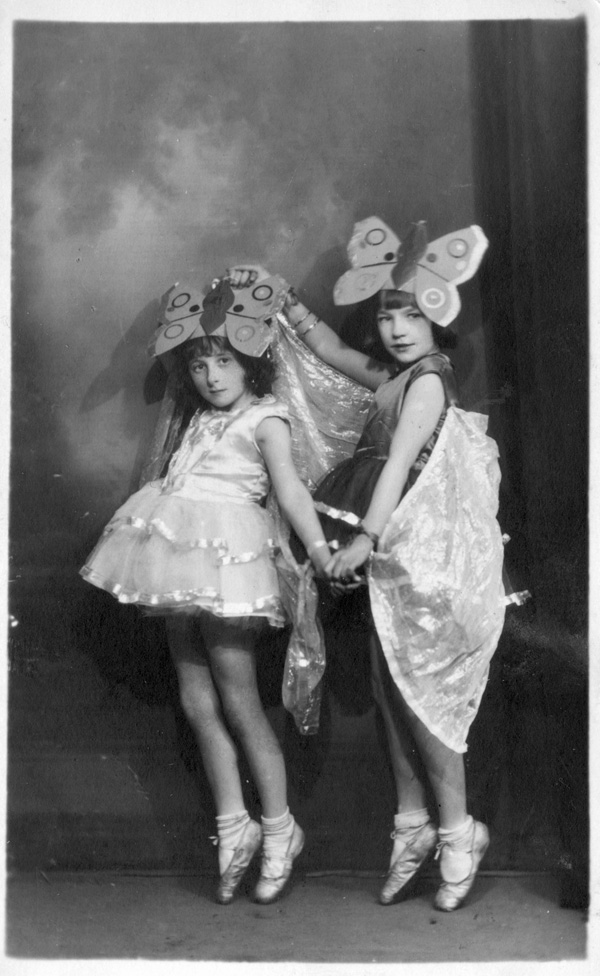
Friday, August 24, 2007

A pleasant surprise

For mom's 65th birthday, my brothers and I devised an elaborate plan for her surprise party. Our friend Steven, who is the stage manager for the Broadway show "Chicago!" would invite my mother and aunt to a benefit at an Italian restaurant in Bay Ridge, Brooklyn, featuring the entire cast of the show. Not only did mom not ponder that a Brooklyn restaurant was a little low-rent for a Broadway cast, neither did she wonder why the cast was playing hooky on a Saturday night. When mom walked in and saw her entire family, as well as friends whom she hadn't seen in many years, we knew we had pulled it off. The look on her face made the effort all worthwhile. My brothers and I had prepared jocular toasts to her, but by the end of each we had practically dissolved into a pool of tears.

At the time, mom's previous health problems were still rather fresh in our minds. She'd been through a stroke, a mastectomy, and a heart attack all within the space of a year while dad was slowly withering away in the hospital. The fact that she was still with us and he was not hit home the realization that maybe she was not long for this world, either. The tears were not so much tears of sadness but relief and celebration that she was still around.

Here we are, 5 years later, and mom is in better shape than ever. By staying active and eating better she's down to the weight she was at about 30 years ago. Her blood pressure and cholesterol are under control, and even her memory seems to be holding steady. Although it was minor, the mini-stroke she had a few months ago finally shook her up enough to make her quit smoking. When one of us suggested that she might want to go on the patch to make quitting easier, she said, "I don't want to put that crap in my body." These kinds of paradoxical statements endear her to people.

For her 70th birthday, my brothers and I devised another surprise party, this time much more low-key, at another Italian restaurant in Bay Ridge. This time there was no promise of a Broadway cast, just my aunt and uncle. Since mom's birthday fell on a Friday, she didn't suspect that 20 of us would all show up for dinner at 5:00 p.m. My brothers and I had told her earlier in the week that we would take her out for dinner on Sunday night instead, so that she wouldn't decline her sister's invitation.

I'd bought mom a Coach pocketbook, a simple black purse with a flap and a shoulder strap. I knew she would like the particular style. When she opened it at the restaurant, her eyes lit up. "My God," she said, "Eileen [my aunt] and I were at Macy's the other day and we were just talking about Coach." My aunt chimed in, "She said she really liked them but would never buy one for herself."

As mom struggled to blow out the 10 candles on her 70th birthday cake, Brian said, "Ma, giving up smoking is supposed to make your lungs stronger." She laughed, and I think she looked the happiest I've ever seen her. This time there were no toasts and no tears, just a simple dinner with her family. We know that mom still has a lot of life left in her.

Labels: , , ,


Continue reading...
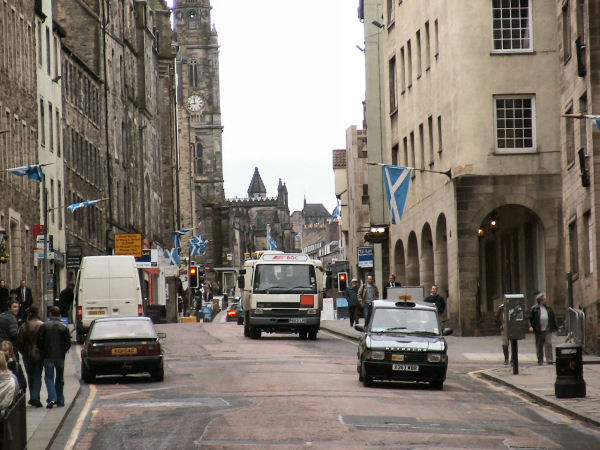
Sunday, June 24, 2007

When it's time to change...

I always thought it would be an affair, or a Maserati, or a wacky new interest, like skydiving, that would jolt me into a midlife crisis. I thought I had gone through one a few years ago, when I started hanging out with The Young, people 10 or more years younger than I who liked to stay out late and party. I went disco roller skating and ate hash brownies. I even bought some White Stripes albums for the occasion. But that was nothing compared to what I'm going through now.

In the past few weeks, I've gotten the sinking feeling that my real midlife crisis has been simmering for some time, like an unwatched pot, waiting to boil over. I can trace it back to my trip to Ireland last summer. For someone who had mocked his Irish heritage for pretty much 40-something years, finding my roots had an unexpectedly profound effect on me. A few months later, on my fifth visit to the UK, I spent 10 days in London with Andrea. It was like being in love again. In part my romantic notions had to do with discovering more about my identity. Getting my Irish citizenship in January opened a treasure chest of possibilities: Luis and I could get married, have free health care, get jobs, buy a house, travel. On my trip to London and Edinburgh in March, I met family I never knew I had. Pieces of the puzzle were starting to fall into place. I felt even more like I belong there. I felt connected. Since then, I haven't been able to shake the feeling that I want to be there. The trouble is, I don't know what to do about it. All I know is that the whole idea is weighing heavily on me.

I've always liked the Robert Frost poem "The Road Not Taken." When I was younger, I saw no urgency in it. If I started down one road and didn't like it, I figured I could always turn back and go the other way. When I was younger, time stretched out endlessly before me. I was in full control of it. I don't feel that way anymore. Time is in full control of me. Songs run through my head, like time won't give me time,, time keeps flowing like a river to the sea, and time won't let me wait that long.

I realize now when I read Frost's poem that there are actually many roads and many forks. Which ones you take depends on how much risk you're willing to face. Complacency and inertia are comforting friends once you're on the road. You get settled into your routine, you lead a comfortable life, everything becomes familiar and safe. Why shake things up? Why not continue along the road you're on and see where it ends? But what if that road leads you nowhere?

Last week I took a class called "Mastering Priorities," taught by Dr. Rick Brinkman. He's an Anthony Robbins type, a motivational speaker who gives strategies for coping with everyone's number one enemy: time. At first I thought the seminar would be platitudinous, but it was quite the opposite. Dr. Brinkman asserts that the key to mastering our priorities is understanding our values, like family, career, fun, friendship. Our values drive our goals, and our goals drive our priorities. If something is a priority and conflicts with your values, Dr. Rick says, it causes internal stress and you need to rethink it.

Coincidentally, this last point was raised almost verbatim in a tarot card reading I had last week, after I took the class. The reader, a stranger, said the cards showed me to be in a state of major change and upheaval. As a result, he said, I am experiencing a high level of internal stress, which is caused by my fear of what might happen if I make the change. The change, which will continue until next spring, will have a positive outcome, with a pleasant surprise involving my relationship. In the light of the inner turmoil I've been going through the past few months, the reading was as clear as day to me. Then why don't I feel any better?

I'm still looking into going to grad school, but I'm not convinced that's the answer to my angst. I have so many things to consider about my life in New York: Luis, my family, my friends, our building project. What would I lose? What would I gain?

I don't have the answers yet, but the weight of this feeling is as oppressive as humidity in July. Eventually something will give. I keep going back to the last lines of that Frost poem: "Two roads diverged in a wood, and I, I took the one less traveled by, And that has made all the difference." Maybe I need to go back to listening to The White Stripes.

Labels: , , , , , ,


Continue reading...

Tuesday, June 12, 2007

FAST thinking

"Mary Jane," my mother's doctor said a few months back, "you have to give up the cigarettes. You have a mild case of emphysema."

"I guess so," mom said, not really meaning it.

"I mean it," the doctor said. "Would you rather gain 20 pounds or be hooked up to tubes for the rest of your life?"

"Hmm," mom said, "I'll have to think about that."

That's my mother in a nutshell: strong-willed. Her spirit is indomitable; it's her body that doesn't want to cooperate. She is always concerned about her outward appearance. After a two-day hospital stay for a radical mastectomy in 1997, the first thing she did was get her hair and nails done. If only she treated her insides with the same respect.

After a stressful 35 years of marriage to my alcoholic, abusive, repressed father, coupled with 45 years of smoking and eating processed food, my mother's body rebelled against her about 10 years ago. A stroke left her without coordination in her left hand and a mild case of Bell's palsy. A heart attack followed several months later. Both of her carotid arteries were blocked nearly 100 percent, and she had surgery to clean them out.

As a result of the stroke, mom had to quit her job as a legal secretary and collect disability. She wasn't happy about it, especially since my dad, who at the time was paralyzed below the waist from a spinal infection and had various types of cancer, was home all day. Her misery was short-lived, though. Dad soon required full-time care and was moved to a nursing home.

Mom's stroke had another result: it impaired her ability to get upset. When my father died 7 years ago, she didn't shed a tear. At first I thought she was relieved over his death, but over time I realized that whatever brain signals controlled anger and sadness weren't getting to the rest of her body.

Despite all the evidence, the warning labels, and her own battery of serious ailments, you might think she'd feel like she'd been hit over the head with a giant frying pan and should change her lifestyle. It's true that dad's death was the biggest stress reliever, but other changes were needed: better diet, more exercise, and, of course, quitting smoking.

"Your aunt and uncle gave up smoking, and now look at them," mom said a few months ago, puffing on a Marlboro Light. It's hard to argue with her. My aunt gave up smoking, developed heart disease, and now has 9 stents in her heart. A couple of years ago she nearly hemorrhaged to death when given too many blood thinners. My uncle developed emphysema after he gave up smoking. So mom now brandishes proof that giving up smoking is bad for you.

For the past few years she's been getting a clean bill of health from her doctors. There's no recurrence of cancer or heart disease, but the brain isn't working like it used to. She doesn't remember something said to her just a few minutes earlier. To camouflage her loss of short-term memory, mom writes everything down. If I tell her I'm going out of town, I promptly get a call on the day I leave and another when I return. She doesn't know that I know about her notebooks. I admire her discipline and also worry about what she doesn't write down or remember.

My brothers and aunt and I have been discussing the warning signs that have been getting ever louder over the last 6 months. That's when mom's cardiologist told her that her carotid arteries were once again blocked, this time at around 40 percent. For years, mom has had a persistent, earth-rattling, hacking cough that we all pretty much ignore now because we've gotten used to it. Any attempt at getting her to quit smoking, or even cut down, is met with insouciance. "Eh, if I die, I die," mom always says. I remind her that she will not re-enact the death scene from Camille, that death from any ailment she might get will not be swift or glamorous. Apparently harshness goes in one ear and out the other.

I was in Manhattan on Saturday night when I got a call from my aunt.

"I don't want to alarm you," she said, "but I ran into your mother at church, and she said that she felt funny and couldn't hold anything in her left hand."

Not two hours earlier our friend F said he had just produced a show on stroke and the FAST method of detection. FAST stands for Face, Arms, Speech, and Time. You can tell whether someone may have had an episode by asking her to smile (look for droopiness), hold up both arms (look for weakness), and say "It's sunny today" (look for slurriness). If any symptoms appear, call 911. You basically have 3 hours from the time of a stroke to administration of a clot-busting drug called tPA. Our conversation couldn't have been more timely.

I promptly called mom, who sounded OK except for one thing: she sounded like she was speaking in slow motion. I couldn't tell if it was my cell phone or being on an insanely noisy street that made her not sound right. I was a little worried, but not enough to raise a warning flag. I figured I'd call her in an hour and see how she was doing.

About an hour later, I got a call from my aunt. My brother Brian had taken mom to the emergency room. Neither he nor my aunt liked the way mom sounded either.

Luis drove me to the ER, which luckily was not busy. Mom looked and sounded fine, but there was something a little off that I couldn't put my finger on. She'd already had a CT scan and was being administered oxygen. Her blood pressure was extremely high: 195/90. The nurse decided to admit her.

"I hope I don't miss The Sopranos," mom said before I left. "It's the last epidode."

I went to the hospital late Sunday morning. Mom seemed her normal self. Luckily her roommate was another feisty Brooklyn woman who'd had hip replacement. I spent a few hours in the room. Her doctor had been making the rounds in the morning and noticed mom's name on the door. That's how he found out she was in the hospital. The hospital had never called him to let him know. He was furious.

The doctor wanted my mother to stay for observation. He ordered an MRA, which tests for carotid artery damage. I was pretty convinced that the blockage had gotten worse in the past few months. I couldn't understand why the doctor had to wait for the blockage to get to a critical point before doing anything about it. Surgery was not really an option, because the risk of her having a massive stroke or heart attack was very high. But why hadn't he prescribed better drugs?

Mom returned home this morning. She had indeed had a transient ischemic attack (TIA), or mini-stroke. The doctor didn't even tell her that; my brother found out only because he works at the same hospital and looked up the records. The right carotid artery is blocked 100 percent, and the left is blocked 60 percent. She is now on Plavix and Lipitor to break up clots and thin the blood. Mom swears she has given up smoking and is now on the patch. But like all the times I've heard her swear to give up cigarettes, she didn't sound terribly convincing. She even let slip that she has to remember not to smoke while she's wearing the patch.

"Your mother and I had a nice long chat today," Luis said earlier. Mom tells Luis things she would never tell me. "She said she'd gone off Zocor a while ago, which she'd been taking to lower her cholesterol."

"What?!" I said, irritated.

"She said that was probably a bad idea."

"You think?" I said. My mother knows I would have yelled at her if she'd told me that.

I don't know what to do, really. Unlike many mothers, who would jump at the chance to win Best Actress in a Role About Disease for their children, my mother hides her ailments like a crazy person stuffing wads of cash in the mattress.

"The best, though," Luis said, "was when your mother said that the worst thing about being in the hospital was that she had just her hair done on Saturday, and now look at it."

If only that were the worst thing about being in a hospital, I might not be so concerned.

Labels: , , ,


Continue reading...

Sunday, May 20, 2007

Circles

How blissful he looks, I think, as I watch the priest mark little Derek's chest with chrism, a mixture of olive oil and balsam used to anoint one who is about to receive a sacrament. The next time little Derek is likely to have chrism applied is when he's about to die--the circle of life.

Derek lies peacefully in his mother's arms next to me in church. He sucks his thumb, oblivious to the priest's blessings and gestures over him. The creases on his tiny, shiny head move up and down as original sin is extricated from his soul. Later, my aunt says she "disagrees" with the removal of original sin, asking how a baby can be born with sin.

Original sin, I explain, remembering my ingrained catechism, is derived from the sin committed by Adam when he gave into temptation in the Garden of Eden. According to church doctrine, this sin (the "original" sin, not extra crispy) is passed down to all descendants of Adam and Eve.

"You know," Luis says, "like herpes."

I'm surprised my aunt doesn't know what original sin is. After all, she's my godmother, and one of the godparents' duties is to ensure the child grows up a good Catholic. I was both flattered and uneasy when my brother and sister-in-law asked me to be Derek's godfather. I'm not exactly the model Catholic, at least according to Pope "Eggs" Benedict. I've already got a nonrefundable one-way ticket to the Seventh Terrace of Purgatory.

So, when the priest asks us, the parents and godparents, to renew our vows of commitment to Jesus, I have to use reason, which the Church assiduously frowns upon.

"Do you reject Satan?" Of course I do, especially if he shows up at my house uninvited, but I'm not so sure the feeling is mutual.

"And all of his works?" Hmmm. I have to think about that one. Rosemary's Baby is one of my favorite movies.

Little Derek is abluted with holy water. It doesn't even faze him. Kim, his mother, says he probably thinks he's just getting a bath.

We stand at the altar, the parents, godparents, and Derek. The priest lights the baptismal candle and gives it to me to hold. Poor Jen, the godmother, gets the box the candle came in. As we witness the claiming of a newborn child who can't vocalize his thoughts by an agent of Jesus, I feel the hot wax from the candle drip onto my hand. I try to ignore it, but it keeps dripping. I remind myself that mortification is a Catholic's lot.

Poof! Original sin, all gone. Derek now has a squeaky clean soul. Over time it will get soiled and require a tune-up in the confessional, or in some cases, a therapist's office.

The ceremony is blessedly short, less than an hour. The reception goes on for about 4 hours. The reception is at an Italian restaurant called Marco Polo. Its stone facade and tinted windows are forbidding. I've always thought it was the kind of place I'd get whacked in if I went in.

The room upstairs has a stained glass skylight, reminiscent of the Sistine Chapel. Godfather. There are about 10 tables and 100 guests. I wonder to myself when events like christenings and communions became extravaganzas. Even when I graduated from high school the most we had was a close family lunch at a catering hall in Flatbush. Now it seems every milestone in a child's life is accorded the same importance as a wedding: a sit-down dinner, a DJ, and a big-ass cake. The only difference is the clown.

With about 20 kids under the age of 11 in attendance, it is only fitting that they be entertained during the event. I just wish they hadn't had to have a clown. Clowns scare the bejesus out of me. This one looked like something out of the Uncle Floyd Show. (You will only know this reference if you are 40 or older and grew up in New York or New Jersey in the 1970s.)

It's not encouraging when you see the clown getting drinks at the bar, but I had to sympathize. Facing 20 screaming kids hopped up on sugar calls for something to take the edge off.

My brother Brian comes over to the table and asks me if I have a speech prepared for the champagne toast. I look at him as if he'd just told me he had ax murdered Kim. It would have been nice to know about the champagne toast beforehand. Again, I wonder when (and why) these enormously expensive events became the norm.

I tell Brian that I'll be happy to make a toast. My mind goes blank. Do I thank the Academy for giving me this honor? Or do I talk about the groom's wantonness? Oh, right, christening. Luis tells my family that I am thrown off and will need to go home and get my computer. He knows me too well. In the end, I decide to wing my toast. But first, I drink several glasses of white table wine that tastes like furniture polish but delivers the buzz.

"For those of you who don't know me, I'm Brian's brother Kieran," I say. "This is probably the first time this restaurant's seen an Irish godfather. [Laughter, thank God.] I'm so happy for Brian and Kim and very honored that they chose me to be Derek's godfather. I'm very lucky to be blessed with three beautiful, wonderful nephews. And I'm even happier that I can visit them, spoil them, and then go home at the end of the day. [More laughter. Whew!]"

The clown disappears and is replaced by a short Latina DJ. She gathers all the kids in the middle of the room and starts playing music games: Name That Tune. Hot Potato.
Freeze Dancing. Little Tytony, who turned 4 a few weeks ago, looks so handsome in his little tie, shirt, and pants with his hair slicked into a 1950s newsboy style. He is so excited by all the activity, he doesn't know what he's doing so he jumps up and down a lot. He grabs another little boy's hand as a dance partner but doesn't get the concept of rhythym or tempo. He just looks like he has ants in his pants. It takes several verses of the Chicken Dance before he realizes he's supposed to flap his arms like wings and move his fingers like a beak. During "YMCA," Tytony loses complete interest. I tell Brian that he has no worry--little Tytony will not make it as a homosexual.

We're served an antipasto of stuffed mushrooms, baked clams, and fried zucchini. My mother and brother eat the clams and ask me if I want the rest. God forbid anyone in my family touches a vegetable or a fungus.

Floating above the tables are blue and white balloons bearing Derek's name. Each table has homemade sugar cookies shaped like a crucifix. We gave them to our Jewish friends when we got home.

The final reminder of the occasion is a giant cannoli cream cake shaped like a cross, bearing the icing inscription "God bless Derek." I hold Derek as pictures are taken. He looks up at me and smiles. I smile back. He is definitely making eye contact. I'm sure he thinks I'm his father, but he's probably smiling because he has more hair than I do.

When we get back to the table, my brother Liam starts asking me about my "hair."

"What are you holding on to those patches of hair for?" Liam says.

"What do you mean?" I say.

"Afraid to go all the way?" he says. Liam shaves his head completely.

"I never really thought about it," I say.

My cousin John, who is also completely bald by his own choice, joins in the fray. "Oh, come on," he says, "do it."

I look at Luis, who has had a few glasses of wine. "Maybe you should try it," he says.

I suddenly feel self-conscious. Have I been deluding myself that my fuzzy-wuzzy head looks good? Is there a crater-sized crown deficiency I don't know about. I decide that I am going to go home tonight and shave my head to the shiny core. Only, I am starting to get a headache from the wine. Maybe tomorrow is soon enough.

The DJ is making cotton candy for the kids. More sugar! Mainline! Mainline! Just in time for the previous sugar rush to wear off. Tytony is spinning around in the middle of the floor like a toy with self-charging batteries. Little Derek is peacefully sleeping in his mother's arms, oblivious to the racket around him. My headache is getting worse and my eyelids are getting heavy. Luis and I say goodbye and leave Marco Polo, which has been demystified. I'm not going to get whacked after all. We go home and pass out from the sugar, bad wine, and maelstrom of child activity. In my dream little Derek is smiling at me, looking at my fuzzy bald head. Free from original sin, I think.

But not for long.

Labels: , ,


Continue reading...

Saturday, March 24, 2007

Two worlds

It sounds like something out of a Christopher Guest movie: My cousin Sandra manages a talent agency for identical twins on the second floor of an industrial building in the Colindale section of London. Her husband operates an auto body shop on the first floor; adjoining that is a cafe run by my cousins Colette and Shonette. The cafe has a Route 66 motif, with a hand-painted mural on the wall showing the road from Chicago to LA. The wall is dotted with US license plates, Elvis posters, and other American memorabilia. I asked my cousins how they'd acquired these things. "eBay," said Shonette. "Pretty much all of it." They have never been to the United States.
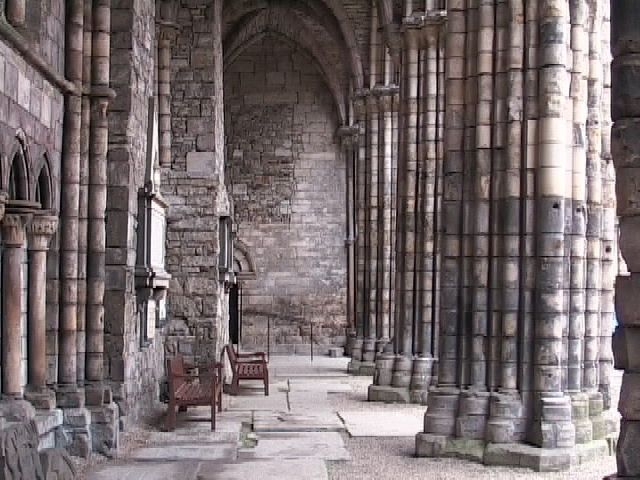
I'd spent the day after our Mother's Day dinner with my cousins at the cafe. Business was slow, so I got to chat with them a lot. We hit it off very well. Sandra has a large client database. In fact, many family members are in it. They all appear to have been on "EastEnders," the enormously popular British soap that at one time I was addicted to. Sandra said her biggest problem was getting paid. "Sometimes the companies ask for twins," she said, "thinking they'll get two for the price of one. What a load of rubbish."

I made fast friends with Sandra's adorable 5-month-old pug, Muffin, which I proclaimed the British cousin of our friends Eric and Sheri's pug Donut. Donut and Muffin sound like a breakfast combo.

Speaking of breakfast combos, Colette made me a nice English breakfast of poached eggs, sausage, and beans. I don't know why I never eat beans for breakfast; they taste so good with eggs.

"Will you be going to mum's this afternoon?" Shonette asked, referring to her mother, my Aunt Gladys.

"Yes," I said, "she said to come over around 3."

"I'll be happy to drive you," she said. "I live right up the road."

Aunt Gladys's daughters live within one or two miles of her. They are all pretty close. Aunt Gladys lives in a wonderful Victorian house in Westminster that she and her husband bought in the 1960s. One of their sons, Ronnie, is a Shakespearean actor, obviously with a wry sense of humor. The house number is 2, and the house next door is 2B. People confused the two, so Ronnie had "(not 2B)" painted under the 2. Chuckle chuckle.

At 83, Aunt Gladys is still sharp. She was eager to show me her photo album, a veritable goldmine. I never saw many pictures of my grandfather because my grandmother destroyed whatever she had. Aunt Gladys had pictures of my grandfather as a young footballer in Dublin and as a passenger on the boat to New York with a friend of his. I definitely saw a family resemblance in some of the photos, especially to my Uncle Willie, who was a very good-looking man. Photos of Aunt Gladys's mother and brothers showed them at various ages.


"These are outfits that my father sent back from America for us," Aunt Gladys said, pointing to a smart little dress she was wearing in the photo. As I understand it, my grandfather sent money and clothes to the family regularly. It was only after he met my grandmother that he gradually, and then abruptly, stopped supporting them altogether.

"He was very generous," she said. "My mother always forbade us from speaking ill of him." She thought for a minute. "Really, if anyone is to blame, it's her. She just didn't want to leave her mother and sisters and go to America....So, there you have it."

More photos, of a young Gladys in costume, performing in a Dublin production of "Little Red Riding Hood" in the 1920s, another of her in dance costume with another little girl, some other photos of Aunt Gladys and her brothers at various ages. "I helped support the family," Aunt Gladys said, without the slightest hint of bitterness. I asked her if she missed those days. "Yes," she said a little wistfully, "very much."

Besides her son Ronnie, Aunt Gladys lives with her daughter, also named Gladys. It turns out that Gladys Junior, as she called herself, and I had something in common. My cousins had told me beforehand, but I don't think I would have had to guess upon meeting. Gladys Junior made some punk videos in the 1980s, as she said, "for ourselves, just for fun." Now in her early 60s, Gladys looks more like a docent than a denizen of CBGB's.

As I had done with Colette, Shonette, and Sandra, I asked Aunt Gladys and her daughters to record a video greeting for my mother and aunt. Their comments were touching and sincere. Afterwards I kept thinking about the asshole priest in the 1950s who insisted that the two families never meet. I hope that Ellie and Mary tracked him down in the great beyond and gave him a piece of their minds.

On my way to the Tube station, Gladys Junior walked part of the way with me, headed to her favorite pub. "It was a pleasure to meet you," she said, and added, "And I'm very glad about your persuasion."


****************************

On Saturday I walked into the cafe and thought my LASIK surgery had gone haywire. The cafe was filled with identical twins. Cousin Sandra was doing her first day of commercial headshots for her clients, which she plans to use on her agency Web site. There were lots of infants and toddlers, as well as a pair of identical twin mothers in their late 30s, dressed in matching outfits. "Aren't they a bit old for that?" I asked Colette. "A bit strange, isn't it?" she said. "I wouldn't even do that for a 2-year-old." While waiting for my lunch, a man came up to the counter to order food. Shonette recognized him from a previous visit. She introduced me to the man, whose name was Tim. He was a striking man, late 40s about 5'10" with dark hair and Mediterranean features. Shonette told him I was her cousin visiting from America. Whenever someone says, "visiting from America," I automatically think of Rula Lenska, who did Alberto VO5 commercials in the 1970s. (Note: If you are under 40 you will have not the slightest clue what I just said.) Tim was very excited that I was from New York and started asking me all sorts of questions. He was quite a character, and when I turned away to get my food and turned back, suddenly there were two of him. "This is my brother Met," said Tim. Thankfully they were not dressed exactly alike, so I had a chance at telling them apart. I sat down with them at their table. Met and Tim are Turkish, both from London, married with kids. Tim is a park ranger, Met a school counselor. They've done some television and photo shoots, including a session in Scotland for a German commercial.

"We went to New York for a charity event a few years ago, after 9/11," said Tim, who sat on my left.

"It was at a restaurant called Twins," Met said. "Ever heard of it?" Yes, I said, I had.

"New York was such a blast," Tim said.

"We got stopped by an officer, one of these real New York types," Met said, perhaps forgetting he was talking to a New Yorker. He adopted a bad New York accent: "Whaddayas doin' heah? This ain't no part of town for you to be in." Frankly I've never seen a police officer tell anyone they were in the wrong part of town. But this was right after 9/11, and they do have vaguely Arabic features for Turks.

I was sitting in between the guys and got used to the ping-pong effect of finishing each other's sentences. There was no break in the conversation, but they were fascinating to watch.

"Have you ever been to LA?" I asked.

"Once," Met said.

"What do you think of it?" Tim asked.

"Hate it," I said, twisting my mouth. "Nice weather, but very plastic. California built a fence around irony and won't let it enter, not even illegally."

"My wife is from California," Met said.

"Oh." I said.

"But she says the same thing."

Both men had been married a long time. "Do you guys ever switch with your wives just to see if they're paying attention?" I asked.

They looked at each other, as if the idea hadn't occurred to them. "No," Met said. "He's a bigger pain in the arse. Our wives would know." Tim threw a napkin at him.

We exchanged e-mail addresses in case they were ever in New York again. About a half hour later it was Tim and Met's turn to get their headshots taken. I went back up to the counter to talk with my cousins.

"Those two are characters, aren't they?" said Colette. I nodded. "Nice enough," she added, whispering, "But real Hollywood types, full of themselves."

The cafe was empty of twins, leaving the cafe to me and my cousins, two families united by one man, now no longer strangers from two different worlds.

Labels: , , , , , , , ,


Continue reading...

Thursday, March 22, 2007

The Royal Mile

Walking in Edinburgh is like being on a Stairmaster. You can build kickass legs and a killer butt (that is, if you don't already have them).

On my last day in bonnie Scotland, after breakfast on the Royal Mile, I walked toward the east end to Holyrood House, the official palace of the Queen in Scotland. You know the Mike Myers character who owns the store All Things Scottish and whose motto is "If it's not Scottish, it's crraaaap!"? Well, I'd have to submit one exception: the new Scottish Parliament building, built in 2004. Personally, I think the it looks like a 1970s train station. As I was standing in front of it, Niamh text messaged me: "Throw a rock at Parliament for me."

I replied, "I know. It's really ugly."

Later, I learned that she meant that, like many Brits, she feels the parliament (both building and legislative body) is a whole lot of nonsense and a waste of money. In 1998 the Scottish people voted for devolution, and this was what they got.

Niamh had a reason for her disdain. The issues of nationalist pride and cultural uniqueness in the UK and Ireland have recently been challenged by a discovery by geneticists that the British, the Irish, the Scots, and the Welsh all share the same DNA. The Picts, Celts, Angles, Saxons, Romans, and Normans didn't have as much of an impact genetically as once thought. The writer did point out, though, that this implication "seems likely to please no one."

I took an audio tour of Holyrood Palace, which has a stately Victorian feel to it. I'll take classical architecture any day. Many school groups were visiting the palace. I was continually trying to beat them to the next room. One of the tours had at least 50 teenagers. The boys goofed on the portraits and furniture, something I'm sure I did at that age. I could understand their goofing, since the Stewart men were not a good-looking bunch. There's a whole gallery of 89 portraits of Stewart monarchs that were commissioned by Charles II. The painter, Jacob de Wet, imagined what some of the early rulers looked like and pretty much made them all look alike to emphasize the prominence of the family. Especially after having just seen The Queen, I was interested in how the palace operates, what guests are permitted to see and how they use the grounds. The gardens are not yet open, but they are supposed to be spectacular in the late spring.

Like a delectable sticky toffee pudding, I saved the best for last: Edinburgh Castle. Walking from the palace up the steep Royal Mile (which is actually 1 mile, 110 yards) to the castle requires a good set of lungs and strong legs. I thought the Rock of Cashel in Tipperary was impressive, but I think the castle might trump it. For centuries it has served as Edinburgh's garrison and could be used at a moment's notice to protect the city from invasion. It's a self-contained city, with prisons, lodging, a chapel, and administrative headquarters. It houses a mammoth cannon called Mons Meg, which could propel a 400-pound cannonball almost 2 miles! The castle exhibits chronicle the long royal history of the Stewarts (or Stuarts if you're French) and the strategic role played by Scotland dating back way before Christ. Unlike other cities, which bury or demolish their past, Edinburgh honors it. Although some modern buildings, such as the Scottish Parliament and the new St. James shopping center, have appeared, you get a real sense of history and time by walking virtually anywhere in town. Buildings are given new identities. My cousin John said that if you buy a property in Scotland, there's little you can do to it. If the original windows, for instance, are not double glazed, you can't upgrade them.

One interesting thing I learned at the castle is that historically imprisonment was not considered a form of punishment. This was particularly true in a military prison where time not spent doing drills was considered idle. Prisoners awaited their punishment, usually torture or flogging. I wonder what happened if you liked that sort of thing.

I had lunch at Cafe Hub, located in a building that once housed offices for the Church of Scotland, designed by architect James Gillespie Graham, who also designed St. Mary's Cathedral, where my great-grandparents were married. The menu had the ubiquitous haggis with tatties and neeps . Though my friends tell me that haggis nowadays is largely oats, the idea of eating organ meats doesn't thrill me. My grandmother made haggis but never forced it on me. Whenever she and my uncle ate steak and kidney pie or calves' liver, I'd just about have to run out of the room from the stink. So I had a prawn salad instead.

I thought I'd given myself plenty of time to get to the train station, but by the time I got back to the hotel to pick up my bags, I realized I had a 15-minute walk ahead of me. My shins were already aching from the steep hills of the Royal Mile and the castle. Laden down with some overnight bags and newly acquired souvenirs, I marched up the hill to the station. It was about 40 degrees out, and I was sweating, but I made the train.

As recently as 2 years ago I had absolutely no interest in my ancestors, or where they came from, or who I am. But all that's changed. Trips like this have changed me.

Labels: , , , , , , , , ,


Continue reading...

Wednesday, March 21, 2007

What's afore ye canny go past ye

The Scottish sun streamed in the hotel window, gently nudging my eyes awake. I got out of bed and looked out the window as the sun rose over Edinburgh Castle. Normally at 6:30 a.m. my eyes would be sealed shut, but the castle, set on a massive bed of volcanic rock, is as inviting at daybreak as it is forbidding at night. I watched the sun rise for about 15 minutes before a car horn from the street below jolted me from my reverie.

After breakfast on The Royal Mile at Always Sunday--Scottish smoked salmon (which I can never have enough of), scrambled eggs, walnut bread, and tea--I walked over to St. Mary's RC Cathedral, where my great-grandparents James Boyle and Mary O'Donnell were married in the year 1900. When it was built in 1886 the cathedral was a sign that times had changed. Earlier Catholic chapels had had been attacked and burned down by anti-Irish, anti-Catholic mobs. With the erection of St. Mary's, Catholics could finally practice without fear of reprisal.

Cousin John picked me up at the hotel and we drove out the M8, which travels due west to Broxburn and Uphall. Broxburn is known for two things: Glenmorangie whiskey and mining, specifically, coal, iron, and shale. As we approached Broxburn, what look like a series of reddish hills rose in the distance. Those hills are called shale bings. Although they are pretty, they are nothing but a heap of waste. Before the US oil boom, in the mid-19th century Glaswegian chemist James "Paraffin" Young found a way to extract oil, or paraffin, from shale and use it in products ranging from lighting and heating to industrial lubricants. As a result of his discovery, the shale mining industry sprang up in Broxburn, and where virtually nothing existed before, a company town now lay. Rigs were installed and row upon row of miners' cottages were built. That boom was the impetus for the emigration of my grandmother's farming family, the Boyles, from Donegal to Scotland in the 1880s. Almost all of my male Boyle relatives who left Glenties, Donegal, at that time moved to Broxburn or neighboring Bathgate. My great-grandfather James Boyle was a shale miner, as was his twin brother Neal and his other brothers Dennis and Patrick, also twins. My grandmother, Nanny M, was born there in 1904. Her family and all the Boyle brothers lived in a miners' community called Holygate. Nanny attended the local church, SS John Cantius and Nicholas, and school across from her house. Shale mining was hard work, but the men earned a good living. The good times, however, didn't last forever. By the late 1920s the boom was over, falling victim to the lower cost of petroleum, and many of the Boyle men went to America to look for work. Unfortunately, their arrival coincided with the onset of the Great Depression.

Before mining, shale is blue. Once the oil is extracted, all that remains is rock, which turns reddish from the high concentration of sulfur beneath it. Ecologists have found the bings valuable as study sites for wildlife habitats and vegetation, but there are also environmental hazards. Waste materials seep into the groundwater and have the potential to ignite. Following the European trend of greening--at which Europeans are light years ahead of the US in that area--the Scots have begun reclaiming the bings. The rock, which is useful in road laying, is being blasted and shipped to countries like Germany.

As we drove down the main street into Broxburn, which stretches about half a mile, John said the area is undergoing a period of rapid growth and even expansion, as Edinburgh becomes larger and the surrounding areas become bedroom communities. Broxburn is only about 12 miles west of the city and lies on the main road into town. That makes it attractive to commuters, and since the road continues west to Glasgow, even those who work there find it a viable place to live.

"That's the house your grandmother was born in," John said. John has a strong Scottish burr that sounds just like my grandmother's. John is my mother's first cousin (or my first cousin once removed, if you like), now in his 60s and retired. He was an engineer for British Petroleum for many years and lived 10 years in Saudi Arabia. "It used to be One Society Place," he said, "but now it's a completely different road and house number." I tried to picture Nanny M and her 7 brothers and sisters living in this one modest cottage in Holygate. "See that shed?" said John, pointing to a row of recycling bins. "That was my father's garden at one time."


Without John I wouldn't have had a clue where to look. SS John Cantius and Nicholas Church is still standing after more than 100 years. Everyone in the family was baptized or married there. We went inside and had a look around. Compared with other Catholic churches it's simple.

"The school where your gran went used to be right behind the church," said John. "But that's all gone. It's all row houses now."

"Could we go to the cemetery?" I asked. I wanted to see where my great-grandfather was buried.

"Of course," he said, "but I have to tell you...there's no headstone."

"Really?" I said. "What kind of marker is there?"

"Well," he said, "there's nothing. I only discovered it recently because I got a space in the family plot and went to check it out. I'd never visited before."

At Uphall Cemetery, off East Main Street, indeed there was no headstone, only dirt.

"I don't know why there's no headstone," John said. "I just think there was no money."

Broxburn is named after a canal (Brock's Burn) that runs parallel to the main road. It's still there to this day.

John asked what else I'd like to see.

"Nanny always used to joke that she was the other Mary, Queen of Scots. Is Linlithgow Palace far?"

"Oh not at all," he said. "It's just a wee bit up the road."

We drove through Winchburgh, which also has shale bings, to Linlithgow. For many years Linlithgow was the county town. Now all the government buildings are being moved to Livingston, a new town (or planned community as it's known in the US), about 15 miles south of Broxburn.

Linlithgow Palace, where Mary, Queen of Scots was born to King James V and Marie de Guise in 1542, is a modest building for a royal residence. It now lies in ruins. Mary never saw her father, as he was across the Firth of Forth in Fyfe at the time of her birth and died 6 days later, at which time she became queen (with a regent, of course).


After Linlithgow we drove to South Queensferry, which overlooks the Firth of Forth, and is spanned by the spectacular Victorian Forth Bridge. We ate at the Hawes Inn, where Robert Louis Stevenson was inspired to write the novel Kidnapped. The inn still had the character of an 18th-century public house but is clearly a modern inn. I had a ploughman's lunch of ham, cheese, apple, tomato, and chutney.

John drove me back to Edinburgh along the busy motorway. When I was a wee lad, Nanny M always told me stories of Scotland. In my mind it was romantic, misty valleys and tall green hills with fortresses and, of course, the Loch Ness Monster. And it is, in some ways, romantic. Now, though, as elsewhere, history is being paved over. But, as Nanny M always used to say, "What's afore ye canny go past ye."

Labels: , , , , , , , , , ,


Continue reading...

Monday, March 19, 2007

Blood is thicker than Guinness

I arrived at Neasden Tube station about 2:15. Anne-Marie was waiting for me outside the turnstiles. I had no picture of her in my mind. I'd asked her a few days earlier her how I would recognize her, but she remained silent. She's about 5'3" with long ginger hair, and we're about the same age.

We walked along the road to the Blarney Stone pub where we were having Sunday dinner. Even though we'd never met I felt like I knew her. She was as sweet in person as in her e-mails.

"I can't help thinking," I said, "that Mary and Ellie had a hand in this."

"I think you're absolutely right," she said. "I think they've met and given poor Fred an earful."

It's interesting to speculate that if there is an afterlife, you might have to spend eternity with those you wronged in this life.

It was Mother's Day in the UK. I brought Aunt Gladys a bouquet of pink and white mums and carnations.

Neasden, formerly a strong Irish enclave in London, is now a potpourri of nationalities, including North African, Indian, Korean, and even Brazilian. You wouldn't know it from the noisy and crowded pub, which was still virtually all Irish.

All of the family members live within several miles of each other, just like my family in New York. First to arrive was Willie, Anne-Marie's husband, to whom Anne-Marie said I bore more than a passing resemblance, and their sons, 15-year-old Ronnie and 18-year-old William, who is an amateur boxer.

Sandra and her daughters Cassandra and Sandy came next, followed by Shonette and her son James, and Colette and her daughter Alex, who brought Aunt Gladys. As soon as I saw Shonette, I saw the family resemblance to my aunt Eileen.


Left: Shonette, me, Sandra
Right: Anne-Marie, Alex, her mother Colette. Gladys, me, Sandra


Left: Me, Sandra, Anne-Marie
Right: Gladys and me


I felt immediately welcome. Everyone wanted to buy me drinks. I think I had three pints of Guinness the whole night. I know it sounds cliche, but I felt like I'd known them all my life. It was like fitting pieces of the puzzle being together to make the picture make sense. I sat between Aunt Gladys and all the daughters and Anne-Marie. They all knew about Luis since I had told Anne-Marie in an earlier e-mail about him. None of them were even the least bit surprised or bothered; in fact, they were disappointed that he was not with me.

Aunt Gladys was very interested in my mother and aunt and was hopeful that she would meet them. She'd had both hips replaced in the last year, and at 83, she was worried about a long trip. No one in the family has ever been to the United States, so unfortunately, many of them still picture New York as a crime-ridden ghetto. I said that such places existed but that they should come see for themselves. Cassandra, who's a very pretty teenager, wants to come to New York to try modeling.

The family, it turns out, has been heavily involved in show business, starting with Aunt Gladys. At the age of 3, she started performing in theaters in Dublin with famous Irish comedian Jimmy O'Dea, who, sadly, is probably best known for playing King Brian in Darby O'Gill and the Little People. Gladys was quite the stage performer. There's a wonderful photo of her in a Mother Goose production. She was like an Irish version of a Busby Berkeley showgirl.

Gladys's son Ronnie is a Shakespearean actor, while daughter Gladys is a video artist. Sandra is a well-known talent agent for identical twins in the UK. She's lining up twins for a new Ewan MacGregor film. Shonette has appeared in re-enactments for documentaries, and Anne-Marie and Willie's son Ronnie played a body double in the Johnny Depp movie Finding Neverland.

Our dinner was slow to arrive. The pub had just changed ownership, and the new owners had not anticipated such a large turnout for Mother's Day. So it took almost 3 hours for the food to arrive. I'd already had two Guinnesses, and my gastrological clock was off by many hours, so it didn't bother me. I was having a great time. My camera decided to die, so my cousins took some photos. You'd never really know we'd just met.

"I would really love to meet Mary Jane and Eileen soon," Aunt Gladys said. I told her that they, too, would like to meet her. She gave me a bag with a gift each for my mother and aunt, a decorative plate that says "Memories of Ireland." I thought of the letter Nanny M wrote to Gladys in the 1950s, to keep remembering Fred as he was and not to judge, because after all, all that is left is memories.

Labels: , , , , , , , , , ,


Continue reading...

Sunday, March 18, 2007

Top it off

"May I top that off for you, sir?" said the attendant, refilling my glass with Charles Hiedsieck Brut champagne as I reclined in my business class seat, my cloth napkin spread on my lap. The lunch appetizer was gravlax with mustard, a fresh fruit salad of grapefruit, melon, and grapes, and a spot of tea. I thought I must be dreaming, considering my situation 12 hours earlier, but I looked out the window at the clear New York sky and realized I was not. I was in heaven.

"Taking off," I text-messaged Luis. "Ta!"

Without my even asking, British Airways upgraded my seat to Club class. I'd flown it only once before, when Luis and I were returning from London and had been upgraded due to a BA error. If I could afford it, I would fly that way all the time.

While on the ticket line, a young, attractive Asian man, probably Indian, explained to me that he absolutely had to get on the next flight out. He was in mergers and acquisitions, you see, and was in the middle of a particularly difficult acquisition. He'd called a meeting of his staff, family men who otherwise wouldn't have had to work on Saturday, and he felt a sense of shame for not being there. To prove his point, he had strategically placed his three bags all along the ticketing line, trying to be in three places at once. Asking us to hold his place in line, he insinuated himself up to the ticket agent, and whatever he did, he got his ticket processed and bags checked and off he went through security. I was a bit awe-struck by his nerve, and even more so that he managed to pull it off.

I perused the brunch menu and decided on a full English breakfast of sausage, eggs, ham, tomatoes, potatoes, and mushrooms. All I'd eaten in the past 18 hours was a sugary muffin and an insipid yogurt and very little water, so massive amounts of protein were welcome. After brunch, served with real linens, silver, and china, I enjoyed a couple of chocolates and champagne. I felt like a rap star.

The attendant, Pascal, who had a mild case of Graves's disease, asked me how I liked my Mac. He was thinking of getting one to produce video. He was a far cry from the frosty British attendant I had back in coach class on the other flight.

After brunch I slept, a deep sleep that lasted several hours. It would not have been possible without the fully reclining seats. No one was sitting in the adjoining seat, and most of the other passengers had been on the same flight as me, or worse. One man I spoke with was supposed to fly out of Newark the previous night. His flight got canceled and he had to stay the night in Secaucus (shudder!), then take a taxi to JFK to get on this flight so he could make his connection to Israel.

Before I knew it, an attendant was announcing our imminent arrival.

"We will be landing at London Heathrow Airport in the next 20 minutes. Passengers on this flight who are making connections to other flights should proceed to our Flight Connections Centre, where staff who are aware of your situation will help you with the necessary arrangements."

This was quite a switch from the earlier chaos at JFK. I chuckled. The British girl on the ticketing line who complained about missing being home in her pajamas was silenced by a Joe Pesci-like BA employee who said to her in as jovial-but-fuck-you manner as possible, "You know if this was London and there was even a little snow on the ground you wouldn't be standing on line at the airport...so we're tryin' to do the best we can."

As a final meal I had Scottish salmon with chive and sour cream potato salad, topped off with a slice of cinnamon apple crumble, and another cup of tea.

The plane landed at Heathrow at 12:55 a.m. Because it arrived after curfew, the plane had to be towed to the gate. The first tractor that came out broke, so we had to wait 20 minutes for another tractor come out. The baggage carousel also broke, and we had to wait for another carousel to open up. At that point, there was nothing to do but shrug.

While at the baggage carousel, I ran into the young Indian man who had pushed his way ahead of everyone.

"Ah, I see you made it," I said. "Did you get upgraded to business class too?"

"No," he said, "I was in business class on the previous flight and they downgraded me to coach." I think Murphy might have had something to do with that.

The only way to the city from Heathrow in the middle of a Saturday night is by taxi. I waited about 20 minutes for a cab. It's about an hour's drive to Islington from there, and the fare was £65 (about $130).

Thanks, Murphy. You had to get that last one in right at the tail end of St. Paddy's Day. But you didn't break my spirit. I raised a glass to you--not porter, but champagne. I arrived in London safely, Nanny M. Just so you know.

Labels: , , , , , , , , ,


Continue reading...

Friday, March 16, 2007

Let me fly!

Is Nanny M trying to tell me something with this treacherous weather? I have been so hopped up about my trip to London I dreamt about it for days. Anne-Marie invited me to Sunday dinner with the family in the Blackbird Hill section of London at a pub called The Blarney Stone. Sunday is Mother's Day in the UK. Aunt Gladys will be there, as will many of my unmet cousins. I am excited, nervous, and choked up all at the same time. I'm not exactly sure why the last, but I suspect it's because of everything I've learned. If I hadn't done all this research and gotten to the core of things, this would be just another trip.

I'm taking the train up to Edinburgh on Tuesday. I'll visit my cousin John and tour around Broxburn and Uphall, where Nanny M was born and raised. I plan to stay there a few days in the city. I can't wait to see Edinburgh Castle and Loch Lomond and the Highlands. If I'm lucky, maybe I'll even see Brigadoon.

So, Nanny, did you help plot the ice storm that's raining down on New York at the moment? Are those your frozen, bitter tears hurtling down from the heavens, telling me not to go? I've come this far. I want to see the heather on the hill.

So far the plane is scheduled to leave on time. Luis is driving me to JFK in a couple of hours. I hadn't expected this would happen on the day I planned to leave, but then so much has happened that I hadn't expected. It's all about the journey, anyway, isn't it?

Labels: , , ,


Continue reading...

Tuesday, March 13, 2007

Waves

My grandmother, or Nanny M as I called her, has been dead now almost 25 years. While my parents worked, she raised me and significantly shaped who I am today. My cousin Denise and I believe that Nanny M guides us on our journey through life. There have been too many signs and too many fortuitous coincidences to chalk up to luck. Now that I've established contact with the other family of her deceased husband, the feeling that she's guiding me is stronger than ever.

I haven't written for the past few weeks because there's been a lot to digest, a lot to let go of, a lot to look forward to. My liaison with the family, Anne-Marie, Gladys's daughter-in-law, has been the perfect medium between us and Gladys. She has handled a delicate situation with nothing but grace and tact. For more than 60 years questions have remained unanswered, truths have been muddied, facts twisted. Many of the players are dead and buried, but for the living the legacy of betrayal and duplicity has persisted like a black cloud unable to rain.

Anne-Marie started the conversation by sending me a picture of Ellie (my grandfather Fred's first wife), Gladys (his daughter by Ellie), and one of Gladys's daughters. After Fred left Ireland, Ellie raised the three children by herself in Dublin. Ellie was 98 years old when she passed away. At the age of 3, Gladys was singing and dancing in theatres all over Ireland, working with a famous Irish entertainer. For many years she worked three shows a day at the Gaiety and Theatre Royal in Dublin, helping to keep the family, earning as much as ten pounds a week. She even worked with Mickey Rooney.

In another exchange, I found out that Gladys had 7 children, my half-first cousins. At some point the family moved to London, and Ellie moved there too to help look after Gladys's children, just as Nanny M helped raise me. Gladys was excited about our connecting and even toyed with the idea of coming to New York to meet us. At 83, though, Anne-Marie related, the trip might be too much for her.

With each new e-mail Anne-Marie sent, I learned more and more about the family. Gladys had letters from Fred to Ellie, diary pages that my great-grandfather Samuel kept during the Boer War, photos of my grandfather and my great-grandparents. It seems that Gladys, like me, is a sentimentalist. I like that about her.

The e-mails were coming steadily for a while. And then, they stopped. Days went by, and I started to worry. Maybe someone had died. Or maybe I had said something to offend them. After all, I had referred to my grandfather as a cad, and maybe they didn't like that. But weren't they the ones who had been wronged? Six days later, I sent an e-mail to Anne-Marie, asking if everything was OK. My aunt, my mother, and I had been hanging on every word she wrote. They waited 60 years for this, and now there was nothing but a pregnant pause in cyberspace.

Finally, on the 10th day, Anne-Marie wrote to say that she hadn't been feeling well. She'd put a hot water bottle on her feet and it had exploded all over her legs, causing them to blister. She was bedridden for the better part of a week. She apologized for being out of touch. I felt bad for her, but I was relieved that we were in touch again. This is what I mean about a delicate situation.

The next e-mail Anne-Marie sent was shocking. In it, Anne-Marie transcribed a letter my grandmother had written to Gladys 6 years after Fred had died. The letter was in Nanny M's hand, dated Sept. 23, 1954. My grandmother told Gladys how the parish priest had called her to come and see him. She did, and he asked her to confess everything she knew about Fred. Up until my aunt was born, she believed she had married an unmarried man. One day she had mistakenly opened a letter she thought was addressed to her but was in fact addressed to Fred. The letter was from Fred's son in Dublin, asking what was going on. Nanny M confronted Fred; he said it was true. She threatened to leave him, and he threatened to kill himself, so she stayed for the sake of her daughters. "I have been waiting to get this off my mind," she wrote Gladys, "and think God is the judge and for my girls sake just keep remembering as he was....The parish priest said he would write you and he said you should destroy this letter after you have read it, for after all, all that is left is memories."

I sat, stunned after reading that letter, and cried for about an hour. I'm sure Nanny M's story is not unique, not by any stretch, but after all, she was my grandmother and I felt for her. I called my aunt and asked her if she wanted me to send the letter to her. I told her she would cry, and she said that was all right, that it was a good thing for her to do.

Anne-Marie said she hoped the letter did not distress us, and it did not. We needed to see it. Gladys, she said, had no animosity toward anyone, that in fact she blamed her mother. Nanny M had always told my mother and aunt that Fred had jumped ship coming to New York. My mother liked to believe that he was escaping some sinister deed he had done, like gun-running for the IRA. In reality, Fred had come over legally and was sponsored by his wife Ellie's uncle. He had come to the States looking for work and had planned to send for Ellie and the kids (two boys and a girl) once he got settled. Many years before he met my grandmother, he returned to Dublin to take Ellie and Gladys with him to the States. They would leave the boys with Ellie's mother and send for them in about 6 months. Ellie refused to go, claiming she did not want to leave the boys, even for 6 months. Gladys thought that in reality Ellie did not want to leave her mother and sisters and instead used the boys as an excuse.

Since Fred was not a citizen, the only way he could get back into New York was to jump ship. It's not clear how he would have brought Gladys and Ellie with him. I can only surmise that Ellie's uncle in New York had died or that something happened to make Fred lose his sponsorship. After he returned to New York, he must have decided to move on with his life, and later he met and fell in love with my grandmother.

The next e-mail from Anne-Marie had a wonderful photograph attached of Fred's sister's wedding from 1920. It was the first time I'd ever seen my great-grandparents in a photo.

In that same e-mail Anne-Marie attached the letter that the parish priest had written to Gladys, which my grandmother had alluded to in her letter. It seems that Gladys had written to the parish priest trying to find out what had happened to her father. She was still unaware of the existence of my grandmother and her daughters, and letters had gone unanswered for years. The parish priest wrote what I think is a rather callous and insensitive letter to Gladys. In part, he wrote:

"I must ask you, in fairness to your father to keep this letter in secret. I am answering your letter, first, that you may have assurance that your father is dead, and second, that you may pray for the repose of his soul. I must, nevertheless, ask you never to write or try in any way to communicate with his children by the present wife. To do so, would destroy your father's reputation and be a gesture of uncharitableness to him and his children especially, since nothing could be gained by revealing to them the misconduct of their father who has passed on."

My aunt was furious when she read the letter, which was written 50 years ago. It's no wonder to me that people have strayed from the Church, when those who claim to represent God pass judgment on a dead person and close the door on reconciliation.

The truth, or a clearer version of it at least, is out now. If my grandmother didn't have closure, at least my aunt and mother will. I am very excited about my upcoming trip to London. I will forget about the ghosts and concentrate on the living. That's how Nanny M would have wanted it.

Labels: , , , , , ,


Continue reading...

Wednesday, February 14, 2007

The Golden Ticket

This tale is one of broken hearts, and loss, and reunion. It is a tale of luck and perseverance and discovery. It is a tale about family. It's a fitting tale for Valentine's Day.

Mary Boyle was 25 years old when she stepped off the SS Cameronia in 1930 with her cousin, also named Mary Boyle, in New York Harbor. The Great Depression was in full swing, but things at home in Uphall, Scotland, were worse. The shale mining boom that had brought Mary's father to Uphall from a little village in Donegal in the 1890s had gone bust, and Broxburn, her birthplace, had all but become a ghost town. Mary's brother John, like other Irish and British laborers, had moved to New York 3 years earlier, looking for work. There were still enough service jobs to be had--clerks and security guards and domestics--that there was little to lose by venturing abroad. In some ways, whether to stay or to go seemed a Hobson's choice. Mary found work as a live-in housekeeper for theater diva Eva La Gallienne in Brooklyn Heights.

Sometimes on her errands Mary would get on the IRT subway line at Borough Hall. Whenever she'd ride, she'd see the same man patrolling the platform, and finally he noticed her. One day, the man, whose name was Fred, asked Mary on a date. Three years later they were wed at a church in Brooklyn. Mary continued living with her employer, Judge Brown, as his live-in housekeeper, until she was able to pay off her passage to America.

Mary didn't know much about Fred, but she was seduced by his Irish charm. He was the first man she'd ever been with, which was not unusual for a Catholic woman of her upbringing, even at the age of 30. Eventually Fred and Mary settled in Flatbush, in a floor-through apartment atop a Chinese laundry. Mary got pregnant and stayed at home, while Fred went to work at the local Catholic church as a sexton so he could be closer to Mary and his first daughter, Mary Jane. Almost 3 years later, Mary gave birth to their second daughter, Eileen.

Over the years Mary had been noticing the letters that Fred received from Dublin. The handwriting, which looked like a woman's, was always the same. From Fred's behavior and things he'd said, she'd begun to suspect that Fred was harboring some sort of secret. She never questioned him on the letters, but one day she couldn't contain herself. She steamed open the airmail envelope. As she read the words, the questions, the pleas, her heart sank and hardened. The letter was from someone named Ellie. She asked Fred when he would be sending for them, why his letters had become so infrequent. It became apparent that Fred had a whole other family in Dublin--another wife, children even. She felt sick by the betrayal and confronted her husband, who admitted to having another wife. He told Mary that it was over between him and Ellie, that he had gone back to Dublin once to try to patch things up with her, but in the end she sent him away and he had returned to America, jumping ship because he was not supposed to have left the country. Things were never again right between Mary and Fred. From that day on, Mary did not consider Fred her husband, would not let him touch her, as they were, in her words, "not married in the eyes of God."

The church found out about the bigamy, whether through Mary or someone else is not clear. Fred was relieved of his duties at the church. A letter was sent to the family in Dublin informing them of the second family. In the ensuing years Mary and Fred's relationship was cool at best. The night before Mary Jane Mason's 11th birthday in 1948, Fred Mason had a heart attack and died at the dinner table. He was 56 years old.

During their marriage Mary had spoken only once with Fred's sister Eileen, who worked as a nurse on Ward's Island. As far as she knew Fred had no other family. After his death she had no way to contact Eileen or anyone else in Fred's family. She realized how little she truly knew about him. Mary would not discuss the circumstances of her duplicitous husband with her young daughters, so heavy was her shame. A year after Fred died her brother Neil came over from Scotland to help Mary raise Mary Jane and Eileen. Neil was a stern Scot, a figure whom the daughters considered more like a father than Fred. The specter of Fred's other life was raised only once more, when Scotland Yard phoned Mary to inquire of Fred's whereabouts. The Irish family, with whom Fred had ceased communication altogether, finally learned about Fred's death, 10 years after the fact.

"Let sleeping dogs lie," the saying goes, but for years, Mary Jane, my mother, and her sister Eileen could not abide it. As I grew into adulthood, I became curious about the family history and interviewed my grandmother Mary. She told me everything she knew about her own family but had nothing to say about her husband's. In 1982, Mary passed away. I wanted the answers for myself, but I didn't know where to begin. My mother and aunt always seemed burdened by the not knowing, the suspicion, the mystery of who their father really was and why he had abandoned his family in Ireland. Rumors abounded that he was a gun runner for the IRA, a philanderer, a shady character with sinister connections. The girls knew that Fred had carried on an affair with their next-door neighbor and suspected that he had even fathered her child. He was not a man to be trusted. His daughters were not yet teens when Fred died. There were issues about their own abandonment as well.

About a year and a half ago, I set out to find some answers. I had very little to go on, other than Fred's birth certificate, which my mother and aunt had sent to Ireland for in 1975, hoping to find out that maybe his name wasn't Fred Mason after all, that he had stolen an Irish operative's identity, that his birth date and place didn't match what he'd said. Their notions were perhaps a bit romantic, because all the information I found was consistent. Maybe there was a simpler explanation for what Fred had done.

I wrote to the Social Security Administration for Fred's application, then to the Department of Vital Records for his death certificate and for his and Mary's marriage record. Everything jibed with everything else I knew. If Fred were hiding something, he wasn't doing a very good job.

I looked for ways to find out more information about him. For months I was at an impasse. I signed up with a half dozen genealogy sites, including Genes Reunited and Ancestry.com, where I found Fred's draft registration card from 1942, when he was nearly 50. No other clues emerged. I figured that my only hope was to find his father Samuel's military record or a clue about his family in Dublin. I didn't know how, but I started looking. It occurred to me that on my upcoming trip to Ireland I could go to the General Records Office and research marriage records in the years after Fred turned 18. Since Mason is not a common Irish name, I was hoping he'd be easy to find in a place like Dublin.

I started with 1910, the year turned Fred Mason turned 18. It wasn't until 1917 that I hit pay dirt. I remember sitting in the records office, getting goosebumps when the name leapt up at me. Was this, perhaps, my Golden Ticket? I ordered the marriage record, and there was the name of Fred's first wife: Ellen Josephine Hamilton. The parents' names, dates, places--all of them matched. I surmised that any children Fred and Ellen would have probably followed shortly after they got married. The first one I found was a son, John, born in 1918. The next boy, Samuel, came in 1921, followed by Gladys in 1923. After that, there was nothing.

Exhilarated, I told my mother, who was with me in Dublin at the time. She called my aunt in Brooklyn to let her know. Aunt Eileen was excited, but the news also resuscitated deeply held resentments about her father as well as the other family. I had to remind her that we were the "other family," not the other way around. "Your aunt says we should look them up," my mother said, handing me a page out of the Dublin phone book. It was the page of Mason entries. There were at least 100. Even if you found one, I said to my mother, what would you say? "Hi, I'm your long-lost half-sister? What if they didn't even know about you?" At any rate, the important thing was that Fred's daughters had learned pieces of the puzzle that for so many years had eluded them.

I continued my search for more clues, but the facts were not forthcoming. Through research I found that John, the oldest son, had died in London in 1991 from injuries sustained in a fall from a ladder. I knew that if any of Fred and Ellen's children were still alive, it would be Gladys. But chances were that Gladys had married, and finding her married name would be next to impossible.

On a trip to London last November I got my next breakthrough. At the National Archives in Kew I found Samuel Mason's military record, another possible Golden Ticket. It turns out Fred had 8 siblings, including a sister named Eileen. She did exist after all. A month after that, I located on Ancestry.com Fred's ship manifest. He arrived in New York Harbor on the SS Baltic in 1925, just 2 years after Gladys's birth, and was discharged to an uncle in Greenpoint. I began to wonder if the uncle was real or just a fictional character. The legacy of shame from my grandfather's roguishness had made me question every document I found. But in the end, it all fit together. My one remaining hope was to find a way to contact the family in Ireland.

Genes Reunited is the site that helped me reunite with my long-lost cousin Kevin in England last November. Members post their family trees, and a spider finds names and dates that may match other members' trees and notified you. I had searched for months and months for Gladys Mason. I tried misspelling her name, using a different year, a different birth place. I knew, though, that no matter how hard I tried, I was never going to find her.

What I never imagined was that she would find me.

This morning I opened my e-mail and saw a query in my Genes Reunited account. It was from someone named Anne-Marie, inquiring about Ellen Hamilton.

I clicked on the link. The query contained one simple sentence: "Kieran, is this the Ellie Hamilton who married Freddy Mason and emigrated to Brooklyn, New York?"

My mouth dropped and my heart started pounding. I couldn't believe what I had just read. I quickly replied that, indeed, it was the same Ellie. Anne-Marie responded that she was Gladys Mason's daughter-in-law, the wife of Willie, Gladys's son. Gladys was alive and kicking and living in London. The two older brothers were dead. Over the course of the day, the heartbreaking truth emerged about the father of Gladys Mason and her brothers:

"Their mother Ellen (Ellie) was 98 years old when she died and had never re-married or had another partner. Fred went to America in order to get work and told Ellie that he would send for her and the children as soon as he was settled with somewhere for them all to live; this of course never happened and gradually his letters became more infrequent. Ellie raised her children by herself and eventually moved to London with her daughter Gladys to help her raise her own children. Gladys says that there was never any argument between Ellie and Frank and no formal separation. She was simply waiting for him to send for her."

As strange as it may sound, those words broke my heart and healed it at the same time. I didn't know any of these people, not even my own grandfather, but across time and oceans the distance had closed almost instantly. Gladys was overjoyed to hear of our connection, and the family there has been telephoning each other all day with information about our newly forged connection. Gladys, now 83, still has the letters that Fred sent to Ellie, as well as the letter from the church informing Ellie about Fred's marriage to Mary. I want to know more. Not ony did I get the Golden Ticket; I got the whole chocolate factory.

Labels: , , ,


Continue reading...

Tuesday, February 13, 2007

The name game

I can relate to having an unusual name. When I was growing up, no one had ever heard the name Kieran. It was butchered, twisted, and mocked, inadvertently and deliberately. Kiernan, Kevin, Karen, Queeran, Kierwin, Skrisbee--those are just for starters. But it was not so unique that others didn't have it. In fact, last year my name was the 573rd most popular name in the United States! While I was happy that my newborn nephew was given a name that doesn't rank in the top 1000, I was secretly happy when my mother left me a voicemail message saying that Brian and Kim had a change of heart and a change of name. They had until today to change the birth certificate, which now reads Derek Gerard O'Leary. Baby Jerry still lives.

Labels:


Continue reading...

Monday, February 12, 2007

What's in a name, anyway?

After days (or 9 months) of deliberation, a name has been chosen for my newborn nephew. Until now, the only thing the Polish, Italian, and Irish had in common was sausage. Now they have my nephew.

What better way to digest a sausage--and a name--than with a big drink? A toast to Gerik Angelo O'Leary.

At least Tyler still gets his Baby Jerry. And I get another beautiful wee nephew.

Labels:


Continue reading...

Friday, February 09, 2007

Say "uncle," again

"I don't think I can do this again," my sister-in-law Kim said a few weeks ago. "I'm only doing this for him," she said, gesturing to my 3-year-old nephew, Tyler. "I want a girl, but O'Leary boys seem incapable of producing one."
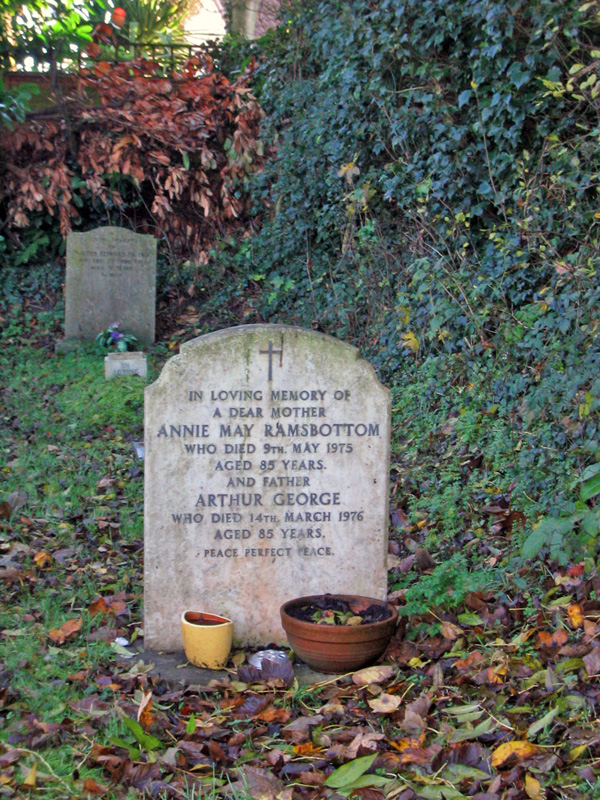
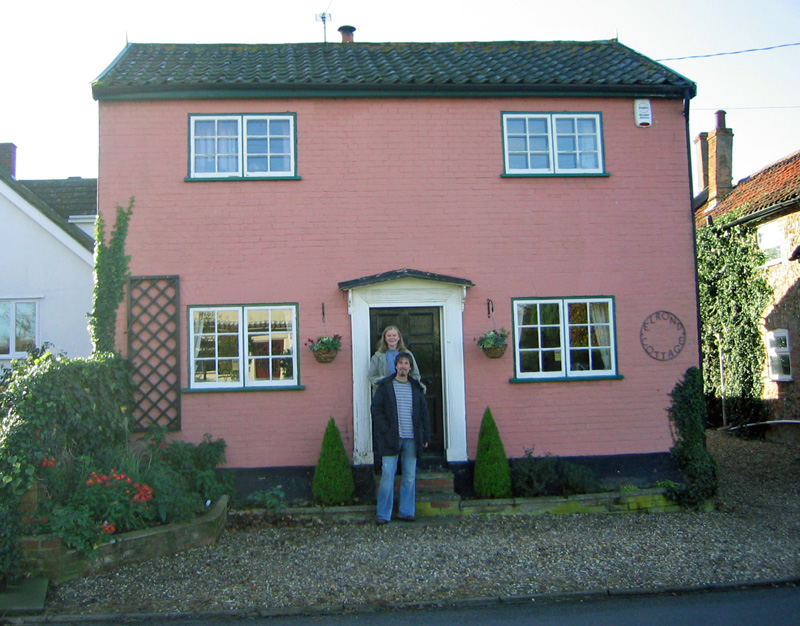
She was right. I'm one of three boys. Each of my brothers has a son, and the one on the way was going to be a son. We do seem to have a thing for Y-chromosomes.

"When are you due?" I asked.

"Three weeks," Kim said. But I think it's going to be much sooner."

She had gained about 40 pounds during her pregnancy. My mother gets all indignant when she hears pregnant women say things like that. "In my day," she said, "the doctor wouldn't let you put on more than 20." Yeah, maybe if you were Mia Farrow carrying Satan's child.

"Have you picked out a name?" Kim and my brother Brian looked at each other. Kim called across the room to Tyler. "What's the baby's name, Ty?"

"Baby Jerry!" Tyler said excitedly, clapping his hands.

Jerry is Kim's father. Tyler lives two doors down from his grandfather and loves him. It was as simple as that. Even at 3, Tyler has very definite opinions. He likes spinach and broccoli, does not like any kind of sauce or gravy, and turns up his nose at meat. He does not want anyone touching his big fat giant Irish head.

"We don't want to name him after anyone," Kim said, "but he keeps insisting on calling the baby Jerry."

"Baby Jerry!" Tyler exclaimed from the other room.

"We're thinking of some version of Jerry, like Gerig or Gerik, which is Polish," Brian said.

On Wednesday of this week Kim's doctor suggested she check herself in, 2 weeks before her due date. Kim was all too happy to oblige. That afternoon, after only a few hours in labor, she delivered a healthy, 7 lb, 3 oz, baby boy. Imagine if she'd waited.

"So," I said when I visited them in the hospital, "what's his name?"

"We don't know yet," Brian said. "We haven't decided."

Just then, Tyler came running up to me.

"Uncle Kieran! Uncle Kieran!" he said, putting his arms around me.

"What, Tyler?" I said.

"Baby Jerry's here!"

I can't wait to see what happens next.

Labels: ,


Continue reading...

Friday, January 26, 2007

Kunta-Kiki

Everyone has been really sweet about my attainment of Irish citizenship. I still haven't heard from the State Department, but I'm sure they'll come around...to investigate. (Just kidding.) People hug me, offer to raise a pint of Guinness. Even complete strangers have sent their congratulations. My friend J sent me the following note, attached to a box of Lucky Charms (which, by the way, really are magically delicious).

In your case, it wasn't just, well...shall we say, "the luck of the Irish," rather dogged, persistent, tireless, resolute, assiduous, tenacious, unswerving, unwavering, indefatigable, indomitable, unflagging efforts on the part of a lost boy from Flatbush looking to find his roots. Success! To Kunta-Kiki!! Congratulations and lotsa love.


Then there's my family.

Their reaction has been more sanguine. To them, New York is the center of the universe. It's all they've ever known. Ireland is just a land of leprechauns, lushes, and lugs. Our ancestors came here for opportunity, the chance to fulfill their dreams. A little romantic, perhaps. Our grandparents, who came over in the late 1920s, escaped a climate of unemployment, poverty, and oppression and arrived just as the Great Depression began.

If any of my other friends attained citizenship in their ancestral lands, their families would weep with pride. There would be wine and dancing and the telling of poignant, life-affirming stories of the trials and tribulations of those brave emigrants seeking a better life in the New World. There would be recognition that the world has become a smaller, not bigger, place through globalization. And globalization opens up new opportunities. Our lives and those of our ancestors have come full circle.

"Why did you want to go and do that?" one of my brothers asked, as if I had announced I'd had a sex-change operation. "What's there that isn't here?" he asked. I was tempted to say, "You." But as the Irish would say, "Don't let your tongue cut your throat." My family's idea of foreign travel is crossing the Brooklyn Bridge.

"It just gives me some options in the future," I said. "Plus I'll zip right through the passport control line next time I go to Europe."

"Aren't you gonna get in trouble?" another relative asked. The State Department does not endorse dual citizenship, nor does it forbid it. But if I were to pledge allegiance to the orange, white, and green, I might find myself no longer protected by the red, white, and blue.

My mother's reaction was more blasé. "Good for you," she said, in a perfunctory tone of maternal support. "I guess it's what you wanted, as far as that goes."

I guess I can't argue with that.

Labels: , , ,


Continue reading...

Tuesday, December 26, 2006

Spirit on a stick

Last year at this time, 9 inches of snow blanketed the ground, and transit workers walked off their jobs. Luis was away in El Salvador visiting his family, and the holidays were rather drab and cold. This year the holiday season, by comparison, has been blissful. The city has been empty, the weather has been mild, and the trains are running normally. While the rest of Luis's family went to El Salvador, he chose to stay here and spend Christmas with me for the first time in three years.

Except for a party at my boxing gym and a couple of small get-togethers, I skipped big celebrations. I did most of my Christmas shopping online, and the rest I spaced out over a few weeks. We bought a 2-ft-high tabletop fir for a Christmas tree that fit perfectly on the windowsill next to my father. We had no ornaments or lights: everything is in storage, since we knew we wouldn't be having a big tree for at least another year, maybe two. I bought some vintage ornaments at Bob and Judi's Coolectibles in Park Slope. Andie and Mike gave us a cute, star-shaped ornament with our names on it.


Our friend John from Virginia stayed with us Christmas eve and day. It was his birthday, so we celebrated at our favorite local restaurant, Blue Ribbon. We went to a local get-together, and on Christmas day we went to my mother's for a few hours. We ate dinner at Jean-Georges with Eric and Sheri on Christmas day. All in all, the holiday was low-key.

Now that The Christmas Season starts some time between Hallowe'en and Thanksgiving, the time it takes for me to get sick of Christmas has shortened considerably. From giant inflatable snowmen to dancing Santa dolls to epilepsy-inducing lights, by Christmas Eve I'm weary of it all. It's hard to get the Christmas spirit after the 95th playing of "Jingle Bell Rock."

This year I left some gift buying until the very end, including my mother's gift. Andrea and I decided to brave shopping last Saturday. The weather was stunning, and the stores were not as maddening as we expected.

We started out at Sav-On Fifth, a local discount store in Park Slope packed with useful (and not-so-useful) items for home and personal use. I wanted to buy mom her yearly bottle of Elizabeth Taylor's White Diamonds, which she asks for every Christmas. I wasn't sure whether the store sold it, but it seemed like the logical place.

We started our search in the personal hygiene aisle, which has every hair relaxer and moisturizer known to man.

"I don't even know if they sell perfume here," I said. "But it seems like they should." I realized that Andrea had stopped about midway down the aisle. I turned around and saw Andrea smelling a stick of deodorant. A smile spread over her face.

"Arctic Ice," she said. "It was Richie's favorite. I can't find it anywhere."

"Really?" I said. "It seems like it would be a common scent."

"You'd think," she said, "but believe me, I've tried to find it all over the city."

"Look," I said. "There's only one stick left on the shelf. It's like you were meant to have it."

Andrea bought the deodorant, and I bought the perfume. "I never think to come in here," Andrea said.

"It's definitely a sign," I said, realizing that I had just witnessed the true essence of the Christmas spirit.

Labels: , , ,


Continue reading...

Saturday, December 23, 2006

An open Christmas gift to my parents

In 1992, I brought my then-partner Harry to my parents' house in Brooklyn for Christmas. I was living 250 miles away, in Virginia, and the distance was by design. When I came out they did not reject me, but neither were they happy about it. It was many years before we were able to talk about the "love that dare not speak its name," and I was encouraged by their attempts to understand. So, for Christmas that year I gave them a book called Beyond Acceptance: Parents of Lesbians & Gays Talk About Their Experiences. I thought it would be more effective than a book written by therapists or gay people themselves. Mom and dad read the book, and it helped strengthen our relationship. I also wrote them the following letter, which I discovered today in a box of photos and mementos my mother gave me. The letter seems almost quaint to me now, but there are still countless people who are afraid to reveal their true selves. Maybe someone reading this will find encouragement in my words.

December 23, 1992

Dear Mom and Dad,

Merry Christmas! I'm really glad we'll be spending Christmas together this year, as we always do. And being able to bring Harry along to share it means a lot to me, too.

You're probably wondering why I'm writing you this letter, especially when I'll be seeing you. There are just some things that are better put to paper, so that they can be reflected on and remembered later.

One of the gifts I decided to give you this year is a book written by parents and friends of lesbians and gays. I have read it, and I think it accurately conveys how many people, not just parents, perceive gay people and how many myths and stereotypes are perpetuated because of lack of information.

I have always been grateful that neither of you rejected me or shut out of your lives when you learned I was gay. I realize that because of societal attitudes and things that you may have believed about homosexuals growing up, it was very painful for you to deal with my coming out. Perhaps you are not aware of how painful it has been for me, too--but the pain does not come from unhappiness with who I am. It comes from being misunderstood by people who want the world to appear in black and white--and, in some cases, just white.

A long time ago I started becoming aware of my different orientation. Even though I attended a college located in the heart of the then-gay mecca, I could not bring myself to accept that I could possibly be gay. One day, while in the NYU library, I searched through the stacks for a book that would help me reach some kind of decision about who I was becoming. The only book I could find was called Overcoming Homosexuality, and it was written by a psychiatrist who claimed he had "cured" thousands of homosexuals by a simple reprogramming procedure. A man seeking conversion was shown pictures of naked men, and when the man became aroused, the doctor would administer electric shock to his private parts. Then the doctor would show the man pictures of naked women and send gentle waves of electricity to induce pleasure. I read that book, and for several weeks I seriously thought about calling that doctor. Fortunately for me, I was afraid of the electric shock treatment.

Had it not been for other friends of mine who happened to be coming out, my life today would have been very different. I am still no closer to understanding why I am gay, but I can confidently say that it does not matter.

I continue to read about countless numbers of people who are rejected by their own families and friends because they are simply being themselves. I truly believe that God doesn't make mistakes, only people do. In Colorado, for example, I heard a report that several people have been given notice to leave their jobs, and they are not even out of the closet! That is why, depsite people's best intentions, they cannot understand why gays need explicit protection from harassment and discrimination. They don't understand that the Constitution was framed for and by white, heterosexual males implicitly.

I know that you are not among hateful and bigoted of our society. You alwasy taught me to respect people for who they are. But I also don't want you to feel that being gay is just what I do in the bedroom. Unfortunately that's whay many people believe. I am the same person you see at Christmas and Harry sees every day. No one "made" me this way, and as long as I'm living, no one will make me change. I am truly happy with myself, and I want you to be happy, too.

I realize some of this may be preaching to the choir, but I think too often I take for granted your unspoken support. After my last visit, in November, when we talked about gay issues, I felt good that we were able to sit down and discuss things without animosity. I don't know many people who can do that with their folks.

So, thank you for your support. If you ever have questions or need information, I want you to ask me. I hope you will read Beyond Acceptance and tell me what you think of it.

I love you both very much.

Your son,
K

Labels: , ,


Continue reading...

Sunday, December 10, 2006

Jock Tamson's bairns

Aunt Meg was a fixture in my childhood. A tall, gaunt, Scottish woman with grey hair and thick glasses, she always dressed like she was going to Sunday Mass. Aunt Meg was deaf and wore a giant hearing aid, back before technology made one virtually undetectable. She read lips, and I was accustomed to understanding her speech, even with her thick burr and palatal utterances, since Aunt Meg, like my grandmother Nanny M, was from Broxburn, near Edinburgh, and they both still trilled their R's and expelled their CH's 40 years after immigrating to New York. As kids, my cousin Denise and I used to make our grandmother recite the alphabet. Whenever she got to the letter H, we'd start giggling and scratching ourselves like monkeys. Nanny never saw anything funny about this. She pronounced the letter as the Scottish do: like the word "itch." She never understood why we found it so funny. "Away ye's gae," she'd say, playfully raising the back of her hand.

One of my fondest childhood memories is of Aunt Meg and Nanny and Uncle Neil (Nanny's brother) singing an old Scottish pub song made popular by Sir Harry Lauder:

Just a wee deoch an' doris,
Just a wee drap, that's a'.
Just a wee deoch an' doris afore ye gang awa.
There's a wee wifie waitin' in a wee but an' ben.
If you can say, "It's a braw bricht moonlicht nicht,"
Then yer a'richt, ye ken.


The gist is: have a nightcap before going home to your wife, and if you're able to say that phrase without slurring, then you're not too drunk (though Americans might argue that you have to be drunk to be able to say that phrase). Lord knows the Scots are not bashful about their drink. My grandmother also taught me this other Scottish ditty, which is sung to the tune of "If You're Happy and You Know It, Clap Your Hands":

Oh ye cannae shove yer granny aff a bus,
Oh ye cannae shove yer granny aff a bus.
Oh ye cannae shove yer granny,
Cause she's yer mammy's mammy
Ye cannae shove yer granny aff a bus.
Ye can shove yer other granny aff a bus,
Ye can shove yer other granny
Cause she's yer daddy's mammy
Ye can shove yer other granny aff a bus.


For obvious reasons, we never sang this song in front of my father's mother.

Aunt Meg died in 1981; Nanny M died the following year, two days before Thanksgiving. They acted like sisters, and for years I thought they were. They were like two peas in a pod. I never understood how they were related until I did my family tree. Aunt Meg was the wife of Uncle John, Nanny's brother, whom I never knew. He died in 1952, ten years before I was born. John was actually Nanny's half-brother, but according to my aunt, no one was allowed to refer to him that way. He was her brother, end of conversation. And Aunt Meg was as family as family could get.

I was doing some research last week on Genes Reunited and came across a woman named Alison, who has someone in her family tree matching the birthplace and date of my Aunt Meg. I contacted her, explaining what I knew, and it turns out that Aunt Meg was her aunt too, but on Aunt Meg's side of the family. Alison lives in Edinburgh and knows my side of the family. It's a pretty small world there.

We chatted back and forth all week, exchanging facts about our common relatives. (We are not related by blood at all.) I mentioned that my cousins John and Margaret live in Edinburgh, and she said she knew who they were. I sent Alison some photos my cousin John in Edinburgh had sent me of Aunt Meg and Nanny M as younger women. Alison sent me some photos of her family. Her father was Aunt Meg's brother; he died a year after Aunt Meg. Other brothers in that family, whom I have never met, live here in the New York area; most of them emigrated from Scotland to the United States in the 1920s. I doubt I would have ever known about them had Alison and I not corresponded.

On Thursday my cousin John in Edinburgh wrote to tell me that Margaret had passed away after a long battle with emphysema. In addition to being my cousin, Margaret was the aunt of the cousins I reunited with in Bury St. Edmunds when I was in London. I had met Margaret many years ago when she visited us, but I remember little about her. As a teenager, I was uninterested in distant relatives, particularly ones from foreign lands. One of Margaret's daughters knitted me a beautiful Aran sweater that I still have and will pass down to one of my nephews. At the time I thought it was a nice gift, but in retrospect I realize how much work went into making that sweater.

I had considered going to Edinburgh on my recent trip to London to visit John and Margaret, but instead I opted to go to Dublin. I'd planned to go on the anniversary of my grandmother's death, to have a look around Broxburn and see where her family came from, since I've never been to Scotland. I hoped I'd get to see John and especially Margaret, who was the keeper of family information. She might not have been well enough to chat, but in the back of my mind I thought it might be the last chance I got to see her. Turns out I was right. Now I regret not having gone.

I wrote to my newfound relative Alison the other day to convey the news about Margaret. She contacted her aunt to find out if it was the same Margaret she knew. Her aunt confirmed that it was. Alison kindly e-mailed me Margaret's obituary, which appeared in the Edinburgh Evening News.

Alison wrote me today: "After being in touch with you, I thought, I'll try and look up Margaret's phone number and ask if I could go and visit her - as I very occasionally would see her when I was out visiting my mum and we were at Mass. She could have even been at my mother's funeral a year past March, but I'm afraid I wasn't aware of who was there that day. I always knew she was connected to my dad in some way, but isn't it a shame you don't ever really know it all until a person is dead."

I was excited to tell my mother that I had been in touch with Aunt Meg's niece. Her response didn't disappoint me. "Oh, yes, I knew Aunt Meg had brothers here in the States, but I never cared much for that family. They always thought they were better than everyone else." Now I know where I got my ambivalence about family from.

Wherever the past lay, I wasn't there. I have fond memories of Aunt Meg, and it's been thrilling to discover all these little threads and how they are woven together. If I hadn't mentioned Margaret's death to Alison, she might have found out anyway, but somehow the timeliness of the coincidence mattered.

There's a Scottish expression--"We're all Jock Tamson's bairns"--meaning, essentially, we're all connected. Even if just to satisfy my own curiosity, thanks to technology, I've been able to tap into those connections and learn a bit more about where I fit in.

Labels: , ,


Continue reading...

Sunday, November 19, 2006

To Bury, the past

In the sleepy town of Barningham, about 12 miles from Bury St. Edmunds, the thatched bungalows are neatly groomed and the pedigrees are centuries old. The houses sit side by side, on what was once pasture, stretching down the road to The Church, The Pub, The Village Hall, and The Convenience Store. On the surface, Suffolk is a sweet little idyll. But just read the local paper Bury Times and you'll find that problems such as signs to toilets pointing in the wrong direction are the real explosive issues.

The Bury paper also has its own local marriage announcements. A Mr. B. Stiff had wedded a Miss K. Sore. The bride is now Stiff, but not Sore.


Local stiffs


The other casa rosada

The weather was spectacular: sunny, cloudless, in the low 50s. Niamh, Jan, and I had breakfast in Stanton at The Leaping Hare, which is part of the Wyken Hall estate owned by Sir Kenneth and Lady Carlisle (probably not related to Kitty Carlisle). Sir Kenneth is a Brit, Lady Carlisle American. The restaurant is in an old, charming, high-ceilinged barn, with country decor and local prints for sale. The Scottish salmon and eggs were the freshest I've ever eaten. Afterwards we watched the llamas (yes, llamas) parade around the pasture, while a flock of sheep lazed under a tree.

Interesting article on how Wyken Hall came to be.


The llamas, Fernando and Lorenzo


Jan snogs a llama

In Suffolk the pigeons are oven ready--and you can order them in advance! I see a business opportunity in New York.


At around 1:30 we headed to Bury St. Edmunds, a medieval town best known for its association with the Magna Carta, its abbey, and its sugar factory. As we approached the town, pillars of smoke from the refinery billowed into the clear blue sky, and the smell of sugar beets and starch filled the air. The factory, owned by British Sugar, produces 1300 tons of sugar every day. Bury's a cute little town, with cobblestone streets lined with shops. One of my pet peeves is apparently international: Christmas decorations were already up, a week before Thanksgiving.


British Sugar: the sweet smell of success

A few months ago I wrote that I'd reconnected online with the wife of one of my second cousins in England. We went to Bury St. Edmunds to meet them: my cousin Kevin and his wife Kay.


Kevin, Kay, and Kieran


Cousins reunited

I recognized Kevin the moment I saw him. "You're such a Boyle!" I said, realizing afterwards that the sound of that might be construed as an insult. Kevin, who is a few years older than I, still looks great. He has worked for more than 20 years as a mechanic for Formula One racers. Kay works in the mental health field. They had two teenage daughters, and the family's list of travels is truly impressive.

I've always had a strong connection to this branch of my mother's family. My mother and aunt have always been close to both Kevin's father Frank, who died last year, and Frank's brother John in Edinburgh. I had spent a week with Kevin and his family at their home in 1983, but I was about 20 and not mature enough to appreciate connecting with remote relatives. I fondly remember Frank. When he picked me up at the rail station and took me back to the house, he barely let me put down my bags before we were drinking pints at the pub. I recall thinking at the time that a pint was an awful lot of beer--that was mainly because I didn't drink.

I also remember going to a country fair in Essex with Kevin and his brother Franny, who passed away, and his sister Jacqueline. At the fair I took the Pepsi Challenge...and lost. I think that was why I switched from Coke to Pepsi.

The morning I left to go back to London, Frank was overjoyed that that their cow had given birth. I said I had never seen a cow give birth; he was incredulous. I said we didn't have many cows in New York City.

I had not met Kay before. She and Kevin met shortly after my college visit. She is a lovely person--funny, warm, outgoing--the same as in her e-mails to me. She brought photos of their family and generously gave me a few to keep.

The afternoon ended too soon for me. We had lunch and chatted for a few hours. They returned to Essex and we to London. Kay has never been to the United States. I volunteered my aunt's house as a place to stay. I'll have to remember to tell her.

Kayo's Law of Visiting Other Lands: Say hello back, and, for God's sake, don't stare.

Labels: , , , , ,


Continue reading...
Hosted by www.Geocities.ws

1