Thursday, January 15, 2009

The 'Book and the tree

I have been conspicuously (and by conspicuously, I mean in my own mind) from the blogosphere for a while now. I start blog entries and then forget about them. I wonder what there is to say that anyone could possibly care about. I still get comments on old blog posts and start writing but lose interest. Facebook and Ancestry.com have tightened their grip on me.

My friend Michelle invited me to join Facebook almost a year ago. I resisted at first, but I thought it would be a good way to research social networking, since my department was looking into building virtual communities. I thought the best way to study them was to become a member. Now I'm hooked on Facebook, and like the Internet itself, I can't imagine what my life was like before it. Well, actually, I know what my life was like before it. It wasn't full of poking, flair, and status updates by the nanosecond.

I've always felt somewhat alone in the blogosphere; Facebook, on the other hand, lets me connect with any of the currently 140 friends I have. I had no idea I knew 140 people, but they are, in fact, people I know, from work, school, the neighborhood, blogging, the gym, the past, my family. Some are casual acquaintances; some are people I've known for many years. In many ways my contact with them mirrors how I would interact with them in real life, but in other ways I've gotten to know people better by observing and interacting with them virtually. For instance, a colleague of mine is in the hospital recovering from a serious illness and was unable to speak on the phone. His wife, through Facebook, was able to keep us all up to date on his condition and relay messages to him. It was better than wondering how he is and having her be bombarded with phone calls and e-mails.

On our recent trip to London, I saved money on cell phone calls by contacting my cousins on Facebook to set up places and times to meet. I saw photos of our friends' new baby who was born while we were away. I correspond with my friend Michelle, who lives in Mongolia and is already living tomorrow. To me Facebook is not a substitute for human contact, and if someone lives hundreds or thousands of miles away, this kind of interaction makes sense. Oh yes, and many of my loyal readers are on Facebook!

But Facebook is only part of the reason why I've put aside blogging. The other part is my genealogical pursuit, which has grown considerably since I started 3 years ago with about 20 people in my tree. Now there are almost a thousand. I've gone back 6 or 7 generations on all four sides, taking me, in some cases, to the late 1700s. I've expanded across generations to almost 700 blood relatives, 400 of them living! I've uncovered cousins in Ireland, England, Scotland, Canada, Australia, Italy, and many parts of the US. I've met dozens of new cousins both in person and through e-mail (and Facebook). And so far I've helped solve three family mysteries. But that's another blog entry. Stay tuned...

Labels: , , , , ,


Continue reading...
Friday, December 21, 2007

What's done is Dunne

On the way back to the guesthouse last night I lamented my lost opportunity to meet my cousin Eileen Dunne. I don't know why it nagged at me so much, but I had convinced myself it was better not to. Then, I thought, well, Billy Splatts! introduced himself to both Keira Knightley and Natalie Portman--and they were perfectly nice about it. I wanted to be that guy.

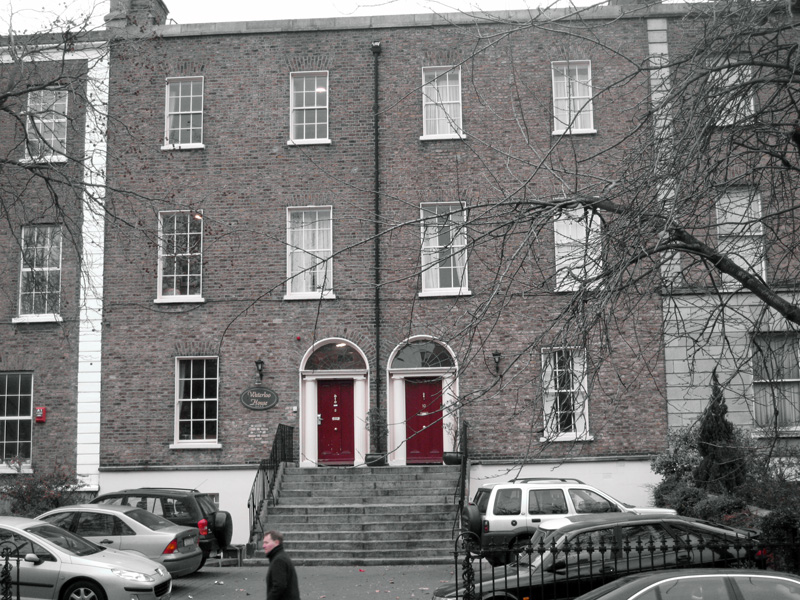
Today was the most beautiful of the three days I spent in Dublin. After a full Irish breakfast (also known as Atkins Delight), I checked out of Waterloo House. I highly recommend this place if you're looking for lodging close to the center in a quiet neighborhood. The lovely proprietor, Evelyn, has spent much of life living between Dublin and San Francisco. The guesthouse is a converted Georgian mansion. The rooms are spotless, with heat and hot water and a great breakfast. I'd read some negative reviews on Trip Advisor and, really, some people just suck, because I don't know what they could possibly complain about.

Dublin is still in the middle of a boom. Construction sites abound, and the face of architecture is due for change, with buildings like Bono's controversial expansion of the Clarence Hotel near Temple Bar, which will feature a dome hanging off the side. A taxi driver said that Dublin is going to get its first 7-star hotel (currently there is only one in the world), but I couldn't find anything about it.

The records office was fairly empty today. The staff was itchy to leave early, but overzealous Yanks bent on finding that one record held them back. I had planned to do only an hour's worth of work but got sucked in and ended up spending the afternoon. I'm at a point where research is getting harder. The further back I go, the fewer sources I have to validate the information. I end up using superpowers like Deduction and Reasoning, when often Guessing is just as effective. My biggest score was the death record of my great-great grandfather. He died in 1937 (the year my father was born) at 93. His cause of death: old age.

By 4:15 I was the only person left, and the office closes at 4:30. The manager said, "We're not trying to rush you..." So I got my last few records and packed up to go. One of the clerks said that vital records are due to go online in the next 5 years, adding "but they said that 5 years ago." That would be a big deal. In the US my only hope is poring over microfilm at Mormon houses and then ordering certificates from Ireland. It's hit or miss if you don't know what you're looking for.

I collected my things and walked to Talbot Street. The street was teeming with shoppers and workers on their way home. I struggled against the crowd while looking for a place to eat. Dubliners seem to have no pattern to their walking. They walk on the right, or on the left, or on the right and the left, or diagonally, or in the middle--and most of it is not attributable to drunkenness. There's just no pattern at all.

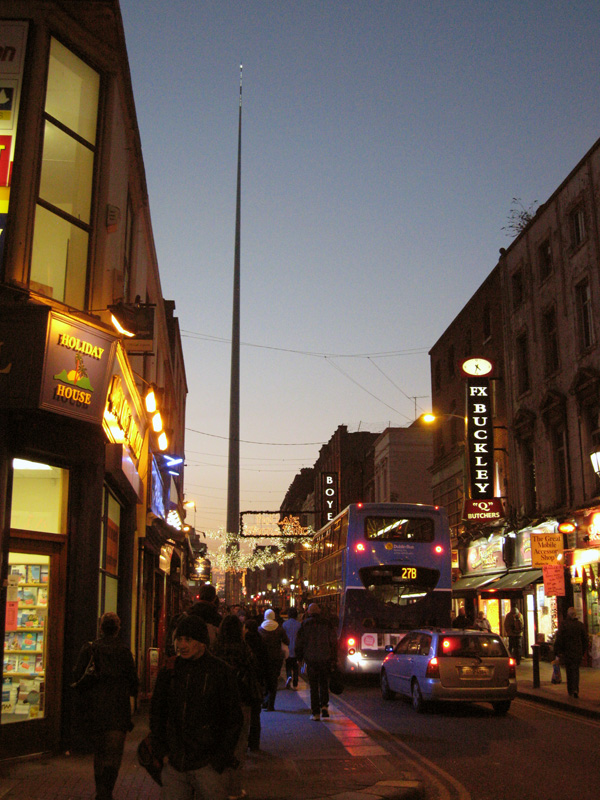
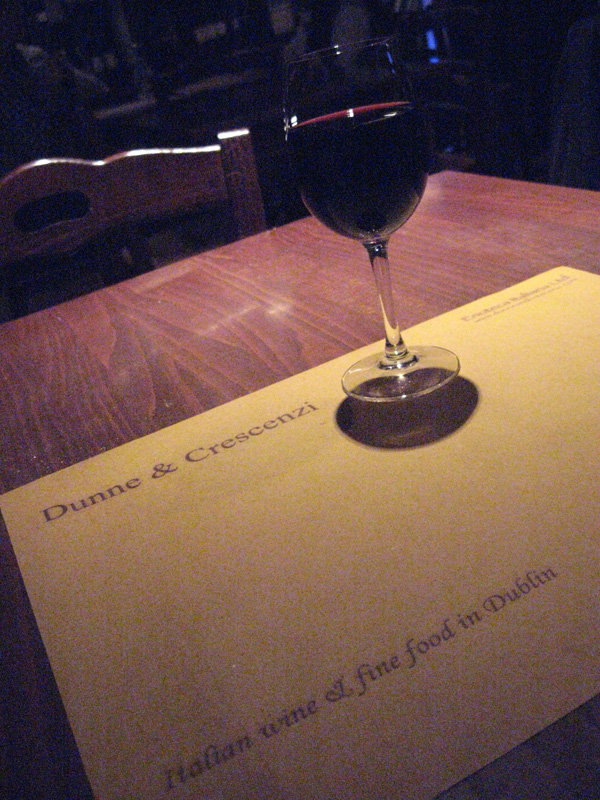
I had 3 hours to kill before my flight. I walked up to Grafton Street and thought about eating at Bewley's. Maybe I could go to a pub and have a nice fish and chips. The crowd was much thicker here, and I was dizzy with hunger and carrying all my belongings. I ended up moving with the flow just to avoid being run down. And then, like being on a Ouija board, I found myself on South Frederick Street, home to Dunne & Crescenzi.

Ah, what the hell, I thought. My conscience obviously dragged me here. I might as well go through with it.

As I mentioned in my last post, Eileen Dunne and I are second cousins. My aunt Eileen is named after her grandmother Eileen. Younger Eileen's father and my grandfather were both named Fred. For many years, my Aunt Eileen said that her father's sister Eileen was the only sibling she knew her father to have and that she had spoken to her as a child once on the phone. My aunt and mother thought, for some reason, that she was a nurse on Ward's Island in New York City, but that has since been debunked. Last March, Aunt Gladys had given me Eileen and Billy Dunne's wedding picture, which was a treasure because it showed my grandfather as well as both my great-grandparents. Aunt Gladys had also told me the names of the Dunne children, all of whom had the same names as my grandfather's siblings. So I was already quite armed with a lot of information about Eileen Dunne the proprietor's family. The trick was to not scare her away.

I walked into the restaurant about 5:00. It was already mostly full. The Italian waiter from last night remembered me from the previous evening and shook my hand. He led me to a table in the back, away from the crowd. Perfect. As he seated me, I asked if the owner, Eileen Dunne, was around and if I could have a word with her.

He gestured to a ginger-blonde woman standing at the bar. She was not the same ginger-blonde woman I'd seen last night, so good thing I had been spared the embarrassment of accosting the other woman. She came over to my table and with a smile said, "Someone said you asked to see me?"

I used the Alison strategy, starting with how much I enjoyed the food, that I was doing my family research and had discovered the Dunne connection and the sibling relationship between Eileen and Fred. I wasn't sure if she believed me, but when I mentioned their common last name, her eyes lit up and I knew she knew I was for real.

She was very warm and listened intently as I mentioned the family in London, that she knew about Gladys but not much else. It seems her grandmother Eileen, Fred's sister, was disowned by the family for marrying a Catholic. (Our great-grandparents were Presbyterian.) I said that my grandfather outdid her by marrying two Catholics. We chatted for about 15 minutes. I told her that I had been hesitant about approaching her with this information in case she thought it was creepy. She laughed and said, "Not at all."

She introduced me to her son, who looks in his early 20s. She asked for my e-mail address and gave me hers and said she would love to hear all about the family history. We shook hands, and they left. It was then I noticed that the card she'd given me was blank, so I have to hope she contacts me and that in the end I didn't scare her off.

But if I don't hear from Eileen again, it's OK. The enoteca's reputation as one of Dublin's finest is well earned. The Italian philosophy of "slow travel" is that to truly experience a place, you must immerse yourself in it. As I savored every bite of my delicious stew of borlotti beans and every sip of red wine there, it felt like the perfect moment to me. And then too soon it was time to go to the airport. It was time to move on.

Labels: , , , , , , , , , ,


Continue reading...
Thursday, December 20, 2007

Another journey

It didn't rain today, but it felt cold, even though it was in the low 40s (or 6 if you're not American). Dublin cold, though, is not the same as New York cold, which can make you cry. Without the Gulf Stream, Ireland would be around 15 degrees cooler. And days are much shorter here: today there was only 9 hours of light, and much of that was dimmed.
Still, though, it was a great day for walking, and since the guesthouse where I'm staying (which by the way, is fantastic) is a block from the Grand Canal, I walked along it to the quays. The Grand Canal connects the River Liffey in Dublin and the River Shannon in the west. Were it not for the canal, Arthur Guinness would have had a tougher time transporting his delicious brew to other parts, since roads (and trucks) were not yet common. Like the Gowanus Canal in Brooklyn, near the site of our new building, the Grand Canal was heavily used for industry, then fell into disuse and became a sewage dump. Now it is being revived through government efforts.

It took me about half an hour to get to the Research Office at the Irish Life Centre. I spent the better part of the day there. When I started my family tree 2 years ago, it had about 35 people; now it has 620. The hard part is going back before the 1860s. Ireland didn't institute civil registration until 1864, so if someone was born before that you have to go to the National Library of Ireland and look at parish registers. Some dioceses, including Cashel and Emly, where my dad's mom's family is from, require written permission from the bishop to view the registers. I'm not sure if this is a ploy to make money or if there's some reason to hide the information, but I can tell you that it's excruciating to pore over hundreds of handwritten, faded documents written in Church Latin (on microfilm), so it's not like people are breaking down doors to view them. I did manage find some records in Limerick for the O'Leary family. Knowing what townlands your ancestors came from is critical. I found this out when researching my mom's mom's Boyle family. Just when you think you've found a match, you see several other people with the same name, in the same place, with the same birth date. The degree of consanguinity in some of these places makes you think about the Habsburgs.

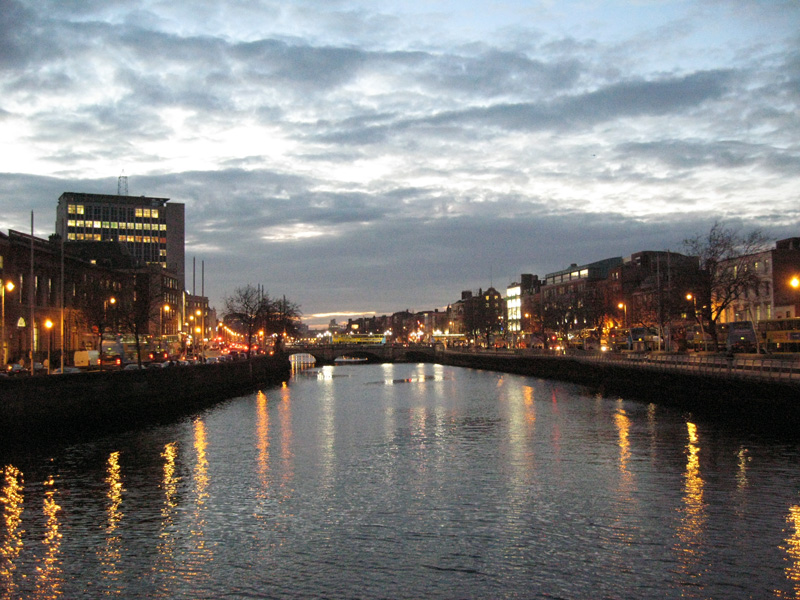
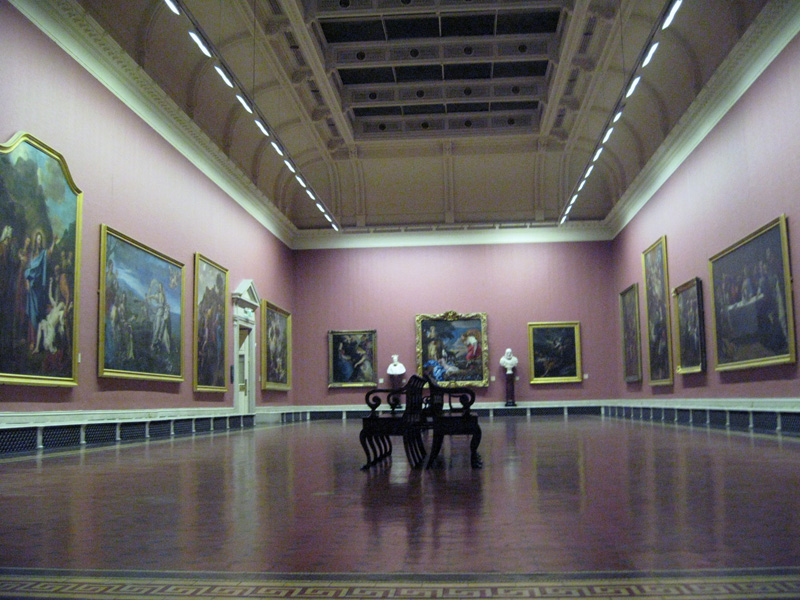
By about 4:00 I'd had enough research for the day. It was already dusk. The Liffey looked spectacular all lit up. People were already geared up for the holidays. The pubs were already filling up. I had some time to kill before meeting my friend Alison, so I went to the National Gallery of Ireland. I'm a huge fan of 16th and 17th century masters such as Rubens, Titian, and my all-time favorite, Caravaggio. The National Gallery has one Caravaggio, The Taking of Christ, which for centuries was thought to be lost but was found hanging in a Jesuit house of studies in Dublin a little over a decade ago. To get to the painting, you have to walk through about 10 rooms of Flemish and Italian paintings. As you walk through the rooms you can see the Caravaggio waiting for you at the other end. I wasn't disappointed.

Alison and I met up around 8:30 and went to Dunne & Crescenzi, an Italian restaurant just south of Trinity College. The restaurant is owned by Dubliner Eileen Dunne and her husband Stefano Crescenzi. There was quite a line at the door, but it lasted only about 10 minutes. I was excited about going to the restaurant, but not only because I'd heard the food was great.

"Eileen Dunne doesn't know this," I said to Alison, "but we're cousins." She looked at me for an explanation. "Eileen's grandmother and my grandfather were brother and sister."

"Does she know you're here?" Alison said.

"She doesn't have any clue who I am. I've been debating whether to introduce myself to her. I don't know whether she'd be freaked out or what."

"Yeah," Alison said, "you'd have to really ease into it."

"Well, this is a good question, then," I said. "Since you're Irish, what would be the best way to approach her?"

Just then, I looked to my right and saw a blonde-ginger haired woman smoking a cigarette outside and tapping on the window to say hello to someone. She looked to be in her 50s.

"Oh my God," I said. "I think that's her."

"Jesus," Alison said. "The family resemblance is unmistakable."

I looked up at a review of the restaurant posted on the window. The woman in the photo looked exactly like the woman outside.

"What are you gonna do?" asked Alison.

"I don't know," I said. I really had thought about it, but now I was having second thoughts.

"Well, look," Alison said, "you have to be cool about it. You start with how much you heard about the place and decided to come try it. You say that you have family in Dublin and that while doing your family research you found that one of your aunts was named Dunne and that you think there might be some relationship."

"I know, but I KNOW there's a relationship."

"Well, if you start pulling out photos of her family and trees and stuff..."

"Yeah, she'll just call a garda and have me arrested."

"Right."

Before I could do anything, the woman disappeared inside the restaurant. We were seated next. The place was noisy and crowded but pleasant. We sat right near the door.

"This must be good," Alison said, "or there wouldn't be a queue. Usually in Dublin if a place is full people just go elsewhere."

We ordered two glasses of prosecco and a special pasta dish of cannaroni with eggplant, tomatoes, and peppers. When our orders came, they looked like orecchiette.

"I don't think this is the cannaroni," I said.

We sent the dishes back and the waiter, who was Italian, was very apologetic. The cannaroni arrived, and it was quite delicious.

"Maybe after dinner you can go up to the bar and ask if an Eileen Dunne works here," Alison said.

"She's not an Eileen Dunne, she's the Eileen Dunne."

"Do you know what you're going to say to her?"

"Well, now I'm not so sure," I said. "Maybe this isn't the right time."

At the end of the meal, I finally got the courage to ask the Italian waiter if Eileen Dunne were here tonight.

"She was here earlier in the evening," he said, "but she's gone now."

My heart sank. Oh well, perhaps another time. Knowing too much about one's family may be one of the pitfalls of doing genealogy.

At least the pasta was delicious.

Labels: , , , , , , ,


Continue reading...
Wednesday, November 28, 2007

Adding on the pounds

While relaxing by the pool at Luis's mom's over Labor Day weekend, Luis and I had a brilliant idea: let's avoid the holiday madness and go somewhere to avoid family drama. Several Cosmos later, we had economy tickets to London on Virgin. Granted, they were very cheap (under $300), but that won't make up for our hemorrhagic spending once we land. With the dollar at more than 2 to 1 to the pound, we're leaving plenty of room in our luggage for ramen noodles.

Lodging is not a worry, since we'll be staying with our friends. We decided that our trip was our mutual Christmas present. I plan to go to Dublin for 2 days to do some genealogical research and possibly meet up with some cousins. Two weeks ago hotel and airfare would have cost me about $300, but I waited a week too long and ended up paying $500. The euro is no bargain either.

We thought we might escape family gatherings altogether, but Luis's mom and stepdad are living temporarily near Perugia in Umbria, and what the heck, we'll already be on that side of the ocean. The Brits and Luis and I are going the weekend before New Year's. We'll be within drinking distance of wine regions Montepulciano and Montalcino. Ironically, the wine there will be more expensive than it is here!

The only thing more intimidating than the exchange rate is the prospect of flying from London to Perugia on Ryanair, a low-budget Irish airline that has fewer frills than a Mennonite church. The fares are so inexpensive I'm envisioning a Flinstones-like plane where everyone flaps their arms to make the plane run. I can't seem to find a good word about the airline; their bad-boy image makes Colin Farrell look like St. Patrick. France is in a lawsuit with Ryanair, customer complaints are rampant, and the EU is threatening to shut down its Web site for bogus pricing. Earlier this year, Ryanair unsuccessfully attempted to take over Aer Lingus, the national airline of Ireland, earning it the airline's enmity. I don't know if it's good or bad that I share the same last name as the airline's president. It will be anyone's guess whether we'll actually make it to Italy. I feel an I Love Lucy episode coming on.

Having said all this, I'm very excited about the trip. I haven't had a vacation since my last trip to London in March, and that was a trip to remember. At least I'll have stories to tell about this one. And if worse comes to worst, I have plenty of healthy organs to sell when the bills start coming in.

Labels: , , , , , , , , , , ,


Continue reading...
Thursday, March 22, 2007

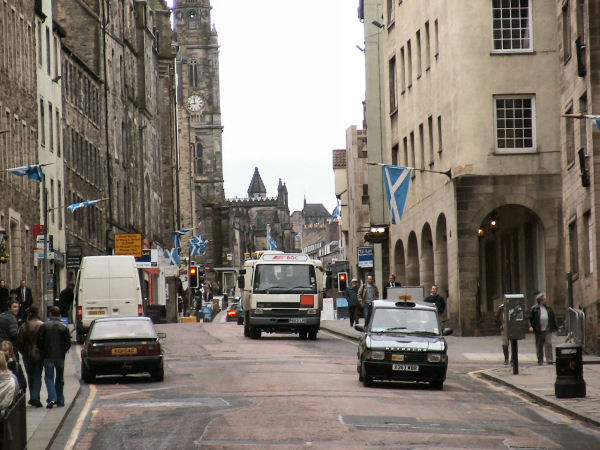
The Royal Mile

Walking in Edinburgh is like being on a Stairmaster. You can build kickass legs and a killer butt (that is, if you don't already have them).

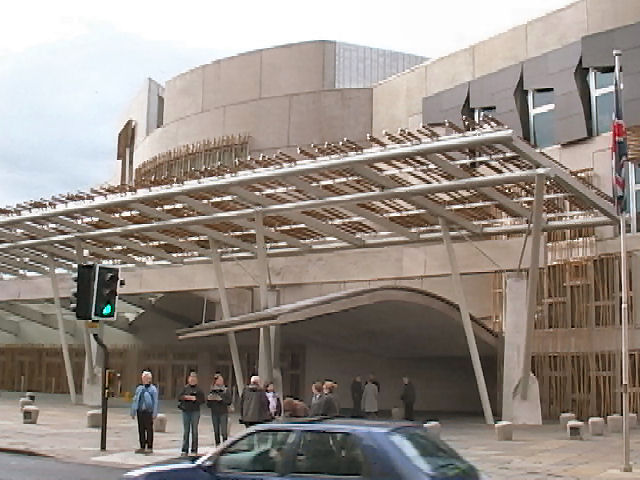
On my last day in bonnie Scotland, after breakfast on the Royal Mile, I walked toward the east end to Holyrood House, the official palace of the Queen in Scotland. You know the Mike Myers character who owns the store All Things Scottish and whose motto is "If it's not Scottish, it's crraaaap!"? Well, I'd have to submit one exception: the new Scottish Parliament building, built in 2004. Personally, I think the it looks like a 1970s train station. As I was standing in front of it, Niamh text messaged me: "Throw a rock at Parliament for me."

I replied, "I know. It's really ugly."

Later, I learned that she meant that, like many Brits, she feels the parliament (both building and legislative body) is a whole lot of nonsense and a waste of money. In 1998 the Scottish people voted for devolution, and this was what they got.

Niamh had a reason for her disdain. The issues of nationalist pride and cultural uniqueness in the UK and Ireland have recently been challenged by a discovery by geneticists that the British, the Irish, the Scots, and the Welsh all share the same DNA. The Picts, Celts, Angles, Saxons, Romans, and Normans didn't have as much of an impact genetically as once thought. The writer did point out, though, that this implication "seems likely to please no one."

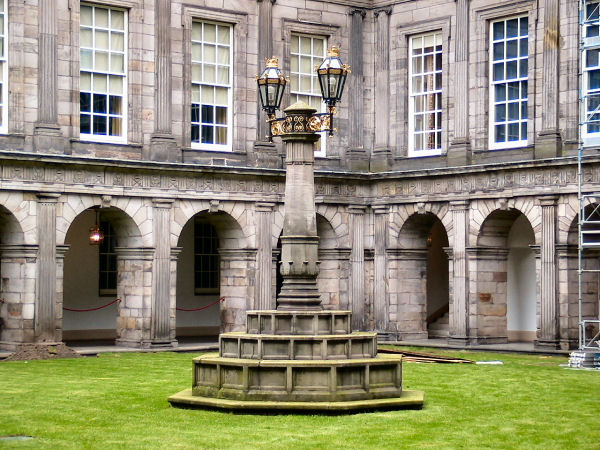
I took an audio tour of Holyrood Palace, which has a stately Victorian feel to it. I'll take classical architecture any day. Many school groups were visiting the palace. I was continually trying to beat them to the next room. One of the tours had at least 50 teenagers. The boys goofed on the portraits and furniture, something I'm sure I did at that age. I could understand their goofing, since the Stewart men were not a good-looking bunch. There's a whole gallery of 89 portraits of Stewart monarchs that were commissioned by Charles II. The painter, Jacob de Wet, imagined what some of the early rulers looked like and pretty much made them all look alike to emphasize the prominence of the family. Especially after having just seen The Queen, I was interested in how the palace operates, what guests are permitted to see and how they use the grounds. The gardens are not yet open, but they are supposed to be spectacular in the late spring.

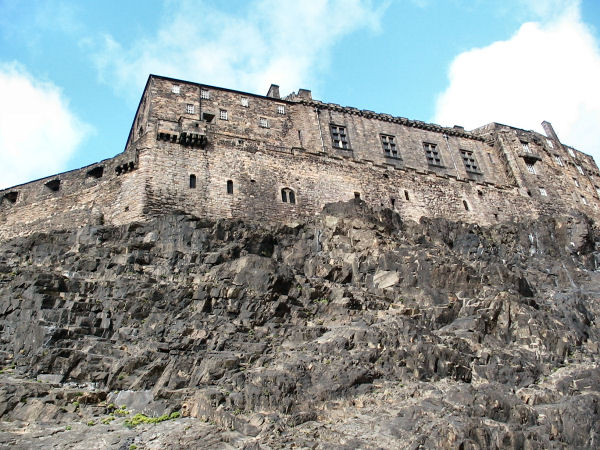
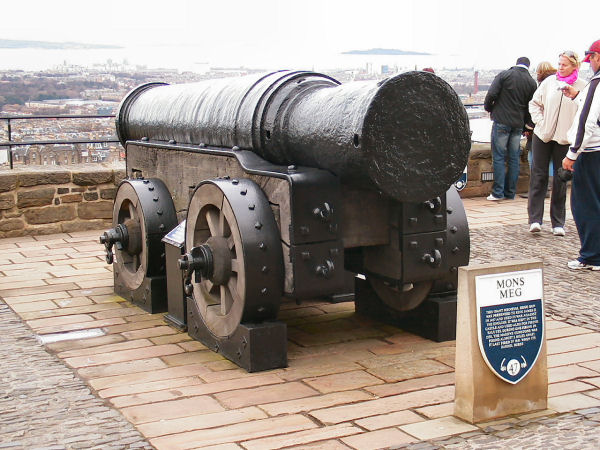
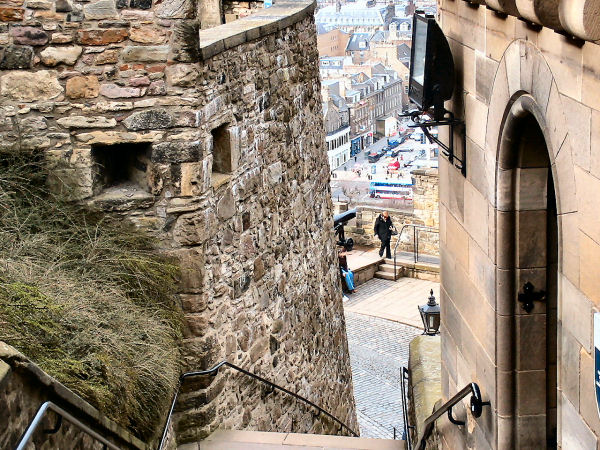
Like a delectable sticky toffee pudding, I saved the best for last: Edinburgh Castle. Walking from the palace up the steep Royal Mile (which is actually 1 mile, 110 yards) to the castle requires a good set of lungs and strong legs. I thought the Rock of Cashel in Tipperary was impressive, but I think the castle might trump it. For centuries it has served as Edinburgh's garrison and could be used at a moment's notice to protect the city from invasion. It's a self-contained city, with prisons, lodging, a chapel, and administrative headquarters. It houses a mammoth cannon called Mons Meg, which could propel a 400-pound cannonball almost 2 miles! The castle exhibits chronicle the long royal history of the Stewarts (or Stuarts if you're French) and the strategic role played by Scotland dating back way before Christ. Unlike other cities, which bury or demolish their past, Edinburgh honors it. Although some modern buildings, such as the Scottish Parliament and the new St. James shopping center, have appeared, you get a real sense of history and time by walking virtually anywhere in town. Buildings are given new identities. My cousin John said that if you buy a property in Scotland, there's little you can do to it. If the original windows, for instance, are not double glazed, you can't upgrade them.

One interesting thing I learned at the castle is that historically imprisonment was not considered a form of punishment. This was particularly true in a military prison where time not spent doing drills was considered idle. Prisoners awaited their punishment, usually torture or flogging. I wonder what happened if you liked that sort of thing.

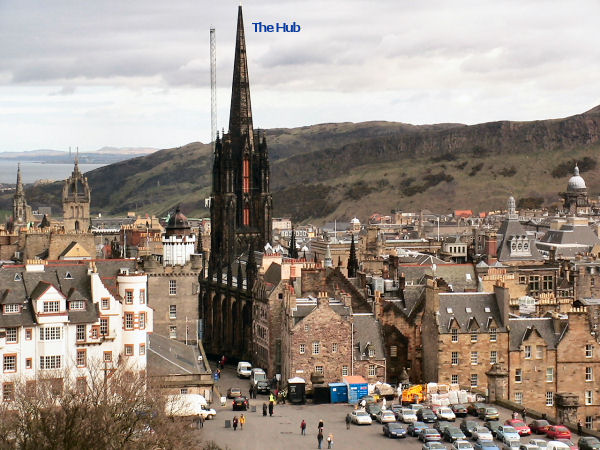
I had lunch at Cafe Hub, located in a building that once housed offices for the Church of Scotland, designed by architect James Gillespie Graham, who also designed St. Mary's Cathedral, where my great-grandparents were married. The menu had the ubiquitous haggis with tatties and neeps . Though my friends tell me that haggis nowadays is largely oats, the idea of eating organ meats doesn't thrill me. My grandmother made haggis but never forced it on me. Whenever she and my uncle ate steak and kidney pie or calves' liver, I'd just about have to run out of the room from the stink. So I had a prawn salad instead.

I thought I'd given myself plenty of time to get to the train station, but by the time I got back to the hotel to pick up my bags, I realized I had a 15-minute walk ahead of me. My shins were already aching from the steep hills of the Royal Mile and the castle. Laden down with some overnight bags and newly acquired souvenirs, I marched up the hill to the station. It was about 40 degrees out, and I was sweating, but I made the train.

As recently as 2 years ago I had absolutely no interest in my ancestors, or where they came from, or who I am. But all that's changed. Trips like this have changed me.

Labels: , , , , , , , , ,


Continue reading...
Wednesday, March 21, 2007

What's afore ye canny go past ye

The Scottish sun streamed in the hotel window, gently nudging my eyes awake. I got out of bed and looked out the window as the sun rose over Edinburgh Castle. Normally at 6:30 a.m. my eyes would be sealed shut, but the castle, set on a massive bed of volcanic rock, is as inviting at daybreak as it is forbidding at night. I watched the sun rise for about 15 minutes before a car horn from the street below jolted me from my reverie.

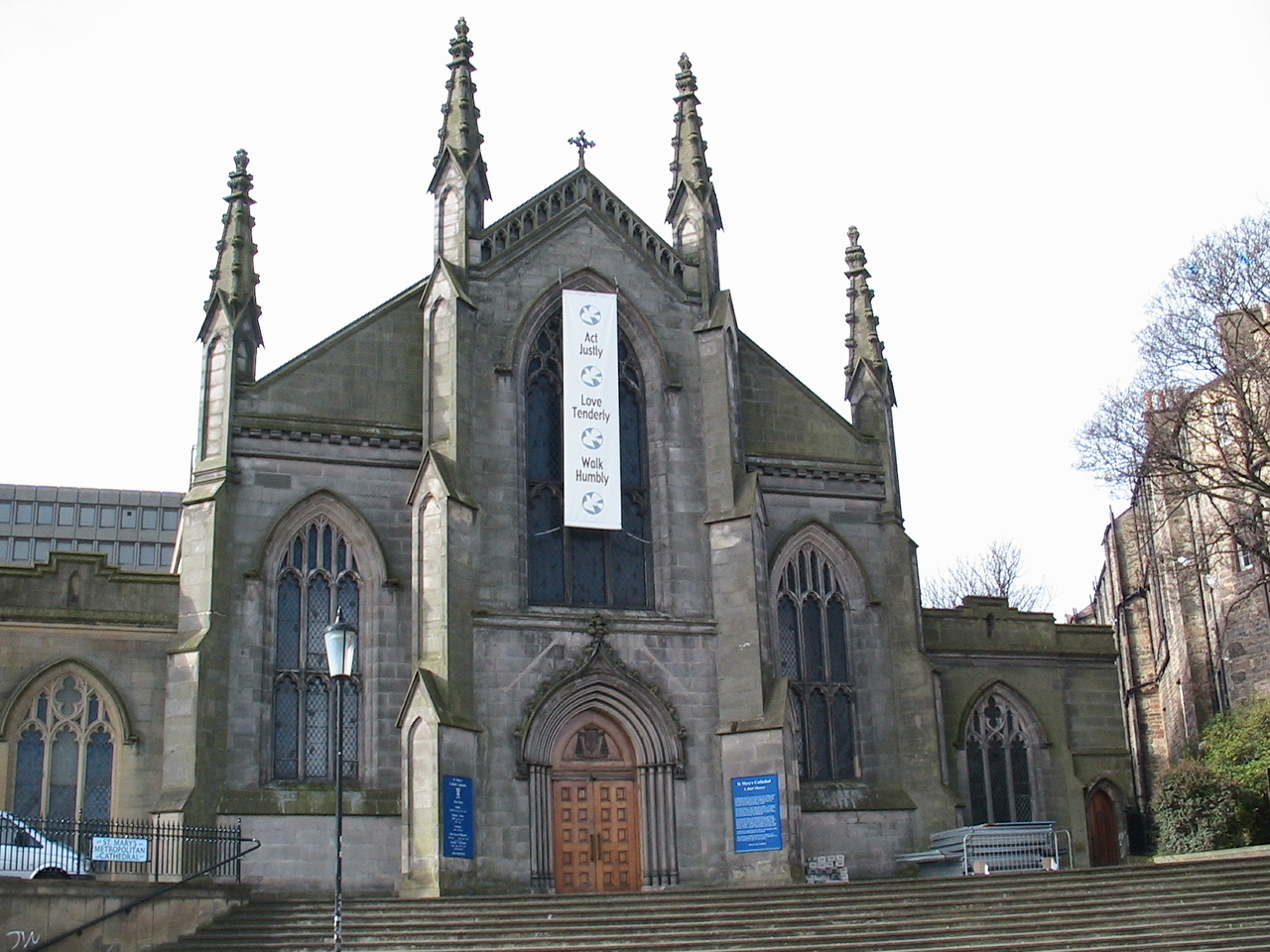
After breakfast on The Royal Mile at Always Sunday--Scottish smoked salmon (which I can never have enough of), scrambled eggs, walnut bread, and tea--I walked over to St. Mary's RC Cathedral, where my great-grandparents James Boyle and Mary O'Donnell were married in the year 1900. When it was built in 1886 the cathedral was a sign that times had changed. Earlier Catholic chapels had had been attacked and burned down by anti-Irish, anti-Catholic mobs. With the erection of St. Mary's, Catholics could finally practice without fear of reprisal.

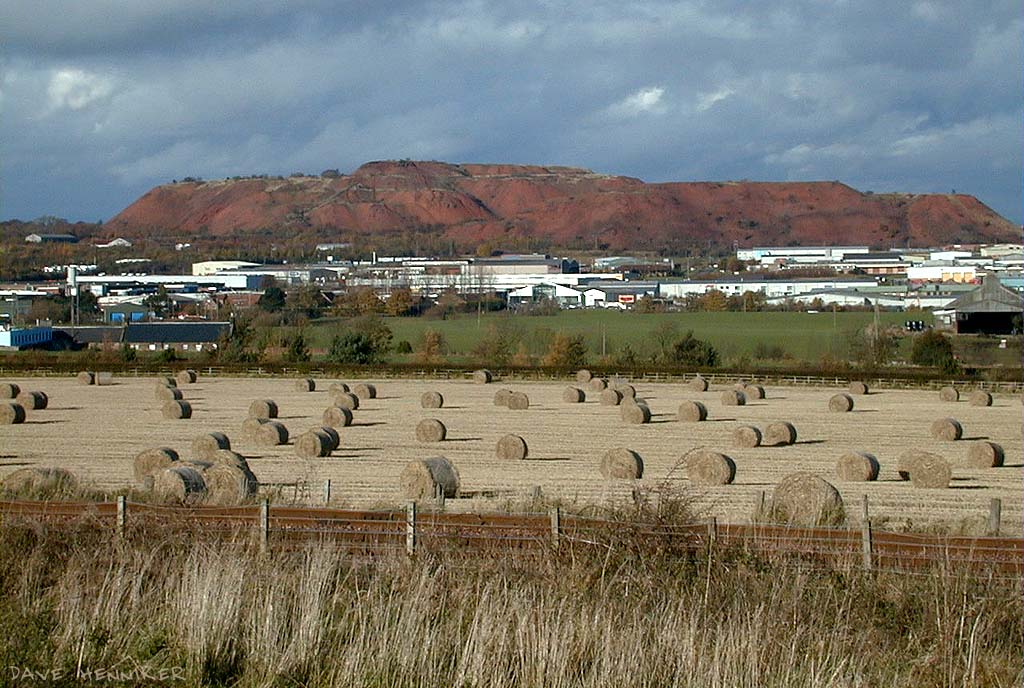
Cousin John picked me up at the hotel and we drove out the M8, which travels due west to Broxburn and Uphall. Broxburn is known for two things: Glenmorangie whiskey and mining, specifically, coal, iron, and shale. As we approached Broxburn, what look like a series of reddish hills rose in the distance. Those hills are called shale bings. Although they are pretty, they are nothing but a heap of waste. Before the US oil boom, in the mid-19th century Glaswegian chemist James "Paraffin" Young found a way to extract oil, or paraffin, from shale and use it in products ranging from lighting and heating to industrial lubricants. As a result of his discovery, the shale mining industry sprang up in Broxburn, and where virtually nothing existed before, a company town now lay. Rigs were installed and row upon row of miners' cottages were built. That boom was the impetus for the emigration of my grandmother's farming family, the Boyles, from Donegal to Scotland in the 1880s. Almost all of my male Boyle relatives who left Glenties, Donegal, at that time moved to Broxburn or neighboring Bathgate. My great-grandfather James Boyle was a shale miner, as was his twin brother Neal and his other brothers Dennis and Patrick, also twins. My grandmother, Nanny M, was born there in 1904. Her family and all the Boyle brothers lived in a miners' community called Holygate. Nanny attended the local church, SS John Cantius and Nicholas, and school across from her house. Shale mining was hard work, but the men earned a good living. The good times, however, didn't last forever. By the late 1920s the boom was over, falling victim to the lower cost of petroleum, and many of the Boyle men went to America to look for work. Unfortunately, their arrival coincided with the onset of the Great Depression.

Before mining, shale is blue. Once the oil is extracted, all that remains is rock, which turns reddish from the high concentration of sulfur beneath it. Ecologists have found the bings valuable as study sites for wildlife habitats and vegetation, but there are also environmental hazards. Waste materials seep into the groundwater and have the potential to ignite. Following the European trend of greening--at which Europeans are light years ahead of the US in that area--the Scots have begun reclaiming the bings. The rock, which is useful in road laying, is being blasted and shipped to countries like Germany.

As we drove down the main street into Broxburn, which stretches about half a mile, John said the area is undergoing a period of rapid growth and even expansion, as Edinburgh becomes larger and the surrounding areas become bedroom communities. Broxburn is only about 12 miles west of the city and lies on the main road into town. That makes it attractive to commuters, and since the road continues west to Glasgow, even those who work there find it a viable place to live.

"That's the house your grandmother was born in," John said. John has a strong Scottish burr that sounds just like my grandmother's. John is my mother's first cousin (or my first cousin once removed, if you like), now in his 60s and retired. He was an engineer for British Petroleum for many years and lived 10 years in Saudi Arabia. "It used to be One Society Place," he said, "but now it's a completely different road and house number." I tried to picture Nanny M and her 7 brothers and sisters living in this one modest cottage in Holygate. "See that shed?" said John, pointing to a row of recycling bins. "That was my father's garden at one time."


Without John I wouldn't have had a clue where to look. SS John Cantius and Nicholas Church is still standing after more than 100 years. Everyone in the family was baptized or married there. We went inside and had a look around. Compared with other Catholic churches it's simple.

"The school where your gran went used to be right behind the church," said John. "But that's all gone. It's all row houses now."

"Could we go to the cemetery?" I asked. I wanted to see where my great-grandfather was buried.

"Of course," he said, "but I have to tell you...there's no headstone."

"Really?" I said. "What kind of marker is there?"

"Well," he said, "there's nothing. I only discovered it recently because I got a space in the family plot and went to check it out. I'd never visited before."

At Uphall Cemetery, off East Main Street, indeed there was no headstone, only dirt.

"I don't know why there's no headstone," John said. "I just think there was no money."

Broxburn is named after a canal (Brock's Burn) that runs parallel to the main road. It's still there to this day.

John asked what else I'd like to see.

"Nanny always used to joke that she was the other Mary, Queen of Scots. Is Linlithgow Palace far?"

"Oh not at all," he said. "It's just a wee bit up the road."

We drove through Winchburgh, which also has shale bings, to Linlithgow. For many years Linlithgow was the county town. Now all the government buildings are being moved to Livingston, a new town (or planned community as it's known in the US), about 15 miles south of Broxburn.

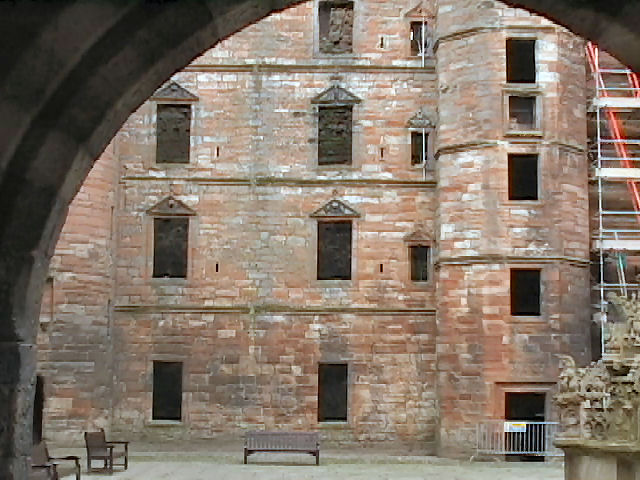
Linlithgow Palace, where Mary, Queen of Scots was born to King James V and Marie de Guise in 1542, is a modest building for a royal residence. It now lies in ruins. Mary never saw her father, as he was across the Firth of Forth in Fyfe at the time of her birth and died 6 days later, at which time she became queen (with a regent, of course).


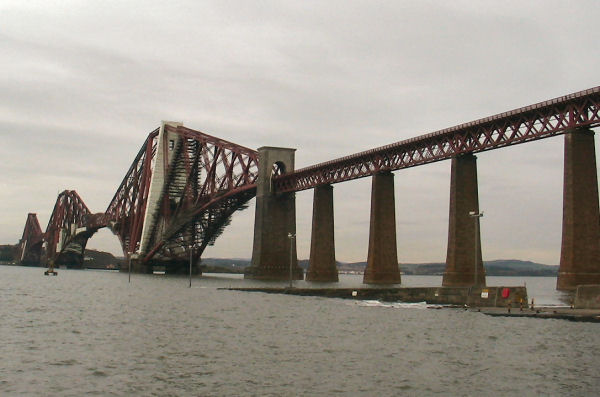
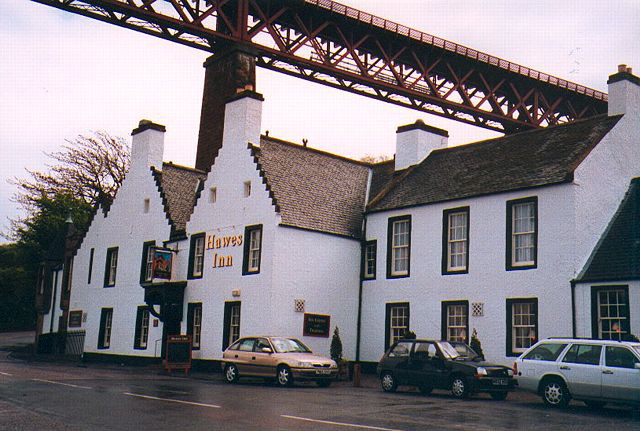
After Linlithgow we drove to South Queensferry, which overlooks the Firth of Forth, and is spanned by the spectacular Victorian Forth Bridge. We ate at the Hawes Inn, where Robert Louis Stevenson was inspired to write the novel Kidnapped. The inn still had the character of an 18th-century public house but is clearly a modern inn. I had a ploughman's lunch of ham, cheese, apple, tomato, and chutney.

John drove me back to Edinburgh along the busy motorway. When I was a wee lad, Nanny M always told me stories of Scotland. In my mind it was romantic, misty valleys and tall green hills with fortresses and, of course, the Loch Ness Monster. And it is, in some ways, romantic. Now, though, as elsewhere, history is being paved over. But, as Nanny M always used to say, "What's afore ye canny go past ye."

Labels: , , , , , , , , , ,


Continue reading...
Tuesday, March 13, 2007

Waves

My grandmother, or Nanny M as I called her, has been dead now almost 25 years. While my parents worked, she raised me and significantly shaped who I am today. My cousin Denise and I believe that Nanny M guides us on our journey through life. There have been too many signs and too many fortuitous coincidences to chalk up to luck. Now that I've established contact with the other family of her deceased husband, the feeling that she's guiding me is stronger than ever.

I haven't written for the past few weeks because there's been a lot to digest, a lot to let go of, a lot to look forward to. My liaison with the family, Anne-Marie, Gladys's daughter-in-law, has been the perfect medium between us and Gladys. She has handled a delicate situation with nothing but grace and tact. For more than 60 years questions have remained unanswered, truths have been muddied, facts twisted. Many of the players are dead and buried, but for the living the legacy of betrayal and duplicity has persisted like a black cloud unable to rain.

Anne-Marie started the conversation by sending me a picture of Ellie (my grandfather Fred's first wife), Gladys (his daughter by Ellie), and one of Gladys's daughters. After Fred left Ireland, Ellie raised the three children by herself in Dublin. Ellie was 98 years old when she passed away. At the age of 3, Gladys was singing and dancing in theatres all over Ireland, working with a famous Irish entertainer. For many years she worked three shows a day at the Gaiety and Theatre Royal in Dublin, helping to keep the family, earning as much as ten pounds a week. She even worked with Mickey Rooney.

In another exchange, I found out that Gladys had 7 children, my half-first cousins. At some point the family moved to London, and Ellie moved there too to help look after Gladys's children, just as Nanny M helped raise me. Gladys was excited about our connecting and even toyed with the idea of coming to New York to meet us. At 83, though, Anne-Marie related, the trip might be too much for her.

With each new e-mail Anne-Marie sent, I learned more and more about the family. Gladys had letters from Fred to Ellie, diary pages that my great-grandfather Samuel kept during the Boer War, photos of my grandfather and my great-grandparents. It seems that Gladys, like me, is a sentimentalist. I like that about her.

The e-mails were coming steadily for a while. And then, they stopped. Days went by, and I started to worry. Maybe someone had died. Or maybe I had said something to offend them. After all, I had referred to my grandfather as a cad, and maybe they didn't like that. But weren't they the ones who had been wronged? Six days later, I sent an e-mail to Anne-Marie, asking if everything was OK. My aunt, my mother, and I had been hanging on every word she wrote. They waited 60 years for this, and now there was nothing but a pregnant pause in cyberspace.

Finally, on the 10th day, Anne-Marie wrote to say that she hadn't been feeling well. She'd put a hot water bottle on her feet and it had exploded all over her legs, causing them to blister. She was bedridden for the better part of a week. She apologized for being out of touch. I felt bad for her, but I was relieved that we were in touch again. This is what I mean about a delicate situation.

The next e-mail Anne-Marie sent was shocking. In it, Anne-Marie transcribed a letter my grandmother had written to Gladys 6 years after Fred had died. The letter was in Nanny M's hand, dated Sept. 23, 1954. My grandmother told Gladys how the parish priest had called her to come and see him. She did, and he asked her to confess everything she knew about Fred. Up until my aunt was born, she believed she had married an unmarried man. One day she had mistakenly opened a letter she thought was addressed to her but was in fact addressed to Fred. The letter was from Fred's son in Dublin, asking what was going on. Nanny M confronted Fred; he said it was true. She threatened to leave him, and he threatened to kill himself, so she stayed for the sake of her daughters. "I have been waiting to get this off my mind," she wrote Gladys, "and think God is the judge and for my girls sake just keep remembering as he was....The parish priest said he would write you and he said you should destroy this letter after you have read it, for after all, all that is left is memories."

I sat, stunned after reading that letter, and cried for about an hour. I'm sure Nanny M's story is not unique, not by any stretch, but after all, she was my grandmother and I felt for her. I called my aunt and asked her if she wanted me to send the letter to her. I told her she would cry, and she said that was all right, that it was a good thing for her to do.

Anne-Marie said she hoped the letter did not distress us, and it did not. We needed to see it. Gladys, she said, had no animosity toward anyone, that in fact she blamed her mother. Nanny M had always told my mother and aunt that Fred had jumped ship coming to New York. My mother liked to believe that he was escaping some sinister deed he had done, like gun-running for the IRA. In reality, Fred had come over legally and was sponsored by his wife Ellie's uncle. He had come to the States looking for work and had planned to send for Ellie and the kids (two boys and a girl) once he got settled. Many years before he met my grandmother, he returned to Dublin to take Ellie and Gladys with him to the States. They would leave the boys with Ellie's mother and send for them in about 6 months. Ellie refused to go, claiming she did not want to leave the boys, even for 6 months. Gladys thought that in reality Ellie did not want to leave her mother and sisters and instead used the boys as an excuse.

Since Fred was not a citizen, the only way he could get back into New York was to jump ship. It's not clear how he would have brought Gladys and Ellie with him. I can only surmise that Ellie's uncle in New York had died or that something happened to make Fred lose his sponsorship. After he returned to New York, he must have decided to move on with his life, and later he met and fell in love with my grandmother.

The next e-mail from Anne-Marie had a wonderful photograph attached of Fred's sister's wedding from 1920. It was the first time I'd ever seen my great-grandparents in a photo.

In that same e-mail Anne-Marie attached the letter that the parish priest had written to Gladys, which my grandmother had alluded to in her letter. It seems that Gladys had written to the parish priest trying to find out what had happened to her father. She was still unaware of the existence of my grandmother and her daughters, and letters had gone unanswered for years. The parish priest wrote what I think is a rather callous and insensitive letter to Gladys. In part, he wrote:

"I must ask you, in fairness to your father to keep this letter in secret. I am answering your letter, first, that you may have assurance that your father is dead, and second, that you may pray for the repose of his soul. I must, nevertheless, ask you never to write or try in any way to communicate with his children by the present wife. To do so, would destroy your father's reputation and be a gesture of uncharitableness to him and his children especially, since nothing could be gained by revealing to them the misconduct of their father who has passed on."

My aunt was furious when she read the letter, which was written 50 years ago. It's no wonder to me that people have strayed from the Church, when those who claim to represent God pass judgment on a dead person and close the door on reconciliation.

The truth, or a clearer version of it at least, is out now. If my grandmother didn't have closure, at least my aunt and mother will. I am very excited about my upcoming trip to London. I will forget about the ghosts and concentrate on the living. That's how Nanny M would have wanted it.

Labels: , , , , , ,


Continue reading...
Wednesday, February 14, 2007

The Golden Ticket

This tale is one of broken hearts, and loss, and reunion. It is a tale of luck and perseverance and discovery. It is a tale about family. It's a fitting tale for Valentine's Day.

Mary Boyle was 25 years old when she stepped off the SS Cameronia in 1930 with her cousin, also named Mary Boyle, in New York Harbor. The Great Depression was in full swing, but things at home in Uphall, Scotland, were worse. The shale mining boom that had brought Mary's father to Uphall from a little village in Donegal in the 1890s had gone bust, and Broxburn, her birthplace, had all but become a ghost town. Mary's brother John, like other Irish and British laborers, had moved to New York 3 years earlier, looking for work. There were still enough service jobs to be had--clerks and security guards and domestics--that there was little to lose by venturing abroad. In some ways, whether to stay or to go seemed a Hobson's choice. Mary found work as a live-in housekeeper for theater diva Eva La Gallienne in Brooklyn Heights.

Sometimes on her errands Mary would get on the IRT subway line at Borough Hall. Whenever she'd ride, she'd see the same man patrolling the platform, and finally he noticed her. One day, the man, whose name was Fred, asked Mary on a date. Three years later they were wed at a church in Brooklyn. Mary continued living with her employer, Judge Brown, as his live-in housekeeper, until she was able to pay off her passage to America.

Mary didn't know much about Fred, but she was seduced by his Irish charm. He was the first man she'd ever been with, which was not unusual for a Catholic woman of her upbringing, even at the age of 30. Eventually Fred and Mary settled in Flatbush, in a floor-through apartment atop a Chinese laundry. Mary got pregnant and stayed at home, while Fred went to work at the local Catholic church as a sexton so he could be closer to Mary and his first daughter, Mary Jane. Almost 3 years later, Mary gave birth to their second daughter, Eileen.

Over the years Mary had been noticing the letters that Fred received from Dublin. The handwriting, which looked like a woman's, was always the same. From Fred's behavior and things he'd said, she'd begun to suspect that Fred was harboring some sort of secret. She never questioned him on the letters, but one day she couldn't contain herself. She steamed open the airmail envelope. As she read the words, the questions, the pleas, her heart sank and hardened. The letter was from someone named Ellie. She asked Fred when he would be sending for them, why his letters had become so infrequent. It became apparent that Fred had a whole other family in Dublin--another wife, children even. She felt sick by the betrayal and confronted her husband, who admitted to having another wife. He told Mary that it was over between him and Ellie, that he had gone back to Dublin once to try to patch things up with her, but in the end she sent him away and he had returned to America, jumping ship because he was not supposed to have left the country. Things were never again right between Mary and Fred. From that day on, Mary did not consider Fred her husband, would not let him touch her, as they were, in her words, "not married in the eyes of God."

The church found out about the bigamy, whether through Mary or someone else is not clear. Fred was relieved of his duties at the church. A letter was sent to the family in Dublin informing them of the second family. In the ensuing years Mary and Fred's relationship was cool at best. The night before Mary Jane Mason's 11th birthday in 1948, Fred Mason had a heart attack and died at the dinner table. He was 56 years old.

During their marriage Mary had spoken only once with Fred's sister Eileen, who worked as a nurse on Ward's Island. As far as she knew Fred had no other family. After his death she had no way to contact Eileen or anyone else in Fred's family. She realized how little she truly knew about him. Mary would not discuss the circumstances of her duplicitous husband with her young daughters, so heavy was her shame. A year after Fred died her brother Neil came over from Scotland to help Mary raise Mary Jane and Eileen. Neil was a stern Scot, a figure whom the daughters considered more like a father than Fred. The specter of Fred's other life was raised only once more, when Scotland Yard phoned Mary to inquire of Fred's whereabouts. The Irish family, with whom Fred had ceased communication altogether, finally learned about Fred's death, 10 years after the fact.

"Let sleeping dogs lie," the saying goes, but for years, Mary Jane, my mother, and her sister Eileen could not abide it. As I grew into adulthood, I became curious about the family history and interviewed my grandmother Mary. She told me everything she knew about her own family but had nothing to say about her husband's. In 1982, Mary passed away. I wanted the answers for myself, but I didn't know where to begin. My mother and aunt always seemed burdened by the not knowing, the suspicion, the mystery of who their father really was and why he had abandoned his family in Ireland. Rumors abounded that he was a gun runner for the IRA, a philanderer, a shady character with sinister connections. The girls knew that Fred had carried on an affair with their next-door neighbor and suspected that he had even fathered her child. He was not a man to be trusted. His daughters were not yet teens when Fred died. There were issues about their own abandonment as well.

About a year and a half ago, I set out to find some answers. I had very little to go on, other than Fred's birth certificate, which my mother and aunt had sent to Ireland for in 1975, hoping to find out that maybe his name wasn't Fred Mason after all, that he had stolen an Irish operative's identity, that his birth date and place didn't match what he'd said. Their notions were perhaps a bit romantic, because all the information I found was consistent. Maybe there was a simpler explanation for what Fred had done.

I wrote to the Social Security Administration for Fred's application, then to the Department of Vital Records for his death certificate and for his and Mary's marriage record. Everything jibed with everything else I knew. If Fred were hiding something, he wasn't doing a very good job.

I looked for ways to find out more information about him. For months I was at an impasse. I signed up with a half dozen genealogy sites, including Genes Reunited and Ancestry.com, where I found Fred's draft registration card from 1942, when he was nearly 50. No other clues emerged. I figured that my only hope was to find his father Samuel's military record or a clue about his family in Dublin. I didn't know how, but I started looking. It occurred to me that on my upcoming trip to Ireland I could go to the General Records Office and research marriage records in the years after Fred turned 18. Since Mason is not a common Irish name, I was hoping he'd be easy to find in a place like Dublin.

I started with 1910, the year turned Fred Mason turned 18. It wasn't until 1917 that I hit pay dirt. I remember sitting in the records office, getting goosebumps when the name leapt up at me. Was this, perhaps, my Golden Ticket? I ordered the marriage record, and there was the name of Fred's first wife: Ellen Josephine Hamilton. The parents' names, dates, places--all of them matched. I surmised that any children Fred and Ellen would have probably followed shortly after they got married. The first one I found was a son, John, born in 1918. The next boy, Samuel, came in 1921, followed by Gladys in 1923. After that, there was nothing.

Exhilarated, I told my mother, who was with me in Dublin at the time. She called my aunt in Brooklyn to let her know. Aunt Eileen was excited, but the news also resuscitated deeply held resentments about her father as well as the other family. I had to remind her that we were the "other family," not the other way around. "Your aunt says we should look them up," my mother said, handing me a page out of the Dublin phone book. It was the page of Mason entries. There were at least 100. Even if you found one, I said to my mother, what would you say? "Hi, I'm your long-lost half-sister? What if they didn't even know about you?" At any rate, the important thing was that Fred's daughters had learned pieces of the puzzle that for so many years had eluded them.

I continued my search for more clues, but the facts were not forthcoming. Through research I found that John, the oldest son, had died in London in 1991 from injuries sustained in a fall from a ladder. I knew that if any of Fred and Ellen's children were still alive, it would be Gladys. But chances were that Gladys had married, and finding her married name would be next to impossible.

On a trip to London last November I got my next breakthrough. At the National Archives in Kew I found Samuel Mason's military record, another possible Golden Ticket. It turns out Fred had 8 siblings, including a sister named Eileen. She did exist after all. A month after that, I located on Ancestry.com Fred's ship manifest. He arrived in New York Harbor on the SS Baltic in 1925, just 2 years after Gladys's birth, and was discharged to an uncle in Greenpoint. I began to wonder if the uncle was real or just a fictional character. The legacy of shame from my grandfather's roguishness had made me question every document I found. But in the end, it all fit together. My one remaining hope was to find a way to contact the family in Ireland.

Genes Reunited is the site that helped me reunite with my long-lost cousin Kevin in England last November. Members post their family trees, and a spider finds names and dates that may match other members' trees and notified you. I had searched for months and months for Gladys Mason. I tried misspelling her name, using a different year, a different birth place. I knew, though, that no matter how hard I tried, I was never going to find her.

What I never imagined was that she would find me.

This morning I opened my e-mail and saw a query in my Genes Reunited account. It was from someone named Anne-Marie, inquiring about Ellen Hamilton.

I clicked on the link. The query contained one simple sentence: "Kieran, is this the Ellie Hamilton who married Freddy Mason and emigrated to Brooklyn, New York?"

My mouth dropped and my heart started pounding. I couldn't believe what I had just read. I quickly replied that, indeed, it was the same Ellie. Anne-Marie responded that she was Gladys Mason's daughter-in-law, the wife of Willie, Gladys's son. Gladys was alive and kicking and living in London. The two older brothers were dead. Over the course of the day, the heartbreaking truth emerged about the father of Gladys Mason and her brothers:

"Their mother Ellen (Ellie) was 98 years old when she died and had never re-married or had another partner. Fred went to America in order to get work and told Ellie that he would send for her and the children as soon as he was settled with somewhere for them all to live; this of course never happened and gradually his letters became more infrequent. Ellie raised her children by herself and eventually moved to London with her daughter Gladys to help her raise her own children. Gladys says that there was never any argument between Ellie and Frank and no formal separation. She was simply waiting for him to send for her."

As strange as it may sound, those words broke my heart and healed it at the same time. I didn't know any of these people, not even my own grandfather, but across time and oceans the distance had closed almost instantly. Gladys was overjoyed to hear of our connection, and the family there has been telephoning each other all day with information about our newly forged connection. Gladys, now 83, still has the letters that Fred sent to Ellie, as well as the letter from the church informing Ellie about Fred's marriage to Mary. I want to know more. Not ony did I get the Golden Ticket; I got the whole chocolate factory.

Labels: , , ,


Continue reading...
Sunday, December 10, 2006

Jock Tamson's bairns

Aunt Meg was a fixture in my childhood. A tall, gaunt, Scottish woman with grey hair and thick glasses, she always dressed like she was going to Sunday Mass. Aunt Meg was deaf and wore a giant hearing aid, back before technology made one virtually undetectable. She read lips, and I was accustomed to understanding her speech, even with her thick burr and palatal utterances, since Aunt Meg, like my grandmother Nanny M, was from Broxburn, near Edinburgh, and they both still trilled their R's and expelled their CH's 40 years after immigrating to New York. As kids, my cousin Denise and I used to make our grandmother recite the alphabet. Whenever she got to the letter H, we'd start giggling and scratching ourselves like monkeys. Nanny never saw anything funny about this. She pronounced the letter as the Scottish do: like the word "itch." She never understood why we found it so funny. "Away ye's gae," she'd say, playfully raising the back of her hand.

One of my fondest childhood memories is of Aunt Meg and Nanny and Uncle Neil (Nanny's brother) singing an old Scottish pub song made popular by Sir Harry Lauder:

Just a wee deoch an' doris,
Just a wee drap, that's a'.
Just a wee deoch an' doris afore ye gang awa.
There's a wee wifie waitin' in a wee but an' ben.
If you can say, "It's a braw bricht moonlicht nicht,"
Then yer a'richt, ye ken.


The gist is: have a nightcap before going home to your wife, and if you're able to say that phrase without slurring, then you're not too drunk (though Americans might argue that you have to be drunk to be able to say that phrase). Lord knows the Scots are not bashful about their drink. My grandmother also taught me this other Scottish ditty, which is sung to the tune of "If You're Happy and You Know It, Clap Your Hands":

Oh ye cannae shove yer granny aff a bus,
Oh ye cannae shove yer granny aff a bus.
Oh ye cannae shove yer granny,
Cause she's yer mammy's mammy
Ye cannae shove yer granny aff a bus.
Ye can shove yer other granny aff a bus,
Ye can shove yer other granny
Cause she's yer daddy's mammy
Ye can shove yer other granny aff a bus.


For obvious reasons, we never sang this song in front of my father's mother.

Aunt Meg died in 1981; Nanny M died the following year, two days before Thanksgiving. They acted like sisters, and for years I thought they were. They were like two peas in a pod. I never understood how they were related until I did my family tree. Aunt Meg was the wife of Uncle John, Nanny's brother, whom I never knew. He died in 1952, ten years before I was born. John was actually Nanny's half-brother, but according to my aunt, no one was allowed to refer to him that way. He was her brother, end of conversation. And Aunt Meg was as family as family could get.

I was doing some research last week on Genes Reunited and came across a woman named Alison, who has someone in her family tree matching the birthplace and date of my Aunt Meg. I contacted her, explaining what I knew, and it turns out that Aunt Meg was her aunt too, but on Aunt Meg's side of the family. Alison lives in Edinburgh and knows my side of the family. It's a pretty small world there.

We chatted back and forth all week, exchanging facts about our common relatives. (We are not related by blood at all.) I mentioned that my cousins John and Margaret live in Edinburgh, and she said she knew who they were. I sent Alison some photos my cousin John in Edinburgh had sent me of Aunt Meg and Nanny M as younger women. Alison sent me some photos of her family. Her father was Aunt Meg's brother; he died a year after Aunt Meg. Other brothers in that family, whom I have never met, live here in the New York area; most of them emigrated from Scotland to the United States in the 1920s. I doubt I would have ever known about them had Alison and I not corresponded.

On Thursday my cousin John in Edinburgh wrote to tell me that Margaret had passed away after a long battle with emphysema. In addition to being my cousin, Margaret was the aunt of the cousins I reunited with in Bury St. Edmunds when I was in London. I had met Margaret many years ago when she visited us, but I remember little about her. As a teenager, I was uninterested in distant relatives, particularly ones from foreign lands. One of Margaret's daughters knitted me a beautiful Aran sweater that I still have and will pass down to one of my nephews. At the time I thought it was a nice gift, but in retrospect I realize how much work went into making that sweater.

I had considered going to Edinburgh on my recent trip to London to visit John and Margaret, but instead I opted to go to Dublin. I'd planned to go on the anniversary of my grandmother's death, to have a look around Broxburn and see where her family came from, since I've never been to Scotland. I hoped I'd get to see John and especially Margaret, who was the keeper of family information. She might not have been well enough to chat, but in the back of my mind I thought it might be the last chance I got to see her. Turns out I was right. Now I regret not having gone.

I wrote to my newfound relative Alison the other day to convey the news about Margaret. She contacted her aunt to find out if it was the same Margaret she knew. Her aunt confirmed that it was. Alison kindly e-mailed me Margaret's obituary, which appeared in the Edinburgh Evening News.

Alison wrote me today: "After being in touch with you, I thought, I'll try and look up Margaret's phone number and ask if I could go and visit her - as I very occasionally would see her when I was out visiting my mum and we were at Mass. She could have even been at my mother's funeral a year past March, but I'm afraid I wasn't aware of who was there that day. I always knew she was connected to my dad in some way, but isn't it a shame you don't ever really know it all until a person is dead."

I was excited to tell my mother that I had been in touch with Aunt Meg's niece. Her response didn't disappoint me. "Oh, yes, I knew Aunt Meg had brothers here in the States, but I never cared much for that family. They always thought they were better than everyone else." Now I know where I got my ambivalence about family from.

Wherever the past lay, I wasn't there. I have fond memories of Aunt Meg, and it's been thrilling to discover all these little threads and how they are woven together. If I hadn't mentioned Margaret's death to Alison, she might have found out anyway, but somehow the timeliness of the coincidence mattered.

There's a Scottish expression--"We're all Jock Tamson's bairns"--meaning, essentially, we're all connected. Even if just to satisfy my own curiosity, thanks to technology, I've been able to tap into those connections and learn a bit more about where I fit in.

Labels: , ,


Continue reading...
Friday, November 24, 2006

The crowning jewel

Despite being a handsome lad, James Scott, the Duke of Monmouth, led a star-crossed life. For starters, his mom, Lucy Walter, was being shtupped by Charles II, though they weren't married. This wasn't a bad thing, except that it's not even clear whether Chuck was his real dad. Still, Lucy and the king may have married secretly, which would have made the Duke the heir to the throne. But then Lucy up and died, and his Royal Hoggishness married Portuguese princess Catherine of Braganza and things got fuzzy.

James proved himself quite capable on the battlefield, and many admirers wanted to see him accede to the throne, not least because he was Protestant, while the throne's rightful heir was Charles II's brother James, a Catholic. When Charles died, brother James became king, and later on James the duke and James the king's forces met in battle. The duke's army was defeated, and he was executed at the Tower of London.

Unluckily for the duke, the executioner, Jack Ketch, was a butcher by trade...and a big drunk. He took eight swings of the axe and still hadn't cleanly lopped off the duke's head. So, he had to get a butcher knife and finish the job.

This was one of the many stories told to me and Andrea by the yeoman warder on our Tower of London tour. If you ever go to the tower, don't do the audio tour; go live.

The story of James Scott had an even more macabre ending. After the duke was buried, someone realized that there was no official portrait of him, so he was exhumed, his head was stitched onto his body, and he "sat" for a portrait. The court painter had a day to finish the job.


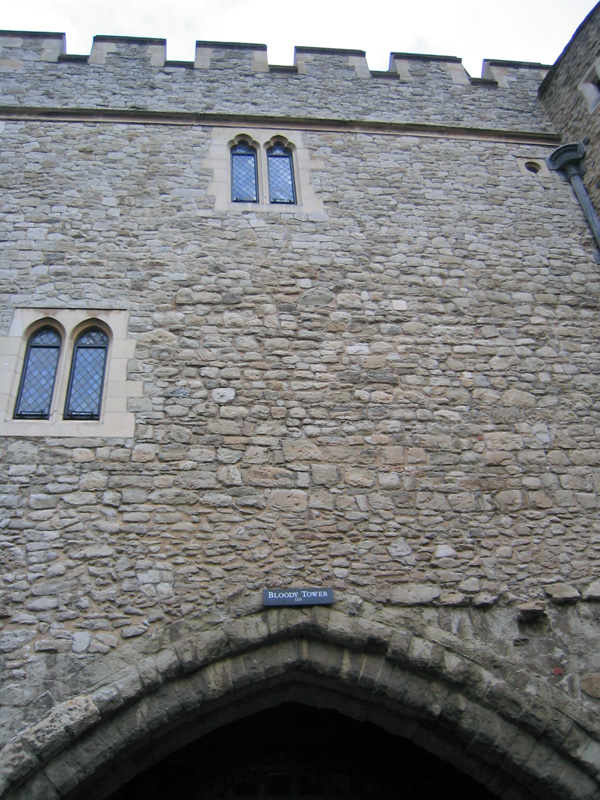
The Bloody Tower


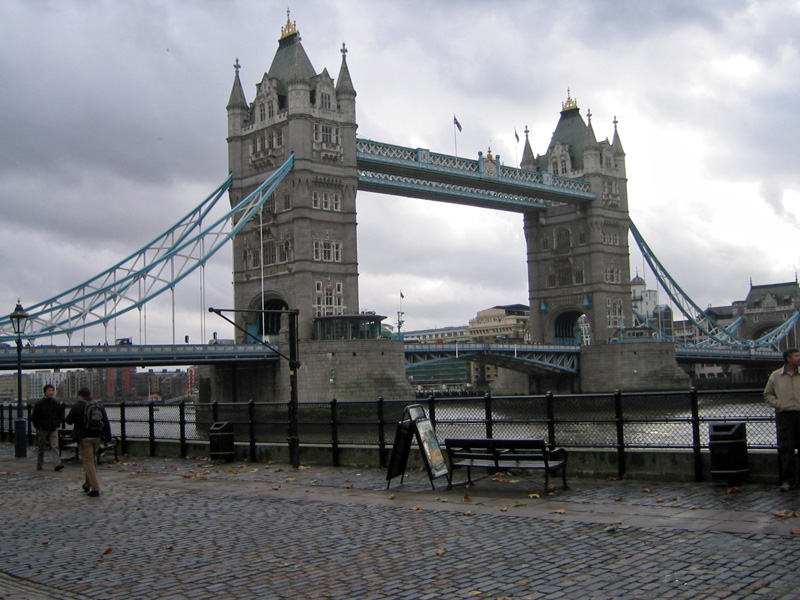
Tower Bridge, across the Thames


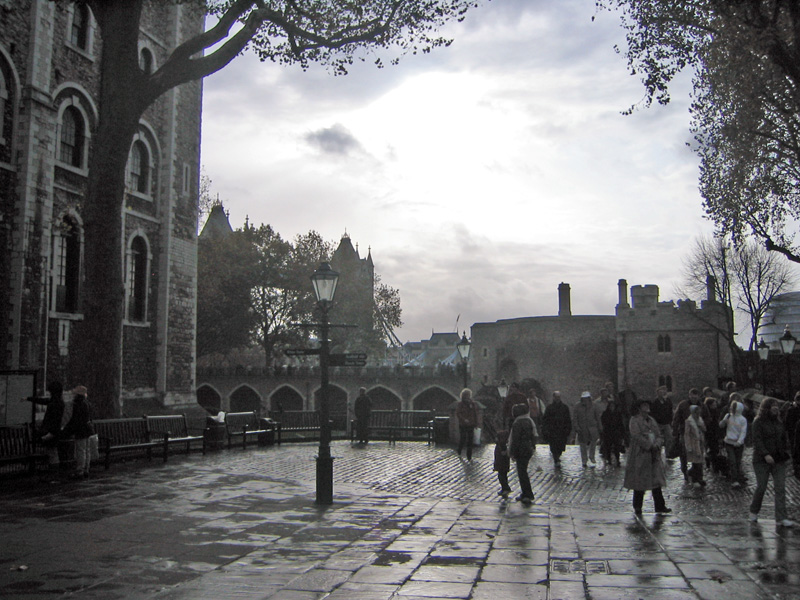
The Tower campus, after a shower

After the tour, we wandered on our own into the tower housing the Crown Jewels (the glittery kind, not the naughty kind). I'm not overly impressed by jewelry, but I have to say, these were spectacular. Andrea was surprised that she liked the Imperial Crown of India, since she doesn't like Indian food.

While sitting in the chapel at the end of the yeoman warder's tour, I glanced over at the walll and noticed a plaque commemorating the Royal Fusiliers. It suddenly occurred to me that one of my goals on this trip was to research my great-grandfather's military record at the National Archives at Kew. Once our tour was over, I asked Andrea if she was interested in going, and she was.

It was still early, around 12:30, so we rode about a half-hour on the Tube to Kew, located in a London suburb called Surrey (as in "Surrey down to the stoned soul picnic" or "Surrey with the Fringe on Top"). Kew is also home to the Royal Botanic Gardens, also known as Kew Gardens (not to be confused with the neighborhood in Queens, though strikingly similar in appearance).

The National Archives is a massive but inviting complex. From the time we entered to the time we left, we found everything easy to navigate and the staff friendly and helpful. The first thing we did was apply for readers' cards, photo IDs that are good for 3 years and entitled us to request any holding in the collection. During our brief orientation, the clerk politely added that no food or drink was allowed in the reading rooms, including the gum that Andrea and I were chewing, and that he would passing around a bin for us to deposit it into. In New York they'd say either "Spit your gum out" or, more likely, they wouldn't care. But in the archives, you're not even allowed to bring in a pen for fear that you might accidentally deface the Magna Carta.

After getting our readers' cards, we went through a secure gate upstairs to the reading rooms. I was looking for military records, so I was directed to the War Office records. At the entrance to the room is a series of kiosks where we picked up leaflets instructing us in exactly what we needed to do to find a particular record. I wanted to find the military record of my great-grandfather Samuel Mason, who, according to my mother and aunt, was in the Royal Army Medical Corps and served in the Boer War. That was all they knew about him.

I knew from previous research that Samuel was born in Tandragee, County Armagh, in 1865. Since Ireland did not become independent from Britain until 1922, Irish soldiers were considered British soldiers, and thus his military record would be at Kew. I had done some preliminary research online, so I knew which collections I wanted to look at. After some false starts, I found the paper records I wanted and, with my new reader's card, requested them online. I was assigned a seat in the reading room, and while waiting for the records I could swipe my card at a monitor on the wall and find out me where in the process my records were. The records were delivered to a locker matching my seat number within 20 minutes.

It was coming up on 3:00, and the Archives closed at 5:00. I opened the box of original paper records, and Andrea and I started sifting through them. There were strict rules about handling these very old, sometimes crumbling records, for instance, no licking your fingers to separate pages. That made things a little rough.

The stack had records of about 20 Samuel Masons, none of which matched what I knew. These record were mainly of soldiers who had been discharged dishonorably or due to injury. I didn't know whether Samuel was discharged or died in service, so I sifted through dozens and dozens of records. All dead ends.

"I'm going to have to consult a genealogy expert," I said to Andrea. "I must be missing something."

The crucial piece of information I was missing was whether Samuel was a soldier or an officer. My mother thought he had a been a corporal, but most of the records I had said "soldier." I went to the microfilm room and asked the genealogy expert what other records I might consult. I said I didn't know whether Samuel had served in World War I, but I thought he might be too old by then. She said it was rare but not impossible for men in their 50s to be in active service. She directed me to two collections that might help me: "burnt" records of officers during the First World War and records of officers discharged to pension.

I located the two microfilm reels I thought might work. As in Dublin, I couldn't figure out how to thread the microfilm reader. An elderly gentleman sitting a few readers over heard me complain to Andrea.

"Just a minute," he said brightly. "I'll be right over to help you." He came over and showed me how to thread the reader. "These bloody diagrams don't help," he said. "These arrows can mean anything." Embarrassed and grateful, I thanked him. It was coming up on 4:00 and I wasn't optimistic about finding the record.

"By the way," he said, "what military records are you looking for?"

I explained that quite honestly I didn't know, but I told him what I had looked at so far. "There's the British Army Lists," he said. I said I had looked at those, with no results. "I'm afraid you're going to have to know the regiment," he said.

He walked away, then turned around and added, "Have you looked at the WO 364 records?"

I said I hadn't but that the genealogy expert had casually mentioned them. The man explained how they were organized, since there were two sets of records. He said I should definitely look at them.

"Well, that's about it for me," the man said. "Best of luck with your search." With that, he left.

I threaded the film into the reader and started looking for Samuel Masons. Andrea left to call her friend Susan and would return in a few minutes. It was now 4:15, and I resigned myself that the chances of finding the record were pretty slim.

I flipped through about five Samuel Masons and accidentally forwarded the reader too far. I backed the film up a bit, and the record it stopped on was for a Samuel Mason born in Tandragee, County Armagh. "Regiment of service: Royal Army Medical Corps." And other things matched: his birth date, the name of my great-grandmothe, and his service in the Boer War.

I was so excited I jumped out of my chair and almost let fly a loud, "Yes!" when I saw a big sign that said, "Quiet, please." I sat down again, my heart pounding in my chest with excitement as if I had just discovered the cure for cancer. Andrea had not returned, and the elderly researcher had left. Andrea had not returned, and the elderly researcher had left.

I ran over to one of the reference librarians and asked how I could get copies of the microfilm. I was told I had to go to a different reader that has a printer attached and purchase a copying card. Andrea came back, and I grabbed her: "I found it! I found it!" I whispered loudly. I thought I was going to break into song.

The microfilm reader with a printer was equally challenging to thread. It was now almost 4:30. Finally, I got everything working and started printing out the record. There were 14 pages in all: Samuel Mason's medical history, military campaigns, enlistment and discharge papers, pension schedule, and the Holy Grail: a list of the names, birth dates, and birth places of the children he and my great-grandmother had during his service. My grandfather was one of 9 children! I knew about only one of them previously. The record also listed my great-grandfather's four brothers' names. It was a veritable goldmine of information.

I printed out the last page just as the announcement was made that the Archives was about to close. If I hadn't seen that sign at the Tower of London, it might not have jogged my memory. Getting this record was a tremendous accomplishment for me. If only I'd been able to thank that man for his help.

Later, I couldn't help thinking that Nanny M had guided that man to me. Maybe from the great beyond she wants me to find out the truth about her husband, which she could never do when she was alive. Another piece of the puzzle revealed, another key to my past unlocked, my own jewel in the crown.

Labels: , , , , ,


Continue reading...
Wednesday, November 22, 2006

Trains, planes, and autoreflection

Before leaving for London I checked the fares from London to Dublin. Aer Lingus was running a special for £6 round trip. That's right, £6 ($11). It sounded too good to be true, and it was. With taxes, the fare came out to £45 (about $85). Still not bad for a day's jaunt.

All week I'd been flip-flopping about whether to actually go, even though I had my ticket. Between getting to and from Heathrow and then to and from Dublin, I would spend about 9 hours in transit, with only about 5 hours in Dublin itself. But my burning desire to do family research overtook me, and I thought about the Frances Mayes quote my friend Cathy had sent me before the trip:

"It's not the destinations; it's the ability to be on the road, happy trails, out there where no one knows or understands or cares about all the deviling things that have been weighting you down, keeping you frantic as a lizard with a rock on its tail. People travel for as many reasons as they don't travel...Once in a place, that journey to the far interior of the psyche begins or it doesn't..."

Today marks the 24th anniversary of the death of my mother's mother, whom I called Nanny M. I was extremely close to her. She raised me about as much as my mother did. Nanny M was Scots-Irish, with a heavy burr and a strong will. When I was a child, she went to battle with my father any time he became abusive with me. While both my parents worked she looked after me. I loved staying at her house, my sanctuary from my parents' screaming and fighting. When she died, my cousin Denise and I both believed that she was, and always would be, our guardian angel. I still believe that.

And so, in her honor, I rode the Tube to Heathrow for an hour, waited an extra hour for my delayed flight, took a cab into Dublin, and went to the General Records Office (GRO), where vital records are stored. I wanted to uncover more family secrets and assemble more pieces of the puzzle. Dublin was where my grandfather left his family--his wife and three children, aged 8, 4, and 2--when he embarked for the States in 1925. Why did he do that? What was he running from? Why did he never return?

I knew I couldn't find those answers in a day, and maybe I'll never find them. But I came to get the facts, like birth and marriage dates, which were easier to come by.

The weather in Dublin was gray but mild, in the 50s. The reading room at the GRO was busy. Most of the information I'm looking for could be easily found at the Mormon family history centers in New York, but coming to Dublin, to the source, is more rewarding. Seeing all of these other people searching for keys to their past reminded me of what my other grandmother, Nanny O, used to say: "What's bred in the bone comes out in the flesh." In other words, nature trumps nurture.

My goal for this trip was to find as much information as I could about my great-grandparents. I was quite successful. I found Nanny M's mother's birth record, as well as the marriage records of both of my paternal great-grandparents. I have now gone back a full five generations and have partial info about the sixth. People always ask me why I'm doing this. The answer is, I'm not really sure. But I have some theories. For one thing, I truly enjoy it. I get an endorphin rush every time I find a major clue. And at 44, I realize I'm probably the end of the line, unless an immaculate conception takes place. My nephews will carry on the bloodline, but it won't be completley mine. I want them to know where they came from, should they ever be curious. I do believe that personality is largely genetic. But more than that, in doing this research I've learned a great deal, about history and family and character and circumstance. If my grandparents had not come to this country, obviously I wouldn't exist, but in whatever form I might have arrived on this earth I'd probably be milking a cow in Tipperary.

I lost track of time at the GRO, and at 3:45 I decided to head over to the National Archives to look up a few census records. I didn't know how long it would take to walk there, and by the time I arrived it was almost 4:15 and getting dark. The security guard was very nice. I asked him if there was any chance I might be able to get to the reading room, that I was only in town for the day and I knew it was late but...He gave me a form to fill out, and I rushed up to the fifth floor to see if anyone could help me. The staff acted with a sense of urgency. One of the clerks helped me look up the census record online and pointed me to the right microfilm drawer. He showed me how to thread and operate the microfilm reader, which was not easy. About halfway through browsing I realized this was not the right record, so I rewound the reel, exchanged it for another, and tried to thread the reader again. This time I could not find anyone to help me, and next thing I knew, the reading room was closing. I had the right record in my hand, but time ran out.

I was somewhat dejected, since I thought that getting this record would shed light on my grandfather's shady past. So, I went to a pub in Temple Bar called Fitzsimon's, which was staffed largely by Eastern Europeans, and had a pint of Guinness and a plate of fish and chips. Afterwards, I walked along the Liffey, amid the bustle of nightlife. Dublin really is a city of the young, and the energy level is high.


The Liffey at night

It was after 6:00, and my flight was leaving a little after 8:00. If I'd had more time, I was going to try to track down the house in Stoneybatter where my grandfather's family lived in the 1920s and take a picture of it. It wasn't far, but it was getting late. Some other time, I felt Nanny M say, some other time. I walked up to O'Connell Street and thought about taking a taxi. Instead, I tracked down an AirLink bus that cost €5 ($6.50). It took 40 minutes. I got to the airport early, bought an armload of Butler's Chocolates, and eyed some hot Irish rugby players. I got back to London around 9:30 and took the Tube back to Islington. The ride was almost an hour long. I'd been traveling since early in the morning, and I was tired, but I was glad I'd made the trip. And I was glad to be back in London, one of my favorite places, a place where a British woman's pre-recorded voice announces matter-of-factly "This is a District line train terminating at COCKfosters"?

Labels: , , , , , ,


Continue reading...

Hosted by www.Geocities.ws

1