Thursday, January 15, 2009

The 'Book and the tree

I have been conspicuously (and by conspicuously, I mean in my own mind) from the blogosphere for a while now. I start blog entries and then forget about them. I wonder what there is to say that anyone could possibly care about. I still get comments on old blog posts and start writing but lose interest. Facebook and Ancestry.com have tightened their grip on me.

My friend Michelle invited me to join Facebook almost a year ago. I resisted at first, but I thought it would be a good way to research social networking, since my department was looking into building virtual communities. I thought the best way to study them was to become a member. Now I'm hooked on Facebook, and like the Internet itself, I can't imagine what my life was like before it. Well, actually, I know what my life was like before it. It wasn't full of poking, flair, and status updates by the nanosecond.

I've always felt somewhat alone in the blogosphere; Facebook, on the other hand, lets me connect with any of the currently 140 friends I have. I had no idea I knew 140 people, but they are, in fact, people I know, from work, school, the neighborhood, blogging, the gym, the past, my family. Some are casual acquaintances; some are people I've known for many years. In many ways my contact with them mirrors how I would interact with them in real life, but in other ways I've gotten to know people better by observing and interacting with them virtually. For instance, a colleague of mine is in the hospital recovering from a serious illness and was unable to speak on the phone. His wife, through Facebook, was able to keep us all up to date on his condition and relay messages to him. It was better than wondering how he is and having her be bombarded with phone calls and e-mails.

On our recent trip to London, I saved money on cell phone calls by contacting my cousins on Facebook to set up places and times to meet. I saw photos of our friends' new baby who was born while we were away. I correspond with my friend Michelle, who lives in Mongolia and is already living tomorrow. To me Facebook is not a substitute for human contact, and if someone lives hundreds or thousands of miles away, this kind of interaction makes sense. Oh yes, and many of my loyal readers are on Facebook!

But Facebook is only part of the reason why I've put aside blogging. The other part is my genealogical pursuit, which has grown considerably since I started 3 years ago with about 20 people in my tree. Now there are almost a thousand. I've gone back 6 or 7 generations on all four sides, taking me, in some cases, to the late 1700s. I've expanded across generations to almost 700 blood relatives, 400 of them living! I've uncovered cousins in Ireland, England, Scotland, Canada, Australia, Italy, and many parts of the US. I've met dozens of new cousins both in person and through e-mail (and Facebook). And so far I've helped solve three family mysteries. But that's another blog entry. Stay tuned...

Labels: , , , , ,


Continue reading...

Sunday, September 16, 2007

The road rose up to meet me

When I was a wee lad my parents showed me a brochure from Aer Lingus that gave bios of various Irish saints, among them St. Kieran. Aer Lingus had just unveiled its first fleet of Boeing 720s and named them after Irish saints, as they still do today. That, and my mother's corned beef and cabbage, was pretty much the extent of my knowledge of Irish culture. And yet, only one generation stood between me and the motherland. Dad's parents were "right off the boat," arriving a mere 30 years before I was born. Dad met mom while working as an Aer Lingus reservations agent. He was the black sheep of his family, and I never knew whether he wasn't interested in his heritage or whether his strained relationship with his abusive father estranged him. Aside from my family, the only Irish people I knew were my friends Jimmy and Mary Lee, new arrivals from Limerick with brogues and scrappy demeanors. Being Irish meant witnessing my father's hazy drunks and enduring the pungent odor of cheap, stale beer in the dark corners of the local pub.

My cousins Joanie and Denise were Irish stepdancers, and for a few summers I watched them dance at feisanna in East Durham. My aunt and uncle were charter members of their local AOH, and family gatherings often involved a wistful rendition of "Danny Boy." One of my aunts would usually go on about the anti-Papist laws, but I just thought she was crazy. I was American, through and through, and no one was trying to stop me from being Catholic. While my cousins were off spending their summers in Ireland with our relatives, my exposure to Irish culture consisted of eating Irish sodabread made by my Scottish grandmother.

I saw my dad's side of the family fairly often as a child. We lived in Brooklyn, and the rest of the family lived in Astoria and on Long Island. Summers I spent at my cousins' sprawling ranch house in Deer Park, where I learned how to ride a bike and breathed more easily away from the city and the family. At least once a month we had Sunday dinner at my grandparents' apartment in Long Island City. They were of the lace-curtain variety, certainly not the shanty variety--a distinction I would later discover is razor-thin.

Dad's mom died in 1980 of complications from arteriosclerosis, before anyone knew it as Alzheimer's, and Grandpa died 7 years later. By that time I had moved away to DC, partly to get away from my family, particularly my dad. I was terrified of ending up a repressed, belligerent drunk like him, so I became a teetotaler.

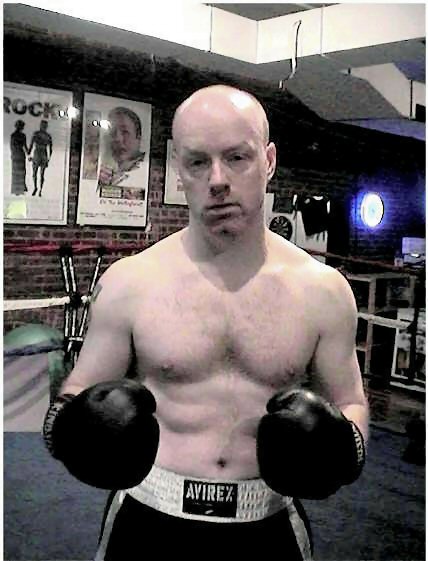
But as I came to learn, as much as you fight against the things you hate, you somehow end up being drawn to them. I didn't become a drinker, but I did like to fight. It must have been innate, because gay boys are not supposed to like fighting. I gave up Catholicism and embraced boxing as my religion. It didn't occur to me that I was following a long line of Irish boxers. Irishness was never in my consciousness. I just knew I liked it.

The year before Grandpa died he began losing his battle with emphysema. We all knew he had little time to live. My aunts and uncles organized a family reunion in a public park in Sunnyside, Queens. It's one of the few times we were all together, my grandfather, his five kids, and their fifteen kids, in one place. I came up from Washington, in the middle of summer, to see my aunts and uncles and cousins. In the pecking order of cousins, I'm number 5. I had fun, but I wasn't quite sure I fit in with them. For one thing, there was lots of drinking, which made me uncomfortable, and talk of sports, which, as a newly minted out homo didn't interest me. There was talk of trips to Ireland and Irish music and dance, and the bombs in Northern Ireland and the bloody Protestants. I remember someone talking about Irish performer Carmel Quinn, who I thought was cheesy. I didn't identify with anything Irish. Being Irish was quaint and backwards. It was leprechauns and green beer and four-leaf clovers. Now, when I think back on it, it's ironic: I was a foreign language major interested in every culture but my own.

After Grandpa died, I lost touch with dad's family. Grandpa was the glue that kept us all together. My cousins, who lived towns apart in Long Island, saw each other regularly. E-mail and cell phones were not common in the 1990s, so contact was sporadic at best. And there was one more thing: I was afraid to tell them I was gay.

Every year the family held a reunion, mostly in Long Island, but I never went. The next one I attended was in the mid-1990s. Many of my cousins had married and started having kids of their own. They owned houses and swimming pools and cars. I was still living in Virginia and renting a house. My "secret" still kept me at bay. During the reunion that year I confided in my cousin Joanie. "I was wondering when you were going to say something," she said. Turns out everyone in the family knew, had known for years, and it just wasn't an issue. It made me realize that fear is largely a figment of our fertile minds.

When dad died 7 years ago, it liberated me. No longer would I witness his bloated dramatic performances at family functions. I could be myself, on my own terms. Through the years, every alcoholic in the family had sobered up and stayed that way. My cousins were adults with interesting lives and families.

For years Luis tried to persuade me to apply for Irish citizenship, and I paid it lip service. When I finally decided to do it, I started talking to my dad's family to find out if anyone had done it. Some of them had thought about it but no one had actually applied. I decided to try, but I realized I didn't even know where by grandfather had been born. As it turned out, no one else knew for sure either. When I applied for his birth record from Ireland, the seed had been planted: I realized that I knew only a watered down version of Ireland. I wanted to know where I came from. A big driver was the realization that I am the end of my line. If I couldn't leave a child, at least I could leave the legacy of the family history.

I started reading Irish history, learning the Irish language, and applying for citizenship. I took my first trip to Ireland, became a member of the Irish Arts Center and the Irish Repertory Theater. I built my family tree and have now gone back almost six generations on both sides. (Oh, and I love the Guinness.) Plastic Paddy though I may be, I don't consider myself any more Irish than I was growing up. I just have a different perspective. I still find it ironic that I am descended from a long line of dairy farmers and I'm mildly lactose intolerant.

This year I went to my family reunion on Long Island. I hadn't gone in 4 years, as I'd had other plans when the reunion was held. My cousin PJ proudly announced that his daughter Julia is a world-ranked Irish stepdancer. My cousin Tommy told us stories of visiting our great-grandmother when he was a kid. I showed my aunts the family tree; Aunt Helen, my best source of family information, said she was so thankful that I had done this. I showed off my new Irish passport, which I will christen on our trip to London in December. Now all my cousins want to get theirs.

At the end of the day, PJ gathered us all in his basement to watch Julia perform a few Irish stepdances for us. I watched her raptly, feeling a tear come to my eye, and was glad for the journey I had made.

Labels: , , , , , , ,


Continue reading...

Thursday, March 22, 2007

The Royal Mile

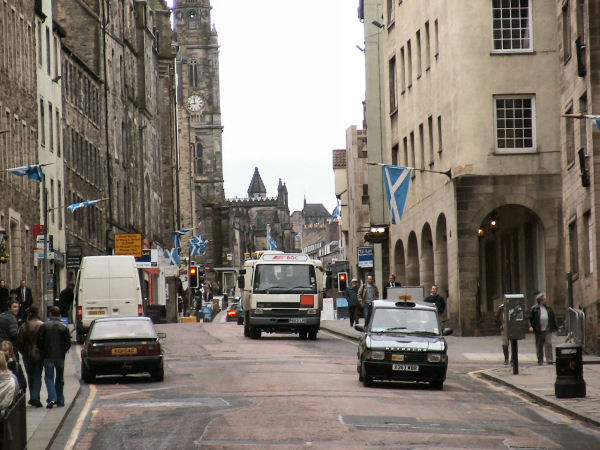
Walking in Edinburgh is like being on a Stairmaster. You can build kickass legs and a killer butt (that is, if you don't already have them).

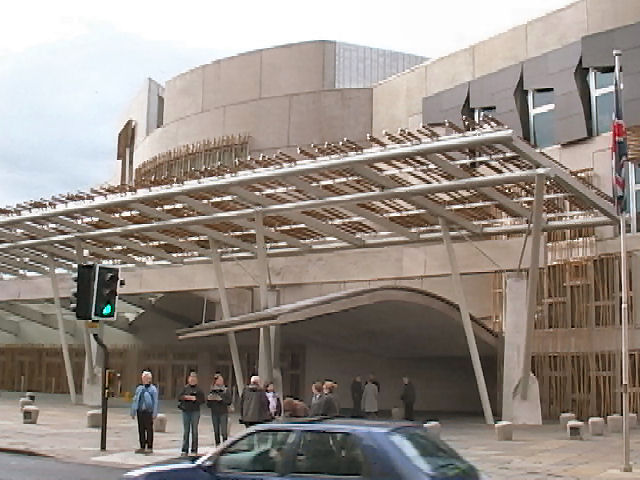
On my last day in bonnie Scotland, after breakfast on the Royal Mile, I walked toward the east end to Holyrood House, the official palace of the Queen in Scotland. You know the Mike Myers character who owns the store All Things Scottish and whose motto is "If it's not Scottish, it's crraaaap!"? Well, I'd have to submit one exception: the new Scottish Parliament building, built in 2004. Personally, I think the it looks like a 1970s train station. As I was standing in front of it, Niamh text messaged me: "Throw a rock at Parliament for me."

I replied, "I know. It's really ugly."

Later, I learned that she meant that, like many Brits, she feels the parliament (both building and legislative body) is a whole lot of nonsense and a waste of money. In 1998 the Scottish people voted for devolution, and this was what they got.

Niamh had a reason for her disdain. The issues of nationalist pride and cultural uniqueness in the UK and Ireland have recently been challenged by a discovery by geneticists that the British, the Irish, the Scots, and the Welsh all share the same DNA. The Picts, Celts, Angles, Saxons, Romans, and Normans didn't have as much of an impact genetically as once thought. The writer did point out, though, that this implication "seems likely to please no one."

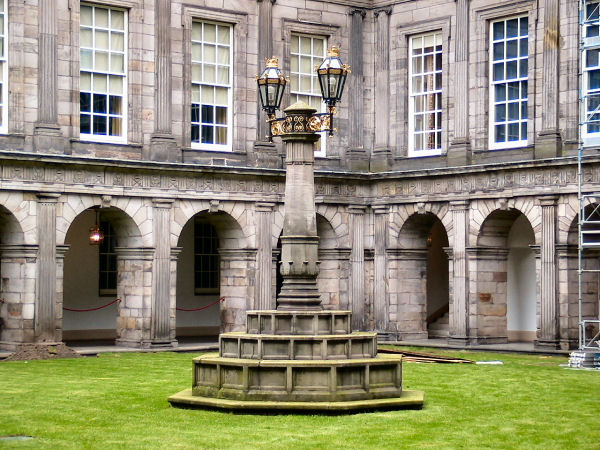
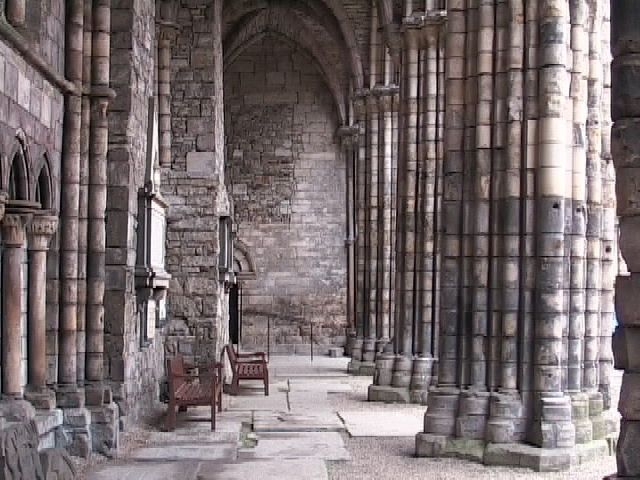
I took an audio tour of Holyrood Palace, which has a stately Victorian feel to it. I'll take classical architecture any day. Many school groups were visiting the palace. I was continually trying to beat them to the next room. One of the tours had at least 50 teenagers. The boys goofed on the portraits and furniture, something I'm sure I did at that age. I could understand their goofing, since the Stewart men were not a good-looking bunch. There's a whole gallery of 89 portraits of Stewart monarchs that were commissioned by Charles II. The painter, Jacob de Wet, imagined what some of the early rulers looked like and pretty much made them all look alike to emphasize the prominence of the family. Especially after having just seen The Queen, I was interested in how the palace operates, what guests are permitted to see and how they use the grounds. The gardens are not yet open, but they are supposed to be spectacular in the late spring.

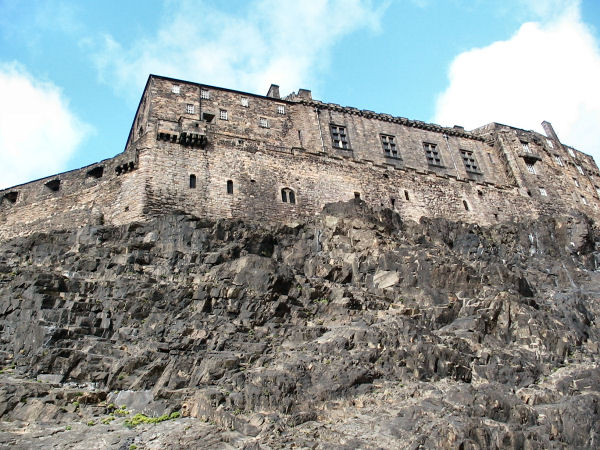
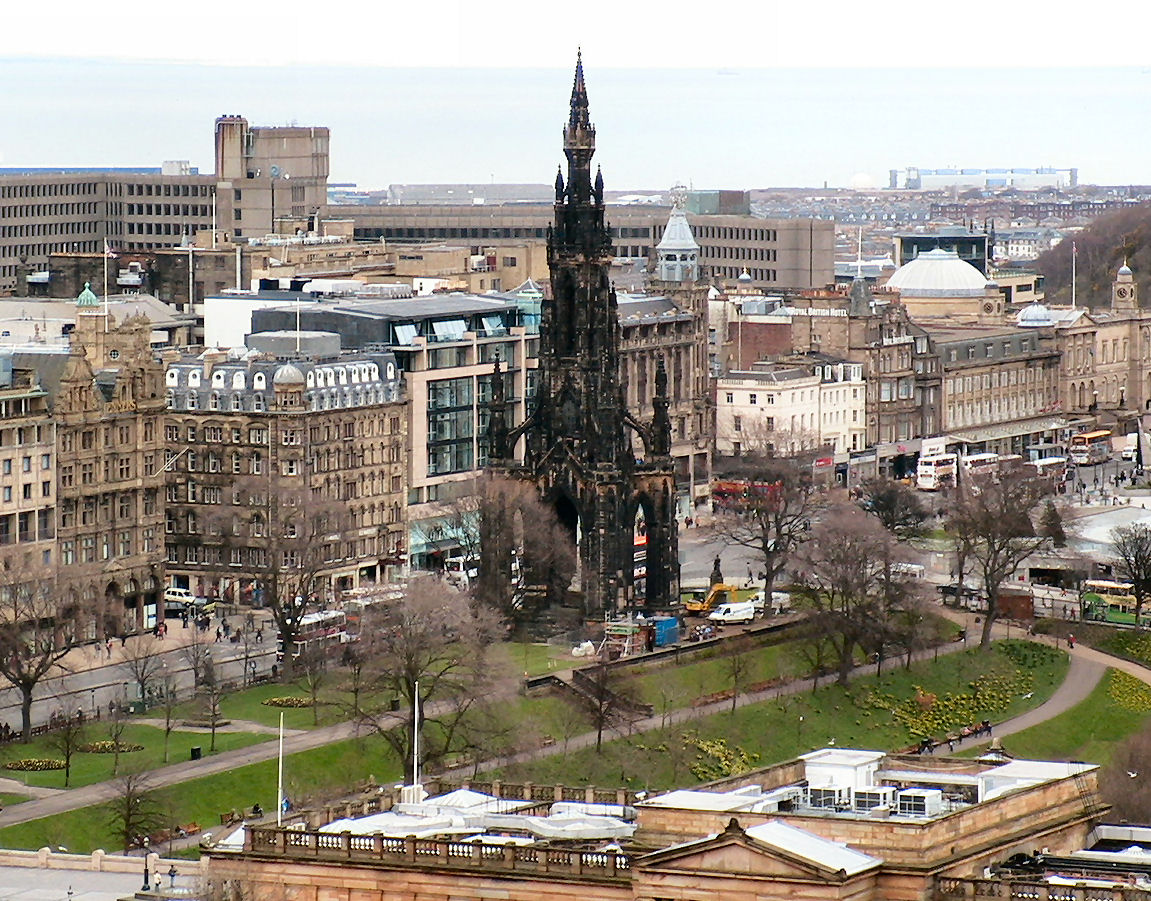
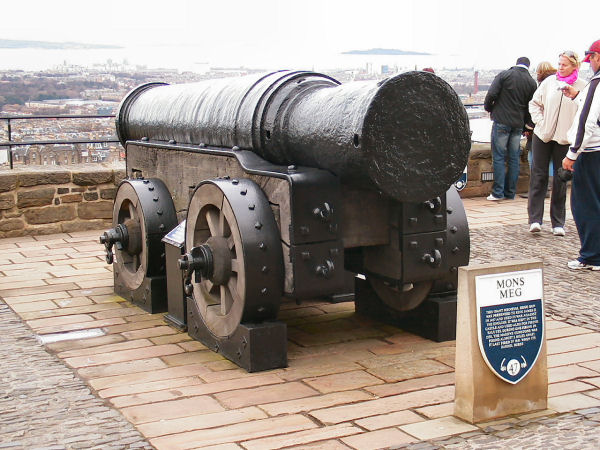
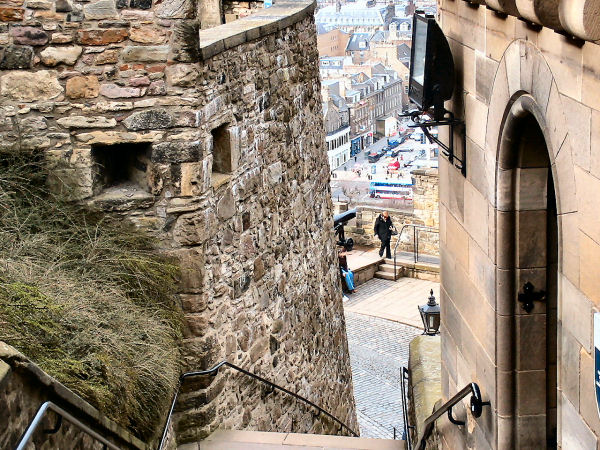
Like a delectable sticky toffee pudding, I saved the best for last: Edinburgh Castle. Walking from the palace up the steep Royal Mile (which is actually 1 mile, 110 yards) to the castle requires a good set of lungs and strong legs. I thought the Rock of Cashel in Tipperary was impressive, but I think the castle might trump it. For centuries it has served as Edinburgh's garrison and could be used at a moment's notice to protect the city from invasion. It's a self-contained city, with prisons, lodging, a chapel, and administrative headquarters. It houses a mammoth cannon called Mons Meg, which could propel a 400-pound cannonball almost 2 miles! The castle exhibits chronicle the long royal history of the Stewarts (or Stuarts if you're French) and the strategic role played by Scotland dating back way before Christ. Unlike other cities, which bury or demolish their past, Edinburgh honors it. Although some modern buildings, such as the Scottish Parliament and the new St. James shopping center, have appeared, you get a real sense of history and time by walking virtually anywhere in town. Buildings are given new identities. My cousin John said that if you buy a property in Scotland, there's little you can do to it. If the original windows, for instance, are not double glazed, you can't upgrade them.

One interesting thing I learned at the castle is that historically imprisonment was not considered a form of punishment. This was particularly true in a military prison where time not spent doing drills was considered idle. Prisoners awaited their punishment, usually torture or flogging. I wonder what happened if you liked that sort of thing.

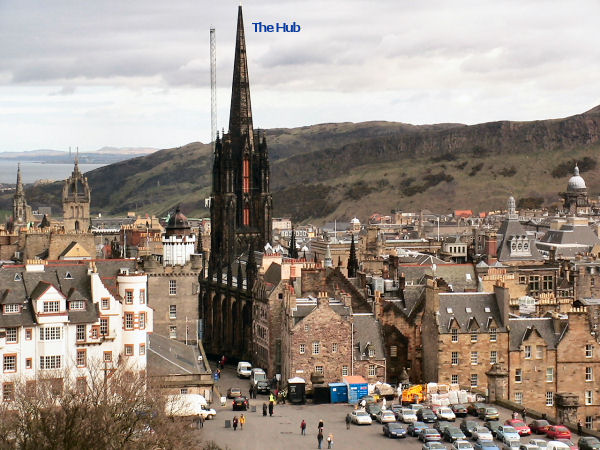
I had lunch at Cafe Hub, located in a building that once housed offices for the Church of Scotland, designed by architect James Gillespie Graham, who also designed St. Mary's Cathedral, where my great-grandparents were married. The menu had the ubiquitous haggis with tatties and neeps . Though my friends tell me that haggis nowadays is largely oats, the idea of eating organ meats doesn't thrill me. My grandmother made haggis but never forced it on me. Whenever she and my uncle ate steak and kidney pie or calves' liver, I'd just about have to run out of the room from the stink. So I had a prawn salad instead.

I thought I'd given myself plenty of time to get to the train station, but by the time I got back to the hotel to pick up my bags, I realized I had a 15-minute walk ahead of me. My shins were already aching from the steep hills of the Royal Mile and the castle. Laden down with some overnight bags and newly acquired souvenirs, I marched up the hill to the station. It was about 40 degrees out, and I was sweating, but I made the train.

As recently as 2 years ago I had absolutely no interest in my ancestors, or where they came from, or who I am. But all that's changed. Trips like this have changed me.

Labels: , , , , , , , , ,


Continue reading...

Wednesday, March 21, 2007

What's afore ye canny go past ye

The Scottish sun streamed in the hotel window, gently nudging my eyes awake. I got out of bed and looked out the window as the sun rose over Edinburgh Castle. Normally at 6:30 a.m. my eyes would be sealed shut, but the castle, set on a massive bed of volcanic rock, is as inviting at daybreak as it is forbidding at night. I watched the sun rise for about 15 minutes before a car horn from the street below jolted me from my reverie.

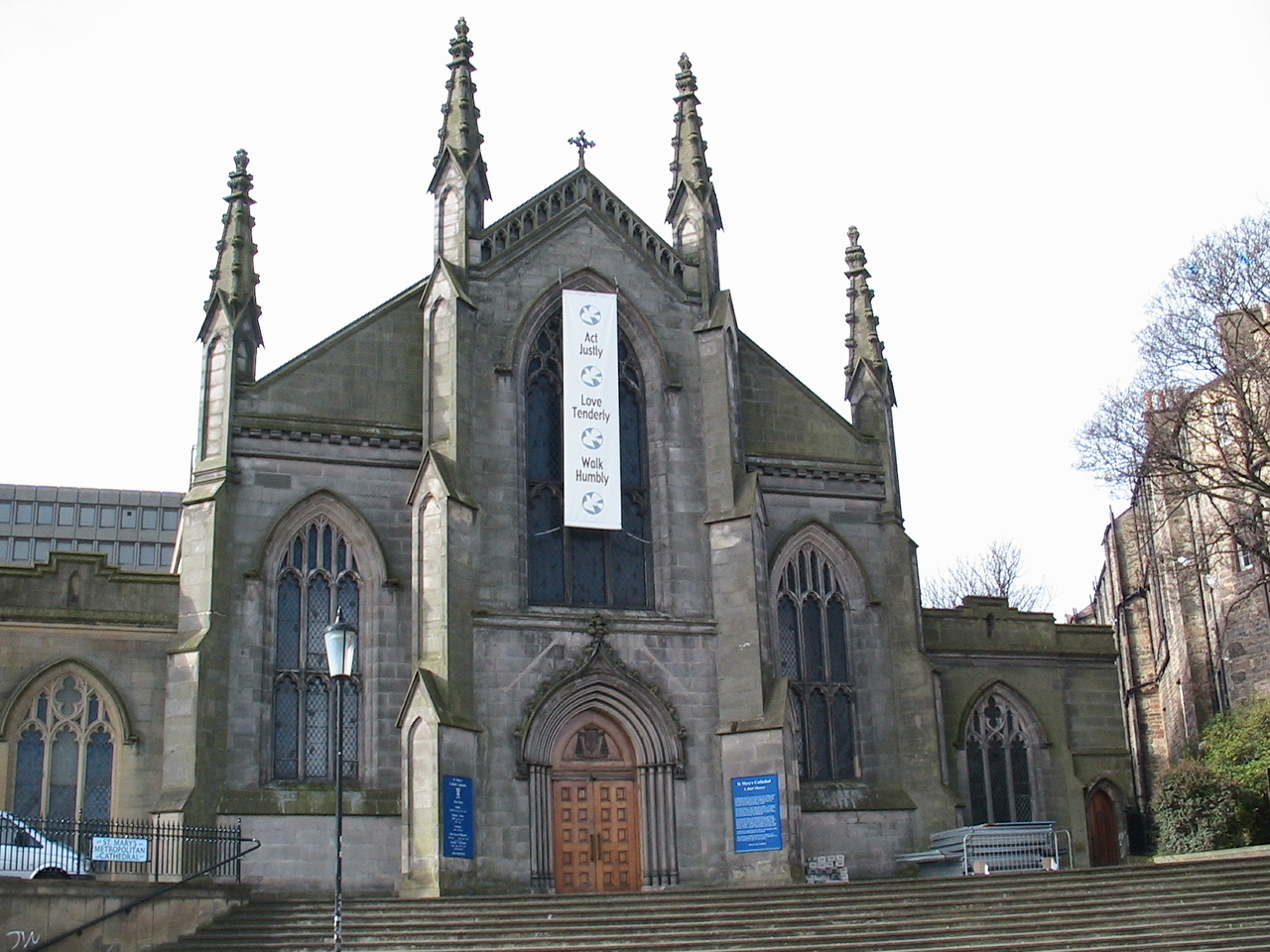
After breakfast on The Royal Mile at Always Sunday--Scottish smoked salmon (which I can never have enough of), scrambled eggs, walnut bread, and tea--I walked over to St. Mary's RC Cathedral, where my great-grandparents James Boyle and Mary O'Donnell were married in the year 1900. When it was built in 1886 the cathedral was a sign that times had changed. Earlier Catholic chapels had had been attacked and burned down by anti-Irish, anti-Catholic mobs. With the erection of St. Mary's, Catholics could finally practice without fear of reprisal.

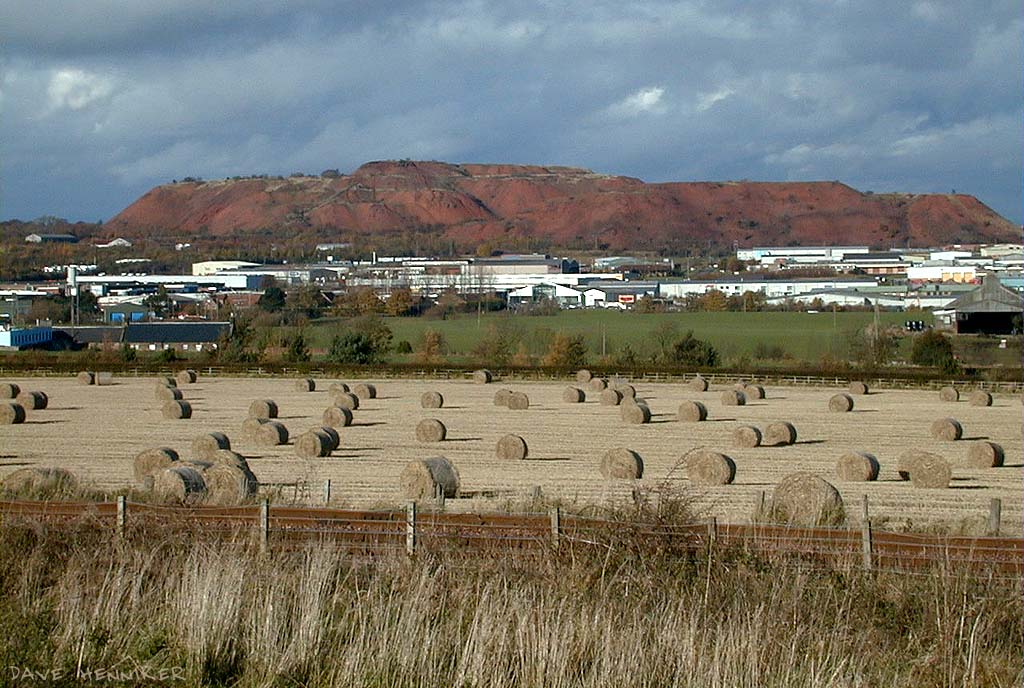
Cousin John picked me up at the hotel and we drove out the M8, which travels due west to Broxburn and Uphall. Broxburn is known for two things: Glenmorangie whiskey and mining, specifically, coal, iron, and shale. As we approached Broxburn, what look like a series of reddish hills rose in the distance. Those hills are called shale bings. Although they are pretty, they are nothing but a heap of waste. Before the US oil boom, in the mid-19th century Glaswegian chemist James "Paraffin" Young found a way to extract oil, or paraffin, from shale and use it in products ranging from lighting and heating to industrial lubricants. As a result of his discovery, the shale mining industry sprang up in Broxburn, and where virtually nothing existed before, a company town now lay. Rigs were installed and row upon row of miners' cottages were built. That boom was the impetus for the emigration of my grandmother's farming family, the Boyles, from Donegal to Scotland in the 1880s. Almost all of my male Boyle relatives who left Glenties, Donegal, at that time moved to Broxburn or neighboring Bathgate. My great-grandfather James Boyle was a shale miner, as was his twin brother Neal and his other brothers Dennis and Patrick, also twins. My grandmother, Nanny M, was born there in 1904. Her family and all the Boyle brothers lived in a miners' community called Holygate. Nanny attended the local church, SS John Cantius and Nicholas, and school across from her house. Shale mining was hard work, but the men earned a good living. The good times, however, didn't last forever. By the late 1920s the boom was over, falling victim to the lower cost of petroleum, and many of the Boyle men went to America to look for work. Unfortunately, their arrival coincided with the onset of the Great Depression.

Before mining, shale is blue. Once the oil is extracted, all that remains is rock, which turns reddish from the high concentration of sulfur beneath it. Ecologists have found the bings valuable as study sites for wildlife habitats and vegetation, but there are also environmental hazards. Waste materials seep into the groundwater and have the potential to ignite. Following the European trend of greening--at which Europeans are light years ahead of the US in that area--the Scots have begun reclaiming the bings. The rock, which is useful in road laying, is being blasted and shipped to countries like Germany.

As we drove down the main street into Broxburn, which stretches about half a mile, John said the area is undergoing a period of rapid growth and even expansion, as Edinburgh becomes larger and the surrounding areas become bedroom communities. Broxburn is only about 12 miles west of the city and lies on the main road into town. That makes it attractive to commuters, and since the road continues west to Glasgow, even those who work there find it a viable place to live.

"That's the house your grandmother was born in," John said. John has a strong Scottish burr that sounds just like my grandmother's. John is my mother's first cousin (or my first cousin once removed, if you like), now in his 60s and retired. He was an engineer for British Petroleum for many years and lived 10 years in Saudi Arabia. "It used to be One Society Place," he said, "but now it's a completely different road and house number." I tried to picture Nanny M and her 7 brothers and sisters living in this one modest cottage in Holygate. "See that shed?" said John, pointing to a row of recycling bins. "That was my father's garden at one time."


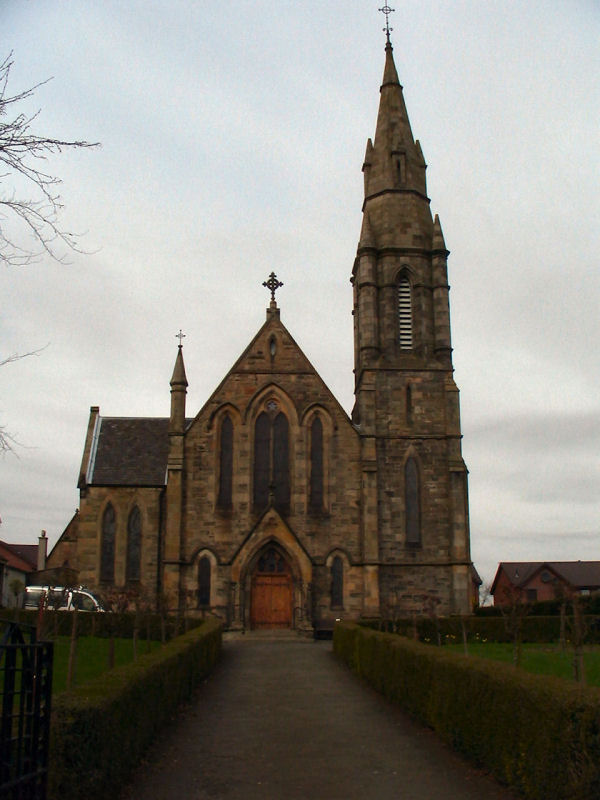
Without John I wouldn't have had a clue where to look. SS John Cantius and Nicholas Church is still standing after more than 100 years. Everyone in the family was baptized or married there. We went inside and had a look around. Compared with other Catholic churches it's simple.

"The school where your gran went used to be right behind the church," said John. "But that's all gone. It's all row houses now."

"Could we go to the cemetery?" I asked. I wanted to see where my great-grandfather was buried.

"Of course," he said, "but I have to tell you...there's no headstone."

"Really?" I said. "What kind of marker is there?"

"Well," he said, "there's nothing. I only discovered it recently because I got a space in the family plot and went to check it out. I'd never visited before."

At Uphall Cemetery, off East Main Street, indeed there was no headstone, only dirt.

"I don't know why there's no headstone," John said. "I just think there was no money."

Broxburn is named after a canal (Brock's Burn) that runs parallel to the main road. It's still there to this day.

John asked what else I'd like to see.

"Nanny always used to joke that she was the other Mary, Queen of Scots. Is Linlithgow Palace far?"

"Oh not at all," he said. "It's just a wee bit up the road."

We drove through Winchburgh, which also has shale bings, to Linlithgow. For many years Linlithgow was the county town. Now all the government buildings are being moved to Livingston, a new town (or planned community as it's known in the US), about 15 miles south of Broxburn.

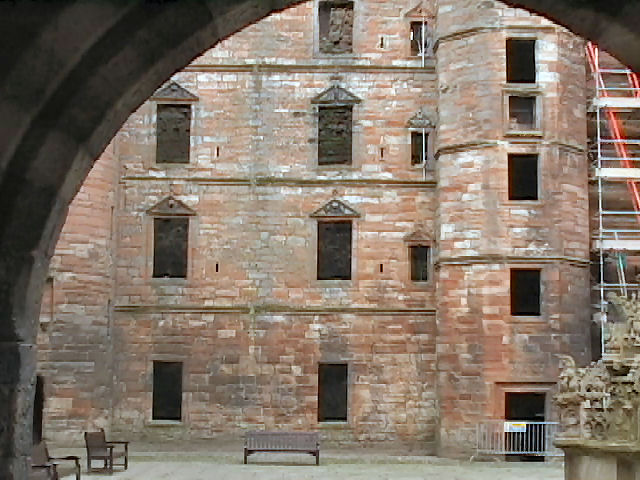
Linlithgow Palace, where Mary, Queen of Scots was born to King James V and Marie de Guise in 1542, is a modest building for a royal residence. It now lies in ruins. Mary never saw her father, as he was across the Firth of Forth in Fyfe at the time of her birth and died 6 days later, at which time she became queen (with a regent, of course).


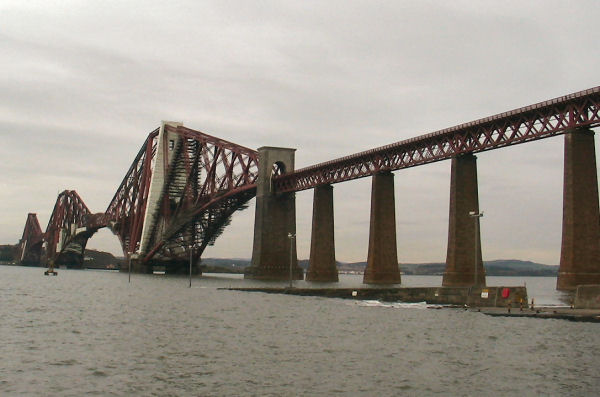
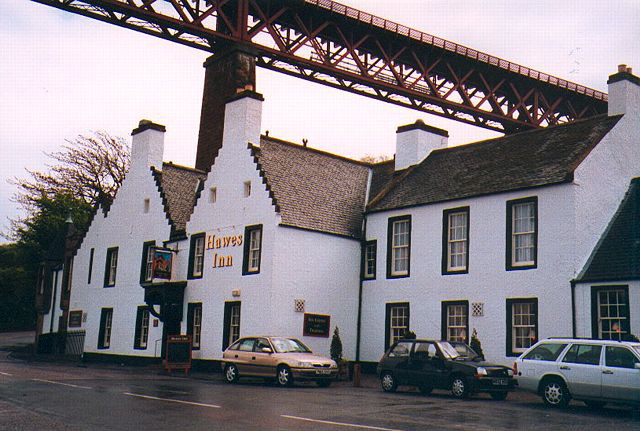
After Linlithgow we drove to South Queensferry, which overlooks the Firth of Forth, and is spanned by the spectacular Victorian Forth Bridge. We ate at the Hawes Inn, where Robert Louis Stevenson was inspired to write the novel Kidnapped. The inn still had the character of an 18th-century public house but is clearly a modern inn. I had a ploughman's lunch of ham, cheese, apple, tomato, and chutney.

John drove me back to Edinburgh along the busy motorway. When I was a wee lad, Nanny M always told me stories of Scotland. In my mind it was romantic, misty valleys and tall green hills with fortresses and, of course, the Loch Ness Monster. And it is, in some ways, romantic. Now, though, as elsewhere, history is being paved over. But, as Nanny M always used to say, "What's afore ye canny go past ye."

Labels: , , , , , , , , , ,


Continue reading...

Monday, March 19, 2007

Blood is thicker than Guinness

I arrived at Neasden Tube station about 2:15. Anne-Marie was waiting for me outside the turnstiles. I had no picture of her in my mind. I'd asked her a few days earlier her how I would recognize her, but she remained silent. She's about 5'3" with long ginger hair, and we're about the same age.

We walked along the road to the Blarney Stone pub where we were having Sunday dinner. Even though we'd never met I felt like I knew her. She was as sweet in person as in her e-mails.

"I can't help thinking," I said, "that Mary and Ellie had a hand in this."

"I think you're absolutely right," she said. "I think they've met and given poor Fred an earful."

It's interesting to speculate that if there is an afterlife, you might have to spend eternity with those you wronged in this life.

It was Mother's Day in the UK. I brought Aunt Gladys a bouquet of pink and white mums and carnations.

Neasden, formerly a strong Irish enclave in London, is now a potpourri of nationalities, including North African, Indian, Korean, and even Brazilian. You wouldn't know it from the noisy and crowded pub, which was still virtually all Irish.

All of the family members live within several miles of each other, just like my family in New York. First to arrive was Willie, Anne-Marie's husband, to whom Anne-Marie said I bore more than a passing resemblance, and their sons, 15-year-old Ronnie and 18-year-old William, who is an amateur boxer.

Sandra and her daughters Cassandra and Sandy came next, followed by Shonette and her son James, and Colette and her daughter Alex, who brought Aunt Gladys. As soon as I saw Shonette, I saw the family resemblance to my aunt Eileen.


Left: Shonette, me, Sandra
Right: Anne-Marie, Alex, her mother Colette. Gladys, me, Sandra


Left: Me, Sandra, Anne-Marie
Right: Gladys and me


I felt immediately welcome. Everyone wanted to buy me drinks. I think I had three pints of Guinness the whole night. I know it sounds cliche, but I felt like I'd known them all my life. It was like fitting pieces of the puzzle being together to make the picture make sense. I sat between Aunt Gladys and all the daughters and Anne-Marie. They all knew about Luis since I had told Anne-Marie in an earlier e-mail about him. None of them were even the least bit surprised or bothered; in fact, they were disappointed that he was not with me.

Aunt Gladys was very interested in my mother and aunt and was hopeful that she would meet them. She'd had both hips replaced in the last year, and at 83, she was worried about a long trip. No one in the family has ever been to the United States, so unfortunately, many of them still picture New York as a crime-ridden ghetto. I said that such places existed but that they should come see for themselves. Cassandra, who's a very pretty teenager, wants to come to New York to try modeling.

The family, it turns out, has been heavily involved in show business, starting with Aunt Gladys. At the age of 3, she started performing in theaters in Dublin with famous Irish comedian Jimmy O'Dea, who, sadly, is probably best known for playing King Brian in Darby O'Gill and the Little People. Gladys was quite the stage performer. There's a wonderful photo of her in a Mother Goose production. She was like an Irish version of a Busby Berkeley showgirl.

Gladys's son Ronnie is a Shakespearean actor, while daughter Gladys is a video artist. Sandra is a well-known talent agent for identical twins in the UK. She's lining up twins for a new Ewan MacGregor film. Shonette has appeared in re-enactments for documentaries, and Anne-Marie and Willie's son Ronnie played a body double in the Johnny Depp movie Finding Neverland.

Our dinner was slow to arrive. The pub had just changed ownership, and the new owners had not anticipated such a large turnout for Mother's Day. So it took almost 3 hours for the food to arrive. I'd already had two Guinnesses, and my gastrological clock was off by many hours, so it didn't bother me. I was having a great time. My camera decided to die, so my cousins took some photos. You'd never really know we'd just met.

"I would really love to meet Mary Jane and Eileen soon," Aunt Gladys said. I told her that they, too, would like to meet her. She gave me a bag with a gift each for my mother and aunt, a decorative plate that says "Memories of Ireland." I thought of the letter Nanny M wrote to Gladys in the 1950s, to keep remembering Fred as he was and not to judge, because after all, all that is left is memories.

Labels: , , , , , , , , , ,


Continue reading...

Tuesday, March 13, 2007

Waves

My grandmother, or Nanny M as I called her, has been dead now almost 25 years. While my parents worked, she raised me and significantly shaped who I am today. My cousin Denise and I believe that Nanny M guides us on our journey through life. There have been too many signs and too many fortuitous coincidences to chalk up to luck. Now that I've established contact with the other family of her deceased husband, the feeling that she's guiding me is stronger than ever.

I haven't written for the past few weeks because there's been a lot to digest, a lot to let go of, a lot to look forward to. My liaison with the family, Anne-Marie, Gladys's daughter-in-law, has been the perfect medium between us and Gladys. She has handled a delicate situation with nothing but grace and tact. For more than 60 years questions have remained unanswered, truths have been muddied, facts twisted. Many of the players are dead and buried, but for the living the legacy of betrayal and duplicity has persisted like a black cloud unable to rain.

Anne-Marie started the conversation by sending me a picture of Ellie (my grandfather Fred's first wife), Gladys (his daughter by Ellie), and one of Gladys's daughters. After Fred left Ireland, Ellie raised the three children by herself in Dublin. Ellie was 98 years old when she passed away. At the age of 3, Gladys was singing and dancing in theatres all over Ireland, working with a famous Irish entertainer. For many years she worked three shows a day at the Gaiety and Theatre Royal in Dublin, helping to keep the family, earning as much as ten pounds a week. She even worked with Mickey Rooney.

In another exchange, I found out that Gladys had 7 children, my half-first cousins. At some point the family moved to London, and Ellie moved there too to help look after Gladys's children, just as Nanny M helped raise me. Gladys was excited about our connecting and even toyed with the idea of coming to New York to meet us. At 83, though, Anne-Marie related, the trip might be too much for her.

With each new e-mail Anne-Marie sent, I learned more and more about the family. Gladys had letters from Fred to Ellie, diary pages that my great-grandfather Samuel kept during the Boer War, photos of my grandfather and my great-grandparents. It seems that Gladys, like me, is a sentimentalist. I like that about her.

The e-mails were coming steadily for a while. And then, they stopped. Days went by, and I started to worry. Maybe someone had died. Or maybe I had said something to offend them. After all, I had referred to my grandfather as a cad, and maybe they didn't like that. But weren't they the ones who had been wronged? Six days later, I sent an e-mail to Anne-Marie, asking if everything was OK. My aunt, my mother, and I had been hanging on every word she wrote. They waited 60 years for this, and now there was nothing but a pregnant pause in cyberspace.

Finally, on the 10th day, Anne-Marie wrote to say that she hadn't been feeling well. She'd put a hot water bottle on her feet and it had exploded all over her legs, causing them to blister. She was bedridden for the better part of a week. She apologized for being out of touch. I felt bad for her, but I was relieved that we were in touch again. This is what I mean about a delicate situation.

The next e-mail Anne-Marie sent was shocking. In it, Anne-Marie transcribed a letter my grandmother had written to Gladys 6 years after Fred had died. The letter was in Nanny M's hand, dated Sept. 23, 1954. My grandmother told Gladys how the parish priest had called her to come and see him. She did, and he asked her to confess everything she knew about Fred. Up until my aunt was born, she believed she had married an unmarried man. One day she had mistakenly opened a letter she thought was addressed to her but was in fact addressed to Fred. The letter was from Fred's son in Dublin, asking what was going on. Nanny M confronted Fred; he said it was true. She threatened to leave him, and he threatened to kill himself, so she stayed for the sake of her daughters. "I have been waiting to get this off my mind," she wrote Gladys, "and think God is the judge and for my girls sake just keep remembering as he was....The parish priest said he would write you and he said you should destroy this letter after you have read it, for after all, all that is left is memories."

I sat, stunned after reading that letter, and cried for about an hour. I'm sure Nanny M's story is not unique, not by any stretch, but after all, she was my grandmother and I felt for her. I called my aunt and asked her if she wanted me to send the letter to her. I told her she would cry, and she said that was all right, that it was a good thing for her to do.

Anne-Marie said she hoped the letter did not distress us, and it did not. We needed to see it. Gladys, she said, had no animosity toward anyone, that in fact she blamed her mother. Nanny M had always told my mother and aunt that Fred had jumped ship coming to New York. My mother liked to believe that he was escaping some sinister deed he had done, like gun-running for the IRA. In reality, Fred had come over legally and was sponsored by his wife Ellie's uncle. He had come to the States looking for work and had planned to send for Ellie and the kids (two boys and a girl) once he got settled. Many years before he met my grandmother, he returned to Dublin to take Ellie and Gladys with him to the States. They would leave the boys with Ellie's mother and send for them in about 6 months. Ellie refused to go, claiming she did not want to leave the boys, even for 6 months. Gladys thought that in reality Ellie did not want to leave her mother and sisters and instead used the boys as an excuse.

Since Fred was not a citizen, the only way he could get back into New York was to jump ship. It's not clear how he would have brought Gladys and Ellie with him. I can only surmise that Ellie's uncle in New York had died or that something happened to make Fred lose his sponsorship. After he returned to New York, he must have decided to move on with his life, and later he met and fell in love with my grandmother.

The next e-mail from Anne-Marie had a wonderful photograph attached of Fred's sister's wedding from 1920. It was the first time I'd ever seen my great-grandparents in a photo.

In that same e-mail Anne-Marie attached the letter that the parish priest had written to Gladys, which my grandmother had alluded to in her letter. It seems that Gladys had written to the parish priest trying to find out what had happened to her father. She was still unaware of the existence of my grandmother and her daughters, and letters had gone unanswered for years. The parish priest wrote what I think is a rather callous and insensitive letter to Gladys. In part, he wrote:

"I must ask you, in fairness to your father to keep this letter in secret. I am answering your letter, first, that you may have assurance that your father is dead, and second, that you may pray for the repose of his soul. I must, nevertheless, ask you never to write or try in any way to communicate with his children by the present wife. To do so, would destroy your father's reputation and be a gesture of uncharitableness to him and his children especially, since nothing could be gained by revealing to them the misconduct of their father who has passed on."

My aunt was furious when she read the letter, which was written 50 years ago. It's no wonder to me that people have strayed from the Church, when those who claim to represent God pass judgment on a dead person and close the door on reconciliation.

The truth, or a clearer version of it at least, is out now. If my grandmother didn't have closure, at least my aunt and mother will. I am very excited about my upcoming trip to London. I will forget about the ghosts and concentrate on the living. That's how Nanny M would have wanted it.

Labels: , , , , , ,


Continue reading...

Sunday, February 04, 2007

Better red than dead

Despite its rare occurrence in the human genome, red hair has been a common trait on both sides of my family for centuries. My paternal grandfather had, as the Irish and Brits pejoratively call it, ginger hair, and so did his father. My mother and brother both have auburn hair, Red-headedness results from high levels of the reddish pigment pheomelanin and low levels of the dark pigment eumelanin. Most redheads, like me, have fair skin, freckles, and sensitivity to ultraviolet light.

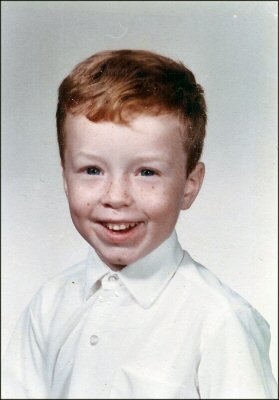
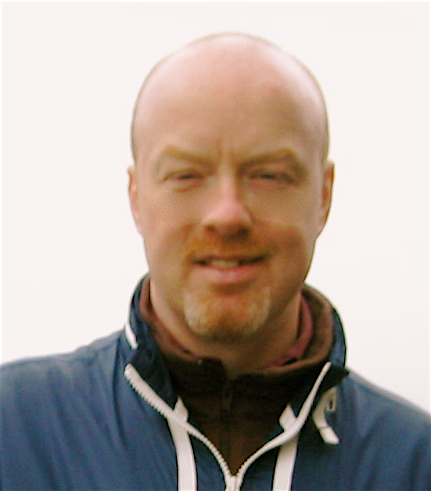
As an infant I had strawberry-blond hair, which turned carrot-orange and eventually reddish-brown until it disappeared altogether. My facial hair is now what you might call salt-and-paprika. To my family I was not an oddity, but to other kids I was. In school I was taunted mercilessly. Just as all Cher ever heard was "Half Breed," all I ever heard was "Carrot Top." I didn't earn any friends by reminding them that carrot tops are green. I cursed my ancestors for their legacy, as I had a hard enough time dealing with my other recessive genes, such as left-handedness and homosexuality. I envied kids with mousy brown hair and rubbed lemon juice on my freckles to get rid of them just like Jan Brady did.


The rapidly receding red

At least all I suffered were insults. The ancient Egyptians ritually buried red-headed men alive, and the ancient Greeks considered redheads unbalanced because their humours were out of proportion. My humor was often out of proportion as a kid. Even though I was mild mannered I got into my share of fights over name calling. That surely justified the perception that redheads have fiery tempers. But did anyone ever stop to think that tempers flare because of all the name-calling?

In a great South Park episode, Cartman gives a presentation in which he says that all redheads are creepy and evil and lack soul and should be discriminated against. The other kids give Cartman a dose of his own medicine by dying his hair red and giving him henna freckles. The other kids who were influenced by his speech begin taunting him for being a redhead, and he eventually learns a lesson about accepting others for who they are. The kids I grew up could have used a viewing of that show.

When I was a kid we had a black and white television, unaware that Danny Kaye, Spencer Tracy, and Robert Redford had red hair. I only knew Lucille Ball's hair color because Ricky Ricardo always called her a "wacky redhead." When we finally got a color TV in the early 1970s, Samantha Eggar proudly announced in a commercial for color TVs that her hair was auburn and her eyes were vivid green.

Nowadays it's hard to find poster boys for gingervitis sufferers. Ewan McGregor, Giovanni Ribisi, Eric Stoltz, and Seth Green carry the standard. Then there's David Caruso, a graduate of the William Shatner School of Acting. There are far more red-haired actresses: Nicole Kidman, Susan Sarandon, Bette Midler, Frances Conroy, Kirsten Dunst, Ann-Margret, Shirley MacLaine. Marilyn Monroe was born a redhead, and look what she did to herself. And let's not forget Lindsay Lohan and Marilu Henner. On second thought, let's.

Now along comes a study by the Oxford Hair Foundation (located somewhere between the Pond's Institute and the Rite Aid Vitamin Institute) claiming that by the end of this century redheads will be extinct. Using an abacus and astrologer Walter Mercado, researchers say that the rare occurrence of redheadedness in the population, coupled with migration patterns and intermarriage, will cause the pigment to die out completely. That should surprise the Scottish people, for which redheads make up 8 to 10 percent of the population. I'm betting it's the haggis, not the lack of melanin, that will be responsible for their extinction.

Celebrity hairdresser Nicky Clarke, who coiffures the red-headed Duchess of York, said it would be sad to lose the diversity of hair color. Natural redheads, he said, have inspired thousands of his customers to seek similar colors for their hair. If you're folliclely challenged like me, the point is academic.

Labels: ,


Continue reading...
Hosted by www.Geocities.ws

1