Tuesday, August 19, 2008

Cazwell throws some shade
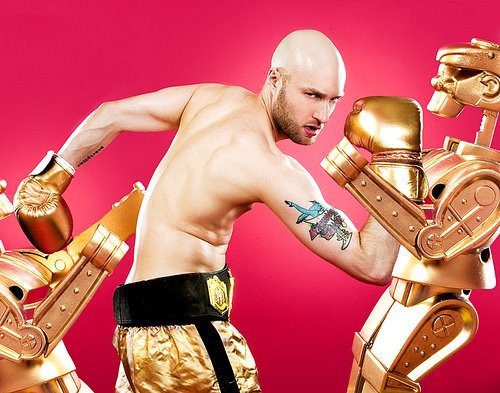
I was beginning to think camp was dead. But it's not; it's just different.

I'm old enough to remember pre-AIDS camp. Back then, "camp" was synonymous with "gay." "Gay" meant "underground." "Underground" meant "immoral." Camp was subversive, dangerous, even anarchical. It defied description and categorization. You just knew something was camp. If you were not on that wavelength, camp meant nothing to you. In mainstream America, camp was unpatriotic. It was up there with Communism.

The camp icons I remember most in the 1960s were Charles Nelson Reilly, Liberace, Paul Lynde, Alan Sues. Women were not camp, but rather the objects of camp: Marilyn Monroe, Bette Davis, Joan Crawford, and, of course, the obligatory Judy Garland. Despite featuring men in drag, the 1959 movie Some Like It Hot is not camp, unless you count the presence of Marilyn Monroe. A man's mere wearing of a dress doesn't make him camp or gay or immoral--or funny, for that matter. An illusion of reality has to be created. As much as drag could be considered a distortion or exaggeration of women, it is really an homage to them. Post-Stonewall drag queens like Divine, RuPaul, and Dame Edna portrayed women as confident, sassy, and complex. They inspired empathy and affinity, but they were still camp. The difference is they were in on the joke.

By the 1970s, essays like Susan Sontag's "Notes on Camp" redefined "camp" to emphasize "artifice, frivolity, naïve middle-class pretentiousness, and shocking excess." Sontag said, "You can't do camp on purpose." In a way, she's right. Camp has to come from the heart, however misguided. In the past 15 years, the gold standard of camp has been, of course, Showgirls, an earnest, jaw-dropping, 15-car pileup that purports to portray the real-life, gritty underpinnings of exploited Vegas performers.

On television there have been camp-like roles, such as Patsy and Edina in Absolutely Fabulous, the women of Sex and the City, and Karen in Will and Grace, but there's a self-consciousness there: gay spirits inhabiting the bodies of real women. I think that one reason straight women and gay men get along so well is because they concurrently fought to be treated as equals and in the past 30 years have gained political clout. They can now use mainstream media to express themselves and large numbers of people don't see them as subversive anymore. That's a far cry from the creepy innuendoes of Paul Lynde's bitchy retorts on The Hollywood Squares (which, by the way, are still hilarious).

The other day I stumbled onto a YouTube video by gay rapper Cazwell called "I Seen Beyoncé at Burger King." At first I thought it was amateurish and not funny, but about halfway through the viewing, it hit me: This is John Waters for the New Millennium. This is the new camp!

But is it camp if the intent is deliberate? To me it is, since it incorporates the three main components of camp: attitude, humor and allusion, and drag.

If the grammatically flawed title doesn't clue you in, the garish, seizure-inducing, psychedelic color scheme and irritatingly monotonous synth track will. Influenced by artists such as Deee-Lite, Caz crafts a novelty song that's as clever as it is annoying. Decked out in what can only be described as white-trash rapper couture, Caz and his over-the-top homo-nerdy sidekick Jonny Makeup let viewers in on their dirty little secret: they've spotted Beyoncé in the Home of the Whopper chowing down on a host of calorie-laden food items.

In the video, "Beyoncé" is a tranny who uses her wiles to get Caz to lend her 10 bucks because her car is parked 3 blocks away and "that's just too far, too far." Caz lets on that he and Ms. Knowles are tight, as he nonchalantly advises her that she'd better repay him. In a subsequent encounter at JC Penney, Beyoncé shows up in her '94 Chevy bedecked in curlers and shades and asks Caz to watch her car while she shops. Caz reminds her of the 10-dollar loan, which she dismisses with a fierce "f**k it." And then Ms. B delivers the ultimate bitch slap, mistaking Caz for a liquor store employee while she shops for a case of beer.

This far-fetched sequence of events is interspersed with shots of Makeup in various ridiculous getups (the nosy neighbor, the fashion-challenged queen) gossiping with a half-stoned Caz, himself dressed in a pink scooped-out tank top and bling, about the alleged sightings. Whether intentional or not, the addition of backup dancers in Burger King uniforms and kitten outfits is a great tribute to camp variety shows like Hullaballoo.

The line on whether this video is more satire than camp is blurred. The premise of a white-trash gay rapper dissing a glamorous hip-hop star in the 'hood is a smart statement on what constitutes celebrity and reality, something John Waters exposed so brilliantly in Pecker. Everyone has something to say about Britney, Lindsay, and Paris, but what do we really know about them?

The YouTube commenters don't seem to get what's going on here, but then viewing comments on that site is like visiting a putrid cesspool. Uh-huh, the music is lame. Yeah, the cinematography is garish. OK, the acting is silly. That's the point. The best that YouTubers can muster up are unironic remarks like "GAY," "Retarded," and "Fucking stoopid!"--remarks that indicate camp is still the purview of those who are in on the joke and that Beavis and Butthead are alive and well and surfing the Web.


Labels: , , ,


Continue reading...

Saturday, August 09, 2008

A world away

Luis took me with him on a real estate listing today to a six-story building in the Flatbush section of Brooklyn, the neighborhood I was born and raised in. When I saw the building again, it brought back to me an extraordinary incident that happened there, coincidentally 33 years ago to the day, an incident that for me symbolized the end of my innocence.

I vividly and fondly remember my childhood in Flatbush in the 1960s and 1970s. I wouldn't have traded the experience for anything else. We lived in a six-story building on Ocean Avenue called Ethel Arms (which Luis likes to call "Ethel Flabby Arms"). Ocean Avenue was once a sleepy path leading to Sheepshead Bay, but in the 1920s, as immigrant waves kept rolling in, high-rise apartment buildings sprouted all along the avenue, urbanizing it. When I was growing up, Ocean Avenue was a four-lane street, and the most popular sport was dodging cars to get to the other side. Once across, you entered Ditmas Park, where the scenery changed markedly and you felt like you were in the country.

The side streets were--and still are--lined with shade trees and stately Victorian homes dating from the early 1900s. The nearby Pink Palace in Sophie's Choice exemplifies those homes. Erasmus Hall High School, alma mater of Barbra Streisand, Susan Hayward, and Donny Most, was the closest public high school. Movie stars such as Douglas Fairbanks and Mary Pickford lived in Flatbush around the time it urbanized. By the early 1970s the only famous local residents I knew of were Tiny Tim and Miss Vicki, a few soap actors, and Barry Manilow and his mother. The giant, fenced-in house across from my building was purportedly the home of a porn director, but I never knew whether that was true.

I always felt safe growing up in Flatbush, and evidently so did my parents, since they let me play unsupervised out on the big, open dangerous street. We weren't really unsupervised, as hundreds of invisible pairs of eyes somehow managed to report unseemly activity to our respective parents. Assaults and thefts were rare, but there did seem to be a fair amount of arson. On Hallowe'en my mother and some friends' parents would escort us to select homes around the neighborhood, including the Ebinger house on E. 19th Street. For those unfamiliar with Ebinger's, it was a family-owned bakery famous for its chocolate blackout cake.

The local movie palaces were the spectacular Loew's Kings (Baroque) and Rialto (Beaux-Arts) theatres, both now houses of worship. I realize now how magnificent some of the local architecture was. I remember old ice-cream parlors like Karp's on Flatbush and Newkirk, where my mother would get me a little cup of Coke syrup to combat an upset stomach.

At the time, I was unaware that the rest of the world was not like mine. Mine was what would be categorized today as "diverse"--a concept that is now enforced politically rather than organically. My building was like a mini-United Nations of different races, religions, and family status. The Pavlicases were a middle-aged Greek couple whose apartment smelled of cardamom, anise, and cumin. Our Jewish neighbor Miriam was a housebound single hemophiliac living with her 80-year-old widowed mother. My best friend, a black girl named Angela Barnes, had a white mom and a black dad. Glenn was a soft-spoken Jamaican man who I think was probably gay. I had friends who were Argentinian, Chinese, Haitian, Italian, Irish, Norwegian, Puerto Rican, Russian. I started studying Spanish on my own when I was 11 by sitting with El Diario and a Spanish dictionary so I could try to understand the Hispanics around the corner. Later, when we moved to an all-Irish block in Sunset Park in my late teens, I realized that worlds like mine were the exception rather than the rule.

In the summer of 1975, I was in love with a beautiful Trinidadian girl named Allison whom I'd been hanging out with for 6 months. When people ask me whether that wasn't a sign that I was straight, I remind them that we were both 12 and neither of us had gone through puberty yet. When we'd watch "Gidget" movies together, I was far more interested in James Darren than Sandra Dee.

Every Sunday morning I went to 10:00 mass at Our Lady of Refuge Church. I sometimes served as a lector, reading from the New Testament before the priest delivered the Gospel reading. I was a faithful churchgoer, a good little Catholic boy who never questioned authority, at least not until much later.

That was the first summer I had been allowed to cross Ocean Avenue by myself and play at my friend Chris's house on E. 19th Street between Ditmas and Newkirk avenues. I had a pretty large group of friends of different ages and backgrounds, and we all hung out together, forming cliques and clubs and factions but in the end always coming back together. Ditmas Park was like living in a suburban community without the sameness. On summer nights a big group of our friends would divide into teams and play Ring-o-levio for hours, using the 16-block grid of Ditmas Park as our playing field.

On August 9 of that year, the news broke that Sam Bronfman, a son of Seagram's heir Edgar Bronfman, had been kidnapped. At first there were reports that Bronfman was tied up in a cave somewhere, but then it was discovered that he was being held in an apartment building right around the corner from our building! My friends and I stood on the corner for long periods, trying to see if there was any action, but all we saw were black cars with tinted windows waiting for something.

One night, a news reporter said that one of the kidnappers was Dominic Byrne, the father of one of my classmates, Tommy. Everyone in the area knew Mr. Byrne, a small, slight Irishman who used to own a liquor store on Newkirk Plaza and then became a limo driver. No one could believe that he could be involved in such a caper because he was so unassuming. There was hushed talk of homosexual activity between Tommy's father and the other kidnapper, a fireman named Mel Lynch. (Lynch later claimed in court that he and Sam Bronfman had met at a gay bar and had been lovers and that Sam was a co-conspirator in the kidnapping, an allegation that was never proved.)

At church the following Sunday, the priest asked everyone to pray for Mr. Byrne, an upstanding usher known to everyone in the community. It was all anyone talked about for weeks. When school started a month later, Tommy wasn't there, though I think eventually he returned after the publicity had died down. Tommy's father went to prison for 3 years, for extortion, not kidnapping.

When I saw the building that was the scene of the crime yesterday I felt a little sad. It was the first time I realized that the kidnapping symbolically signaled the end of the Flatbush I had known and loved, or maybe I'm just older and more cynical.

In October 1975, New York City went bankrupt, and the federal government refused to bail the city out. Garbage piled up on the streets, and crime spiked as cops became scarcer. In 1976 the brand-new 10-speed bike I got for graduation was stolen from me at knifepoint in broad daylight on Ditmas Avenue, half a block from my building.

By 1977, the burning of Bushwick during the NYC blackout and the Son of Sam shootings were further emblems of the city's ailing health. Many of my friends and their families were moving to the suburbs or to other states to escape the worsening climate. My mother was mugged in the vestibule of our building, and my father had his wallet stolen several times. And then, the coup de grace: some random teenager picked up my 8-year-old brother and dropped up him on his head on the grass down the block for no apparent reason. In September 1977, we said goodbye to Flatbush.

It was strange walking around the area. I found a faded patch of concrete where a bunch of us had etched our initials in the then newly paved sidewalk. And there was the fence--or was it the fence?--we climbed over to get to our favorite hiding place during Ring-o-levio. Everything looked the same as it did 30 years ago, only smaller and less magical. Today I live only 3 miles from my childhood home, but in so many respects it's a world away.

Labels: , , , , , , , , ,


Continue reading...

Saturday, April 12, 2008

The healing power of Chris

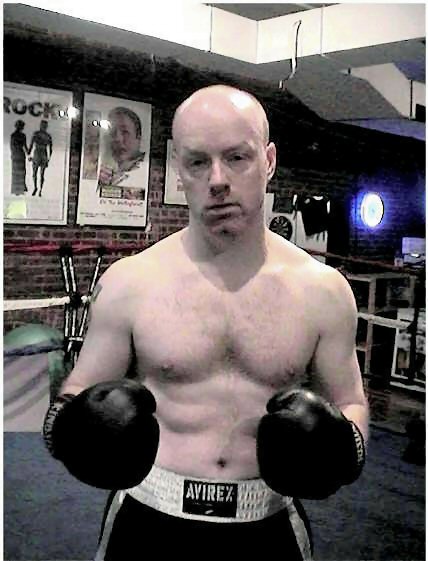
I wasn't in the mood to go to the gym tonight, but it was our first beautiful Spring evening. Plus, I vowed this year to take better care of myself. The past few months were dark and wretched. I let the stress of my job knock me to the ground and stomp all over me. I ended up with a nasty virus--or some kind of illness--that TKO'd me for 3 whole weeks. A chronic hacking cough, fatigue, and endless post-nasal drip were my constant companions for almost a month. The doctor said I had run down my immune system to the point where I developed temporary asthma. He put me on an inhaler and said whatever I had would have to run its course. So a few weeks later I'm rested, the asthma is gone, and I'm back in the ring, getting my strength back and trying to roll with the punches. Boxing has always been my therapy, but for the past few months even that wasn't working. So I checked out for a bit.

Outside the gym tonight 6 or 7 production trailers lined the street. This is not an unusual sight, since the street the gym is on is off the beaten path and perfect for filming movies and TV shows. A few weeks ago a trailer had "Lucy" and "Desi" on the doors, and I thought, Oh God, can there really be another "before the laughter" movie?

As I was coming in to the gym I saw Julie, a fellow boxer, at the front desk.

"What's with the trailers?" I asked.

"They're filming an episode of Law and Order," she said, hopefully.

"Woof! Chris Meloni!" I said.

"Oh my God, he's hot!" she said. "Have you ever seen Wet, Hot American Summer?" I said I hadn't. "I'll bring in the DVD for you."

"Can it be any better than his nude scenes on Oz?" I said. "After that, seeing him fully clothed in person might be a disappointment," I said.

I changed and started working out. It felt good whacking the bags and sweating. I completely forgot about the trailers outside, and after all, filming had probably long since wrapped up.

I was having a particularly good round when Julie sidled up to me and said, "Don't look now, but Chris Meloni is at the front window."

I tried to act cool, but I looked over and there, less than 6 feet away from where I was sweating, stood the real Chris Meloni, in a dark suit, more handsome in person, signing autographs for some shameless gym members. Evil thoughts started forming in my head.

Damn these gloves! The 13-year-old girl in me wanted to yank them off and run right up to Chris Meloni with a pen and have him sign anything I could get my hands on. But I played it cool. I pretended not to stare at him. The bell rang and I started hitting the bag, never taking my eyes off Chris Meloni.

The therapy was definitely starting to work again.

Labels: , , ,


Continue reading...

Wednesday, April 18, 2007

Goodbye, Kitty

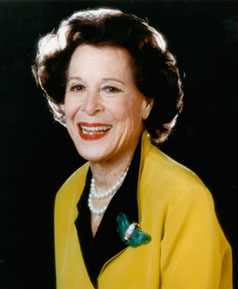
My comment yesterday about passing to Kitty Carlisle had a sad resonance today. Arlene called today to say she had read yesterday of the death of Kitty Carlisle Hart at the age of 96. She had never quite known who Kitty Carlisle Hart was, but when Arlene read her obituary she was flattered. See, when we were kids, I called her Kitty Carlisle because she was such a social butterfly. Clearly homosexuality was not a lifestyle choice for me. I have no recollection of giving her this moniker, but Arlene's memory is like one of those glue traps from which mice never escape.

In my eyes Kitty Carlisle Hart had the most fabulous life. Raised in New Orleans in a well-off family, educated in Europe, linked romantically to George Gershwin, married to late playwright Moss Hart, she seemed to have the kind of romantic existence that exists in Merchant-Ivory movies. She was an opera singer at the Met in the 1960s and performed at Feinstein's at the age 95. She became a devotee of Scaasi, designer to First Ladies. Her jet-black hair was always perfectly coiffured, and she was outfitted with stoles and pearls and stylish hats. She never looked zhlubby, at least not in person--she was always the epitome of elegance, fashion, and graciousness.

I always wondered, then, why Kitty took a part-time job as a panelist on game shows "What's My Line?" and "To Tell the Truth." She certainly couldn't have needed the money. Plus, she sat near fellow panelist Peggy Cass, whose raspy braying was like listening to a car coming to a screeching halt. I guess part of Kitty's appeal for me was that she seemed so down to earth, charming, and self-effacing--a real classy woman. In the mid-1970s she took on the mantle of chair of the New York State Council of the Arts and used her social network to get arts funding when no one cared about New York or its art scene. Kitty Carlisle Hart is another lost emblem of a bygone era. On some level I wanted to be her. I'll miss her.

Labels: , ,


Continue reading...

Saturday, April 14, 2007

"The Tudors" mixed up spells "other stud'

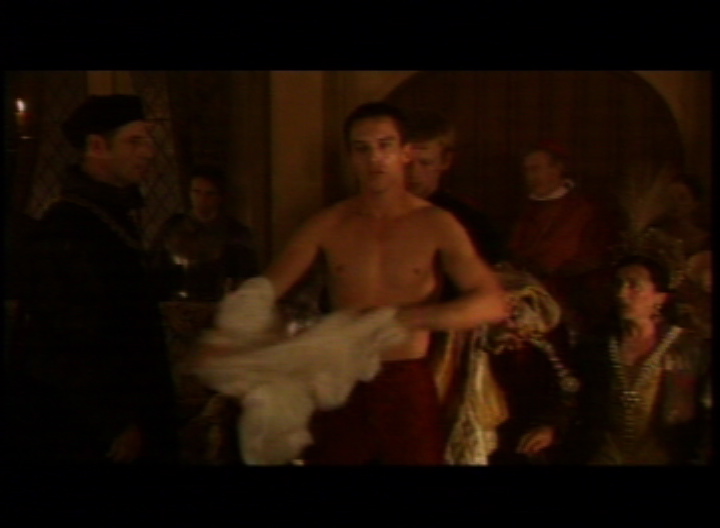
Perhaps I was raised too heavily on "Masterpiece Theatre," but I like my historical dramas plodding and stuffy. "The Tudors" has changed my mind. It's easy to pull off contemporary figures, like Michael Sheen's Tony Blair in The Queen, but how do you reinvent the image embedded in our minds of a fat, bearded, and ugly Henry VIII?

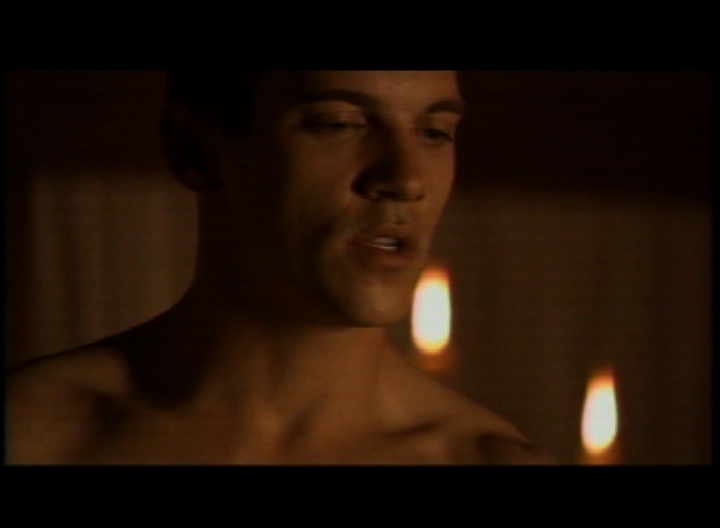
You cast sizzling hot Irish lad Jonathan Rhys-Meyers as the young Henry, that's how. Then you add some other hotties, like Henry Cavill as Charles Brandon, Henry's best friend, and Natalie Dormer as Anne Boleyn, and voilà!, history gets horny. If I had known English kings looked like JRM I'd have paid more attention in class.

My first thought was to make a drinking game from this show. You could call it "Tudors Gone Wild!" You take a drink, like mead or grog, every time someone utters "Your grace," "Your eminence," or "Your majesty." You'll be plastered.

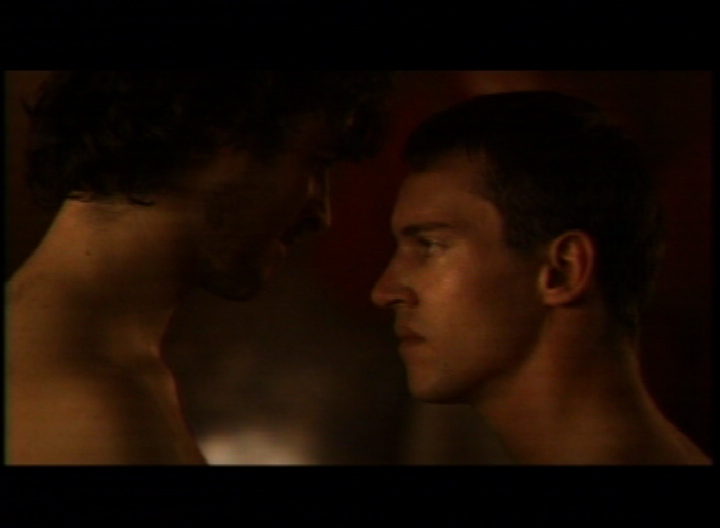
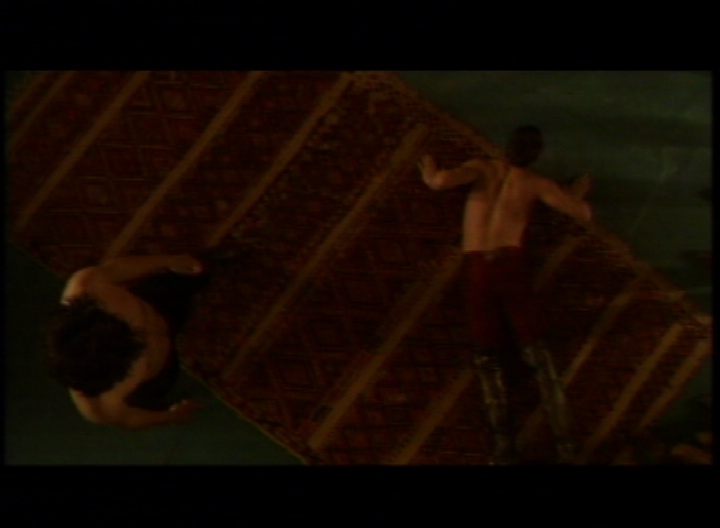
The first episode was fun, a little over the top, but seemed historically sound. It wasn't until episode 2, though, that I got hooked. I think it was the hot, sweaty, shirtless wrestling match between Henry and his cousin, Francois, the King of France, that sold me.


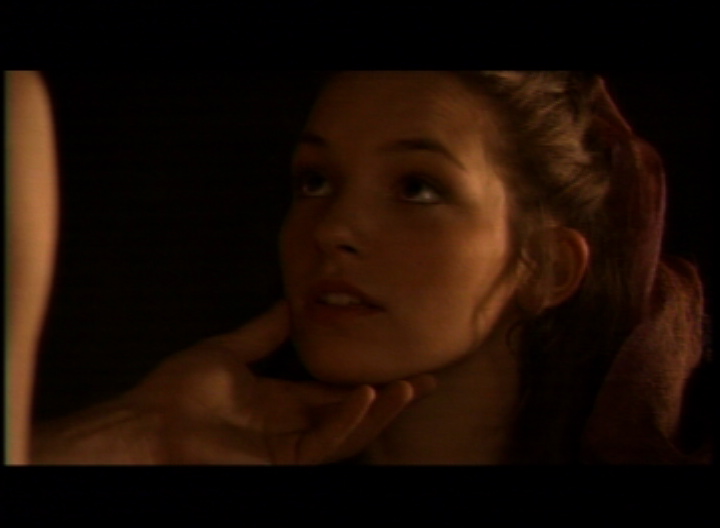
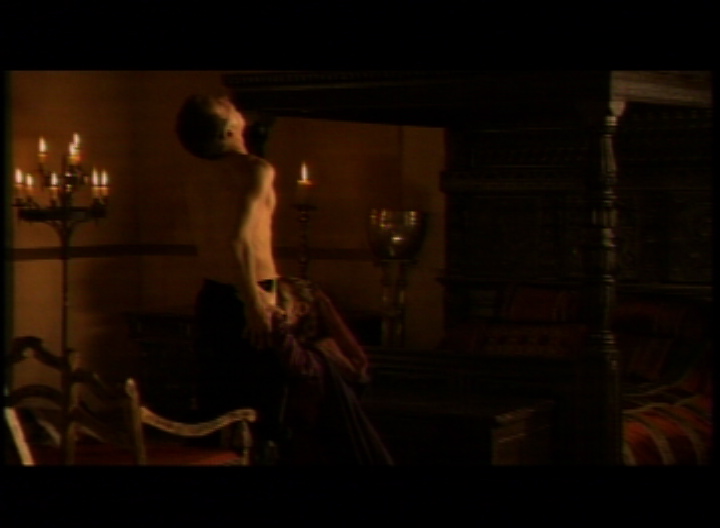
Henry loses the match but gets a consolation prize. Summoning French courtesan Mary Boleyn to his chambers, he asks the tarty Gaul to impart her special knowledge to him.

HENRY: Lady Mary...you've been at the French courts for two years....Tell me, what French graces have you learned?


MARY BOLEYN: With your majesty's permission.


HENRY (whispering): Granted.


Mary got to give the king head; later, he would take away her sister Anne's.

From now on, if the networks cast, oh, I don't know, Chris Evans as inbred horseface Philip IV of Spain, I will overlook historical inaccuracies. If only the following trailer were true, history would become my favorite subject.

Labels: , , , ,


Continue reading...

Friday, February 23, 2007

Minky and the pain

I got to the theater last night at 7:00 sharp. We were going to see the new Charles Busch play on its first night in previews at a theater in Midtown. I'm usually the late one, but since seating was general admission, I figured it best that I be on time. For once I was the first to arrive. There was no sign of Luis or the four friends we were meeting. Fortunately we each had our own tickets in case anything went wrong.

I looked at my cell phone to see if Luis had left me a message. The battery was dead. I'd just have to cross my fingers and hope that we'd find each other. I debated whether to go down to the theater and grab 6 seats or to wait for someone else in our party to come. It was already 7:05 and there was still no sign of anyone. I decided to wait a few more minutes.

I chatted with a tall, older man who was looking for a spare ticket for his friend who had come in from California. The show was sold out. A woman entered the lobby and went to the ticket window. The tall man leaned in and whispered, "That's Juliet Mills." I nodded, figuring that she was somehow related to British actress Hayley Mills (she's her sister). The man must have seen the blank look on my face: "Maxwell Caulfield's wife." Miles Colby? I thought. He was a featured actor in the play we were seeing.

At about 7:10 a man and woman entered the lobby. The man was older and portly, ruddy, and looked like he had just swallowed a whole lemon. The woman, on the other hand, was instantly noticeable as someone of great wealth and, uh, furriness. Her giant mink hat and matching stole enveloped her frail body, but it was her face -- oh, the face! -- that attracted the most attention. Her lips looked like a duck bill; her eyes were frozen in a state of constant panic. Her "enhancements" were so grotesque she could have passed for Jocelyn Wildenstein's sister. If you turned her upside down you could use her as a floor polisher. The man left her alone for a few minutes and went downstairs. She stood in the lobby, teetering as if she might fall over. She was either very old or drunk, or both.

The man returned a few minutes later, exasperated. "Someone mistook me for a ticket taker," he said huffily. "No one dresses for the theater these days, so they don't recognize a blazer when they see one."

The man and woman took the elevator down to the theater level, and I continued waiting in the lobby. Still no sign of anyone. Maybe everyone had come much earlier and was already seated, I thought. At about 7:20 I made my way downstairs to the theater. When I entered, I didn't see anyone I recognized. The theater was not yet full, but most of the seats facing the stage were occupied. There were maybe 6 rows of about 30 seats across, and an additional 40 or 50 seats flanking either side of the stage. The setting was rather intimate, so intimate that the ushers warned the people sitting in the front row to mind their knees because the scenery swung out at certain points.

There was no way I was going to find 6 seats together. Lord only knew what had happened to everyone else, or even whether they would ever arrive. The curtain was due to go up in about 5 minutes, and people started pouring in. The seats flanking the stage were mostly free, so I plopped myself down in the middle row and spread hats, gloves, and programs on the seats around me. I didn't know how long I'd be able to hold on to them, but they were less desirable than the front seats so no one was clamoring for them.

I looked around the theater and recognized J's friend Jeffrey. I gathered my things and went over to his seat. He had spread out all his things on whatever seats he could find. The seats were in the second row, center stage, about 15 feet from the performers.

"I'm glad you're here," Jeffrey said. "I have to go outside and give Don his ticket."

"Cool," I said. "I hope the vultures down swoop down and try to eat me before you get back."

No sooner had Jeffrey left than I turned to my left and saw the furry white crone in mink from the lobby. She was sitting with the older man, in the same row as us, on the other side of our aisle. Their view was slightly stage right, but no less good than ours.

Minky, still dressed in her fur costume, probably out of fear that her face would unravel if she removed anything, came over to my seat and said that she was going to sit in the seat next to mine. She didn't ask; she just told me she was sitting there. I told her it was reserved for someone. "That can't be," she said, curtly.

"But it is," I said, equally curtly.

"You can't hold seats here AND there," she said, pointing to the side seats I originally occupied.

"I'm sitting HERE," I said. "I'm not holding the side seats."

The man she was with overheard us and muttered, "Well, of course not. No one wants to sit there."

I glared over at the male companion, less than 5 feet away. It was Rex Reed.

"Well, this is just uncalled for," Minky said, returning to her seat.

"The nerve of these people," the woman said to Rex.

Rex looked over at me, pursed his lips, and said loudly to Minky, "The other people are not even here. THIS should not be allowed."

I stared Rex straight in the eye and said, "But it is."

I felt bad that we were holding all these seats, but by now the theater had filled up to the point where no one in my party would have a seat if they didn't get here soon. Besides, no one else seemed to have a problem with holding the seats except Minky and Rex. I could not understand why Minky was making such a big stink when she had a perfectly good seat herself.

Minky noticed that the seat directly in front of me was free. She hobbled down to the front row and asked the man in front if the seat was available. He must have said yes. So she began the long journey over to her seat to collect her things.

By the time Minky got back over to the front row seat, another woman had occupied it.

"I'm sitting here," Minky said to the woman.

The woman didn't have any idea who this Opus-like creature was. "No, you're not," she said.

"This is outrageous," Minky said, shuffling over to the usher.

The usher politely shrugged, explaining that it was general seating. To hear her, you would have thought that Minky had paid hundreds of dollars for a seat at Lincoln Center or else had never gotten over the cancellation of "Dynasty." Maybe she was the opening act for the show. That wacky Charles Busch!

Jeffrey returned with Don in tow. Luis and our friends J and F still hadn't arrived. Minky and Rex became the least of my worries; I was concerned about my friends. Minky now escalated her seating drama up to the theater manager.

About 2 minutes before the curtain went up, Luis and J and F rushed in. They'd gotten stuck in horrible traffic and had to abandon the car in SoHo and take the subway to the theater.

When I last looked, Minky and Rex were in their original seats.

The curtain went up and the show went on. It was comical in parts and poignant in others, but it was not nearly as entertaining as the pre-show act of Minky and Rex.

Labels: , ,


Continue reading...

Wednesday, December 06, 2006

I'm a dead French writer!

All right, so I'm a sheep. Baa, baa. Since I am terminally unhip, I tend to follow the leads of people like him and him. It's not always a good thing, but I just had to see which celebrities I supposedly look like. Boy, am I sorry. The first photo I submitted got no matches at all. Owing to my giant forehead, I thought I'd at least match Fred Gwynne. On the second try I got a bunch of dead, ugly politicians, so I tried a third. This time I got a Pepperidge Farm cookie assortment: everyone savors the Milanos (Ewan McGregor), admires the Pirouettes (Petra Nemcova), and turns their noses up at the Chessmen (everyone else). Although I have the same hairline as Saint-Exupery, I think I bear a striking resemblance to Georgia O'Keeffe, especially around the eyebrows.

Labels: , ,


Continue reading...
Hosted by www.Geocities.ws

1