









|
|
|
|
VIEWING
HOUSES
After
selecting your houses, a representative from the Housing Office will drive you
around town to show them to you. Usually,
they coordinate with the landlords the same morning (or afternoon), so there is
a chance that you may not get to view some of the houses you originally planned
on viewing that day. That is why
you must remain flexible and begin your house hunting early.
You will normally view houses in the same areas (to save time), so keep
track of what you have seen. One
method is to create a matrix that lists all of the items you feel are important:
price, number of bedrooms, garage/parking space, Agip tank, community
water, etc. If you have a digital
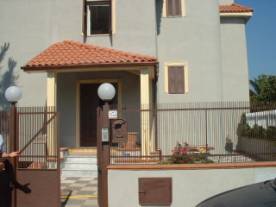
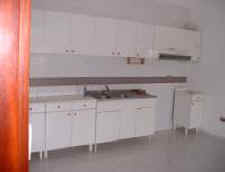
camera or camcorder, you can photograph the house for later reference.
This is invaluable, especially after you have seen 10 to 20 houses.
Safety
is a big consideration when looking at the houses. There
is no way to determine how good the house or community is until you actually
visit it. Aside
from the Security Office requirements (alarm systems, bars on windows), you
should look for other safety measures.
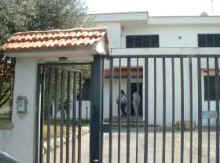
For example, a gate to your yard may seem like a good theft deterrent,
but even an inexperienced thief can snap the lock in a few seconds and gain
access to your yard.
Automatic gates offer a little more security since they are harder to pry
open manually (some are nearly impossible, which can be bad if your remote
batteries die). Do
not be overly paranoid when looking at safety factors.
You do not need a fortress to protect your house, just some added
protection like bars on the windows.
Also keep in mind that most thefts will occur in the daytime and are
typically non-violent.
There are far fewer murders related to robberies here in Italy than in
the United States.
One of the best protection measures is a landlord who lives below you.
There are many advantages (and some disadvantages) to your landlord
living in the same building.
It is an added bonus if your landlord is a police officer (or is in good
with the police).
While
viewing your house, also look at your neighbors.
You have a great opportunity to live in predominately Italian communities
or you can choose a military community if you wish.
Your neighbors can be another factor in the safety of your house (and its
contents). Many
Italian homes have several generations of families in them--children, parents,
and grandparents. This
is a great advantage in crime deterrence, especially if they live in the same
building as you.
Someone will always be home to watch your house. Now
is the time to ask the landlord questions.
Although you will negotiate terms during lease negotiation, it will be
much easier to ask questions up front so that you do not waste time (and
possibly not get to rent a house) during the actual negotiation and signing.
This is when you should ask about pets, repairs/improvements, and
anything else you can think of.
Most landlords are very willing to talk with you at this time and help
you. If
they are not, then maybe that particular house is not the one you should
consider. Don't
be surprised if your landlord doesn't speak English.
It will be your personal preference whether you want to rent from him
knowing that there may be a language barrier, but it's probably not as important
as you may think.
You can always call Housing and have them contact the landlord for you.
Plus, it almost forces you to learn Italian.
In a few rare instances, the landlord may quote a rental price higher than the Housing Office had listed. You may be able to talk the landlord back down on the price. If not, then just forget about that particular house. The listings can be inaccurate and may cause you problems. This is yet another reason to start house hunting early. You will encounter problems, so just be patient and deal with them.
Some
Italian houses are designed to accommodate only European-style appliances.
European refrigerators, stoves, washers and dryers are much smaller than
the American versions. Make sure you look at the areas closely and determine if
American-style appliances can fit into them.
Again, photographing the house is very beneficial in this aspect.
You can view the loaner furniture book at the Housing Office before you
view the houses. The book has all
of the measurements of the appliances and furniture available (free during your
entire tour) from the warehouse. Also
look for hot water outlets for the washer.
Italian-style washers do not use hot water.
They heat the cold water. Page
30 of the "Benvenuti a Napoli 2000" book has a checklist of questions
you may want to ask your landlord. Remember
that you will get a Move-in Housing Allowance (MIHA) of a few hundred dollars.
This is a "gift" (you don't have to pay it back) and is
intended for home improvements. When
asking the questions, you may also ask how much the cost would be to add
additional items (e.g., screens). Here
is a partial list of those questions (and some explanations on why you want to
ask them): 1. Check for screens. Most Italian homes do not have air conditioners. You can get a portable unit from Housing, but it may be very expensive to operate it. You actually don't need it, especially if you live near the bay or on the top level. The breeze that blows through your house will keep it very comfortable, except maybe in August when the temperature gets into the 90s. Screens keep the bugs out since your windows will be open most of the time. Ask the landlord if he will consider installing screens if they are not present. 2. Is there a full bathroom? Most houses have several bathrooms with both showers and tubs installed. You will also notice a peculiar fixture not usually present in American bathrooms. 3. Is there a water reservoir? Some areas have a problem with low water pressure or complete loss of water. Magic World, a water park, is in Licola and the houses surrounding that area commonly have problems with water pressure in the summer. There may be other areas, so just ask anyone who has lived in them about the water pressure. 4. Agip tank or serving tax-free gas (if shared, must be with all Americans)? Agip is the gas company which supplies both gasoline (gasolio) and house gas (liquid natural gas). You will get fuel coupons only for Agip tanks. Some landlords have their own non-Agip tanks and will collect payments from you each month. There may or may not be any advantage to getting fuel coupons for Agip if the gas is inexpensive. Do your homework though so you don't end up paying high prices for gas. Page 36 in the "Benvenuti a Napoli 2000" book has a section entitled "Heating" that explains this more thoroughly. 5.
Is it close to "the home to school" bus route?
The Housing Office will probably be more helpful with this question.
They have maps that show the routes.
6. Check landlord history.
Is he receptive/flexible? In
the housing book, you will find comment forms from previous tenants.
Read these thoroughly. If
there was a problem, you may want to investigate further.
Sometimes the problems are simple misunderstandings.
An example (real example) of one comment was "Landlord enters the
house whenever he feels like it." All
that was required was to ask the landlord not to enter the house when the
tenants were not home. In this
particular case, the landlord did not speak English and maybe the problem was
just a language barrier. In other
cases, the landlord may have just been a bad landlord.
You should avoid them. There
are plenty of good houses and good landlords around.
You don't have to settle for someone who won't take care of you. 7. Pet policy? Ask
the landlord. Some of the housing
data sheets will say "no pets", but if you ask, the landlord may bend
the rules. Some landlords will
allow smaller pets if asked, but will absolutely refuse large dogs.
8. Adequate security? Unit
must meet Housing Office security standards.
If this hasn't been done, then you may have to wait an additional 7-10
working days after you put a hold on the house. Remember that the standards are minimum standards and may not
meet your expectations. You must
decide if the house is safe or not. Just
because Housing says it meets the standards doesn't necessarily mean that your
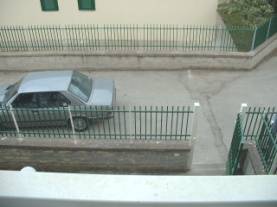
house won't be robbed. 9. Is there adequate parking? Does your car fit into the gate/parking space? Some houses are located down narrow alleys. It is not wise to leave your car parked on the street. Many houses have garages or parking inside a locked gate. You would probably feel safer having your car inside your yard than on the street. Ensure that you can maneuver it easily. Also look outside the gate. If someone parks adjacent to it, can you still get out?
10.
Do doors, windows, blinds, and shutters work?
Italian windows have a style of shutters that most Americans have not
seen. Check them when you view the
house. They can be extremely
frustrating if not in good condition. 11. Functional outside lights?
Another good safety measure. 12. Resist answering questions about your rank/pay grade or
rental ceiling. It could affect the
rental amount. That is what the
book says. This could work to your
advantage. If you select a house
that is higher than your rental ceiling, or "cap", then you may get it
cheaper if you let the landlord know that you can't spend that much. Don't expect him to come down in price too much, but he may
lower it a little bit. 13. Adequate space for washer and dryer? Mentioned previously. 14.
Talk to people in the neighborhood.
Check the surrounding area. Common
sense will tell you if the neighborhood is good.
Some neighborhoods have security guards and gates around them.
Parco Enea near Arco Felice/Pozzuoli, for example, is a closed community.
The landlords all contribute money for a guard at the entrance.
On the opposite end, the gate is locked and only foot traffic can enter.
15. Inquire about AFN reception.
You can pick up local AFN with a multi-system TV and "rabbit ears".
Some houses are pre-wired with an antenna, which is good if it works.
Don't be overly concerned about it.
You can get several Italian channels just fine with the set-top antennas
and can use a satellite dish to get European and Korean AFN. 16. Check proximity of schools in the area. Bus routes? Again,
check with housing. 17. Ask seasonal questions (e.g., if you visit in the summer, ask
about winter, and vice-versa). Traffic
gets heavy in some areas during the summer.
If the house is on a hill, can you access it easily if the roads freeze
(uncommon in Naples, but still possible)? 18. Traffic? 19. If something is not present, ask for it.
You have a few hundred dollars (check with finance for the exact amount)
of Move-in Housing Allowance (MIHA). Use
this to negotiate additions to your home. Ask
how much it will cost and then see if your MIHA will cover it or if you can talk
the landlord down on the price. You
may be able to get improvements to the house by increasing the monthly rent
also. 20. Location of electrical outlets?
Remember that Italy runs on 220V, not 110V like the U.S.
If you have many 110V appliances (TVs, stereos) you must consider their
locations since you will have to run them from transformers.
21. What type of fixtures are in the home? See the section on "Tenant Responsibilities" for
more details. As a renter, you will
be responsible for minor repairs, typically more than in the U.S. 22. Be "volts and watts" smart. Most houses are rated at 3KW, which is considerably lower
than most U.S. homes. It doesn't
take much to blow a circuit breaker. If
someone is running a hair dryer (about 1.5KW) and you turn on the oven (another
1.5 to 2.0 KW), then the breaker will trip.
There isn't much you can do about this unless you want to spend extra
money on upgrading to a 6KW circuit. It's
probably not worth the money to get it upgraded, plus you will pay more per
kilowatt/hour. 23. Is there adequate storage space?
Most Italian houses do not have closets. You will get a few "wall lockers" from Housing (1
per family member plus one more for military gear). Basements are good for storage, but can be damp. 24. How often is garbage collected?
Where? When?
You will probably have to transport your garbage to a roadside dumpster
near your house. You can schedule garbage collection, but if you don't speak
Italian, then it may be a hassle. Your
landlord may pay the collection fees (actually part of your rent). 25. Condo fee? Who
pays? What is included? Although you may pay a condo fee, it is probably included in
your total rent. Condo fees are
taxed differently, so it's more of a paper fee.
You will usually pay your "cap", maybe a little more.
The "condo fee" is typically for your water and septic tank
cleaning. 26. Check electronic gate and intercom. Your gate will probably have an intercom system, which can also opens the gate remotely. It can be extremely inconvenient if you cannot open the gate from inside your house. Door-to-door salesmen are here in Italy also.
27. Who is responsible for the yard? Some houses have fruit trees--lemon, plum, figs, etc. These can be an added bonus unless you don't like to do yard work. Ask the landlord who takes care of those things.
28. Street access? What
is the condition of the road? 29. Where to buy bombolas? (Actually,
the plural of bombola is bombole). A bombola is a gas tank, similar to the ones used for outdoor
propane grills, only larger. You
may not need one of these if you have an Agip (or other) tank that services the
entire house. Your dryer will use
gas instead of electricity and may require a bombola if there is no connection
to the main gas supply. You can get
bombola coupons from the NEX. 30. Will your furniture fit? This is especially important if you live on an upper level. Staircases can be very narrow. 31.
What kind of heating system? Gasolio
or LP gas? Many Italian houses use radiator type heating.
The hot water for the radiators comes from the same unit used to heat
bath water. Italian houses do not
have "hot water tanks". The
unit heats the water as it flows through the pipes, so there is no pilot light
to waste your fuel. If you live on
a top floor, then your neighbors below may provide enough heating for you. 32. Do elevators work? Handicap access? These are extremely rare. 33. Playground access for children? 34. Toilet seats? Check
for size? Can you locate
replacements? Of course you can. Just go downtown to a hardware store. You shouldn't need to replace them though.
Insist that the landlord provide new ones and those should last your
entire tour. 35. What is drainage capability like? Some houses have balconies and you can get quite a bit of
water in your house if you leave the balcony doors/windows open during a rain
shower. If you live on the lower
floor, then your upstairs neighbor's balconies may drain onto yours. 36. Condition of sewage line/tank?
When was it last cleaned? Ensure
landlord pays this fee. This fee
will probably be part of your condo fee. You
don't need to be concerned about something like this. Write it in the contract for the landlord to take care of it.
37. Can you communicate? Does
you landlord speak English? Do you
speak Italian? Mentioned before.
You may be perfectly happy with a non-English speaking landlord.
Many tenants have had no problems. 38. Realize that your "cap" includes utilities
allowance, so rent a place about $200 below your cap.
It is up to you how much you want to spend. You should be able to find a great place that's within your
allowance. Most Italian houses are
very large and lavish when compared to American homes of the same price.
You won't get marble floors in the U.S. without paying quite a bit for
them. After
viewing several houses, consider going back to look at your favorites again. You may want to consider visiting the neighborhood at night on your
own. You'll get a different perspective. There is no magic number for the number of houses to view,
but 20 seems to be a good average. You
can view that many in just a couple of weeks.
You should get a good representation of what's available since Italian
houses are quite different from American ones.
Consider taking someone along with you.
They can help you ask the right questions and point out things that the
Housing representatives won't. Ask
the landlord where the utility connections are located.
Some houses have two or three connection points for the telephone lines.
The utility workers do not always know the locations of the access
panels. This may cause a delay in
getting your service if you don't know beforehand.
You may want to do a
"tag along" tour before you actually do one on your own.
A tag-along tour is where you ride along with others while they view
their selected houses. It gives you
a good opportunity to see how the process works without wasting your own viewing
time. Ensure that you drop hints to
the Housing representative that it is your first time in Italy. Ask about a "pasticceria" (pastry shop) every time
you pass one. More than likely,
your Housing representative will stop and allow you to get some pastries and
caffe (espresso). If you're really
lucky, he/she will buy. Ask for Max
or Ciro (pronounced Chee-ro) for your tour guide.
They will usually stop if they have time.
|