
|
|
|
Menu |
Merry Meet and Welcome to The Paganus Website |
|
�Home |
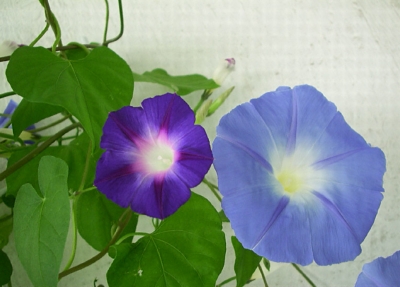
Family: Convolvulaceae Common Names: Morning Glory, heavenly blue, Ipomoea tricolor, Tlilitzin (Aztec/Nahuatl "Sacred Black Ones" - I. violacea), Badoh (seeds of Rivea corymbosa), Badoh Negro (seeds of I. violacea), Piule, Ololiuqui (Aztec/Nahuatl "Round Thing", seeds of T. corymbosa), Coaxihuitl (Aztec/Nahuatl "Green Snake" - T. corymbosa) Occurrence: Mountains of Southern Mexico, Guatamal, West Indies, & Tropical South America Information: Ipomoea violacea is a climbing vine that is native to Meso-America. In pre colonial times the plant was of medicinal and religious value. The Aztec and other Indians ingested its seeds ritually for divination; the Indians prepared hallucinogenic drinks from the seeds to see visions. I. violacea is probably identical with the ancient Aztec narcotic �tlitliltzin�. According to etnobotanical data the seeds were employed in a similar manner as Turbina corymbosa seeds (ololiqui). Phytochemical investigations determined the presence of ergot alkaloids in the leaves and seeds. Effects: Psychedelic; euphoria, extreme lassitude, listlessness, changes in visual and auditory perception, emotional disturbances and a desire to sleep. Time and space perception are seriously altered Autonomic effects: nausea, pupillary dilation, tremor, retching, rise of blood pressure and body temperature. The effects start about half an hour after ingestion and last for 4-8 hours. 20-300 seeds produce psychedelic effects. After pulverizing the seeds, a cold water infusion can be prepared, but the seeds can also be swallowed. Synergistic effects occure when the seeds are combined with Monoamine oxidase inhibitors (MAOI). Chemistry & Pharmacology: The psychotomimetic principles of I. violacea are ergot alkaloids. The biosyntheses of these alkaloids is initiated in the leaves and from there precursor-molecules are distributed to the seeds. The heart-shaped leaves contain ergine, isoergine and ergometrine. The fresh seeds have an alkaloid content of 0,02-0,1%; d-lysergic acid amide (ergine) , d-isolysergic acid amide (isoergine), the N-1-hydroxyethylamides of both isomeric amides and chanoclavine are present. Elymoclavine and lysergol (reduction products of lysergic acid) and penniclavine have also been isolated. Ergine is active in doses of 2-5 mg. The structures of the neurotransmitters dopamine, noradrenaline and serotonine are present in the lysergic acid-structure. As a result the ergot alkaloids can influence dopaminergic, noradrenergic and serotonergic systems. All active principles of I violacea activate the G-protein linked serotonergic-receptors 5-HT2; the receptor-subtype 5-HT2A is partly responsible for psychedelic activity. This receptor-subtype indirectly stimulates phosphatidynlinosit specific phospholipase C (PI-PLC). Modifiers: � MAO-inhibitors and sympathomimetic amines (amphetamine, ephedrine etc.) have synergistic effects; they prolong and intensify the experience. � Caffeine in combination with MAOI can cause hyperreactivity and suspiciousness. � Other tryptamines (psilocybin, DMT) alter and intensify the effects. � Ascorbic acid ( vitamin c ) doesn�t change the intensity of the experience, but it alters it�s quality. One can concentrate better, developes less paranoia and is also less tired at the end of the experience. � Hashish or Marijuana can also alter the experience. It usually produces a positive feeling. � Tricyclic-antidepressants antagonize the effects. These should NOT be combined with MAO-inhibitors � other MAO-inhibitors � alcohol � amphetamine/ ephedrine (Ephedra) � high doses of antihistaminica � large amounts of coffee � tyramine containg foods: � chocolate � aged cheese � red wine � nutmeg (large doses) � citrus fruits (oranges, grape fruits etc.) |