1. Welcome 1.1 For Sunfoods 1.2 For the Academic Reader 2. The Abstract 3. Thesis Introduction 3.1. The Aim 3.2. Research Background 3.3. The Research Topics 3.4. The Targeted Audience 3.5. Disposition 4. Research Method 4.1. The Constructive Research Method 4.2. The Research Process 4.3. Information Gathering 4.4. Export Guide and Questionnaire Construction 4.5. Analysis Method, Conclusions and Thesis Presentation 4.6. The Broad Scope of the Thesis 5. The Export Guide 5.1. Export Guide Presentation 5.2. Export Readiness 5.3. Trade Condition 5.4. Foreign Market Analysis 6. Questionnaire 6.1. Questionnaire Presentation 6.2. Export Readiness 6.3. Trade Condition 6.4. Foreign Market Analysis 7. Research Results 7.1. Export Readiness 7.2. Trade Condition 7.3. Foreign Market Analysis 8. Discussion 8.1. Export Readiness 8.2. Trade Condition 8.3. Foreign Market Analysis 9. Conclusions 9.1. Export Readiness 9.2. Trade Condition 9.3. Foreign Market Analysis 9.4. The Next Step 10. Supplements 10.1. Site Map 10.2. Glossary 10.3. The Complete Interview 10.4. Acknowledgements 10.5. Sources |
||||||||||||||||||||||||||||
| 1. WELCOME | ||||||||||||||||||||||||||||
1.2 For the Academic Reader 1.2.1 Welcome Different readers may require different approaches to the same paper, depending on their background, previous knowledge etc. In order to recognize this, the thesis' site may be entered through different ports depending on the background and the requirements of the reader. The different ports lead to different introductions to the thesis. As you have entered the thesis through this link it may be likely that you have no previous knowledge of the company and the product the thesis is concerned with. If this is the case it may be advisable to read the 'Introduction to Sunfoods and Konnyaku-Chips' before continuing with the actual thesis in order to fully comprehend the contents of the paper. |
||||||||||||||||||||||||||||
| The text below is based on information found on Sunfoods homepage (2003-04-08) and in the company's official brochures. The pictures come from the same source. | ||||||||||||||||||||||||||||
![]() |
||||||||||||||||||||||||||||
| 1.2.2 Introduction to Sunfoods and Konnyaku-Chips | ||||||||||||||||||||||||||||
| In 1941 several independent producers of konnyaku-products in the Kanazawa area merged to form one company, originally called Kanazawa Godo SeikonCo., Ltd.. This company gradually grew and by 1997 the company's capital had increased to 30 million yen. Today, the company is named Sun Foods Co.,Ltd.. In addition to Sunfoods head office in Kanazawa, the company also has offices in Tokyo, Toyama and Fukui in Japan. Moreover, the Sunfoods also encompass an office in Hawaii, USA. Sunfoods main products are different variations of konnyaku, tokoroten, jelly, jerky and bavarian cram. | ||||||||||||||||||||||||||||
| Company Facts Official Company Name: Sun Foods Co.,Ltd. Loction: Kanazawa, Japan Foundation: November 20, 1941 President: Nobuyuki Nakai Trade Representative: Hajime Shiraishi Number of Employees: 60 Web Site: http://www6.ocn.ne.jp/~sunfoods/ |
||||||||||||||||||||||||||||
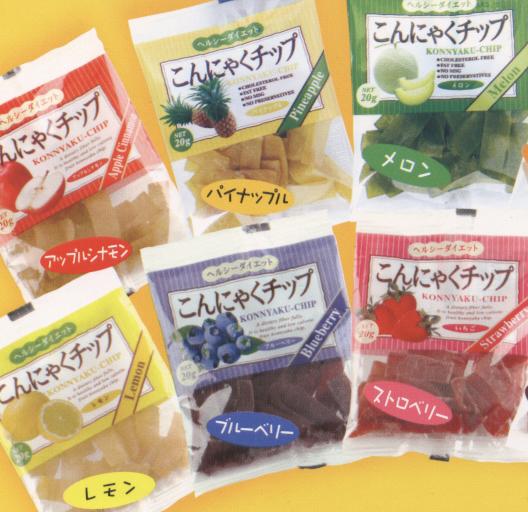
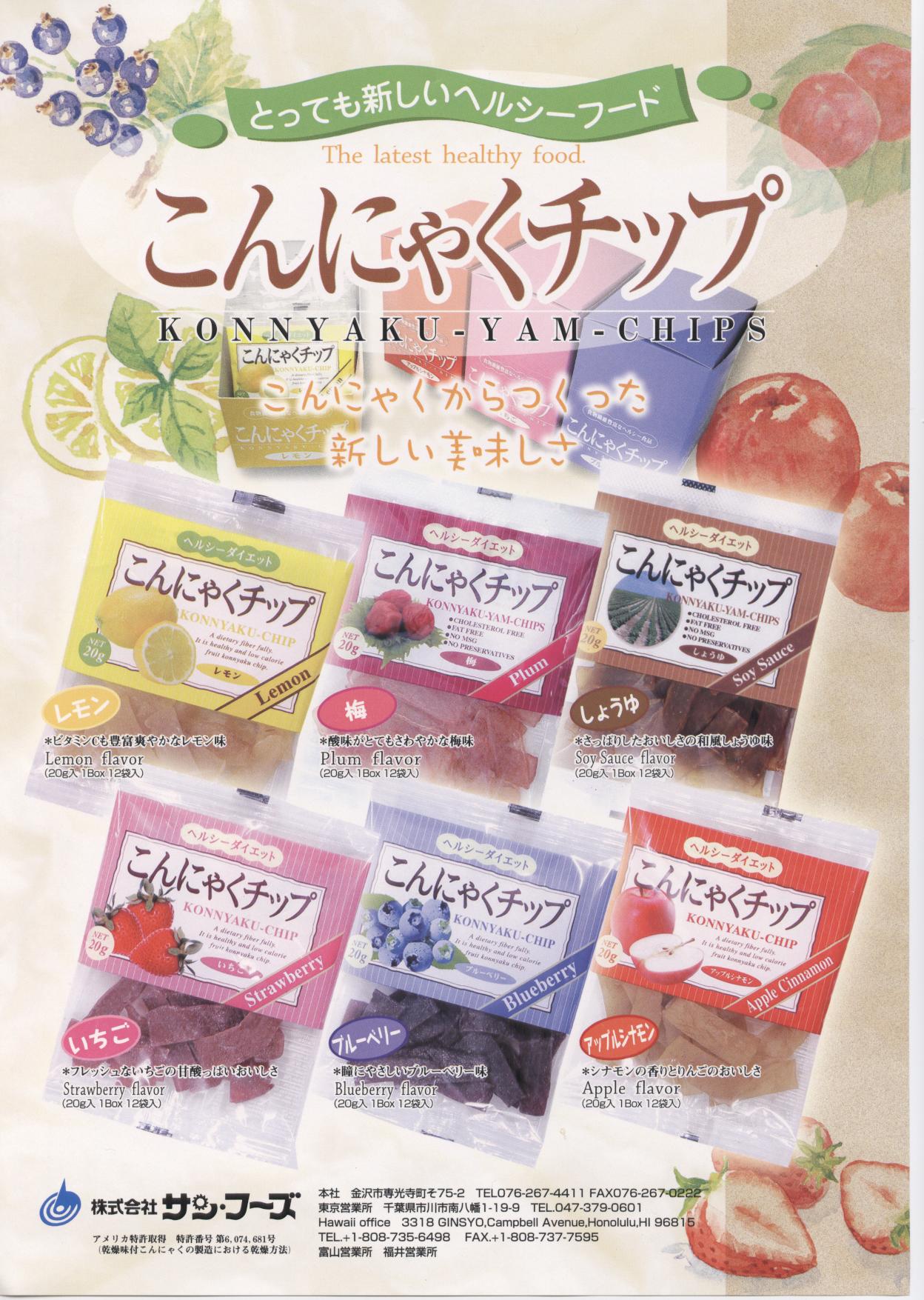
| Konnyaku is claimed to have been a popular food item for hundreds of years in Japan and it is said to be valued for its high content of water-solvable dietary fiber and low content of calories. Konnyaku-Chips is a konnyaku-based product that comes in a number of fruit flavors such as strawberry, blueberry and lemon. In Japan, the product is especially popular among young women. Each package of Konnyaku-Chips contain 20 grams of chips and the price is slightly less than 200 yen (approximately 15 Skr in June 2003) per package. The Konnyaku-Chips are low in calories and some flavors contain as little as 8 kcal per package. Additionally, the chips contain only natural ingredients. Pictures of the chips can be found below. | ||||||||||||||||||||||||||||
![]() |
||||||||||||||||||||||||||||
![]() |
||||||||||||||||||||||||||||
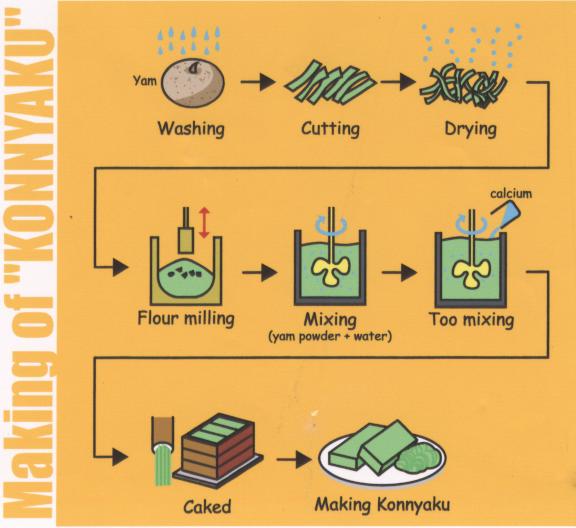
The process of making konnyaku is described by the picture below. |
||||||||||||||||||||||||||||
![]() |
||||||||||||||||||||||||||||
| The Konnyaku-roots are washed, cut, dried and made into flour. This flour is mixed with water, calcium and other ingredients. Finally this mixture is made into various konnyaku products. | ||||||||||||||||||||||||||||