Landscape & wildlife
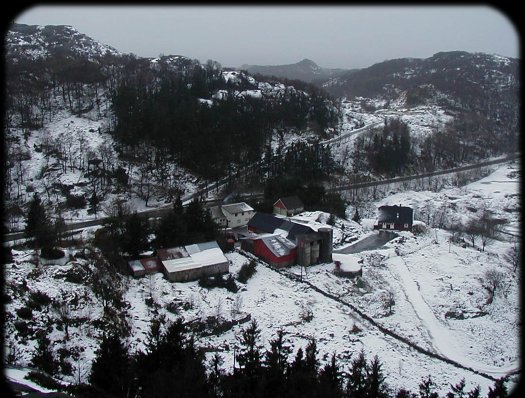
Overview of the Ougendal farms on a snowy day in January 2001.
The snow rarely last more than a week or two before being put away by mild weather.
The ground in this part of Norway mainly consist of hard rock, anorthosite,
with little arable soil upon. This mineral is very rare , as the only places you will find it,
apart from the Dalane region, is in some parts of Canada and the moon!
Anorthosite consists little fertilising materials, thus making the spare soil that covers
the valleybottoms acid and hard to develop into fertile agricultural land.
Peder Claussøn Friis, a well-known clergyman from the 17th century, who was thought to have
been born in Egersund once said that Dalane must have been created by God in anger.
Most visitors are amazed how bare and naked the landscape seems, with the grey colour of the
rock dominating the landscape, but beneath these rocks and summits, rarely stretching more than
1200 feet above sea-level, are small green valleys where people have created an outcome for
thousands of years.
The closeness to the sea has helped as most farmers have combined farming with harvesting the
riches of the sea.
Often men from farms such as Åvendal, Gyland and Birkeland would take hire on boats at Mong
during the herring-season in late winter/early spring.
The many lakes spread around is also a common feature in the Dalane landscape. During the last
few years fish like trout and salmon have returned due to less air-pollution and acid-rain.
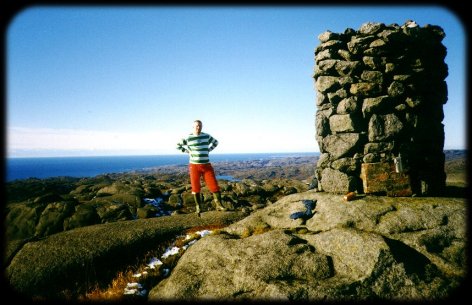
The author on Ragnhildsfjellet mountain, at 900 ft above sea level it is the highest summit in the vicinity of Ougendal
and it offers a superb view across the North Sea.
The horizons has changed considerably during the last decades, with trees, mostly birch, growing up at every possible spot because of less intensive grazing from sheep. A hundred years ago hardly any woods existed and people had to cut turf in the bogs to use in their stoves.The growing of the woods has meant a return of the elk to the area, and Åvendal today holds the rights to elk-hunting.
Other animals quite common are deer and hare.
The only predators of notion are red fox and lynx. The lynx had been absent from this area for
many years, but has now returned to the disgust of many farmers. In earlier times both
wolves and bears were great threats to the farm-animals when out grazing, but both are long
gone from the western parts of Norway. Einar Birkeland's great-great-grandmother swore that she
saw a wolf around 1825, and at Åvendal there is an oral tradition that one of the horses on the farm once came home fatally hurt when it's foal had been attacked by a wolf. It had managed to save it's foal, but they could not save the horse.( This story is undated)
Spread around in the area, you can still find many stone-paddocks used as protection for the
animals by their shepherds during night.
It is worth of notice that in January 2002 a wolf has been roaming the moors of Dalane, bringing terror for the sheep-farmers.
It is believed that it is the first time for more than 100 years that a wolf has lived in Rogaland County.
| 