
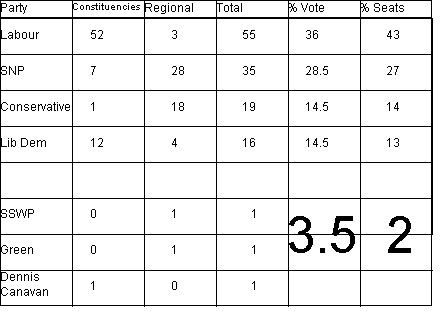
The Additional Member System was used to elect the Scottish Parliament in 2000.
73 MSPs were elected using FPTP ballot. Each MSP would represent a constituency similar to that represented by an MP at Westminster.
56 MSPs were elected on a second ballot paper. In this ballot voters voted for the political party of their choice.
Scotland has been divided into 8 regions so there are 7 'additional' MSPs for each region.
11. Arguments for PR
It is fairer than FPTP as % of votes = % of seats
Small parties are better represented
Votes are wasted under FPTP
Avoids extremes of government
You can vote for a variety of parties (STV)
Many European countries use PR successfully
12. Arguments against PR
No one votes for a coalition
FPTP provides strong stable government, usually with a majority
Small parties in the PR system of ten hold the balance of power - this is not what the public voted for
Only the national list system provides a truly proportional result
PR produces large, multi-party constituencies which means less personal contact between constituents and MP
13. The life and work of an MP
An MP is elected to the House of Commons o represent his/her constituents
An MP has, in effect two jobs. They work in the House of Commons Monday to Friday and in their constituency at weekends
In the House of Commons an MP will be involved in passing new laws, examining the work the government and raising matters which are of concern to his/her constituents
MPs who are not government ministers or who are not on the opposition front bench are called private members or back benchers
14. How MPs represent their constituents - In the House of Commons
Write a letter to a minister or a department to get information
Speak directly to ministers
Raise issues or questions at question time or at debates
Sit on a select committee
Try to persuade other MPs to support them
Try to introduce a bill
15. How MPs represent their constituents - In their Constituency
Reply to constituent's letters
Hold regular surgeries
Attend local meetings and give advice
Keep in contact with councillors and work them
Take part in social events for direct contact
Home 1 2 3 4 5 6

1 2 3 4 5 6 7 8