

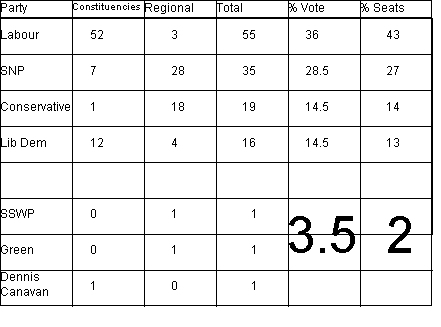
The Additional Member System was used to elect the Scottish Parliament in 2000.
73 MSPs were elected using FPTP ballot. Each MSP would represent a constituency similar to that represented by an MP at Westminster.
56 MSPs were elected on a second ballot paper. In this ballot voters voted for the political party of their choice.
Scotland has been divided into 8 regions so there are 7 'additional' MSPs for each region.
11. Arguments for PR
It is fairer than FPTP as % of votes = % of seats
Small parties are better represented
Votes are wasted under FPTP
Avoids extremes of government
You can vote for a variety of parties (STV)
Many European countries use PR successfully
12. Arguments against PR
No one votes for a coalition
FPTP provides strong stable government, usually with a majority
Small parties in the PR system of ten hold the balance of power - this is not what the public voted for
Only the national list system provides a truly proportional result
PR produces large, multi-party constituencies which means less personal contact between constituents and MP