|







|

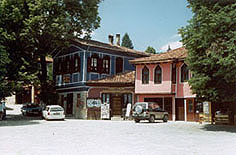
Koprivshtitsa
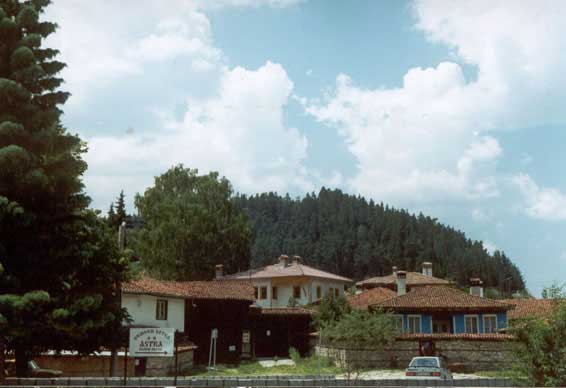
is a nestled
in recesses of Central Sredna Gora Mountain, in the middle of a little
valley at 1060
m altitude.
Both with Smolian, they are the highest cities in Bulgaria. The small town
lies on the both sides of river Topolnitsa, locally known as Topolka. The
mountain outlines are soft and round. Fields and meadows, separated by
young pine-tree forests, which penetrate into the real town and complement
the townscape around.
Koprivshtitsa
does not have an ancient history. It is a comparatively
young town, founded by herdsmen. Later intelligent, bright people came here
and found shelter in the inaccessible mountain recesses, running away from
Turkish invaders. In the end of
XVII century
Koprivshtitsa was already wealthy town with developed cattle breading and
craftsmanship.
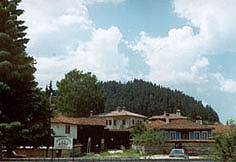 The
homespun
tailoring
was particularly prosperous. The town rapidly become thriving.
All privileges, given to it by sultan’s firmans were another contribution
to its status. The rich town was three times sacked and fired in the end of XVIII
century and in the beginning of XIX century, but it revived again. Cattle-drovers
from Koprivshtitsa
were famous through
the whole Ottoman Empire. More than 400 tradesmen delivered craftsman’s
products from Koprivshtitsa to
Constantinople and Alexandria.
In year 1837 Neophyte Rilski founded common school and in 1847 Naiden Gerov
founded class school. Among the rich people in Koprivshtitsa started a real
competition in building as lovely as could be houses, thereby trying to show
their prosperity. Thus an original town grew up - unique with its
architecture. The
homespun
tailoring
was particularly prosperous. The town rapidly become thriving.
All privileges, given to it by sultan’s firmans were another contribution
to its status. The rich town was three times sacked and fired in the end of XVIII
century and in the beginning of XIX century, but it revived again. Cattle-drovers
from Koprivshtitsa
were famous through
the whole Ottoman Empire. More than 400 tradesmen delivered craftsman’s
products from Koprivshtitsa to
Constantinople and Alexandria.
In year 1837 Neophyte Rilski founded common school and in 1847 Naiden Gerov
founded class school. Among the rich people in Koprivshtitsa started a real
competition in building as lovely as could be houses, thereby trying to show
their prosperity. Thus an original town grew up - unique with its
architecture.
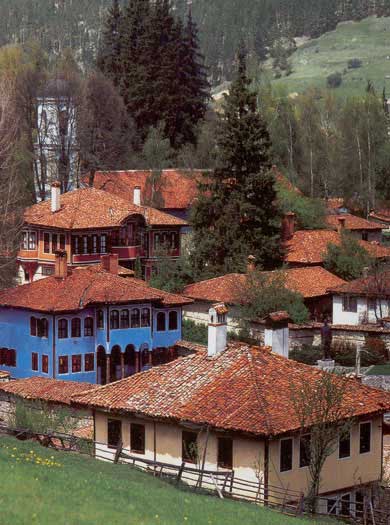
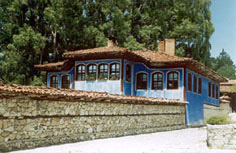 There
are kept
in Koprivshtitsa the best achievements in building art of the Bulgarian Renaissance
in XIX century. Koprivshtitsa turned to be real national Town-museum. There
are kept
in Koprivshtitsa the best achievements in building art of the Bulgarian Renaissance
in XIX century. Koprivshtitsa turned to be real national Town-museum. 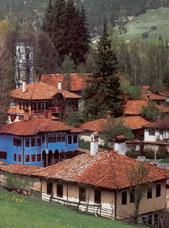
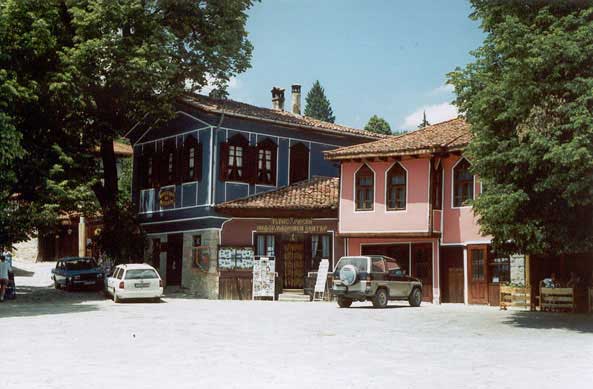
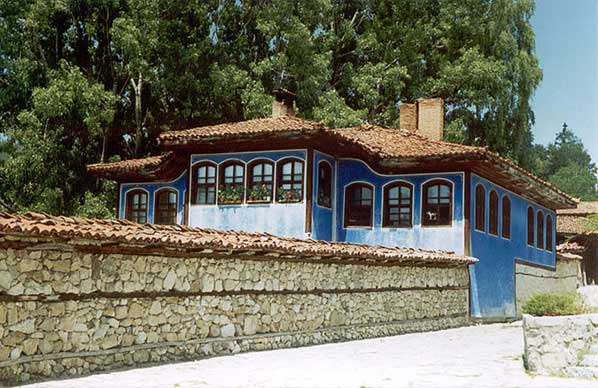
The
greatest impressions make the houses with high stonewalls, wide eaves
and gates, verandas and balconies. The simpler of them have been built by the
local craftsmen, such as the Bankovski’s, Diado Liben’s, Dushkov’s
house, etc. The biggest house that have emblazonry and fretworks, such as
Oslekov’s, Liutovs’s, Markov’s, Garkov’s, Mlachkov’s house, etc.
have been owned by rich cattle-drovers, tax-collectors and tradesmen.
|
 City
Guide of PANAGYURISHTE
City
Guide of PANAGYURISHTE