
|
 |
|

Home Page
Cocktails
Groups of Things
Horoscopes
Phobias
Pictures
Zodiac (Chinese)

All About Rastas
Cannabis Timeline
Ganja in The USA
Rolling - Lego Story
The Good Drinking Guide
Wicked Recipes

Alcohol Guide
Drug Guide
Holiday Guide
Rolling Guide
Rolling Guide (Advanced)

Articles:
Drug Addiction
Drugs:
Alcohol
Cannabis
Ecstacy

Erowid
Drum&Bass Arena
Ravislayer
Stagg's Site

About Us
Contact Us
Sign Guestbook
View Guestbook

Skip to: Introduction | History | Measurement | Effects | Dangers | Hangovers | The Law | Myths | Sciency Bit
Introduction
| Legal Status | Controlled |
| Drug Type | Depressant |
| Drug Sub-type | N/A |
| Chemical Class | N/A |
| Normal Duration | 2-6 hours |
| Aliases | booze, alcohol, beer, etc. |
| Dose | 60ml |
| Price (per dose) | £5-10 |
Alcohol is rarely thought of as a drug as it has been part of the human race for millennia and so is considered 'socially acceptable' by most people. However, alcohol is still a drug, it effects your body and mind much like other drugs do, legal or illegal. In fact, alcohol is considered by many in the scientific to be more dangerous than many illegal drugs.

History
A brief history lesson for those who are that way inclined... One of the earliest mentions of wine making is from an Egyptian papyrus dated 3,500 BC. However, alcohol drinking is thought to go back almost as far as the human race does. Alcohol has been central to social, religious and personal use all over the world throughout history, although the making of alcoholic spirits like gin and brandy only started some one thousand or so years ago.
The industrial revolution caused an upsurge in alcohol use as many people saw it as the ideal way to escape the boredom and pain of their urban working lives. Earlier this century restricted licensing laws kept pubs closed for longer but this is slowly being reversed (to the delight of drunk university students up and down the country).
Measurement
Alcohol is measured in units. One unit of alcohol being: - Half a pint of ordinary strength beer (3.5% ABV) - A small glass of wine (9% ABV) - A shot (25ml) of spirits (40% ABV) The strength of alcoholic drinks is shown on the label as Alcohol By Volume (ABV). The higher the percentage the stronger the drink will be. In the USA (for some twisted reason) alcohol is not measured in the same way. Their scale of strength is measured in proof (characterised by the degree symbol instead of percent on the label). The proof of a drink is roughly equal to double it's ABV percentage (i.e. 100% will equal 200°).
Effects
|
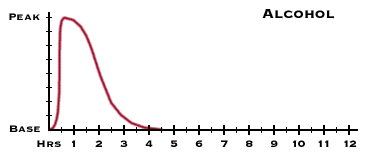
Positive: relaxation
mood lift
lowered inhibitions / reduced social anxiety
analgesia (kills pain)
Neutral: slurred speech
flushed skin
drowsiness (sleepiness)
nystagmus (difficulty focusing eyes)
tolerance with repeated use within a few days
Negative: decreased coordination
nausea, vomiting increased anger and violence in some cases
frequent urination (especially with beer or wine), diuretic effect
dizziness and confusion
blackouts and memory loss at high doses
coma and death at extreme doses
brain and liver damage (cirrhosis) with heavy use
hangover, lasting 12-36 hours, from mild to severe after heavy use
possible foetus damage in pregnant women at high dose or frequency
Drunkenness is the term given to alcohol’s pharmacological effect on the human central nervous system. This effect causes incoordination, slowed reaction time, muscle relaxation, behavioural disinhibition and impaired judgment, all of which last for several hours after alcohol is consumed. The extent of these symptoms (dubbed drunkenness) depend on several factors, as shown in order of importance:
- The amount taken at one time (dosage)
- The weight and gender of the user (this will effect water concentrations in the body)
- The amount of food in the stomach (this will slow absorption into the bloodstream)
- The user's past experiences with alcohol and metabolism (i.e. tolerance)
- The circumstances under which the drug is taken (the place, the user's psychological and emotional stability, the presence of other people)
Dangers
Short Term: After 4 to 5 units most people feel less inhibited and more relaxed. After 8 or so units, most people slur their speech and become less co-ordinated and clumsy and some people become more emotional. More alcohol could result in staggering, double vision, loss of balance, nausea, vomiting and an impression of 'the room spinning'. With large doses blindness and unconsciousness may occur, the user may also not be able to remember what happened while they were drunk. The greatest danger from alcohol is injury due to the drinker being more clumsy and less mentally sharp. In 1990, 15% of fatal road accidents were alcohol related and about 50% of pedestrians ages 16-60 killed in road accidents were under the influence of alcohol. In 1992 over 600 people were killed in alcohol-related road accidents. Alcohol is also a factor in at least 7% of accidental drownings and 40% of household fires. (All statistics are from British sources, not the states). In fact America's stats are even worse; more Americans have died in alcohol-related traffic accidents than in all the wars the United States has been involved in since it was founded. Drinkers may also choke on their own vomit whilst unconscious due to alcohol, but this is very uncommon. After a period of alcohol consumption a mixture of factors, mainly withdrawal and dehydration (alcohol dehydrates the body) may cause a hangover. Mixing alcohol with other depressant drugs (such as GHB or heroin) increases its effects and dangers and can result in a very dangerous cocktail.
Long Term: The recommended alcohol limits published by the British government are 21 units per week for men and 14 units per week for women. Sustained drinking can lead to liver disease (cirrhosis), ulcers, heart/circulation disorders and in extreme cases permanent brain damage (such as Korsakoff's psychosis, a form of permanent amnesia). Physical and psychological dependency can occur (commonly known as addiction). Deaths from suicide, accident and cirrhosis of the liver are common among heavy drinkers. Sudden withdrawal from heavy drinking produces sweating, anxiety and trembling and in some cases can cause delirium and convulsions. Contradictions:
- Never take alcohol with other depressants (e.g. GHB, heroin, Sleeping pills).
- Do not operate heavy machinery. Do Not Drive.
Hangovers
Hangovers are due to three things, the diuretic effect of the alcohol, alcohol (and it's metabolite's) toxicity and other mild poisons in the drink. Hangover symptoms include headaches, dehydration, irritability, sleep disturbances, liver toxicity, nerve and tissue hypersensitivity, etc. These symptoms can be prevented or significantly reduced by simple interventions that will be discussed in this section. The diuretic effect of alcohol can easily be countered by drinking large amounts of non-alcoholic fluid (e.g. water, fruit juice, etc.). It is very important that the fluid is non-alcoholic because otherwise it will only dehydrate your body more. Counteracting alcohol's toxicity is slightly more difficult. It is important to understand that alcohol is metabolized in a multi-step process into various metabolites, each of which have unique biochemical effects of their own. Contrary to common belief alcohol has quite a low toxicity, the first step in metabolizing alcohol is the conversion of alcohol to acetaldehyde (enthanal) and it is this that causes most of the damage (acetaldehyde is 30 times more toxic that alcohol is). If acetaldehyde is not efficiently converted into acetic acid (the second step in the metabolism of alcohol), severe toxicity can result (and a chronic hangover). Acetaldehyde is primarily broken down by sulphur-containing antioxidants, however, the amount of these antioxidants needed to totally eliminate the toxic effects of the acetaldehyde is far more than that which normally exist in the body so dietary supplements will need to be munched (cysteine is recommended). Vitamin C will also need to be taken in order to keep cysteine in its reduced state (and affective against acetaldehyde). Vitamin B-1 (thiamine) and lipoic (thioctic) acid may also help in the detoxification of acetaldehyde and/or may be depleted by the intake of alcohol. to demonstrate the effectiveness of this treatment rodents were given a LD-90 dose (the lethal dose for 90% of test subjects) of acetaldehyde (the toxic metabolite of alcohol) and pre-treated with Vitamin C and cysteine supplements. The toxic effect of the acetaldehyde was completely blocked by this treatment (i.e. none of the rodents were killed by the normally lethal dose of acetaldehyde). It may be worth noting that the pharmacologic and toxic effect of alcohol are not linked. Essentially the the pharmacological effect (i.e. intoxication or drunkenness) is not inhibited by vitamin C or cysteine, but the toxic effect (e.g. the hangover, nervous irritability) is inhibited. Taking about 100mg of cysteine along with 300mg of Vitamin C per unit of alcohol (1/2 a pint of beer) should prevent any hangover (smaller amounts will also have a noticeable effect). Please note that you should allow about 20min for the treatment to start working as it will take time for it to be absorbed into the blood stream. Ironically alcohol itself significantly diminishes the toxicity of the acetaldehyde. This provides a strong incentive for people to continue drinking to prevent the toxic effects of the acetaldehyde. Of course, when they do stop drinking the effects of the acetaldehyde will increase as the alcohol is rapidly cleared from the body. Another important fact to consider is that there are other mild poisons in the drink (as well as alcohol) which can cause hangovers. The type of drink is important in this area because the fermentation process can vary between different drinks. Below is a scale of which drinks are worst for hangovers (in ascending order).
| Brandy Red Wine Rum Whiskey White Wine Gin Vodka |
 |
Almost all red wines and chardonnays are matured in oak barrels so that they will keep and improve. If you drink this wine younger than three years there will be a higher level of nasties that can cause hangovers. If left to mature these nasties change to neutral substances and the wine will give you less of a hangover. So generally older wine will contain less hangover-causing poisons, especially if the wine was from a good year.
The Law
(Note this is British, not American law)
| Under 5 | It's illegal to give alcohol to a child under 5 except under proper medical supervision |
| Under 14 | You cannot go into the bar of a pub unless it carries a 'children's certificate' and you can only enter parts of licensed premises were alcohol is being sold but not drunk (e.g. an off-licence) or drunk but not sold (e.g. pub garden). |
| 14 or 15 | You can go anywhere in a pub but not drink alcohol |
| 16 or 17 | You can buy or be bought beer or cider to drink with a meal (except in a bar) |
| 18 and over | You can buy and be bought alcohol of any kind from licensed shop, pub or other outlet |
The police have the legal power to confiscate alcohol from any who is known to be or suspected of being under 18. Unlike US police, the British gava has the power to perform a breathalyser test on anyone suspected of driving under the influence of alcohol (i.e. they don't need to walk in a straight line beforehand). The breathalyser test is automatically given to any driver who has been involved in an accident (suspected of being under the influence or otherwise). The legal limit for driving is 1 unit (half-pint of beer).
Myths
You can 'sleep it off': False, it takes one hour for your liver to remove each unit of alcohol, so it is quite possible to still be drunk the morning after (and above the legal limit for driving).
Coffee can sober you up: False, coffee does nothing to decrease your blood/alcohol level. Coffee does, however, contain caffeine (a stimulant drug) and this may counteract some of the depressant effects of the alcohol (although there is no scientific evidence for this).
Alcohol is good for you in small amounts: Yes and no, it is true that alcohol can help prevent heart disease. In fact numerous studies have shown that around 1-2 units of alcohol a day can reduce the risk of dying from coronary heart disease by 30% to 40%. However, it has also been shown that (for women) the chance of developing breast cancer will rise by approximately 15% to 40%. It is worth noting though that the chance of dying from heart disease is at least four times more likely than from breast cancer (alcohol not being involved).
More alcohol can cure a hangover: Sort of, as afore mentioned alcohol does actually help break down acetaldehyde (a toxic metabolite of alcohol) and so it will prolong the onset of a hangover but this will only work if there is any acetaldehyde in your bloodstream! So it won't help the morning after.
Alcohol keeps you warm: Well yes and no, alcohol does in fact increase your body temperature but here's the catch, it also causes vasodilation (an increase of blood flow to the skin) and so most of the time this heat will be lost into the surrounds but, it really depends on the environment you are in at the time as to whether the heat lost from the skin outweighs the heat gained through the chemical processes of alcohol.
Sciency Bit
Name: Alcohol
Chemical Name: Ethanol
Chemical Formula: C2H6O
Molecular Weight: 46.07
Melting Point: -114.1°C
Boiling Point: 78.5 °C
LD50: 7.06 g/kg - 10.6 g/kg
Diuretic Effect: Alcohol is a diuretic that blocks vasopressin (Anti-Diuretic Hormone) from regulating the osmotic gradient of the blood, therefore it is not the overall amount of fluids, but the total alcohol content that now affects urination frequency (this can cause dehydration).
Temperature Effect: The conversion of alcohol into acetaldehyde by alcohol dehydrogenase and acetaldehyde into acetate by the enzyme acetaldehyde dehydrogenase results in the generation of NADH (reduced nicotinamide adenine dinucleotide). NADH is the hydrogen-transfer chemical (i.e. electron transporter) that enables oxidative phosphorylation to take place (i.e. the production of ATP energy within the mitochondria through the utilization of oxygen). Suffice to say that NADH production generates a great deal of energy. This is why drinking alcohol warms people up. The extremely rapid NADH production from the alcohol dramatically increases energy availability and body temperature, especially in people who are chilled. After alcohol has been converted into acetate, the acetate enters the citric acid cycle to generate even more NADH. Vinegar is about 5% acetic acid (acetate). However, the vasodilatory effect of alcohol means that most of this excess heat will be lost through the skin (often resulting in a net lowering of body temperature).
Anger Inducing Effect: In some cases alcohol may induce anger in some people (although this is not the case for most people). Many scientists believe that the reason behind this is low serotonin levels. Low serotonin levels increase carbohydrate appetite, aggression and violent behaviours, and depression. Dietary supplements of 5HTP, L-Tryptophan or Phenylalanine should help rectify this.
Glycogen Effect: Alcohol cases the liver to convert stored glycogen (the stored form of most sugars) into glucose (the type of sugar used to directly make energy). For people with hypoglycaemia (or other blood-sugar regulatory problems), alcohol offers a 'quick fix' solution to increase blood sugar levels. This is why, although alcohol is a depressant it often seems to increase the energy of the user rather than decrease (almost like a stimulant would do).
Copyright CUBE 2003
