 |
|
|
|
|
|
|
|
|
|
|
Tiwanaku Bolivia |
|
|
|
Tiwanaku, also called Tiahuanaco, is Bolivia's premiere archaeological site. Easily reached from La Paz (three hours by car, train or bus on the road to Desaguadero, Peru) and Lake Titicaca, the ruins are the remains of a pre-Inca civilization dating from about 600 BC.
The site is thought to have once bordered the lake, and to have been an important ceremonial center. The influence of this civilization was far-reaching, extending even to the coast of Peru where Tiahuanaco artifacts are common, and believed to be more advanced than the Incas in art, pottery, astronomy and mathematics.
Legend has it that Tiwanaku was created overnight by a race of giants, and the size lends credence to that myth. By the time the Inca civilization developed at Lake Titicaca, Tiwanaku was already in ruins, most likely the result of earthquake activity.
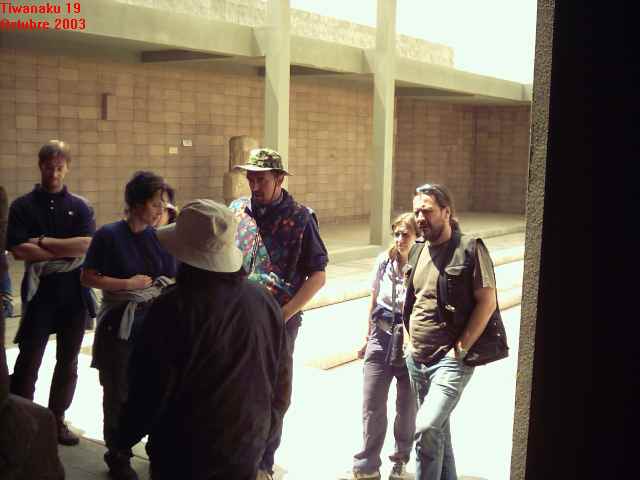
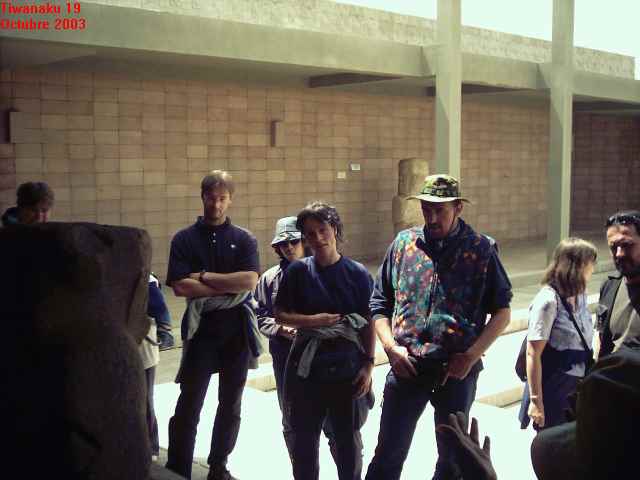
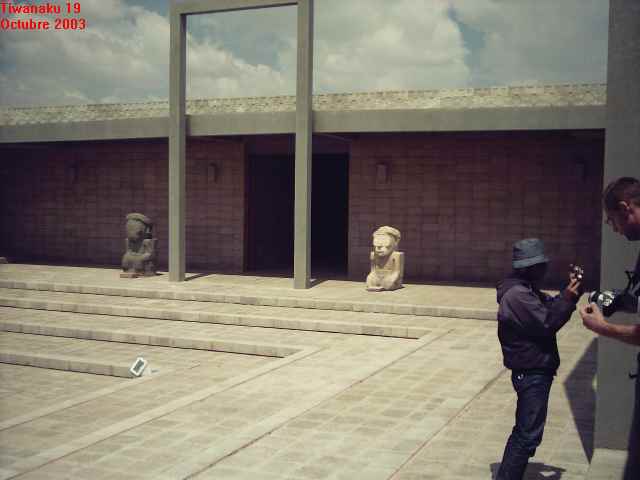
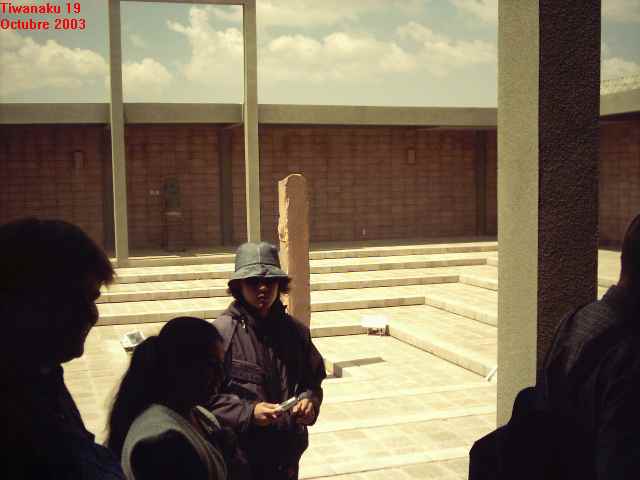
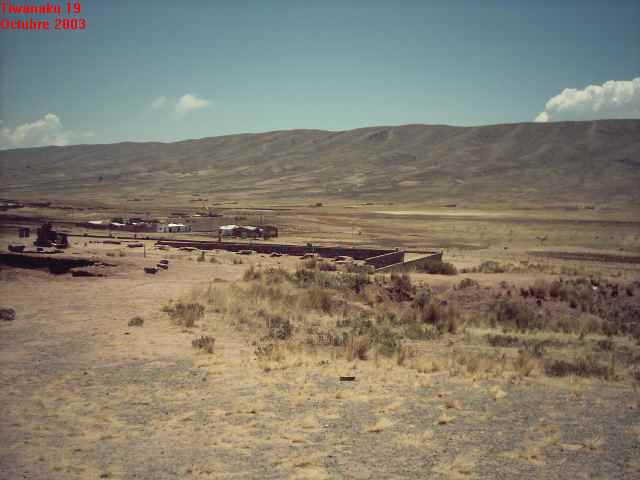
The site at Tiwanaku is still under exploration, though many of the monoliths have been moved to the Museo Nacional de Arqueolog�a in La Paz for preservation and easier viewing. Still on site are the Gate of the Sun, Acapana Pyramid, Kalasaya compound and rooms cut from stone with stone faces carved into the walls. This picture is the entrance to the Kalasaya compound and opens from a sunken courtyard seen in the photos below. Barely seen in the doorway is a statue. Other ruins include the semi-subterranean temple and the Puma Punku, the Gateway of the Puma, compound across the railroad tracks from Tiwanaku.
The Tiwanaku civilization was agrarian, and supported a large population. Theory has it that when the lake receded, and a drought restricted crop growth, the culture declined. Over the years, stones from the Tiwanaku site have been used in construction elsewhere. |
|
|
|
 |
|
 |
|
|
|
By the time the Inka came to Tiwanaku around the middle of the fifteenth century, it had been abandoned for hundreds of years. But even in ruins, Tiwanaku posed a greater challenge to the Inka Empire than any of the indigenous groups it fought during its conquests. The Inka justification for empire and rule was based on being the firstborn. They believed that before the Inka, there were only darkness and savagery. Yet clearly, here was a civilization far older than theirs. In a slight twist to mythic history, the ruins of Tiwanaku were turned from a potential liability into further proof of the divine nature of the Inka. It was here, the Inka claimed, that their creator deity, Viracocha, made the first peoples of the Andes from clay and then the first Inka, whom he then sent to Cuzco to found the empire. The silent monoliths were proof of Viracocha's creations. |
|
The first Spanish chroniclers were amazed by the size and antiquity of the structures at Tiwanaku, and for the next few centuries a number of notable observers traveled to visit what became known as the "American Stonehenge" or the "Baalbek of the New World." The bleak and seemingly inhospitable altiplano landscape led some to view Tiwanaku as an empty ceremonial center, a pilgrimage site with no permanent population |
|
|
|
|
|
 |
|
|
|
|
 |
|
|
|
|
|
|
Fortunately, scientific investigations over the course of this century have corrected these misconceptions and left us with a deeper understanding of the complexity of Tiwanaku and the cultural history of the Titicaca Basin. Arthur Posnansky is one of the more important figures in Tiwanaku studies, producing one of the most detailed studies of the ruins after decades of investigations. Unfortunately, his theories of hyper-diffusion, exaggerated age for the site (10,000 B.C.), and radical ideas of race tainted an otherwise incredible career. |
|
|
|
|
Of all the ruins in Central and South America, Tiwanaku has especially been a magnet for strange theories. In the early twentieth century, Austrian astronomer H.S. Bellamy insisted that the metropolis was a result of one of Earth's former moons crashing furiously into the ground. It was considered absurd to think that a civilization could actually flourish as high as 13,000 feet above sea level. In the late 1960s, writer Erich von Daniken concluded from his "research" that aliens set up a base at Tiwanaku and erected the great monuments using their extraterrestrial technology. He used as evidence a bizarre biblical interpretation that the prophet Ezekiel had been abducted by these same cosmic beings. |
|
|
|
|
|
|
 |
|
|
|
|
|
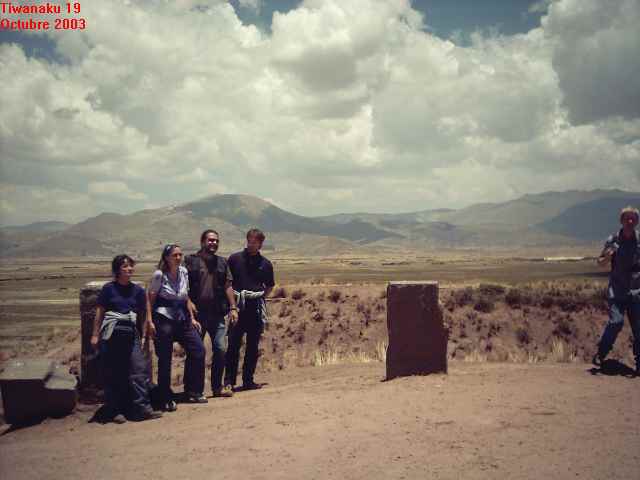
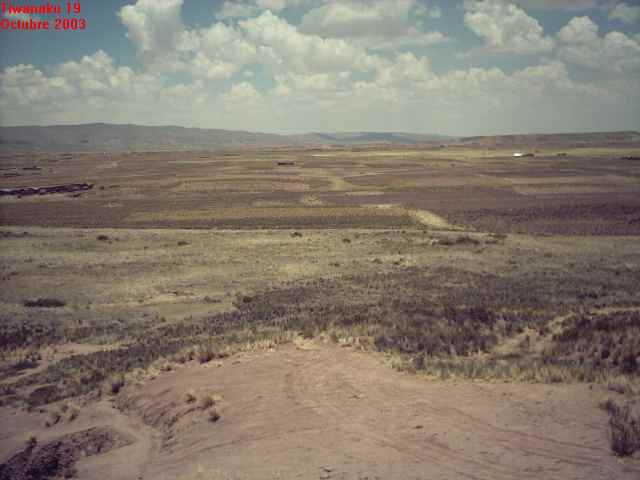
Thousands of tourists pass through the site each year, many to watch the sun rise on the summer solstice. The success of Tiwanaku as a tourist attraction has had adverse affects. Only a portion of the site is protected, the rest is subject to controlled development and poor management. For example, two paved highways that were built across the ruins to provide better tourist access destroyed monumental remains and scarred the landscape. |
|
|
 |
|
|
|
|
|
|
 |
|
|
|
|
After decades of foreign research, Ponce Sangines established an unabashedly nationalistic Bolivian organization for the study of Tiwanaku in 1957. Bolivia was a young nation still in disarray from a disastrous war with Paraguay and a massive land reform that finally did away with the Spanish system of haciendas. The intent was clear--what the Inka were to the Peruvians, Tiwanaku would be for the Bolivians. Several monuments were fully excavated and reconstructed to a state that may not have existed in the past. Almost every schoolchild and Bolivian national visits Tiwanaku at some point, and the cracked Gateway of the Sun has become an icon to Bolivians. Since the late1980s several foreign scholars have worked on the site and have added to our understanding of this enigmatic place. |
|
|
|
|
|
|
Though as large and as densely populated as major European cities at the time, Tiwanaku belongs to a Precolumbian urban tradition that is still poorly understood. Brief descriptions of Inka cities at the time of European contact and previous scientific investigations at Tiwanaku have left many questions that recent projects have tried to answer. |
|
|
|
|
|
 |
|
|
|
As the only sustainable source of income in the valley--and the source of identity and pride for the valley's inhabitants--the local government and the indigenous communities recently took over the ruins after years of dispute with the central government. Talks on the future of the ruins continue between all parties involved, and UNESCO is planning a mission to the site in August to arbitrate and set conservation guidelines. It is within this atmosphere of indigenous revitalization, government infighting, and international pressures that we plan to carry out another season of investigations. |
|


