 |
|
|
|
|
|
|
|
|
|
|
Bolivia economisch en sociaal |
|
|
|
Bolivia is een van de armste landen van Zuid-Amerika. Het merendeel van de Boliviaanse bevolking van 8,3 miljoen inwoners slaagt er niet in te voorzien in zijn basisbehoeften. Volgens gegevens van de Boliviaanse autoriteiten leeft 60% van de bevolking in armoede en 32% in extreme armoede. Hoewel sociale indicatoren -m.b.t. levensverwachting, gezondheid, onderwijs, voeding- in het laatste decen�nium in absolute termen zijn verbeterd, blijft Bolivia laag scoren op de Human Development Index van de UNDP (2000: 104de plaats van 162 landen). De alfabetiseringsgraad van volwassenen is de laatste jaren gestegen tot 85%. Bijna een derde van de plattelandsbevolking en meer dan een derde van de vrouwen op het platteland zijn evenwel nog analfabeet. Tijdelijke en permanente migratie naar de steden houdt aan. De be�schei�den eco�nomi�sche groei van de laatste jaren (gemiddeld 4% per jaar), welke in belang�rijke mate werd geabsorbeerd door de bevolkingsgroei (gemiddeld 2,5% per jaar), heeft geen verbe�te�ring ge�bracht in de inko�mens�verde�ling van het land. |
|
|
|
 |
|
 |
|
|
|
De armoede in Bolivia kent vele oorzaken: historisch, economisch, politiek, sociaal en cultureel. Het is een structureel fenomeen dat zich manifesteert in het hele land, maar met verschillende gradaties. De armoede in Bolivia is zowel een oorzaak als een gevolg van de sociaal-economische achterstand van het land. De maatschappelijke en politieke buiten- en uitsluiting van het grootste deel van de inheemse bevolking is een hoofdprobleem. Ook gebrek aan (toegang tot) onderwijs, gezondheidszorg en basisvoorzieningen, een beperkte maatschappelijke en politieke integratie, een geringe produktieve economische ontwikkeling en een zwakke institutionaliteit zijn belangrijke factoren in de armoedeproblematiek. |
|
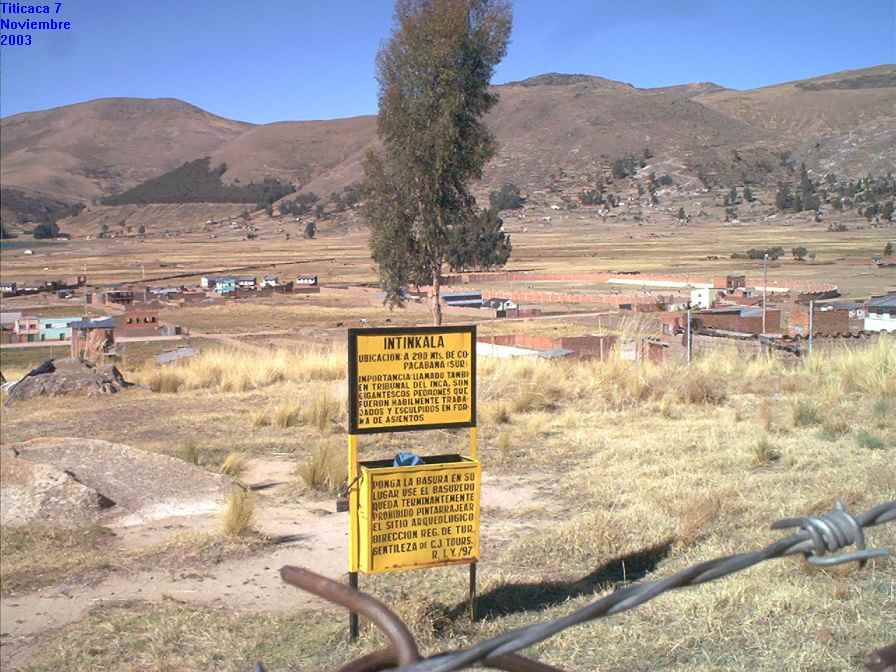
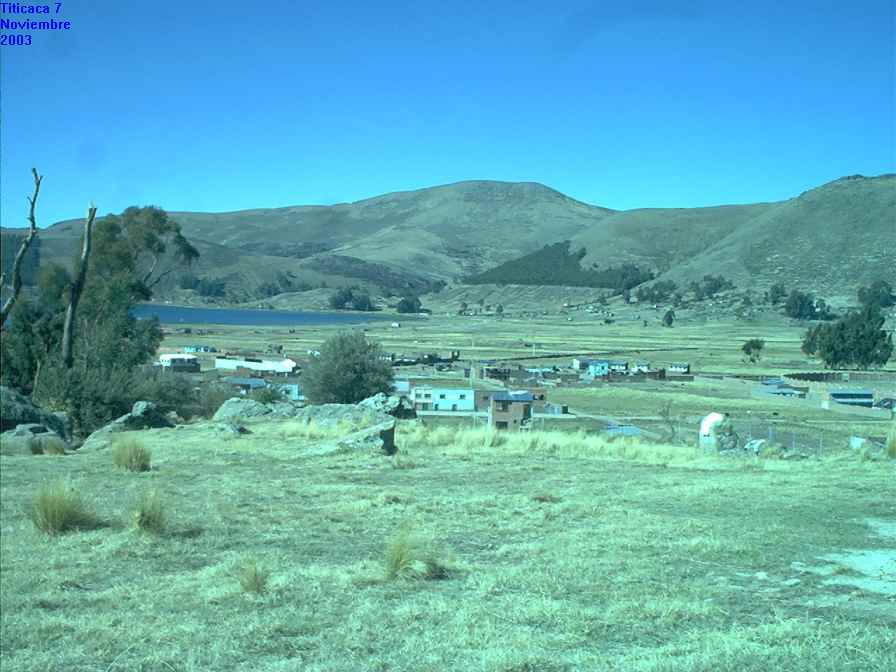
Intinkala is a Inca reserve with ancient buildings. On your way to the "Horca del Inca" you can pass by the "Asientos del Inca" also called "Intinkala"(which means "stones where the sun sits"). The sight is located 5 minutes from the main church, right in front of the cementery.
|
|
|
|
|
|
 |
|
|
|
|
 |
|
|
|
|
|
|
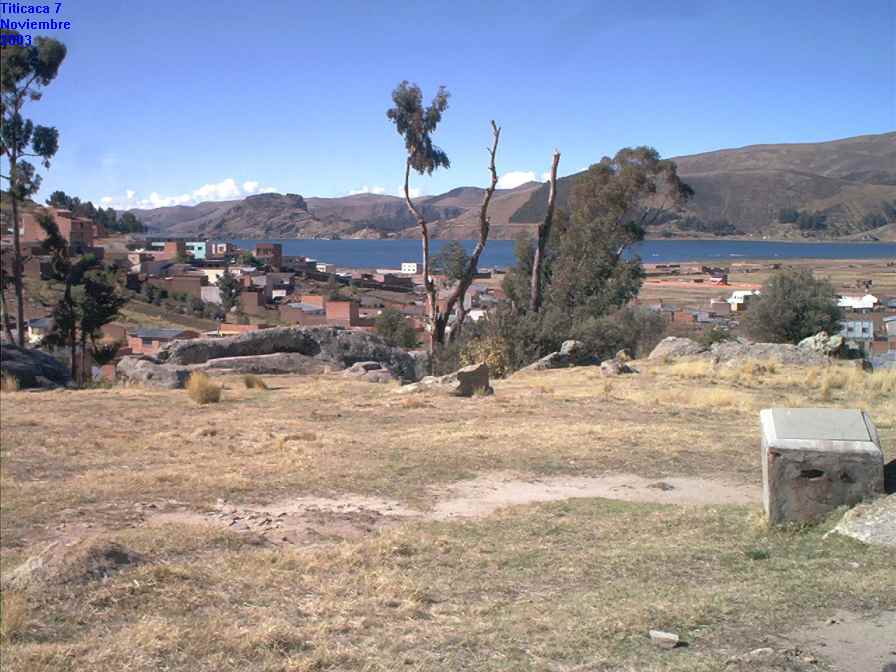
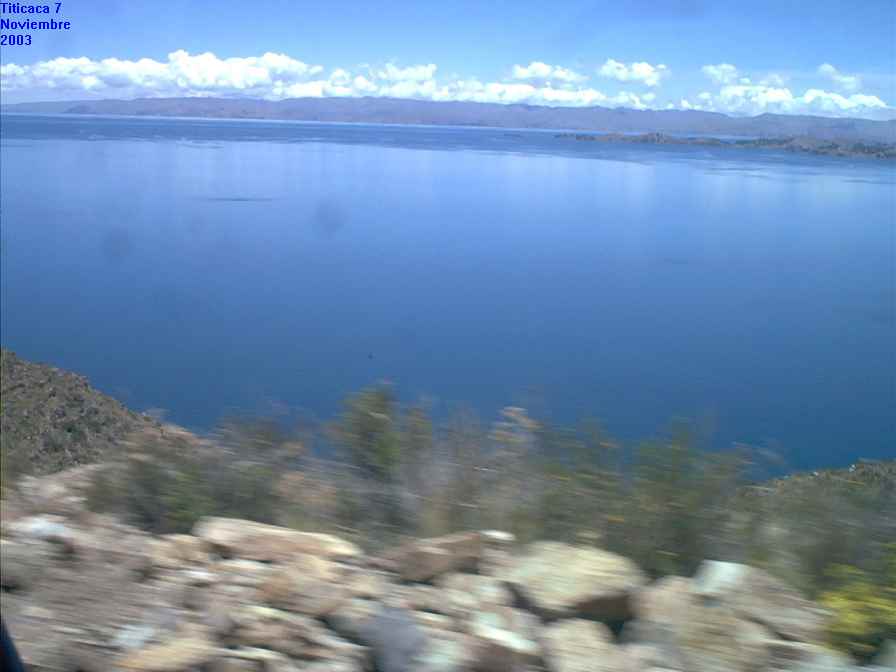
The Quetchua word "cota cawua�a", which means " to overlook the lake", was transformed to Copacabana by the Spaniards.With the splendid views you get over Lake Titicaca, the name of the village could not have been choosen better.
Copacabana has 5 thousand inhabitants of indigenous origin. They speak spanish and aymara (the language of the indians of that region) and have their local traditions mixed with the introduced european, christian culture.
|
|
|
|
|
The astronomic observatory "Horca del Inca"
The name means "the hanging place of the inca" and was incorrectly given by the spanish. It is neither a hanging place nor made by the inca.
It is a sacred astronomic observatory of the chiripa culture.
Every 21 th of June, the sun on it's rise projects a beam through a man-made hole onto a horizontal stone. This moment marks the begining of the aymara year.
Many people from Copacabana walk up the mountain (40 minutes walking distance), before sunrise on this special day to give offerings to Pachamama (mother earth) and to ask for good crops, abundance and health for the following year.
|
|
|
|
|
|
|
 |
|
|
|
|
|
The Church
The church of Copacabana was built in the 16 th century and has a mixture of spanish and islamic architecture. It is famous for its dark virgin, which still attracts many pilgrims from Bolivia and Per�.
A popular custom is to get your car blessed in front of the church. You can witness these blessings with the strong aymara influence practiced by the christian priests every saturday and sunday morning.
|
|
|
|
|
 |
|
|
|
|
|
|
 |
|
|
|
|
The village of Copacabana offers you the opportunity to visit the "Church", the ruins "Asientos del Inca" (Inca Seats), the hill "Calvario" and the "Horca del Inca" (Astronomic Observatory) all within half an hour walk.
The Village of Copacabana combines various points of interest, which attracs both local as well as international tourism. Bolivian tourists come from all over the country in devotion to the famous virgin and to have their cars blessed in front of the impressive church of Copacabana.
|
|
|
|
|
|
|
. We verkennen het stadje: bezoeken Intinkala uit de inkatijd, dat is een paar grote keien, waarin "zetels" zijn gehouwen. Verder bekijken we de mooie kathedraal en de kapel van de kaarsen voor "Virgin de Copacabana". Ilona doet de "kruisweg", een berg omhoog, die tussen het stadje en het meer ligt.
There is a small, but perfectly formed, Inca site just outside the town, by the cemetery: Intinkala. This was a ceremonial site, with carved huge stones for seats, a platform facing east to observe the sunrise, and a possible sacrificial altar with a groove resembling a serpent for the drainage of the blood. It resembles the larger 'Inca throne' within the vast complex of Saqsaywaman in Cuzco, though I did not know it then
Titicacameer ligt voor 2/3 in Peru en 1/3 in Bolivia. De naam
begint met Titi, wat slaat op het grootste deel en dat ligt in Peru. De
rest "caca" ligt in Bolivia. Wat caca betekent, als een pacifist zegt
tegen een soldaat " mili caca", dan ....... En als de wind vooral uit het
westen komt vanuit Peru, waar drijft dan het afval dan naar toe?? |
|
|
|
|
 |
|
|
|
|
|
The hill "Calvario"
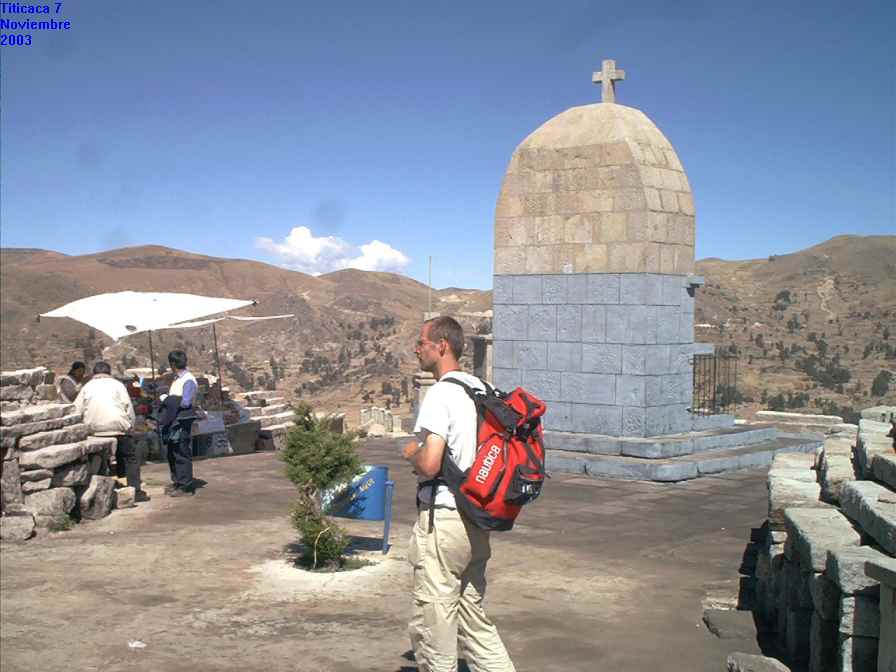
Copacabana is placed right at the foot of the hill, called "Calvario". The path, that leads up to the top, is marked with the Passion Stations of Christ. Walking up, you are likely to see traditional indigenous offerings and blessing ceremonies.
From the top of the "Calvario", about 40 minutes from La C�pula you have a wonderful view over the lake and the landscape.
This walk is highly recommend to see the sunset over the lake.
|
|
|
|
|
