

-
Your Gateway To Oman
|
|
|
- |
|
Your Gateway To Oman |
||
|
|
Camel Breeding |
HIS MAJESTY |
|
INTRODUCTION |
 His Majesty the
Sultan His Majesty the
Sultan |
|
|
History |
Royal Tours |
|
|
Geography |
Sultan Qaboos Rose |
|
|
National Security |
FEATURES |
|
|
Social Welfare |
The National Flag |
|
|
Environment |
The Grand Mosque |
|
|
Regions |
Forts |
|
|
WILDLIFE |
Khanjars |
|
|
Arabian Oryx |
Dates |
|
|
Arabian Leopard |
The Al-Falaj System |
|
|
Arabian Gazelle |
TRADITIONS |
|
|
Reem Gazelle |
Ship Building |
|
|
Arabian Tahr |
Halwa |
|
|
Birds |
Bee Keeping |
|
|
MAPS |
Camel Breeding |
|
|
Oman |
Horse Breeding |
|
|
|
|
|
Make Crazy $$$ With Your Website | /// |
|
Copyright© Hareesh Networks® |
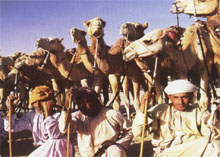 Camel
breeding and rearing is a traditional activity practiced all over Oman,
dating back to references in the Holy Quran. Omani camels are of medium size
and is know for their strength and speed. Colour varies by region: Dhofar
camels tend to be black, although lighter colours are more common elsewhere.
Camels are used in Oman for riding or racing and also used for meat and
milk. Camel breeding has become more profitable in the recent years and
therefore more popular; the price of a racing camel can reach over Omani
Rial Seventy Five thousand.
Camel
breeding and rearing is a traditional activity practiced all over Oman,
dating back to references in the Holy Quran. Omani camels are of medium size
and is know for their strength and speed. Colour varies by region: Dhofar
camels tend to be black, although lighter colours are more common elsewhere.
Camels are used in Oman for riding or racing and also used for meat and
milk. Camel breeding has become more profitable in the recent years and
therefore more popular; the price of a racing camel can reach over Omani
Rial Seventy Five thousand.