


 Inorganic
Pigments- They are of the type mineral-earth but generally are
metallic oxides or synthetics. Pigments that are of the type
Mineral-earth are very simple and naturally occurring colored
substances. The preparation process is also simple and consists of the
steps of washing drying, pulverizing and mixing into a formulation. The
following table shows the refractive index of some of the very popular
class of inorganic pigments.
Inorganic
Pigments- They are of the type mineral-earth but generally are
metallic oxides or synthetics. Pigments that are of the type
Mineral-earth are very simple and naturally occurring colored
substances. The preparation process is also simple and consists of the
steps of washing drying, pulverizing and mixing into a formulation. The
following table shows the refractive index of some of the very popular
class of inorganic pigments. | Pigment | Refractive Index |
| TiO2 (rutile) | 2.71 |
| TiO2 (Anatase) | 2.55 |
| Antimony Oxide | 2.20 |
| Zinc Oxide | 2.01 |
| Calcium Carbonate | 1.65 |
| Fumed Silica | 1.45 |
Examples of inorganic pigments can be materials like lead oxide, cobalt blue, chromium oxide, cadmium yellow, molybdate orange, and nickel titanate. As new environmental laws are very strict about toxicity a few of these heavy metal pigments are no longer in use.
Organic
Pigments- Organic Pigments are not usually found in nature. That is
the reason that a majority of these pigments are chemically synthesized.
They contain carbon and comes with relatively low levels of toxicity,
not providing any major environmental concern. Raw materials can include
coal tar and petroleum distillates that are transformed into insoluble
precipitates. Traditionally organic pigments are used as mass
colourants. They are popular in plastics, synthetic fibers and as
surface coatings-paints and inks. In recent years the organic pigments
are used for hi-tech applications that includes photo-reprographics,
opto-electronic displays and optical data storage. Categories of Organic Pigments
Organic pigments are generally categorized into six types :
- Monoazo Pigments
- Diazo Pigments
- Acid and base dye Pigments
- Phthalocyanine Pigments
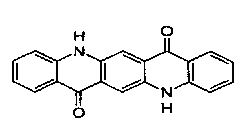
- Quinacridone Pigments
- Other polycyclic Pigments
Key features and characteristics of Organic Pigments
- Very good stability to solvents, light, heat, and weathering
- Good tinctorial strength
- Cost effectiveness
- Consistency and unique shades
- Completely non-toxic
- Very bright, pure, rich colors
- Organic pigments shows good color strength
 Metallic
Pigments
Metallic
Pigments