In Organic pigments, the molecules are made of carbon
atoms along with hydrogen, nitrogen or oxygen atoms. Organic pigments
can be subdivided into two subgroups:
 Natural
Organic Pigments-
Natural
Organic Pigments- Pigments of this category are derived from animal
products and plant products. The use of these pigments are rare due to
their poor lightfastness property.
Before the beginning of the modern era, the natural organic pigments
were considered as an important part of the historical pigments. Earlier
these are used for bodily ornaments, textile dyeing and cosmetics.
But, today a large number of the natural organic dyes have been
replaced by the synthetic organic dyes. Therefore, today, these pigments
are remembered by theirs quaint historical names. These pigments are
being adopted by the modern commercial paint companies to lend romance
in their traditional mixtures.
Synthetic
Organic Pigments- Pigments of this category are carbon based and
these are often made from petroleum compounds. Most of the Synthetic
Organic Pigments except Carbon Black are not stable and they will wear
away at the time of using as a pigment.
Under intense pressure or heat, carbon base molecules are manufactured
from petroleum, acids, and other chemicals and Synthetic Organic
Pigments have been formulated from these molecules.
These two subgroups of Organic Pigments have been depicted in the
following table.
| Natural Organic Pigments |
Synthetic
Organic Pigments |
Miscellaneous: e.g Rose-Madder,
Bone
Black,
Carbon Black |
Quinacrid
ones |
Phthaloc
yanines |
Perylenes |
Pyr
roles |
Ary
lamides |
Metal Complexes: e.g
Transparent Yellow,
New Gamboge |
Miscellaneous: e.g
Dioxazsine
in Danthrone. |
The entire concept of organic chemistry mainly
depends on carbon's atoms. These atoms have amazing flexibility and
ability to form many different structures. Due to this attribute, they
are able to form different combinations with other carbon atoms or atoms
of other elements or with other compounds. This facilitates it to form
almost limitless molecular variations. Out of these large number of
carbon made molecules, intense color variations attribute will come in
these synthetic organic pigments. Pigments which are formed out of these
molecules, are the least toxic and economically beneficial.
AZO Pigments along with other organic pigments are derived from water
soluble dyes.
Synthetic Organic Pigments are mainly derived from some selective
elements atoms. These are as follows:
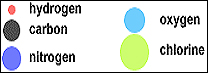
Chromophore is a pair or group of atoms. This pair creates a complex
and dynamic clouding of the electrons within the respective electron
shells in single atom or more then one atoms. These chromophores are
responsible behind the color creation phenomena of the pigment's
molecules.
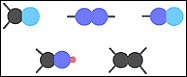 (Image showing Chromophore groups in synthetic organic pigments)




 Why
a large number of modern pigments are Synthetic Organic in nature?
Why
a large number of modern pigments are Synthetic Organic in nature?
