Carbon Black is one of the most important types of
pigments that have major industrial applications. Carbon blacks are
typically elemental Carbon that is available in highly dispersed
powdered forms. They are produced from hydrocarbons by controlled
vapour-phase pyrolysis. In Producing Carbon Black there are numerous
processes available. Mostly all the production processes depends on
thermal decomposition or incomplete burning of fuel oil or natural
gas(hydro carbons). Majority of all carbon black is made by employing
the furnace process."Furnace black" and "channel black"
are the two very popular variants of Carbon Black. Others include
acetylene black, lamp black and thermal black. Mostly all types of
Carbon blacks contain oxygen, hydrogen, nitrogen and sulphur bound
chemically. While oxygen content is of paramount importance for their
usage.
The following are critical requirements of
applicability of carbon Black, albeit, they may vary in importance
according to application:
 Color
Strength-
Color
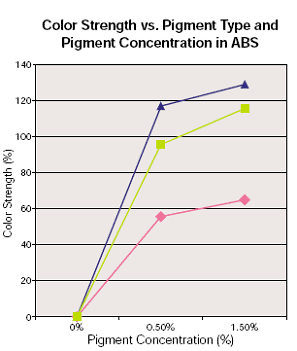
Strength- Colour strength of a few type of carbon Black pigment as
appearing in Acrylonitrile butadiene styrene (ABS) polymer is shown in
the graph.
Masterbatch
Dilutability- By the process of measuring the melt viscosity of a
given masterbatch formulation, Masterbatch dilutability is approximated
and compared. In fact masterbatch dilutability is critical. In the
selection of the right carbon black and can result in saving substantial
formulation cost.
UV
Stability- By addition of carbon black, the stability with regard to
UV rays can be increased.
Carbon
Black Dispersability
Blue
Tone
Today the use of Carbon black have expanded into many
horizons. This include other than pigmenting, applications like UV
stabilizing and as a conductive agent in a vast number of specialty
products. Popular applications include:
Thermoplastic
moulding- Some of the significant applications of carbon black are
shown here. Prominent application is found in automotive applications.
 (Steering and Dash Board system of a car using Carbon Black
Pigment)
Plastics-
(Steering and Dash Board system of a car using Carbon Black
Pigment)
Plastics-
Used in plastic masterbatch applications, like films, conductive
packaging, pipes, fibers, moldings, and semi-conductive cable compounds.
Toners
and Printing Inks- Carbon blacks are very important printing inks.
They significantly enhance formulations and offer broad flexibility in
terms of specific color requirements. Applications of carbon Blacks
include letterpress. Lithographic, gravure, flexographic, and screen
printing processes. It is important here to know that each of these
processes needs different performance attributes.
Offset
printing- A high color strength along with high pigment loadings,
smooth flow, and a viscosity that is fairly working are needed from the
application of Carbon Black. Offset ink must not be miscible with water.
If the requirement is high gloss then lower oil absorption pigments are
required.
Flexography
ink- This ink is fluid, with instant drying features. Rheology is a
vital factor here. Carbon Black pigments with low oil adsorption
pigments are a must.
Screen
Printing- The critical performance factors are rheology, low
viscosity. This can be achieved by pigment blacks that has higher
structures. Optical density property can be obtained by relatively low
pigment black loadings.
Coatings-
Carbon blacks provide coating applications for sectors like marine
and aerospace. By way of pigmentation, conductivity and UV protection.
Industrial
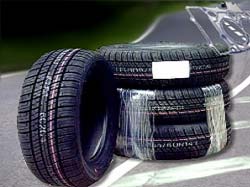
Rubber Products and Tyres- Carbon black is applied for uses like
innerliners for tyres, sidewalls and treads, for industrial rubber
products, usages include belts, hoses and gaskets. In fact a majority of
the Carbon Black that is produced goes into the making of reinforcing
filler for use in tyres and other rubber article.
There is some chances of hazards resulting from
carbon black exposure. Typical classes of chemicals with carcinogenic
nature like polycyclic aromatic hydrocarbons (PAHs), sulphur-containing
PAHs, nitro derivatives of PAHs are adsorbed on to surface of carbon
black.






 Characteristics
of Carbon Black
Characteristics
of Carbon Black