
 |
 |
 |
 |
 |
 |
 |
 |
 |
 |
|
|
 |
 |
|
|
|
 |
|
|
|
|||||
|
||||||
|
Inorganic Pigments
Those Pigments that are made up of mineral compounds
are known as to be Inorganic Pigments. These minerals are mainly oxides,
sulphides of one or more than one metals. To impart colors in different
compounds, inorganic pigments are applied.
Inorganic pigments may be obtained from vivid
naturally occurring mineral sources or minerals which have been obtained
synthetically.
Inorganic pigments are considered better over their
organic counterparts. These inorganic pigments can withstand the impact
of sunlight and chemical exposure in better way. They have also good
opacity and thus these can protect other objects by preventing the
light. These pigments also increase rash inhibition, abrasion resistance
and rigidity to the molecules. These pigments are available at low cost
in respect to the organic pigments. These pigments have more durability.
Color comes from inorganic pigments is comparatively
less brighter. These pigments are also seemed to be less rich and pure
than the organic pigments. As these pigments have low tinting strength
so a large number of pigments are required to produce the desired
effects.
Inorganic pigments are available in the
market in different forms. These different forms are powder, pastes,
slurries and suspensions. The Inorganic Pigments are again divided into two sub types: Natural Inorganic Pigments Natural Inorganic Pigments are the earth colors in natural form like ochers, umbers etc. These color pigments are extracted from the earth bed. Iron oxide and hydroxide which are present in the soil. These two compounds are responsible for the coloration of these color pigments. Clay, chalk and silica are also present in these pigments in varying quantity. The different kinds of Natural Inorganic Pigments are :  Azurite-
Actually these kind of natural inorganic pigments are copper
carbonates having greenish blue shading. From a very long period,
azurite has been using as a pigment. But, often these pigments have been
replaced by synthetic pigments or used to paint the expensive
ultramarine as under paintings. Azurite-
Actually these kind of natural inorganic pigments are copper
carbonates having greenish blue shading. From a very long period,
azurite has been using as a pigment. But, often these pigments have been
replaced by synthetic pigments or used to paint the expensive
ultramarine as under paintings. 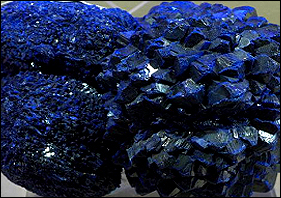 Red
earths- These pigments are the most diverse kind of natural
inorganic pigments. These are made from clays and they have a large
amount of iron oxide. The color varies from dull yellow to dull deep
yellow or from dull orange to dull red or from dull dark brown to dark
brown.Yellow
earths- These are natural earth containing silica and clay. These
pigments are present in hydrous form of iron oxide. These pigments also
contain gypsum or manganese carbonate. In all over the world, these
pigments are available and have been using from the prehistoric period. Red
earths- These pigments are the most diverse kind of natural
inorganic pigments. These are made from clays and they have a large
amount of iron oxide. The color varies from dull yellow to dull deep
yellow or from dull orange to dull red or from dull dark brown to dark
brown.Yellow
earths- These are natural earth containing silica and clay. These
pigments are present in hydrous form of iron oxide. These pigments also
contain gypsum or manganese carbonate. In all over the world, these
pigments are available and have been using from the prehistoric period.Synthetic Inorganic Pigments Synthetic inorganic pigments are manufactured in the laboratory. These pigments consists of metallic compounds like manganese violet, cobalt blue. Synthetic inorganic pigments can also be produced by the replication of the natural earth colors like Mars Red or Yellow. As these pigments are manufactured in the laboratory, so they are found in pure form having fine particles. |

 Sources
of Inorganic Pigments
Sources
of Inorganic Pigments