DC:AC - isolating, step-up transformer
The full H-Br used in this project with 12v to 230v step-up transfomer.
Pros
- Electrical Isolation: This feature safeguards the system from electrical disturbances, promising a stable and reliable power supply. This is a vital aspect for off-grid solar systems.
- Robustness: These inverters are renowned for their ruggedness. Making them a fitting choice for demanding environments requiring high durability and galvanic isolation.
- Better Performance in Unstable Grid Conditions: Transformer-based inverters can maintain a consistent performance even in areas with fluctuating grid conditions, making them a more reliable choice for off-grid solar systems in remote locations.
- High Surge Capacity: These inverters can handle high surge capacities effectively, which is essential in environments with unstable power supplies or where grid disturbances are common. This is because they are a low frequency inverter
- Less Sensitive to Electromagnetic Interference: Ensuring a stable power output even in areas with high levels of electrical noise.
Cons
- Size and Weight: Although they are bulkier, their robust nature and reliability often outweigh this downside, particularly in off-grid setups where durability is a priority.
- Cost: While they carry a higher price tag, the investment is often justified by the reliability and longevity they offer.
- Lower Efficiency: The presence of a transformer can introduce energy losses, which, while mitigated at higher power levels, can be a concern at lower power outputs.
What transformer can be used to test the inverter?
I used step-down 240v to 17v transformer switched in reverse.
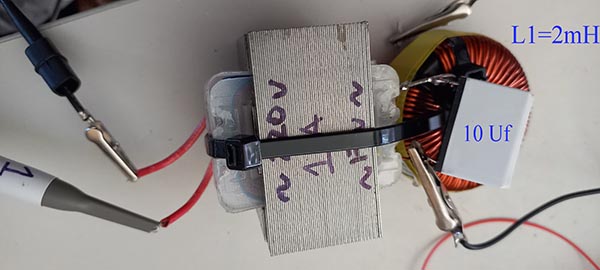
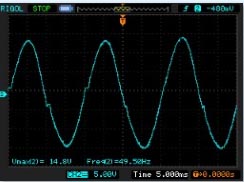
The sinewave after transformer (on photo above: the scope is connected on left side)