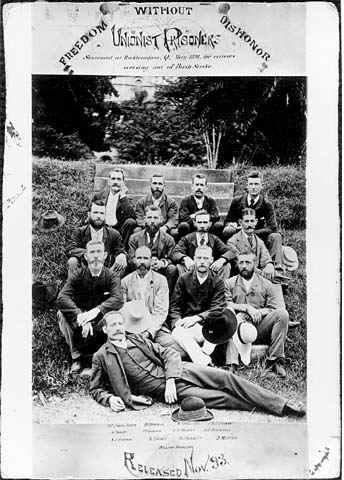
On the morning of January 5th, 1891, on a property called 'Logan Downs' near a town called Cleremont in Queensland, the shearers of the day were approached by the property manager Mr. Charles Fairbain, to sign a new 'term of contract' agreement. This new agreement ensured that the already meagre pay and hard working conditions that the shearers were currently operating under, were further reduced and eroded. It was also an attempt, to break the hold that the shearers union had over the industry.
Thus began our very first, major strike of united workers. A strike that would split the nation, lay the foundation for industrial laws ensuring a 'fair go' for workers and cement a place in our history books.
At that time, Australia had become so successful at sheep farming, that it was one of the largest producers of wool in the world. And to some extent is still there today, but common sense and economic rationalization, has stopped the over supply of good quality merino wool and export lamb meat, affecting world prices.
The strikers, on that fateful day, gathered in numbers never seen before in Australia, in a united front against the reduction of pay and conditions and cheap imported Chinese labour.
They marched that evening, as a sign of solidarity and resolve, bearing torches and chanting slogans, through the streets of Barcaldine.
1,000 men, united to a man.
At that time world trading was in recession, and this was the Pastoralist Associations' solution to reducing overheads and increasing profits, by bringing in cheap Chinese and other labour and drastically reducing the shearers pay...and at that time, they were being paid the princely sum of one pound ($2) per one hundred sheep shorn. Not a kings' ransom by any standard, considering the shears they used were not mechanically operated in those days, and this was back breaking work.
By March the property owners had their way, and were bringing in cheap labour, the mood of the shearers became very militant, and the new labourers had to be protected as they traversed from shed to shed. The cheap labourers were labelled 'scabs'. There were mysterious 'fires' at shearing sheds and the Colonial Administrators, encouraged by the pastoralists, were becoming increasingly impatient for the dispute to end.
Again the flag of the Eureka Stockade was raised in a show of defiance.
Yet again, the men took the same oath, called 'The Diggers Oath' that was taken so many years before, at the Eureka uprising.
"We swear by the Southern Cross to stand truly by one another and to fight to defend our rights and liberties".
And yet again, there was military style training of the men.
The demand for a republic, once again became popular.
By the end of April the authorities had had enough, and the Colonial Secretary ordered the arrest of the ring leaders, and called in the government mounted troops.
On the 6th May, 1891, some 4 months into the strike, they surrounded the union office with 120 armed mounted men, the 13 union leaders were finally arrested and taken in. Charged with conspiracy and sedition, under some very obscure and almost forgotten about, colonial British law.
|