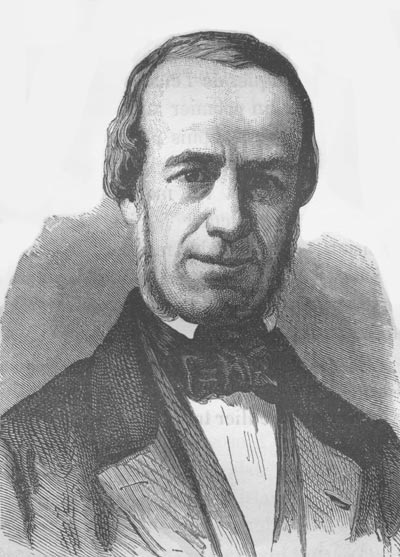
Charles
Shepherd (1830-1905)
Charles Shepherd of Hendon devised such an arrangement (patent no.12567) in
1849 and his clock was a great success at the exhibition at Hyde Park in 1851.
As a result of this success he was asked to build a clock for the Greenwich
Observatory to control time signals by telegraph and to control the time ball
at Deal. The Neuchâtel Observatory also installed one of his
clocks.
As
the pendulum swings to the left it engages a catch and releases its gravity
arm. The impulse pin fitted to the pendulum now receives an impulse from the
gravity arm. At the end of the pendulum's excursion to the right, contact
is made with the suspension spring and the electro-magnet is energized. The
armature of
the electro-magnet now resets the gravity arm.
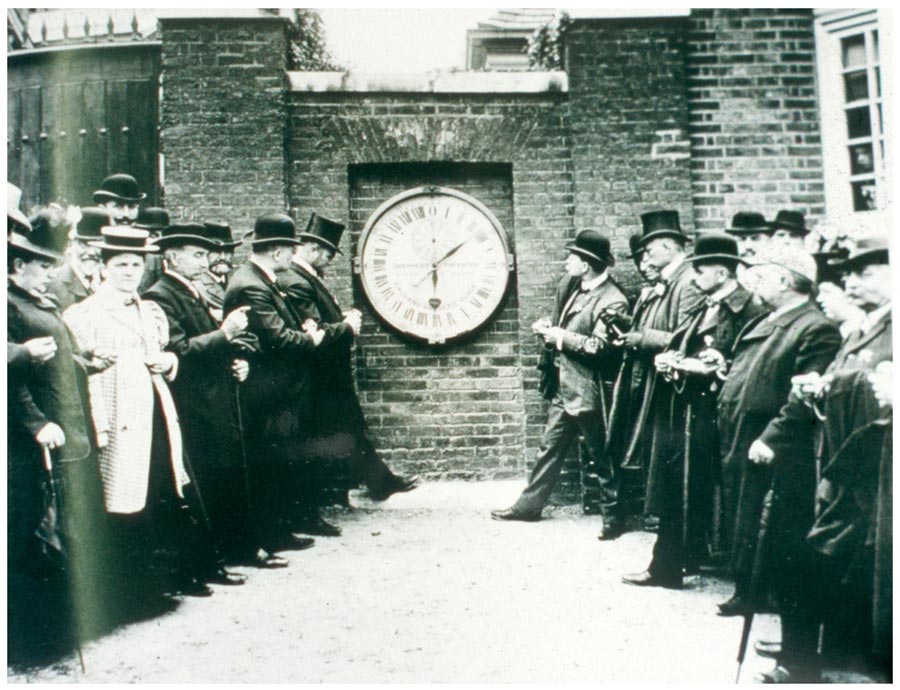
The picture shown here illustrates proud owners synchronizing their precious watch with the time indicated by the slave dial at the entrance of the Greenwich Observatory.
Shepherd’s clock meant a big step forward to precision but there was still a long way
to go. The pendulum has every kind of work to do, it charges into fixed contact
points at the ends of its swing and unlatches its gravity arm in the same
way.
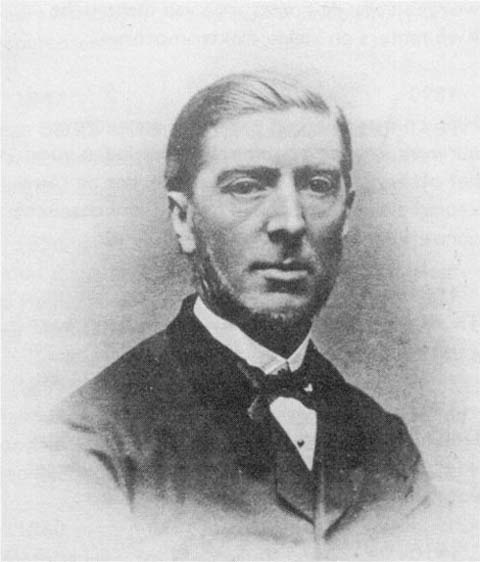
Paul-Gustave
Froment (1815-1865)
Meanwhile in France Paul-Gustave Froment,
an instrument maker who at the age of eighteen had already built his first
electro-motor and in 1851 had built the pendulum arrangement for Foucault's
famous experiment, in 1854
devised a much simpler and improved version of Shepherd's clock.
An important difference with Shepherd’s clock was that the force stored in
a leaf spring had replaced gravity force. --------------------animation
On its swing to the left, the pendulum picks up a spring by means of a contact screw. The electro-magnet is now energized and pulls its armature out of the way.
The pendulum, on its return to the right, does not part from the spring until
the latter has reached a point below that at which the pendulum found it.
When the contact is broken the armature resets the spring.
The difference between its lift and fall is the total impulse given.
F
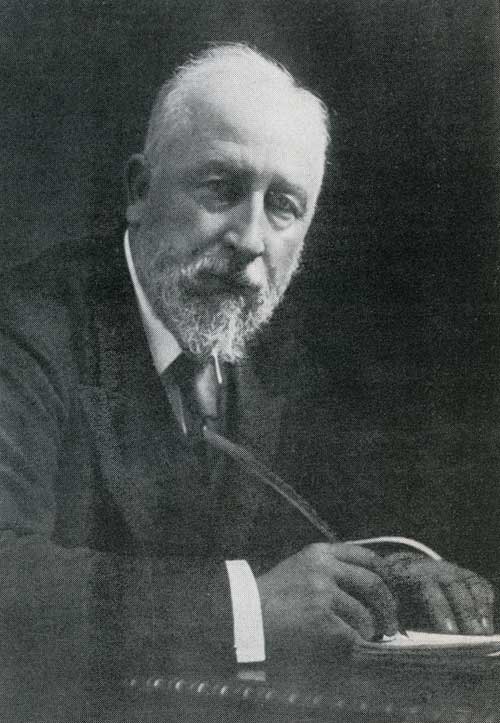
C de Jong (1826-1876)
In 1865 F C de Jong, a clockmaker from Amsterdam, used a count wheel not only
to propel the hands, like Hipp did, but also to induce contact. Like Froment,
he used a leaf spring to store potential energy.
Con
tact making and impulsing occur when the pendulum is passing through its zero
position when its kinetic energy is at its maximum and the interference to
the freedom of the pendulum is kept to a minimum.
Quite an improvement compared to Froment's design.------animation
On each swing to
the right, the pendulum will propel the count wheel and in doing so close
contacts placed under the count wheel and activating the electro-magnets.
The armature is pulled down and a pin fixed to the armature deflects a spring
fitted to the pendulum. So potential energy is stored in this spring and is
released to the pendulum.
Unfortunately,
De Jong’s invention did not attract the attention of the rest of the world.A remarkable fact, as his clock was comprehensively
described in a well-known French journal for chronometers.
De Jong’s clock is
exhibited in the museum of Schoonhoven and is one of the oldest Dutch electric
clocks to have survived time.
David
Gill (1843-1914)
Way down in South Africa, David Gill, director of the Royal Cape Observatory
from 1879 t
ill 1907, adopted
Froment's system. In 1879 he replaced
spring force used by Froment
by the force of gravity.
He ordered his clock to be built by The Cambridge Scientific Instrument
Co Ltd to set-up experiments to control his telescopes. Unfortunately
no part of his clock has survived time.-------animation On its swing to the left the pendulum picks-up a gravity arm by means of a contact screw. The electro-magnet is energized and moves its armature out of the way to release the gravity arm. The pendulum, on its return to the right does not part from
the gravity arm until the latter has reached a point below at which the pendulum found it.
The difference between lift and fall determines the amount of impulse given.
When the contact is broken the armature resets the gravity arm.
One of the problems left with Gill's clock was the poor contact making.
As always, the limited pressure available from the pendulum made the contact
unreliable.
One of the points Bain made in his early patents was that the impulse
given to the pendulum could be made independent of the battery voltage by
using an electro-magnet to store energy in a spring or weight and then using
the constant amount of stored potential energy to impulse the pendulum.
 of
the electro-magnet now resets the gravity arm.
of
the electro-magnet now resets the gravity arm.