|
|
|
|
|
|
Getting Started:
Introduction and expectations.
Independent Study Project
|
|
|
|
Where you live
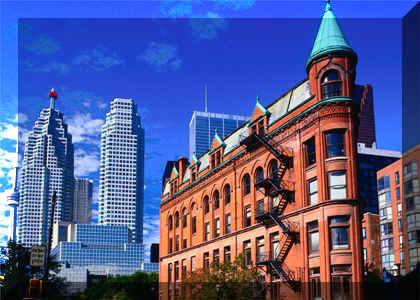
Think about the place where you live. Place, in
this sense could mean the house you live in, the neighbourhood, the town,
the province, or even the country. Divide a piece of paper into two columns.
At the top of the first column write the heading: The Place Where I Live.
At the top of the second column, write the heading: The Place Where I Dream
of Living. In each column, list the positive and negative attributes of
the two places. The more attributes you can think of, the better!
Duedate: End of the period.
|
 |
|
|
Unit 1: Conceptual
Approaches to World Geography
-chaos and complexity theories -The butterfly effect Article: Touch your arm, touch your heart. The Globe and Mail. Mon. May 5, 2003. |
|
|
|
Unit 2: Geographic
Foundations: Space and Systems
Introduction to Systems Theory Settlements -The What and Where of Settlements -Some Settlement definitions Handout: Historical geography Handout: In the Beginning. Expectations: explain how culture (e.g., religion, gender roles, social values, food preferences) and function (e.g., finance, trade, government, education, manufacturing) affect the characteristics of a place |
 |
|
|
Case Study: Agricultural development in the American
Midwest (EaP pg. 203)
Case Study: Climate and economic development in southern California (EaP pg. 93) Expectations: describe how landforms, climate, soils, and vegetation influence settlement patterns |
Climate and economic development
in southern California
Do Qs 10 - 13 on the handout.  |
|
|
Africa's medical geography
Handouts: Sub-Saharan Africa: Environment, People and Health; Medical geography; Ebola virus feared as worst of tropical disease family; Illness undetected on planes, at entries; Anxious doctors await Ebola verdict; Winnipeg centre begins Ebola tests. Indonesian Malaria Outbreak 2005 Expectations: demonstrate an understanding of the locational advantages and disadvantages of different sites for human activities (e.g., Nile or Brahmaputra flood plains, coastal wetland zones, river crossings). |
Homework:
Watch the video "Outbreak" starring Dustin Hoffman.
How accurate is the connection between Hollywood's Motaba" virus and the real world Ebola virus? Could Hollywood's drama become a reality? Name the recent, local outbreak that proves this point. |
|
|
Reasons for differences between locations and time
periods
Groups of people in similar environments may have different
ways of life
Expectations: explain why groups of people in similar environments (e.g., deserts) may have different ways of life; analyse the characteristics of selected ecumenes (settled environments) and explain why they differ from place to place and from one period of time to another; |
Bisenahalli Questions Q #9 and 10
Brazil Questions #1 and 2
|
|
|
Settlement Patterns.
The Nature of Towns Note(EaP pg. 458) Paris: Historical walled city.(EaP pg. 459) The South American City (keyhole pattern) The North American City structure (concentric zones with suburban downtowns) The South East Asian Port City (patches structure) Kumasi (EaP pg. 463) Expectations: analyse selected settlement patterns around the world to show how they have been influenced by cultural factors (e.g., inheritance systems, land settlement systems); |
Assignment:
1. Case Study: Bangkok. Read the evolutionary history of Bangkok on the internet. a) Why are even the most remote provinces of Thailand affected by what goes on in Bangkok? b) Describe three problems faced by the city of Bangkok? c) Think of and describe at least three problems with the suggestion of relocating Bangkok. 2. Kumasi : Housing types and their distribution.
Expectations: assess the influence of different cultures on their local area |
|
|
Capacities - Megacities
of past and present
-The World's Giant Cities (Map) -Teeming Mexico City
Expectations: evaluate the impacts of urbanization on selected environments (e.g., air pollution in Los Angeles or Hong Kong, slums in Mexico City); |
Label the world map with city names
and ranks
Ten top urban regions for 1900, 1950, 1992, and 2010 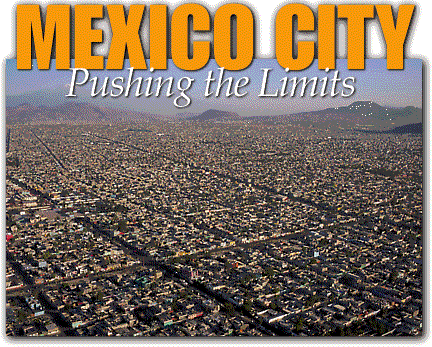 Traces (Mexico) |
|
|
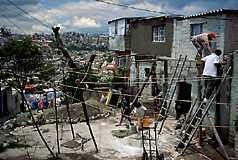
Article: Cities.
Time Magazine. January 11, 1993
 |
Read
an essay on Urbanization and Development
USGS note on World Geography : Urbanization |
|
|
Urbanization and Urban growth -
historical and recent trends
Urbanization in Australia, North America, and South America. (Handout and Question sheet) -The urban-rural continuum in Japan (EaP pg. 453) -Poem “Rush Hour Tokyo”, Joy Kogawa  Expectations: compare the capacity of selected ecumenes in the past and in the present to meet human needs; produce a case study to show how characteristics of their local area have evolved to meet changing human needs |
Urbanization Questions:
1. In the first 3 paragraphs of the article, there are a lot of numbers. What is the main, strong statement that these figures are trying to make? 2. Define push and pull factors. 3. Why are South Americans flocking to the cities in such large numbers? 4. Describe the living conditions in these large urban areas. 5. Look at the model of the "South American City" in your notes. Sketch a picture of the type of buildings that you would expect to find in each sector of the city. (Details are important, but artistic ability is not.) Articles on York Region urban sprawl:
Write a one page summary of what you have read to show
that characteristics of York Region have evolved to meet changing human
needs.
|
|
|
Handouts:
Pollution; Up to the Smoke; Atmospheric pollution in Tokyo; Board Note:
Air pollution and urbanization.
|
Assignment:
Write a comparison of Tokyo smog to London smog. Your comparison must be in paragraph form but in planning and setting up your comparison, use the similarities and differences format as follows: Similarities In both Tokyo and London.......... 
Differences In Tokyo...... but in London...... Evaluation:
|
|
|
The Golden Horseshoe
Pattern and Process: A Research
and Web Assignment
Expectations: analyse a major geographic characteristic of the Great Lakes megalopolis (e.g., spatial organization, urban systems, demography) and determine the factors that have shaped its present pattern; |
Mark Lombardi (1951 - 2000) Global
Networks
|
|
|
Article: For many, the goal is never
leaving Las Vegas. The Globe and Mail. Sat. May 10, 2003.
Article: The end of the road. The Globe and Mail. Sat. Aug., 24, 2002 Article: The Toronto Hamptons: Creemore. The Globe and Mail. Sat. Sept. 20, 2003 Expectations: analyse examples of the influence of culture on human activities (e.g., pilgrimages, tourism); |
Read the articles about Las Vegas,
Nevada , "Smalltown" Ontario, and Creemore.
Choose any two of these three places. Think of as many similarities and differences between the two places as is humanly possible. Create an organizer to compare and contrast the two places. 10 marks in the Thinking category. Your comparison will be in list form but in planning and setting up your organizer, use the similarities and differences format as follows: Similarities
Evaluation:
|
|
|
Urban Pollution, squatters, cultural impacts
Two of Toronto's Urban Problems: Homelessness and Urban Garbage. Video: CBC News In Review. Urban Garbage: Landfill or Recycle? Dec. 2000 Handout: Keele Valley Landfill (1983 - 2002) Toronto Life Magazine., Dec. 2002. Expectations: explain why various environments have differing capacities to support population growth and industrial development. |
|
|
|
March break | Enjoy your week off!
(Work on the Pattern and Process: A Research and Web Assignment due March 24, 2005) |
|
|
Article: Our parks are a mess. The Globe and Mail. Sat. Sept. 20, 2003. | Summarize the article in exactly 7 sentences. |
|
|
First Test | (knowledge, thinking, communication, application evaluation) |
|
|
Core - Periphery
Regional Relationships
-The
Von Thünen Model
|
 |
|
|
Boundaries
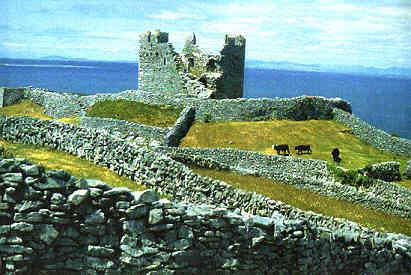
-How national and regional boundaries evolve -Poem: Mending Wall. by Robert Frost Pattern and Process: Research and Web Assignment Due Expectations: identify boundaries according to type |
 |
|
|
Article: Separation
Anxieties in the West Bank. The Toronto Star July 28, 2002
Map of South America
|
Article Questions:
1. Summarize the article in exactly 10 sentences. 2. Why is it going to be most difficult to decide where to construct the wall in Jerusalem? 3. Describe the curious case of Barta'a. |
|
|
South American border disputes
-Geopolitics in South America Falklands or Malvinas. The Guianas The war of the Pacific Expectations: explain how and why national and regional boundaries evolve; explain the consequences of being a landlocked country (e.g., with respect to imports/exports, sharing of offshore resources) and describe how such a country responds to its position (e.g., Switzerland, Rwanda, Luxembourg). |
1. Read the handout with
the case studies of The Falkland Conflict, the Guianese Disputes and the
Bolivian-Chilean-Peruvian conflict.
2. Make a chart for each case, that outlines the positions of each of the countries involved in these border disputes. 3. Write a paragraph that explains why border disputes such as these are issues. Further study: The Falkland war of 1982 |
|
|
The problem of Kashmir (Map of India and Pakistan)
Video: Tides of Peril Expectations: explain how and why national and regional boundaries evolve; |
On the blank map of India, locate
and label the items listed on the handout.
Read the handout, The Problem of Kashmir. Discussion about India-Pakistan ongoing relations. |
|
|
Germany's Reunification
4 politico-geographical questions. Video: CBC News in Review. Dec. 1999. The Berlin Wall 10 years later. Article: German unification a mixed blessing. The Globe ad Mail. Sat. Oct. 4, 1997 |
Video Questions:
1. After 1945, why did Soviet Russia get a peice of Berlin? 2. Who controlled the western piece? 3. Why was the wall erected in 1961? 4. After 1961, what was required if a citizen wanted to go from East to West Germany? 5. How was the wall fortified? 6. On what date did the wall fall? 7. Since the demise of the wall, what difficulties plague the East? 8. What remains as a divide betweeen East and West even though the physical wall has fallen? 9. Communism provided the East with "a barren landscape, a barren regime, which demanded not thought, but only obedience:. How did the aftermath of this regime cripple Eastern Germans once the wall had fallen? 10. Who has control of East Germany now? How so? 11. Why do some people say they want the wall up again? 12. Two different cultures met after the wall came down, but instead of evolving together and creating something new, one has swallowed the other up. How has this left the East German people? 13. In Berlin, the wall that cannot be seen still has its influence. Write a paragraph to comment on this with regard to Robert Frost's Mending Wall. 14. In Palestine, a wall is being constructed, as described in the article "Separation anxieties in the West Bank". Write a paragraph to compare the situations in Berlin and Jerusalem. |
|
|
Article: Odds improve for resolving Cyprus
dispute. The Globe and Mail, Tues. Nov. 19, 2003
Article: Now Spain, Morocco talk peace. The Toronto Star. Monday July 22, 2002 Expectations: propose solutions to selected boundary conflicts and internal disputes. |
|
|
|
Borders Assignment
Our Own Borders: Canada / US Article: "Good Fences" keeping us Canadian. The Toronto Star. Oct. 3, 2000 Article: The Vanishing Border. Maclean's Magazine. Dec. 20, 1999 Article and questions: U.S. fails to tighten northern border. The Toronto Star. Monday Aug. 5, 2002 |
Borders Assignment Handout.
|
|
|
Article and questions: Dying to make a better
life. The Globe and Mail, Sat. Sept. 20, 2003.
The U.S. Border Patrol's battle to stem the tide of illegal
migrants from Mexico is legendry. Much less well known is just how many
people wind up dead. This year's body count is a record, and critics say
Canada shares the blame.
Expectations: explain the reasons causing people to leave rural areas and move to cities in large numbers and the consequences of these movements for rural and urban landscapes; propose solutions to selected boundary conflicts and internal disputes; evaluate the positive and negative aspects of migration policies on human movements; |
"Dying to make a better life."
Questions:
1. Why are record numbers of illegal aliens dying along the Mexico - Arizona border? 2. Why do these migrant workers risk their lives? 3. Describe the “death trap” that they must cross to reach the US. 4. Operation Gatekeeper, and Operation Desert Safeguard are two measures instituted by the American government. Describe the reasons for, and objectives of each. 5. The article states that “Neither country shows any serious interest in an attractive economic alternative that would keep Mexicans from wanting to risk their lives.” The author of the article does not explain what such an alternative is. Propose your own “attractive economic alternative” that would fit the bill. 6. Why does Canada share the blame in the atrocious death tolls along this Mexican - Arizona border? 7. Explain the term “callous disregard”. Why is it applied to both the “Coyotes” and to the political motivations of the San Diego politicians? 8. How has the construction of the fence made the problem invisible? 9. Explain the statement “Border defence must be reasonable, but to force people to cross a lethal desert for purely political appearances is an abuse.” 10. Explain how Operation Gatekeeper is self-defeating? 11. Explain the financial burden that is put on some poor counties on the US. side of the border. |
|
|
Video: Bowling For Columbine | Create a chart to show the differences
between Canada and the United States as portrayed by Michael Moore's documentary.
Do you think Mr. Moore portrayal is accurate? Explain your viewpoint. |
|
|
Patterns of movement.
Mobility: What is it? People on the move Explaining migration. Who migrates? Thematic mapping of migration patterns Expectations: explain the reasons causing people to leave rural areas and move to cities in large numbers and the consequences of these movements for rural and urban landscapes; explain selected movements of goods and people, using concepts of spatial interaction. Additional research links:
|
Who Migrates? Questions:
1. The age-sex pyramids of the capital of Peru, Lima, and of one of the poor departments in the Peruvian Sierra from which people migrate to the capital are shown in Figure 22.8 (on handout). a) Describe the main differences in the pyramids of the two areas. b) Account for the differences you have described. 2. With reference to Figure 22.9, comment on the education levels a) in Apurimac, b) in Lima, c) of the migrants to Lima from Apurimac. 3. To what extent does this example support the idea that areas from which migration takes place are impoverished by the people they lose? Assignment: Thematic mapping of migration patterns
|
|
|
Borders Test | Knowledge - matching of definitions of terms, theories,
and concepts. (20 marks - K)
Communictation - Short answer questions. Choose 4 from 10. 5 marks each ( 20 marks - C) Thinking - Longer answer question. Read short newspaper article, respond. ( 15 marks - T) |
|
|
Catalysts for movement
Push and Pull Factors Article: A dream deferred comes true. The Globe and Mail. Sat., July 19, 2003. Expectations: explain why push factors are more significant contributors to international migration today than pull factors; evaluate the positive and negative aspects of migration policies on human movements; |
 |
|
|
Types of migration
Organizing migration Government policies Article: Canada plans to detain unidentified new arrivals. The Globe and Mail, Nov. 28, 2002 Article: Passports for sale. Maclean's Magazine April 3, 2000 Article: U.S. seeks improved passport security. The Globe and Mail. Wed. May 21, 2003. Article: No entry for immigrants with HIV. The Toronto Star. Thurs. Sept. 21, 2000 Expectations: identify different types of migration (e.g., immigration, forced migration, economic migration, seasonal migration); explain how international migrations are affected by political conditions, economic incentives, and religious and family ties; explain how government policies can either encourage or discourage mass migrations; |
|
|
|
Expectations: identify world regions that have experienced considerable international migration and explain the reasons for those movements; | |
|
|
Expectations: analyse the causes of selected great migrations of history and explain their effects on settlement patterns; describe how mass migrations influence the spread of cultures and affect understanding between peoples; | |
|
|
-Impact
of mass migrations on ecosystems
-refugee camps Expectations: analyse the effects of mass migrations on various terrestrial ecosystems; produce a case study of the effects of human migration on selected ecosystems (e.g., refugee movements into fragile environments in Africa or Asia); |
Forced Migration
United Nations: Status of Refugees |
|
|
Quest: Migration | |
|
|
Unit 3: Human - Environment Interactions
Spatial Interaction (Humans and Environments) Difficulties in preserving natural environments.
Expectations: identify examples from each continent of positive and negative effects of human activities on the natural environment; |
Is Ecuador up to the challenge
of managing the Galapagos?
1. Describe the threats to the Galapagos Islands. 2. List the measures being taken by the Ecuadorian government to protect this special environment. 3. Answer the question in the title of the article in your own opinion. Provide proofs from the article to support your ideas. (10 marks communication) |
|
|
Humans and Environments
Keoladeo Ghana national Park, Bharatpur, India (EaP pg. 233) The Coto Donana wetlands, Spain. (EaP pg. 234) Expectations: describe selected examples of distinctive alterations of the physical environment by humans and explain the reasons for these adaptations |
|
|
|
Attempts to maintain species in artificial environments.
Article: Uncaging the zoo. The Globe and
Mail. Wed. May 7, 2002.
Expectations: identify examples from each continent of positive and negative effects of human activities on the natural environment; |
Discussion:
Why preserve species in zoos if reintroduction to the non-existant wild is no longer possible? Are wild animals being domesticated to serve as trinkets for short-sighted humans who cannot see the importance of big picture interconnectivity? At the end of the discussion, list 15 points discussed in class. |
|
|
Modifications to human environments:
Reclamation in Tokyo Bay (EaP pg. 220) -loss of estuaries and salt marshes in favour of human development. Expectations: describe selected examples of distinctive alterations of the physical environment by humans (e.g., terraced hillsides of Thailand, polders in the Netherlands) and explain the reasons for these adaptations |
|
|
|
Malaria in North Borneo - problems caused by interfering
with an ecosystem. (EaP pg. 250)
Article: West Nile Solution: Kill them all. The Globe and Mail. Sat. May 17, 2003. Video: Niagara Falls: A Cautionary Tale Expectations: describe selected examples of distinctive alterations of the physical environment by humans and explain the reasons for these adaptations |
|
|
|
Sensitive environments: Wetlands,
Deserts, Tundra. Areas under stress.
The Hadejia-Nguru wetlands, Nigeria.
(EaP pg. 236)
Desertification:
Coping with the problems of permafrost (EaP pg. 210) Expectations: analyse the advantages and disadvantages of intensive human use of selected physical features |
The Indira Gandhi Canal Questions:
1. The Indira Gandhi Canal was constructed to carry irrigation water to some desert areas of Rajasthan in India. What are a) the potential benefits, and b) the possible disadvantages of such schemes? 2. List 5 reasons why the desert is a fragile ecosystem. Coping with the problems of permafrost
|
|
|
The Three Gorges Dam Project, China.
Hydoelectric power (EaP pg. 365) Expectations: assess the costs and benefits of a solution to national or regional development needs that involves major environmental changes (e.g., China’s Three Gorges project), taking into consideration short- and long-term economic and environmental consequences and human impacts; |
|
|
|
Expectations: produce a case study that analyses an aspect of human-environment interaction in their local area | |
|
|
Settlements and Natural hazards
-Tokyo - living with earthquakes (EaP pg. 19) -Volcanoes and earthquakes - the good and the bad. (EaP pg. 20) -Precipitation and hazards (EaP pg. 127) Article: Surging water causes havoc in Europe. The Globe and Mail, Wed. Aug. 14, 2002. Article: Devastating tornadoes wreak havoc in Midwest. The Globe and Mail. May 6, 2003. Hurricanes -Hurricane Andrew (EaP pg. 142) Hazards in the highlands Landslides in Derbyshire (EaP pg. 26) Expectations: explain how natural hazards (e.g., drought, flooding, typhoons, landslides, earthquakes) and environmental problems caused by human activities (e.g., oil spills, acid rain) affect development in selected regions. |
Impact
of the Indian Ocean Earthquake on Thailand
 Map
of Asian areas affected by Dec.26, 2004 Tsunami
|
|
|
Unit Test: Unit 3 | |
|
|
Unit 4: Understanding and
Managing Change
Expectations: explain what is meant by regional economic disparities and identify examples in different parts of the world; |
|
|
|
Expectations: analyse the causes of selected examples of regional economic disparity; | |
|
|
Expectations: explain, through the analysis of selected examples, the relationship between population movements and economic disparities; | |
|
|
Analyse selected social and economic changes
in a rural region of the world
Article: Mao's Birth Control Creating Crisis For The Elderly Article: Where are all the mommies? The Globe and Mail, Sat. July 12, 2003 The social costs of a particular attitude towards motherhood. Expectations: analyse selected social and economic changes in a rural region of the world; |
Population policies
are used to try to control population growth; therefore they are somewhat
unnatural, and have many social costs.
1. In your notes, outline the costs of incentive programs, which are designed to increase birth rates; penalty programs, which try to decrease birth rates; and the costs to society, of either of these schemes. 2. Why do population policies focus on birth rates and not death rates?  |
|
|
Article: Bitter Fruit. Alternatives
Journal 25:1 Winter, 1999
Expectations: conduct a case study of a country that depends on a single resource (e.g., oil in Nigeria or a Middle Eastern country) to illustrate the positive and negative impacts of this type of economy on cultural, political, and social life. |
|
|
|
Evaluate a selected development project
on the lives of the people involved.
-Article: Argentines say no to gold. The Toronto Star, July 13, 2003 -Article: Once strip-mined, twice shy. The Globe and Mail, Sept. 29, 2003. Expectations: evaluate the political, economic, and social impacts of a selected development project on the ability of people to control their land and lifestyles; |
 click here to see the assessment
rubric for this assignment
click here to see the assessment
rubric for this assignment |
|
|
Unit Test: Unit 4 | |
|
|
Unit 5: Global Connections
Concept of Global Village Cultural / economic convergence and divergence Article: The Global Village Finally Arrives. Pico Iyer. |
|
|
|
Centrifugal and Centripetal
forces.
Article: India praises defiant bride who scorned dowry greed. The Globe and Mail. Sat. May 17, 2003. Article: Bending Their Ways. The Globe and Mail. Aug. 2, 2003 Expectations: explain how technology contributes to cultural/economic convergence (e.g., facilitation of cross-cultural contact) and divergence (e.g., reinforcement of nationalism, religious fundamentalism, cultural separation, economic protectionism). |
How does the line "good fences make good neighbours" in Robert Frost's poem, Mending Wall, influence the concept of the Global village? |
|
|
Links to Global
Village
Expectations: explain how cultural characteristics (e.g., religion, language, ethnicity) act as linking factors within and between regions; |
The 10 Geographic Qualities
of:
North America Middle America South America Europe North Africa / Southwest Asia China Japan South Asia SoutheastAsia Australia, New Zealand |
|
|
International Organizations.
Issues of Aid (EaP pg. 421-424) Expectations: explain the role of international organizations (e.g., United Nations, World Bank, World Health Organization, Red Cross, Amnesty International) in fostering contact between world peoples; |
|
|
|
Article: The heart of hopefulness. The Globe
and Mail. July 20, 2002.
Expectations: explain how international aid has brought about change in disadvantaged countries; |
|
|
|
Peace and War and the future of the U.N. and its Peacekeepers.
Article: Moving in to Timor. Maclean’s Magazine. Nov. 8, 1999 Article: Out of Timor. Maclean’s Magazine. Mar. 20, 2000 Article: A Force For Peace. World Watch. July/Aug. 1992 Article: With the UN, or without it? The Globe and Mail. Mon. Apr. 28, 2003. Video: UN Peacekeeping in the New Millenium. CBC News in Review. The Geography of Cocaine. Article: Our Man in Bogota. McLean's Magazine June 4, 2001. Expectations: evaluate the role of international organizations in maintaining peace between countries (e.g., United Nations, North Atlantic Treaty Organization, economic organizations); |
U.S. Race and Ethnicity Resources |
|
|
Barriers to participating in Global Village
Article: Polio outbreak in India sparks Unicef warning. The Globe and Mail, Mon. Dec. 2, 2002. Racism in Germany in the 1990s (EaP pg. 290) Article: Canadians embracing patriotism, poll shows. Globe and Mail, June 29, 2002 Ethnic cleansing in Bosnia-Hercegovina (EaP pg. 292) Article: Argentines say no to gold. The Toronto Star. Sun. July 13, 2003 Expectations: identify cultural and economic factors that trigger conflict or ecological disintegration (e.g., national, ethnic, and religious differences, unequal resource distribution, trade blocs); |
African
Development Institute
|
|
|
Expectations: explain the role played by culture and economics in selected incidents of conflict or cooperation; | Seminar on small island developing states |
|
|
Social Connections: Overcoming
language
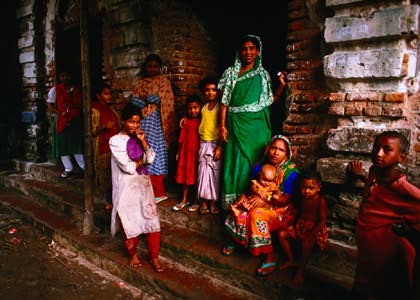
Article: Pictogram designer paul Arthur gives orders to the planet - without using a single word. Article: English-language boom worldwide draws support and condemnation. The Globe and Mail. Mon. July 14, 2003. Article: Eurobabel. The Globe and Mail. Sat. Feb. 6, 1999. Article: Mangled words divide generations in Japan. The Globe and Mail. Sat. Aug. 24, 2002. Article: Rebirth of dialects mirrors new regionalism. The Globe and Mail. Wed. May 21, 2003. An ageing population Article: Canadians older than ever before.The National Post. Wed. July 17, 2002 Expectations: analyse examples of social phenomena that contribute to cultural and economic convergence (e.g., widespread use of English in business, ethnic quarters in large cities, cultural associations and centres), peace, and good international relations; |
 |
|
|
Information revolution, technological progress,
and global trade
impact on world regions. Tourism - a global industry? (EaP pg. 405) |
Agriculture
and Agrifood Canada, Trade Ageements
Corporate Watch Cultural Survival
|
|
|
Article: Yes, we'll have no bananas.
The Globe and Mail. Sat. Jul. 19, 2003.
Expectations: assess the impact of technological change in a region of the world. |
|
|
|
The globalization of services
Tourism: a global industry -costs and benefits Video: CBC News in Review. Beijing 2008: A momentous decision. Sept. 2001 |
|
|
|
-The international war on drugs
-The Geography of Cocaine -Article: Our Man in Bogota. Maclean’s Magazine. June 4, 2001 Expectations: explain how people in different countries can work together to solve international problems (e.g., the Land Mine Treaty campaign); |
|
|
|
Economic opportunities for men, women,
and children in selected regions or countries.
Article: -towards global interdependence
|
Globalization and Business Practice: Managing Across Boundaries |
|
|
“Who Owns a Global Village” - CBC Ideas broadcast
April, 1999
Article: The Critics have it wrong. William Dymond. |
|
|
|
Examination Period |  Good luck on exams! Good luck on exams! |

 Video:
Escaping from History. The National Film Board of Canada, 1994. 51 min.
(Mexico)
Video:
Escaping from History. The National Film Board of Canada, 1994. 51 min.
(Mexico)


