|
Natural
Study
FLORA:
It
is not place to suppose forests and oakwood of frond, but
you will have to imagine that in a time the oak melojo dressed
these prairies in impenetrable warp. Fires and pasturings have
reduced to him to the vestige or that condition that as soon
as it allows to him to show over escobonales and brezos. for a
forest engineer this would be "low mount". You are
not so contemptuous and still considers that she continues
being an alive mount, with more value, because they keep these
plants the knowledge to survive in the worse conditions.
Engineering contemplates to the mount like field of cultures,
placing manchones of pines, repoblaciones and experiments by
all these hills.
Also
the civilians has done the own thing. Mainly, to burn. the
fire bites the scrub and appears poor grass later. But the
fire, mainly, allows to burn urces and brooms, which the
following year the stump by hard root will take advantage of.
This strong wood is the ideal fuel for the villagers. The
stocks of brezo constitute the best coal of forge and houses
and leñeras are piled up next to hoping to warm up stews or
to put the furnace to the red one.
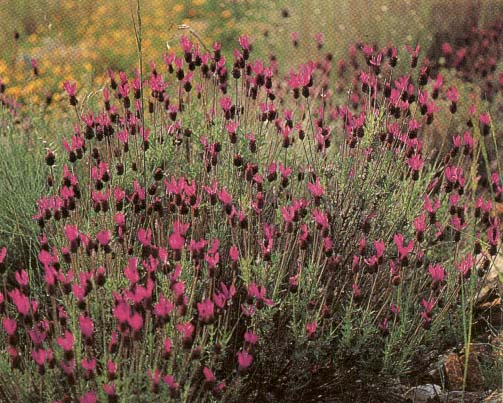
The
springs are mauves and white of so much briar that tapiza the
mount. And the yellow one of the nabiza colors May. The
oak rebollo or melojo appears in dense cloths that alternate
with profusion of urces and brecinas, carqueixas four species
vegetales that take possession gradually of all the spaces
that it has left the plant suitable for timber. The
briars, that they color all the mount, they offer two basic
varieties: the white one and the black, although this last
receive the name to weigh to have an accused coloring purple.
But also there are brecinas rastreras. They
appear in the mount some exemplary of carrasca ilex, bush ilex
of cup green ash, thick and of fleshy leaf.
Herbs
of grass, gramíneas and tomillos itself insert in the cloths
of mount, moteados by cantuesos, saxifragas, tusílagos,
cerrajas, herb of Santiago, cardos, linen montesino,
gordolobos, dedaleras, among a hundred varieties more than you
keeps the surprise. In
the terrace of unirrigated farmland cultivated they are born
rye and barleys, forrajeras or vegetables.
Next
to the water are born alisos and four varieties of willow and
some insert ash. The poplars populate parts of the copse among
the bush of blackberry, wild blackthorns and more thorny or
honeysuckle. In the meadow returns the poplar to be boundary,
in company of blackberry, briars and willows. Different plants
pratenses and forrajeras, gatiñas, cardos, dedaleras,
gordolobos, arvejas wild or loves of horticulturist complete
part of this tapestry vegetal.
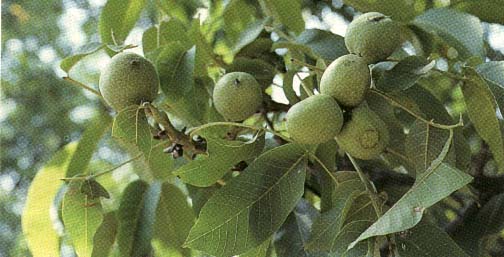
But
you will glimpse also some ashes, walnut, near the town, apple
trees, pear trees and cherry trees, in the gardens where are
cultivated cabbages, potatos, peas, beans, some take you... Wild
flowers: daffodils, chimes, violets, poppies, daisies, rose
bushes, tooth of lion... A
great variety exists of setas among the ones that we can find
some food as the parasol and mushrooms of poplar.
FAUNA:
The
fauna comes to congregate in these places to all practically
name savage of Leon. Even more, since here some rare
endemismos like that sanabresa salamander are located that it
gets to live nothing less than forty years. It happens,
nevertheless, that the modifications had in the agrarian order,
after the abandonment of not few traditional activities in
which it sent to the plow and the cattle, have affected
directly to not few species interrelated with old tasks. The
sensible diminution of surfaces dedicated to the rye is
reflected in the reduction of perdices, hares or foxes. On the
contrary, the appreciable increase of repobladas surfaces of
pine has supposed the creation of a new habitat for the
expansion of corzo or the red deer.
When
the spring stammers in first suns of March the Vista can hunt
this wild expression more easily, specially in which it
concerns the activity of the birds, whose working of
emparejamiento or nest building intensifies in these dates. If
you wish to contemplate one of the most frenetic activities of
the pajarada one, as it is it his food of the noon, siéntate
to the border from the river to that hour in which the
mosquitos eclosionan on the surface of the water. Mosquito
nettings, launderers, some herrerillo, cockroaches and
carriceros are located in the kind shrubs of the border to the
mouthful that happens floating among them.
In
the more or less motley robledales that you will see in the
located slopes in front of in which you take a walk, can be
listened to arredanjo, some picamaderos and, with greater
difficulty, it could see the discreet scholar, that chocha
perdiz or pitorra that nests in the grounds and whose layer of
pen is a perfect camuflante in its movements. In
the mount the sighting of the fauna of greater caliber will be
somewhat more difficult to you, those mammals that are
consustaciales to this landscape. The wolf, for example. He
was always the best neighbor of these mounts in spite of his
historical persecution.
Corzo
is more probable in the sighting, since it stands out in all
spurs of the Teleno and today has more mount and less people
than ever, but are other species those that take the attention
of the peculiar one, like that more and more improbable gineta
or the weasels, garduñas or martas that can consider a true
exception in this time. Tejón
resists in the lateral losses, like some ferrets that are to
look for in these levels their daily diet. In
the air of these mounts the wild life is written with wings
and you will see one long serious one of rapaces, between
which the mousy eagle is more habitual, although the milano,
the lanner or the kestrel are also frequent.
Next
to the river, as already I have said to you before, a greater
activity is registered (chorlitejos, alcaravanes and andarríos,
among others). It is not difficult that you can sight some
heron in real winter or those ánades (azulones) that works
occasionally in some fluvial sections. It also writes down in
these bajuras the most common birds: to mir them, magpies,
rooks, hoopoes, some tórtolas and torcaces. But
in the water they are the jewels. The trout, as it is logical,
commands in a river that has enjoyed an exquisite transparency
traditionally, since the embarramientos in riadas and
swellings do not take place with the intensity of other
channels. The otter works in sections of the river with dense
scrub that protects it.
It
hopes to you, finally, all that interminable slight life of
small mammals, reptiles and insects that you will find here in
the same profusion that in the best natural places of Leon.
|

 ·
·
 ·
·  ·
·  ·
·  ·
·  ·
·