The hypothetical and the hypocritical

|
WARNING: Just so you know, this page contains profanity.
|
Ain't Misbehaving Hygiene, bye-giene! Proprietary impropriety |
For most people, living and working in Korea is a great experience. They have fun, make money, work in a job that is rewarding, and get to see another part of the world at somebody else's expense. Life couldn't be better, right?
Well, no. Not for everybody.
Despite the vast number of positive experiences you will read about teaching in other countries, some people are simply not suited to it. Before you go, you need and have a right to know about things that might make life difficult for you. Discontent doesn't make you a malcontent.
Understand one important fact: having a difficult time coping in Korea is NOT a sign that a person is uncooperative or unwilling to get along with others. If you criticize a person for having difficulty with Korean culture, you are saying the person's own culture is at fault. (If the visitor's culture is the problem, then Korean culture is equally the problem. As George Carlin once said, "Let's not have a double standard, one standard will do just fine.")
If you criticize a person for having difficulty in Korea with things related to their health and well being, you are saying the person's life and health are not important. (No person or country has the right to put itself above the well being of others, even a single person. If you disagree, then the Japanese were right for trying to eradicate Korean culture in the 1940s.)
Many of the points I discuss in this section may be perceived as negative. Because of this, recruiters may not want you to read them. Neither I nor anyone I know was mistreated by recruiters, but there could always be a bad apple who leaves you to rot when you need help. And as unkind as it is to say, even the recruiters who are honest and decent are still in this business for the money. If you read my words and decide Korea isn't for you, they will lose a commission.
(I hope recruiters who read this page choose not to censor it. People, your good reputation is worth more than the few commissions my words may cost you. Even if I do cost you those few commissions, I bet the number midnight runners my site prevents would be the same.)
If you do go overseas, you will be in a foreign country, in a culture both social and legal that expects you to abide by their rules and way of life. Sometimes their views are very different from your own country, and can even be ridiculous, idiocyncratic or hypocritical. This section of my document is again specifically about Korea, but it can easily apply to many other countries, and it could suggest things you may need to learn or know in advance.
To the prospective recruit and teacher, read this page and think. Research your destination country. Ask questions, because the only dumb question is the one you don't ask.
Ain't Misbehaving
I am always amazed at the ignorance of some people. I have met
people who think that Gerry Rafferty covered the Foo Fighters'
"Baker Street", and other people who think some movies made
in 2003 and 2004 ("The In-Laws", "The Stepford Wives"
and "The Manchurian Candidate") are brand new ideas.
And then there are the morons who don't know anything about buddhism.
I have met several people (almost all were fundamentalist
christians, naturally) who see buddhist swastikas and think
nazism invaded Korea. For the informationally challenged,
here are the facts: Nazism dates back to the 1930s. Buddhism
predates judaism.
Buddhism has been using the right-turning swastika more than half
its existence as a symbol for their temples, and a third of all
Koreans are buddhists. Do us all a favour and read the history,
don't just blurt out assumptions without knowing these people.
In Canada, no god-bot on the street would dare touch you without
your permission for fear of prosecution for assault. But
to Korean bible bleaters, the "message" is far more important than
your right not to be violated. Being physically accosted, grabbed
by them, or having them walk in front of you to block you are
standard practice.
The other type can be avoided: groups of tone deaf jesus freaks
playing music through amplifiers on the street or in the subways
at (no exaggeration) around 100-120 decibels. The sound can
be truly deafening, especially in the confines of a subway station.
You will hear these audio vandals the most outside of Jonggak
station, outside in the Euljiro-1-ga shopping district, and
inside of Yeongdeungpo station on Line 1.
There was a recent (May 2004) news item on proselytizers in
Korea, that they feel it is their "sacred duty" to go into muslim
countries and "convert the heathen". If you want to get your head
chopped off like the guy in Iraq, go ahead. But even in muslim
countries that aren't violent (ie. most), it is still illegal
to proselytize other religions. Where people get the nerve to do
this, I'd like to know.
People have every right to expect to have and practice their own
religion, but have no right to expect others
to have or practice said religion. (If you can force your views
onto other people, then they can force their views onto you.)
Some people like Korean pop music because it's new or different to
them. But to tell the truth, most of it is the same, either dance
music or copycats of western boy or girl vocal groups. There are a
few originals, but not many.
What's really weird about Korean bands are the names: either strange
names with English words (Crying Nut, Cherry Filter) or
acronyms of English letters: SES, Fin.K.L. (Fine Killing Liberty),
H.O.T. (High-five of Teenagers), g.o.d. (Groove on Demand),
among others. Some even use single letters, such as the female
singer J. Visit the K-pop
(Korean pop music) website to see more of this.
As you might have noticed, my website has a Rush theme to it.
When I tell people that I have been listening to them since 1975's
Fly By Night, and to other groups such as Queen,
The Steve Miller Band, and Chicago (before
David Foster ruined them) my entire life, and most can't
believe it. Aside from a single Korean folkie (a Bob Dylan clone)
who has been around since the mid-1980s, the life of a typical Korean
band is at most five years.
Koreans don't share our view of pets. They do love them, but not in
the way that westerners do.
Dogs are treated less as objects of affection and more as fashion
accessories. The trend has lessened in the past year but for a while
it was common to see dogs with dyed fur wearing "costumes". I have
personally seen dogs dressed as bumblebees, lions, and other things.
Korea's population density is very high so there is not much room, but
animals still need space to move and to run. Most pets in Korea are
tied all day to a fixed objects, with a collar and leash often no more
than a metre long. Many are left to sit in the heat, rain and cold
with little or no shelter, and are sometimes physically abused by
children or passersby. I have seen Korean men kicking other people's
defenseless dogs simply because the animal barked at them.
Other animals are kept as pets, be they birds, rabbits, chickens,
ducks, fish, snakes, lizards, and a list too big to mention. The
real tragedy for me and others westerner is that Koreans see most pets
as disposable, temporary or novelty purchases. Most don't survive
very long after purchase, excepting cats and dogs. And because Koreans
don't love them the same way we do, as family members, they don't treat
them with the same care. (Whether you view this as criticism or
reporting, this is a fact of life in Korea.)
Visit the
Korean Animal Protection Society
to learn more about the practice and how animals are cooked and
"acquired". Be warned: many photos on the site are extremely
graphic, showing cruelty to animals that would make a "puppy mill" look
reputable.
Despite what you may be told by some that very few Koreans eat dog meat,
it is common. There is one nationwide chain of restaurants that serves it.
The further away you go from the bigger cities, the more common it becomes.
Where western influence or visibility is high, it is less common. If I can
do it without being caught, I will take a photograph of a large restaurant
near Seoul that serves only dog meat.
My bone of contention with the practice is not about what Koreans are
eating (one who eats animal meat is not in a position to criticize
other people who do) but rather the lack of hygenic standards and
unethical practices involved in the trade. Visit the KAPS site,
even if it does make you sick. (I couldn't eat meat for three weeks
after I first saw the pictures.)
Remember Ahn Jung Hwan, the former member of an Italian soccer
team who scored against Italy in the World Cup? (His goal was the
only legitimate part of that "victory".) He has made a lot
of ads in Korea since that time. Ads for makeup and hairsprays.
Maybe it's a glam or Poison revival, I don't know, but
a trend toward "effeminite" looks for men has become popular in Korea.
Many young men have taken to dolling themselves up. Not with lipstick,
but with skin creams and coiffures.
Korean actor Bae Yongjoon has become a heartthrob in both Korea
and Japan because of his effeminite features and a popular historical
TV drama series he stars in. He does many advertisements with a popular
Korean actress, Lee Yeong Ae, and he looks more feminine than
she does.
This does not imply that the Korean male population are gay, far from
it. In fact, if your knee jerk reaction is to assume these men are
gay says more about you than them. Korea is a very macho society,
and homosexuality is still a taboo subject for public discussion.
If you are gay and come to Korea to teach, stay in the closet. Many
Koreans still believe the myth about gays being paedophiles. (If
you believe that myth, go visit the American
Psychological Association website and educate yourself.)
Just like effeminite Korean men are not necessarily gay, neither are
the men or women holding hands with their own gender. Handholding
between friends in Korea is perfectly normal, except that it's also
normal for Korean men to hold hands. I have seen straight middle-aged
business men holding hands and nobody bats an eye.
Conversely, and what I don't get, is why people can hold hands and
nobody blows a gasket, yet kissing in public is considered
shameful. In fact, most Koreans will be appalled at the sight of
people kissing and cuddling in public places, and you don't have to
be doing anything sexual. To Koreans, kissing is sexual.
It's best to save it for your apartment. (Public signs of
affection are becoming more common, especially around the universities.)
The strangest western trend I've seen in the past year is at
some dance clubs: Western males will go up behind women
(westerners or Koreans) on the dance floor and start...um...
rubbing themselves on the backs of female strangers until the
men are...well, erect.
Am I just a prude, or is this sick? Maybe Korean conservatism does
have its upsides.
"The state has no place in the bedrooms of the people."
Damned straight! Er...I...uh, well, maybe that's a poor choice of words....
With a minority Liberal government supported by two parties
with pro-gay marriage stances, the NDP and the Bloc
Quebecois, legalized gay marriage in Canada is inevitable.
(Half of all heterosexual marriages end in divorce, so how are
straight people fit to criticize gay people?)
In Korea, it's a different story. There is no open violence and
hostility towards gay people, but that's mostly because Confucianism
never explicitly forbade it. (Hell, Confucianism pretends homosexuality
doesn't exist!) Most Koreans think it is a "foreign problem",
as if it were a "problem". Half of Koreans are christians, and
many of them are baptists, a christian variant know to be openly anti-gay.
That especially applies to teachers at hagwons. You can't be "out" while
teaching kids in Korea. Date if you like, but keep your relationships
away from co-workers and the school.
A Korean TV star came out a few years ago and it killed his career.
This is also true of China and Japan, too. In 2003, Leslie
Cheung, one the most popular actors and singers in Taiwan (nearly
as popular as Jackie Chan), committed suicide by jumping off
a building. Rumour has it he was going to be "outed" against his will.
From what I'm told there is a fairly lively gay nightlife in Seoul,
though mostly geared toward men. Itaewon, Shinchon, and Hongdae
are said to be the hotbeds of meeting places and bars. (I recently
saw the kd lang bar "for women" near my home in Mok-dong....)
Remember the early 1980s when leopardskin clothing and neon were in
style for a thankfully short time? In Korea, they never went out
of style. You would not believe some of the clothing you will see
people wear here:
I'm no clothes horse, but even I can recognize a nation of fashion
victims when I see them. The list of bad taste you can write down
in Korea seems endless at times.
In Canada there are nude and clothing optional beaches and sites
in most provinces. In Toronto and Vancouver, there are public
swimming pools where women can swim topless.
In Korea, if a man goes outside without a shirt on, it's
scandalous. Guys, it's an easy compromise to make, and ladies,
be conservative. Let's go along to get along.
(Personally, I think it's silly. The day a naked body is
immoral is the day we are born with clothes on. What were you
wearing when they cut your umbilical cord?)
I don't mention this to criticize, but the fact is Korea is very
conservative (dare I say uptight?) about the body. Even
when it's very warm in May or October (sometimes over 25�C)
Koreans won't wear shorts or short sleeved shirts outside of
summer months.
Do you remember the Hyundai Pony? For those who don't,
it was a car from the early 1980s. Many were recalled for a
slight problem that sometimes happened: The engine would
explode and the fire would go up the drive shaft, into the
driver's lap. Needless to say, North Americans consumers
were not impressed. (In many automotive books, the Pony
ranks up there with the Audi 5000 and the Pinto as
the worst and most dangerous cars ever made.)
For a long time, Korean cars were garbage. They should have
learned lessons from the Japanese that low quality with
fuel economy sells, but low quality without it
doesn't, and that high quality sells the best. (Korean cars
still aren't great, but at least there is some reliability and they
are no longer deathtraps.)
"No, no, we'll do business the Korean way. There are
enough customers that if we piss off one, we can live without them."
Despite my sarcastic tone, that is exactly how Korean businesses
think: unhappy customers don't matter.
They learned the hard way that North Americans don't behave like
Koreans. If it's crap, we don't buy it. If the company refuses to
live up to its commitments, we shop elsewhere. Korean car and
electronics manufacturers only started making quality for the North
American market because their products weren't selling.
In Korea, however, their products are still lousy, and they still
sell. It's partly due to blind loyalty to all things Korean, and
partly due to protectionism. Despite talk of "free trade" in
Korea, foreign goods are often priced out of the market with tariffs.
When you come here, don't buy big ticket items and think you are
getting a bargain. If you want a Korean brand of stereo or TV, wait
until you get back to Canada where the quality of merchandise is
higher and you can be sure the warranty will be fulfilled.
Hygiene, bye-giene!
I said it elsewhere: Korean men are the world's worst and most
inconsiderate chainsmokers. Making it illegal doesn't stop them.
You will find men smoking in schools, hospitals, while pumping
gas at a station, in subway stations, in government buildings,
in public washrooms, etc., et al, ad infinitum, ad nauseum.
Even in your house if you say no smoking before they enter,
Korean men will try to light up. If one uses your bathroom,
make sure he doesn't take his cigarettes with him. Koreans
don't consider the bathroom to be part of the house or apartment
(or perhaps it's because you can't see him to stop him...).
The reason why is twofold: cheap cancer sticks and the military.
Korean coffin nails are dirt cheap, 1500-2000 won for Korean
brands which stink worse than "western" brands.
Service is mandatory for all Korean men before their 26th birthday. The pay is lousy and one of the
few "benefits" (yeah, right) are the cheap or free
cigarettes given to soldiers by the death peddlars, creating
addicts for life. It's just like Europe in World War II.
(Another horrible effect of Korea military life is the
drinking. More about that next.)
The other reason is, as I've said elsewhere, is Korean societal
rules. People will do things when they think they are unseen
that they would never do in front of friends or family. Also,
when a (by their social rules) "superior" person is in
the presence of an "inferior", one person is not answerable or
accountable to the other, and does not feel bound to obey the
rules of the "inferior" person, even in the person's home.
Korean men are top dogs here and most think they can do what
they will in the presence of anyone.
Just as smoking is ubiquitous with Korean life, so is heavy
drinking. Soju is a cheap rice wine (a 500ml bottle
costs 900-1100 won) and Koreans slug it back by the bottle.
I wouldn't use soju to clean my toilet, I'd be afraid for the
sewer pipes.
As I said above about smoking being encouraged by the military,
so is heavy drinking. Among men in Korea, the ability to consume
large amounts of alcohol, regardless or whether you vomit or not,
is seen as a sign of manhood.
And when I say vomit, I mean vomit. You will find "road pizza"
in the morning on almost any street in Seoul if it doesn't rain.
Drinking until vomiting ensues is considered a normal part of
drinking and socializing; the western notion of moderation, of
drinking to enjoy the taste of the alcohol, does not exist in Korea.
(Considering that all Korean alcohol tastes like lighter fluid,
that's not surprising.)
What is really appalling are those who can't control themselves,
and vomit in people's doorways, on the subway, in taxis, and many
other places. It's smells as awful as it sounds.
I call it "writing" and "creativity". Other people
call it "taking a dump". Regardless of your euphemism,
unless you own a bidet, everybody uses writing paper,
a bog roll, s*** tickets, whatever you want to call them.
Despite the fact that most Korean infrastructure was built after
World War II when it was known how to build a good sewer system,
Koreans built a substandard one. In most places, you are not
allowed to flush the paper you just used to wipe yourself.
"So what am I supposed to do with it?" you ask. See the
little garbage can in the bathroom or toilet stall? Yes, you put
it in there.
If you think that's bad, just wait until summer when the temperatures
hit 30�C, the humidity makes you sweat in the shower,
the urine dries on the floor after children miss the bowl, and the
cigarette smoke lingers in the toilet for hours. It can create the
most acrid and foul smell you will ever experience in your life.
Because of the smell and my apartment's location, I often wait and
go home between classes rather than use the school's washroom.
One important piece of advice: In most public bathrooms,
whether in your school, subway stations, or wherever, most do not
have toilet paper in the stalls. Always carry a packet of
kleenex with you, just in case....
I mentioned elsewhere that Koreans take the view that strangers
don't exist. Part of this "thinking" is that actions no
westerner would ever do in public become acceptable to Koreans
(or at least, nobody complains). Picking one's nose or
ears in public is commonplace, especially amongst middle-aged
men.
What bothers me the most, however are the Korean attitudes
toward handwashing (or not washing after using a toilet)
and coughing with their mouths open. This is not about
"respecting Korean culture", this is about health and scientific facts.
Coughing with an open mouth is a great way to spread disease.
The most recent spread of SARS in China (May 2004) was
because a hospital patient coughed all over other patients
and their families in a ward.
In China, Japan, and Korea, covering your mouth when you cough
in the presence of strangers is seen as unnecessary. Despite
a campaign by the Korean government and Korean doctors to try
and change this attitude (and even the Korean doctor who is
a high muckity-muck at the World Health Organization)
Koreans do not pay attention. They think "Our way is better"
despite medical science proving otherwise.
If you are standing on a bus, subway, or in an elevator and Koreans
are standing behind you, be aware if they are sick. If they cough,
they will cough all over your back and not cover their mouth because
they can't see your face.
Similarly, handwashing in Korea is almost non-existant. Watch
in any subway station, store or restaurant toilet for an hour:
most Koreans will not wash their hands after using the toilet.
The only thing I can figure is that they think, "Well, my
hands are okay," and because strangers don't exist, they don't
care if germs are passed onto others. (See above about
coughing with an open mouth, and below about water in Korea.)
Some good advice: Never take any unwrapped food a
child offers you with their hands. Although they intend it as a
kindness, children are the worst offenders for not washing.
Korea likes to give the impression it is a first-world country
(except when it's time for handouts from the UN!)
but if you look around Seoul and other cities at the abject
poverty of nearly half the population, you have to wonder.
Water in Korea is a good example. The government pretends the
tap water is safe to drink, but if you watch the locals, only
the poorest people drink the tap water.
In Daegu during March 2002, a year before the subway fire,
several people died from drinking the public tap water. It turns
out the system was contaminated with cholera. (Cholera
happens when feces gets into the water.) It was just like
Walkerton, Ontario: politicians and civil servants all pointing
fingers at each other and trying to avoid responsibility for
the victims' deaths.
My advice is to only drink bottled water and use it for brushing
your teeth or rinsing your hands for contact lenses. Tap water
is okay for showering and washing dishes (I sometimes rinse
dishes or kitchen utensils in drinking water if I use them when
wet), but not much else. I don't even trust boiled tap
water. Use bottled water for tea, coffee and cooking.
Proprietary impropriety
I know this part is going to piss off a lot of people, but it needs to be said.
I don't know what table manners are like in your neck of the woods,
but where I was brought up you were expected to eat quietly and in a
dignified manner (or prim and proper, if you like). You wash
your hands before eating, you chew with your mouth closed, you don't
talk with your mouth full, and you don't touch other people's food.
Everyday table manners in Korea are the exact opposite. I'm not
criticizing Koreans by saying this, I am merely reporting the facts.
Chewing food with an open mouth is perfectly acceptable.
(This also applied to chewing gum and popping bubbles.) The
slurping of food, such as sucking noodles or spaghetti, is also
standard practice.
There are no serving utensils at a Korean table. The chopsticks
put in the mouth are the same ones used to dig around the plates
of food. (And I do mean dig, people touch and poke
pieces of food with their chopsticks until they find one they
like.) Soup is not served in individual bowls, but in a
large communal bowl where everyone repeatedly puts their spoon
into both the soup and their mouth.
In some Korean restaurants such as kalbi (beef) houses,
people use the chopsticks they have put in their mouth to cook the
food that others are expected to eat.
If you find such eating habits unhyhenic, then I would advised you
not to eat at the same table. Discretion is the better part of valour,
as the saying goes. Some people call me rude for not eating with
Koreans, but I find it more polite and palatable to make excuses and
leave than to criticize my hosts or have to endure behaviours that I
find unbearable.
If hygeine is your only concern and not the eating noises, then eating
delivered lunches at work will not be a problem. But be warned: if
Koreans are curious about your lunch they will often touch your food
with their hands to look at it (recall what I said earlier about
hand washing) rather than just ask you what it is.
This is the Korean equivalent of the George Carlin seven words.
I have avoided using profanity for shock value on this site (the
only use of such words was about "ddong-jip" in
Part 6: Working Man and the "lecture" sound
effect above) but now I need to discuss offensive language in Korea.
I am educating you in Korean profanity not for you to use
them but so you know if others are directing them at you.
Usually, it's a coward hiding behind the language when seeing a
white face. Other times, drunken verbal abuse is a precursor to
violence. Recognizing drunken insults has kept me out of trouble
on numerous occasions.
(The follwing information was taken from
The Alternative Dictionary,
a collection of insults and profanity in many languages from around the world.)
A word of warning for anyone thinking about using profanity while
in Korea: Koreans don't like hearing their own words used against
them, and most know the George Carlin seven English words, so don't
use them. I also found out to my surprise that the popular French
insult "manger de la merde" sounds like a Korean insult
as does "chien" (or so I am told by other people)....
Stick to "You're ugly and your mother dresses you funny" if
you feel you must, but it's better not to do it at all. Don't act
like the prototypical "ugly American", especially when you
are a Canadian.
As a matter of fact, do speak French (if you know any) to
belligerent Koreans. Most know enough English to know they aren't
hearing it and will think "not an American". (If said Korean is
drunk, this may not work....)
There are over 30,000 American soldiers stationed in Korea, and
since most are Caucasian, it shouldn't surprise that westerners
both American and non-American are often mistaken for GIs. In
many parts of Seoul but especially around Itaewon and in the
Yongsan area, calls of "GI go home!" are sometimes directed
at any and all foreigners, soldiers or not.
For your own personal safety, it would behoove you, especially men,
to make yourself obviously differnt from the American military.
This also means (a suggestion, not a requirement) that you
not associate with the American soldiers.
So get rid of the army fatigue clothing, and keep your hair a
minimum length (I recommend 4cm for men, and 10cm for women),
and maybe wear some facial hair (guys only - girls, it looks
revolting on you). American soldiers are required to be clean
shaven everyday, and most Koreans know this.
In early June 2004, a US soldier was arrested in Shinchon after
stabbing a man. Yet another example of the ugly American, right?
Acually, no. The GI was socializing with a KATUSA, something almost
unheard of. Most US soldiers treat Korean soldiers like dirt.
(KATUSAs are Korean soldiers who work with the US military.
Their time counts toward American citizenship.)
A group of drunken Korean civilians attacked the American, and the
Korean soldier helped defend him. The American foolishly pulled out
a knife and stabbed one of the civilians (not fatally). The
American was arrested and physically abused by the Korean police in an
Abu Ghraib sort of way: he was stripped of his clothes and his
naked and bruised body was photographed in humiliating ways by the
police against his will, then the photos were published in a Korean
newspaper.
Although in this case, like the two GIs who accidentally drove over
the two teenagers in 2002 (the girls ran into the street against
a red light) the American was not the cause, it might be best
not to socialize with them. Most I have met are decent people, but
the few numbskulls and meatheads in the city make it too big a risk
for my liking.
A recent (June 2004) item noted there is an influx of Russian
and Philipino women brought into Korea as prostitutes. Many of these
Russian women hold Bachelor Degrees and many Philipinas speak fluent
English. It seems the Americans are as guilty as the Japanese of
bringing in "comfort women", and the Korean government is
turning a blind eye to it.
During the 1930s and 1940s, the Japanese army would buy or kidnap
women and ship them to other countries to isolate them from their
own culture and from help. (Korean women went to Japan, Philipinas
to China, etc.) Such women were referred to as "karayuki",
or "foreign-going woman". In the 1980s and 1990s as women headed to
Japan to work in the lucrative prostitution trade, a new term arose:
"Japayuki". I have to wonder if these Philipinas and
Russian women will be called "Hanayuki".
It is not just the US soldiers who use prostitution in Korea, many
Korean men do because of the Confucianist attitude toward virginity
in women. (Premarital sex is perfectly acceptable for a man, but
a source of shame for a woman.) Reportedly, Korean men also see
these women as "exotic" because they are foreign.
How westerners and Koreans (this applies to Japanese and Chinese
people as well) behave at the front door of someone's house is
very different. If you are not prepared for it, Koreans' ways can
seem (or are) very rude.
In traditional Asian homes, it is common practice to open the front
door and look in, then say "Hello?", regardless of whether
the homeowner is in or not. With modern locked doors, opening one
is impossible unless you are doing a B&E, but Koreans still
open the doors and enter before being invited. This is normal and
acceptable to them.
If you find this a violation of your privacy, I would advise you to
lock your door even when you are home. It might inconvenience a
roommate if you have one, but when both people recognize the problem,
both might be willing to compromise on locked doors. The schools
have keys to the apartments, so locking still won't guarantee privacy.
A former co-worker of mine told me how one of the school's directors,
a man, entered her apartment bedroom in the morning while she was
sleeping. It was summer and she was sleeping in her underwear with no
bedsheets. He never apologized because he said he "didn't violate her
privacy", that westerners "expect too much".
Another great annoyance with Korean behaviour is how they knock on
doors. In western countries, we knock or ring the bell and we wait a
minuter or two for an answer. Sometimes we ring or knock again in
case the person didn't hear us or was busy, and we are saying
"We're still here". Only those with no respect or decency
behave otherwise.
In Korea, however, patience is a vitual impossibility. When a Korean
knocks on the door, it is not a gentle rap with the knuckles, it is a
bang with the fist. Unless you open the door within a second of them
knocking (no exaggeration), Koreans will continue to hammer on
the door. They will knock louder if they can hear you or if
you acknowledge their presence.
My current apartment is a bacherlor suite about 25m� in total. The
landlady who owns the house knows how big my apartment is, yet if I
am home and she knows it, she will still hammer with her fist
constantly for 10 seconds to a minute, glass banging against
a metal screen. Even if she hears me saying "wait" or "just a minute"
in Korean, she will continue to bang on the door. The concepts
of patience and courtesy simply don't exist amongst Koreans.
One of the big praises you will hear sung about Korea is their
low rates of violent crime. From what I have seen, it's mostly
true. Gun crimes are low, murder rates are low, robbery is
rare, and children play safely out in the streets as late as
midnight without any danger.
What Korea lacks in violent crime, however, it makes up for in
petty crime, white collar crime, and "domestic" violence.
Bribery and corruption charges are levelled constantly against
politicians throughout Korea. To date, no Korean president has
been voted out of office - all have resigned or been arrested
for taking bribes and other backroom deals. In 2003, Hyundai
had to withdraw its support from a candidate due to investigations
of impropriety and illegal business dealings.
Domestic violence is also a concern. Recall from
Part 9a: Understanding the Korean
Mentality, Koreans see men above women, and in some
circles, men feel this gives them special privilege, that women
should accept without complaint. It is still a law in Korea that
in the case of divorce, the man receives custody of the children,
regardless of his or the woman's fitness as a parent.
Petty crime is also a big problem. Littering is a major headache
and expense for the city, yet people still do it. Vandalism and
graffiti are underreported due to the "strangers don't exist"
mentality, and a lack of respect for others' property (damaging
other people's cars, walls, fences, etc.) goes without
punishment or payment for damage caused.
Aside from Itaewon and Hong-dae, most parts of Seoul are safe to
walk, even for single women at night. It's the other, smaller
crimes that you have to be worried about.
(Paraphrasing Dick Gregory, if I may.)
I read how in North Korea that only healthy adult people are
allowed to live in the capital, Pyeonggyang, that no
pregnant women, no elderly people, not even children, can be
seen on the streets. Whether that is true or not I don't know,
but in many ways South Korea is the same.
(Read Part 9a: Understanding the Korean
Mentality for more on this.)
It is very rare to see the disabled in the more trendy parts
of Seoul except as beggars. The blind and the infirm seem to
be pushed to the outskirts, the poorer parts of the city. In
downtown Seoul, disabled businessmen are a rare sight despite
the number of injuries incurred to young men during their
mandatory national service.
Koreans are obsessed with appearance: if something isn't "normal",
it "should be kept out of sight". You won't find schools
integrating the mentally handicapped with other kids as in Canada,
and with rare exception, the physically disabled aren't hired
even when they are better qualified to do the job. Discrimination
based on appearance is commonplace.
In recent years the Seoul government has attempted to make the
city friendlier to the disabled, though it seems geared more
towards foreigners and tourists rather than Korean citizens.
Crosswalk lights with sounds for the blind can be found in many
neighborhoods, but that is an easy change. For people with
limited mobility, either needing crutches or wheelchairs,
getting around in Seoul is either difficult or expensive.
In downtown Seoul (Jongno, Yongsan, and Yeouido), most
streets are very wide and traffic is given preference over
pedestrians. In many places, there are not any street-level
crosswalks. In Jongno, that inevitably means underground
passages through subway stations. And since very few stations
in Seoul have elevators, this means long treks up and down
stairs to get around. I am able-bodied and fit, and I
hate using the stairs.
In other areas of the city, there are elevated overpasses, but
most have only stairs and no ramps, or those that do have ramps
so steep that only Rick Hansen could climb them.
The ramps are really intended for women with baby carriages,
not wheelchairs.
Buses with wheelchair access? I have yet to see one. There
is, however, a bus/taxi service for wheelchair users, but you
must book it a day ahead, so it's not something for everyday
use. Mobility in Seoul for the wheelchair-bound will be limited,
especially with the narrow sidewalks and a lack of ramps at
streetcorners.
More often than not, the disabled could get around faster by
taxi than by themselves. If you use crutches or a cane to get
around, investing in a scooter (gas powered, not electric)
might be a good idea. They are easy to operate and used ones can
be had for half to a full month's salary.
(You can always sell it off at the end of your contract.)
One thing that happens to me and to many people I talk to when in
Korea is the number of Koreans who walk up and offer to help when
you look lost or are trying to find something.
It can be nice at times, having someone tell you where to find
something specific (but big or unique things only, smaller
business are everywhere and less noticeable).
But I'm cynical, and I often see something which is equally the
case: the Korean person sees you as a chance to practice their
English. I don't begrudge them doing it, but the Korean way of
giving directions leaves a lot to be desired.
This conversation happened to me once:
Koreans seeking free practice is not overly bothersome, but you may
encounter it a lot, especially in downtown Seoul.
Western societies are becoming less civil year by year.
"Please" and "thank you" and other basic courtesies
are less commonly heard. That doesn't mean they aren't necessary,
and I refuse to give them up just because Allen Iverson says so.
So when I arrived in Korea and saw how Koreans behave toward one
another, how they treated strangers, I was appalled. Things that
I took for granted, things I do without a second's thought aren't
even considered here. I wait in line patiently, and many Koreans
do too, but a great many think it's perfectly acceptable to elbow
people aside to get to the front of the line. Some become angry
because I won't let them past when they are the ones being rude
and impatient.
I stand up for the elderly and pregnant women on the bus. Does
anyone else? Nope.
(Early 2004, I'm entering a bookstore. Through the glass
doors I can see a woman with crutches approaching, so I hold the
door open for her. A man in a suit walking downstairs then runs
for the open door, almost pushing the woman backwards off her
crutches until I grab him by the hair and stop him.)
These are all everyday examples you will encounter. I have
somehow managed to maintain my civility and do basic courtesies
for others, but my patience wears thin at times. Here it's
"men first", not "Ladies first". Or to put
it another way I heard it:
Chivalry isn't dead in Korea. It never existed to begin with.
This is the one thing in Korean society which I will
criticize and not tolerate. I refuse to be treated with
less respect than I show to others, and I advise you not to
stand for it either. This is not an issue of culture (even
if Korean society is founded on Confucianist rules) but
one of decency. On almost every other topic I will not criticize
how Koreans do things and behave, but on this I will, and rightly so.
Every society throughout history has the "golden rule" in
some form or another. Whether the christian "Do unto others",
the Wiccan "An' it harm no other, do what thou will",
or as far back as the Code of Hammurabi, every societies' rules
say that if you want some respect, you earn it, you don't demand it.
Sadly, Koreans do not have a rule of this sort. Theirs is a society
of status and privilege, and it needs to change, starting with your
students. Don't just teach them English, teach them courtesy,
manners, and patience.
In Closing
Like it or not, agree with me or not, this has been my experience in living with
Koreans. Some will see it as bigoted. Some will see it as my encountering a few
bad apples. Some will say I'm the one who is rotten. Regardless of your opinion
of me or my words, there they are.
There is an American saying: "Trust, but verify". I don't expect you to
believe me without question, but it is not unreasonable for me to suggest you keep
these things in mind. Even if only a fraction of what have I said is true, would
you rather have been warned beforehand, or shocked and wishing you had listened to
me after the fact?

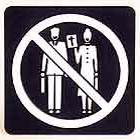
Street preachers are annoying enough, but in Korea, there are two
type you don't see in Canada: space violators and
noise polluters.
In the west, we see pets as part of the family. We lavish them with
love and affection, let them sleep in our beds, sometimes eat at our
tables. (My family had a pet budgie that flew onto a table and
ate from his own plate.) We are equally horrified when someone
mistreats an animal.
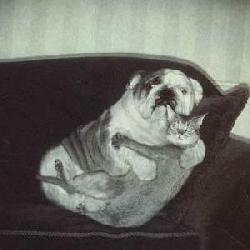
Almost universally you can say Koreans hate cats. Pet cats
are petrified of anyone but their owners, and children often chase
or throw things at strays for "fun". Many Koreans believe cats are
all carriers of disease and that their eyes are "evil". Explaining
that cats keep the rodent population down and prevent disease
is wasting your breath.

Finally, when it comes to domestic animals, there is the issue of eating
dog and cat meat. Koreans don't eat house pets. The dogs used
in boshintang are raised for it. (There are rumours that some
pet dogs are stolen to be used as meat.) The practice of
eating dog is not universal, but it is more common than Koreans will admit to.

- Pierre Eliot Trudeau, 1970, upon legalizing homosexuality in Canada
One notable exception in Korea is Harisu, a transsexual singer
who began her career in transvestite stage shows and as a model. Early
in 2004, the Korean government recognized her legally as a woman and
not a man (which thankfully exempts her from military service).
People refuse to admit listening to her, but her records are still
selling....

Korean
English equivalent ano shipal fuck off doltaegari stupid, moron, dumb ass
(ironically, similar to English's dolt)imi shimi pet pojida your mother has a bald pussy jiralhanae to become a retarded lunatic jotkara castration of male testicles
(male slang word)
English
Korean equivalent son of a bitch gaejashik,
byeong shin gat'eun nom,
chisahan nomshit (noun) ddong shit (interjection) yeom byeong hal,
bil'eo'meok'eul
Korean: "Exit at this subway station, then go straight."
Which, of course, does not help at all. They know the way and
assume that you should know it too. It probably has something
to do with the implied nature of Altaic languages. If both people
know what is being discussed, nouns and subjects are dropped. But
since I don't know what's being discussed, it would help if
the person would state it explicitly....
Me: "Which way? North, south, east, or west?"
Korean: "Just go straight."
Me: "Which way? There are four directions."
Korean: "Just go straight!!!"
I hold doors open. Does anyone say thank you? Nope.
I say "excuse me" while making my way through crowds. Does
anyone move? Nope.
Back to the front page