All about the job, since it's what you're here for
|
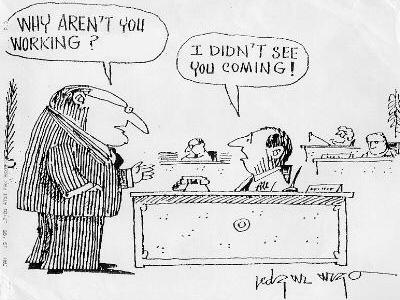
What? You thought living in Korea would be a year-long paid holiday?
Excuse the sarcasm, but I have seen far too many people come here with that attitude. They put in the least work possible and expect more and more from their employer. Of all the things you pack and bring with you, a good work ethic is the most important.
|
If you have a good work attitude, that is half the battle. The other half is knowing what the job entails. And that is the purpose of this page.
Don't just take my word for it. Visit my links page and have a look at the teaching websites I listed, or look for the websites of other people who taught in Korea. They are great sources of information for ideas on how to be a better teacher, and you can read about the good and the bad of other people's experiences. They might even answer your questions.
Having said that, we move on to my teaching tips.
A primer on primaries
Children are raised very differently in Korea.
When it comes to discipline, parents in Canada and other western
countries try to maintain an even hand in raising their children.
From infancy to independence, Canadian parents let their kids be
inquisitive and have fun, but they also keeps the kids within
certain limits of behaviour.
Korean parents raise their kids by extremes. From infancy until
they enter school, children are given free reign to be little demons
and maniacs. Breaking things, yelling and screaming, saying anything
(including profanities and insults) with no punishment or
control is commonplace.
Yet as soon as kids start school, it's "spare the rod and
spoil the child". Corporal punishment (or just the threat
of it) is used both at home and in public schools is used to
bring the kids in line. Children go from no limits to complete
restriction with no transition period.
Second, Koreans have a preference for boys, and when I say
preference, I mean how they are treated, the money spent of them,
the adoration they get from parents. The Korean word for a girl's
birth is "birth". The Korean word for a boy's birth is
"happy birth". I wouldn't say Koreans consider females to
be second class citizens, but....
This is not just in the home, it happens in schools: preferential
treatment becomes an expectation. Even if a girl needs
extra tutelage, some boys become upset when girls get the attention.
(And yet when studying English, it is the girls who usually excel
and not the boys. Perhaps the male bias is driving girls to work
harder to succeed. Just listen for the accents of the male and
female presenters on Arirang TV.)
Finally, in western societies bodily functions and fecal matter are
not regular topics of discussion. In Korea, on TV you will see ads
for laxatives with CGI animations of bowels expurgating feces. Kids
in Korea are fascinated with the topic.
The Korean word for subdivision (in a town or city)
is the same as the Korean word for feces. Popular cartoons feature
characters with hair shaped like piles of poo, and one character named
Woobi-boy is sometimes shown to be eating it. There are even
toys glorifying it. It almost reminds me of the Canadian Airborne
regiment video.
I am not saying Korea has a scatological culture. What I am saying is
not to be surprised at kids asking about things that we would consider
taboo or "not for discussion in polite company".
Most important, beware of ddong-jjip, which literally means
"shit finger". With hands together, fingers interlaced and the
two index fingers sticking out, children walk up behind each other
and ram their fingers into each other's rectums. They also do this
to the rookie teachers. (This the Korean equivalent of a
"wedgies" and Koreans do it about as often.) It's
humiliating, painful, and unhygenic. Don't put up with it at all.
Business is business
Question: At its most basic level, what is your job in Korea?

|
a. teaching b. entertainment c. customer service |
That's right, C. You are in the customer service business. The parents are the customers, and teaching is a service. People only pay when they think they are getting value for their money.
The school is not doing the parents a favour by teaching the kids. Rather, the customer is doing the school a favour by paying. If customers aren't satisfied, they will take their money elsewhere. That is the reality of businesses, and the hagwon (private academy) business is cutthroat.
If the kids aren't learning, the school loses business. If you are not teaching the kids effectively, you will lose your job. The school hired you to do a job and to generate revenue, and if you hinder instead of helping them achieve that goal, you can and will be replaced.
I personally know of two people who have been fired over this. The "teachers" constantly showed up for work either late or barely on time, they rarely prepared before class, and often did nothing more than play Uno with the students. Student enrollment was dropping fast.
You aren't in college anymore, and deadlines are no longer suggestions. Be a professional: do what you are paid to do, and when you are asked to. You are not the only teacher available.
 Would you hire this woman? |
- Tattoos are taboo
Koreans generally take one of two views of tattoos: that they are satanic or a sign of gang membership. I have a tattoo on my... well, somewhere, and Koreans at the saunas still freak out when they see it. (In the Korean military, they forcibly remove tattoos from recruits' bodies with lasers.)
Either way, tattoos that are potentially visible have to be hidden, even if this means wearing a long sleeved shirt in the summer.
- Like Leopold and earlobe
If you are a woman, limit your jewelry to studs both for the sake of appearance and safety. Korean kids love to grab and pull on you.
Men can't wear earrings of any kind on the job. (The 5cm sleeper for my Hallowe'en pirate costume was a different matter....)
If you have any other piercings, hide or remove them and don't discuss them with the kids. Anything you say in class can get back to the parents and then to the director.
- Samson and delightful
Your hair is the most noticeable feature when people first meet you, so make sure yours is conservative enough for working. Follow these guidelines and you should be alright.
- Avoid hair colouring. If you insist on doing it, make it look natural, such as streaking or going from brunette to red. Drastic change is unacceptable to Koreans.
- No unusual hairstyles. No excessively long hair on men or excessively short hair on women, and definitely no mohawks. If you have an unusual haircut and are hired, it means the employer accepts you as you are, so don't change it except to a "normal" haircut. Major changes in appearance are unacceptable.
- Very short hair on both men and women is standard in the US military. Keeping your hair a minimum length (4cm for men, 10cm for women) can help prevent being mistaken for an American soldier. (This is especially important in certain areas of Korea or when encountering intoxicated and belligerent Koreans.)
- Shaved heads are rare in Korea except on buddhist monks. However, Koreans usually don't react badly to seeing them on Koreans or on foreigners.
For men, these are good guidelines to follow on facial hair:
- If you are hired with facial hair, you can probably keep it
but it MUST be neatly trimmed and short. My directors
didn't like mine but didn't harangue me either.
- If you have no beard, you must be clean shaven every day.
(If yours is one of the few schools that opens on Saturdays,
then my condolences to you).
- Men cannot grow facial hair. If you shave off a beard,
you can't grow it back.
If you insist on growing a winter beard, start it during Chusok, a five day holiday in October. Be sure to get approval from the director and always keep it neat.
- Wearing facial hair may be advisable for your personal safety.
The US military does not permit facial hair and most Koreans are aware of this. I have encountered more hostility in public places when I am clean shaven and less when wearing a beard or goatee, and other caucasian men report the same thing.
- Clothes make the mantra
As I have said, appearance counts in Korea, and directors want their schools to look professional. You don't have to choose comfort or presentability, you can have both.
- Presentable shirts are a must, no t-shirts allowed. Men should wear
polo shirts or lightweight cotton dress shirts. For women, blouses and
other conservative tops are ideal. If you have cleavage, hide it.
- Dress pants or khakis should be the norm, and knee length skirts if you
ladies wear one. Jeans and shorts are out of the question, even in the summer.
Buy lightweight cotton or silk clothes. The humidity in Korea during the summer in Seoul and Korea is unbelievable, and -10�C is the coldest temperature I have seen in three Korean winters. (Prove you're a Canadian and impress the Koreans! Wear short sleeves during the winter!)
- Presentable footwear doesn't mean choosing between sneakers and dress shoes.
A good pair of black walking shoes (Reebok, Adidas, or whatever) can
pass for dress shoes and are comfortable enough for everyday wear.
- Suit and tie for men and business dresses for women are almost mandatory
when teaching adults. A blazer with matching clean khakis may also be
enough. In fact, you should have at least one good set of clothes
(bought in Canada or Korea, it doesn't matter) for formal
situations such as school presentations or meeting the parents. The
tree-planter look might be acceptable where you are from, but not here.
(Almost all the Korean teachers you work with at hagwons are women. I and other westerners have been invited to several weddings. If you go, do you wear jeans and a t-shirt, or a presentable suit or dress?)
Speaking of being propositioned for sex, it happened to me once. I was in Yeosu (a town on the south coast) for a weekend and a fat middle-aged woman approached me. At first I thought "You're a little too old, big and ugly to be on the game". Only twenty minutes later I realized what she was after. It made my skin crawl.

- Presentable shirts are a must, no t-shirts allowed. Men should wear
polo shirts or lightweight cotton dress shirts. For women, blouses and
other conservative tops are ideal. If you have cleavage, hide it.
Your own worst enemy
I have three golden rules for getting along in the workplace. I advise you to live by them.
Dating on the job is bad news in any country. Even if you
and your boyfriend/girlfriend/partner keep it out of the office,
inevitably you will become the source of gossip.
Directors will fire the Korean employee and not the foreigner,
but only because of the cost involved. Some do it to
prevent office romances. Some Koreans think that Koreans and
foreigners should not date anywhere or anytime, let alone get
married.
If you meet someone in Korea and hit it off, great, but keep it
away from the workplace. Do you want a reference letter at the
end of the contract or a place on a blacklist?
Think of it this way: If you talk about other people behind their
backs, they are more likely to talk about you. If you don't spread
gossip and they talk about you anyway, at least you have nothing to
apologize for.
Simply stated, keep your mouth shut. You don't just work with
these people, you socialize with them too. The same thinking applies
in reverse - anything you say to them outside of work, even if you
expect it to be secret, will eventually get back to the workplace.
If you can't control your mouth when you are drunk, either drink
alone or don't drink. As the saying goes, "A drunken man's words
are a sober man's thoughts."
Also remember that in Korea you are the odd one out. As a foreigner
you can be more easily spotted if you do something inappropriate, especially
where you live or work. Word can quickly get back to your employer or
the immigration office.
Instead of listening to and spreading rumours, be more concerned
about not being the cause. If you hear something, check the
facts at the source, and whatever you do, don't repeat
any rumours. High school ended years ago, so act like it.

|
The most important part of teaching effectively is preparation. I won't talk about curriculums or lesson plans because your school will (or should) have one prepared for the teachers. Most do.
What schools do have but don't always tell you about to are tools for reinforcement. Games, tools, puppets, storybooks, dioramas, there is or should be a myriad of things and ideas for you to use. And there is good reason to use them.
If you think you will simply come in and teach, you are mistaken. Most of the time, the lessons are not very long, taking only 20-40 minutes depending on the material. The rest of the time (classes range from 30 minutes to an hour) you have to fill yourself. Either you can kill the time or you can fill the time. If you are dedicated to the cash and don't care about the job, you can kill time. But if you want the kids to learn, fill the time constructively.
So how do you do that? By using games to reinforce the lessons. By getting the kids to talk and use the vocabulary. By getting their interest in things that use the words. But the most important thing about preparing is not letting the kids get bored. Bored kids don't listen, and they don't learn. Never underestimate the learning power of play!
Here are some things I have done in class as examples for you. Most cost little or no money to do:
- Bring a newspaper. Sports interest kids and may include new vocabulary. If the lesson topic is weather, show them the day's forecast. Some English language newspapers have short English lessons for Korean readers.
- Flash cards. The school should have some, or you can buy or make your own. Play match games, spelling games, word association or whatever you can think of.
- Singing. Kids love to sing their favorite songs. Use the school's portable systems or get some cheap computer speakers for your CD walkman. Look up lyric web sites on the internet, there are plenty with many popular hit songs new and old. You can also find songbooks and tapes or CDs in many educational stores.
- Puppets. For play acting, storytelling, creating new dialogues, the possibilities abound.
- Plastic animals. You can find them in many places, and kids love to play with them.
- Posters. Many educational stores sell posters with many named objects, with themes of food, animals, vehicles, professions, and many other topics. Think of them as oversized picture dictionaries. They are great because all the students can see them.
- Match games and hangman on the whiteboard. I have had "game days" where the kids wanted to do nothing else.
- Simon says and other physical games. They are great for reinforcing directions, anatomy, and listening skills. (Say "Simon say touch your knees" while touching your elbows.)
For other ideas, look on the internet. Many ESL websites (see my links page) have sections on games, puzzles, and lesson plans, all free for download.
Finally, what I found was the most important part in preparation was not reading the teachers' guides or making copies or flashcards or puzzles. Rather it was when I prepared for classes.
Read ahead. Find out what the lessons will be for the next week or month, depending on the school's structure. Planning ahead is always easier if you know what you are planning for.
Is a quiz coming? Do a little review. Is there holiday such as Hallowe'en or St. Patrick's Day? Bring a treat or make decorations. Having the lesson gnaw the back of your mind can make you think of ideas when you see something relevant or useful.
Corporal punishment
Corporal punishment is legal in Korea. In both public schools
and hagwons, hitting children is still acceptable (I consider
it abuse, not punishment). Ear twisting, rulers across the
hands, hands raised overhead for 20 minutes or more, handstands
(hands and feet on the floor, rear end high in the air or it
gets swatted) are just some of the things I have seen Koreans
do to students.
Just because the Korean teachers and directors hit the kids, don't
assume that you can. Several westerners I worked with were
disciplined when the parents complained.
This does not mean you should not restrain a child if one becomes
violent. That is a wholly different matter. Some younger ones who
take tae kwon do won't hesitate to use it when angry. I
find that grabbing the sleeves or embracing the child (if he or
she is small) to keep flailing arms in works very well.
"Restrain without pain" if worst comes to worst.
Above all, do not hit, do not lose your temper, and do not yell
except to call for help.
Getting your propers
One of the big myths that people believe - not just in Korea, I mean
people everywhere - is that respect is not something you demand.
Wrong. Respect is something you show, that means it is
voluntary. If the kids stop showing you respect, it is inevitably
because of something you did.
As a new teacher walking into a classroom, you don't start at zero.
The fact that you are a teacher means the kids will show you some
respect from day one. It is up to you to maintain and build on this
respect, because once lost it is very hard to get back.
Don't play favourites, don't have a teacher's pet, and don't
have a whipping boy. When kids see that some children are
treated differently, either better or worse, they notice.
Having said that, giving encouragement to weaker students is
still a good idea. Helping less able students up to the level
of the class is not special treatment. Stop bullies from
mistreating smaller children but don't play mother hen either.
Being silly in class doesn't work more than once or twice. Kids
follow your lead, and if you are goofing around, so will they.
It is the quickest way to lose their respect.
All work and no play, etc. is still true. It's okay to have fun,
but make fun a part of learning (eg. Simon Says and body parts)
and not just a way to kill time.
If you say you will bring something, bring it. If you promise the
kids a game, play. But whatever you promise to do, keep your word.
Kids are less willing to listen to liars (breaking promises
is a lie in their eyes) and that unwillingness to listen includes
your classes, not just any other promises you make.
In Closing
Though I have picked my brain as best I can, I doubt I have covered
everything, and certainly can only talk about my own experiences or
what others told me. If you have any contributions or corrections,
send them to me through my Feedback page.
Back to the front page