 |
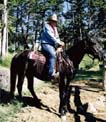
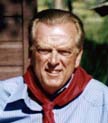
Hi. I’m Ben Benton from Flagstaff, Arizona. I believe that you will enjoy my daily journal from Yellowstone National Park during the summer of 1999. I left downtown Flagstaff with my saddle and duffel in early July and lighted in the horse corral at Mammoth Hot Springs. My journal will continue through September 20th, unless the weather shuts us down earlier. You’ll read about adventures on the back country trails, Yellowstone history, people I meet, and anything else I can think of to write about. I’m the author of “National Park Employment Data,” a guide to working in national parks, which is available for purchase on my web site at www.gorp.com/nped/. I’ve been working in national parks and ski areas off and on for over twenty years. Because I want the data in my book to always be fresh, I continually test the concepts, employers, and tips that I provide. Right now, I’m working for Amfac Parks and Resorts. They are a top notch concession company because they place employee training, morale, and amenities first. |
 |
|
Previous 7/16 |
Tuesday, 8-17-99Today, from 8:00 A.M. to 5:00 P.M., I studied Wilderness First Aid. It was taught by Bret DeYoung of Amfac’s Risk Management Department. With a Cellular One phone in my pocket and four cellular towers covering most of Yellowstone, it’s easy to say that wilderness first aid means to dial 911 and order a helicopter. But it’s not that simple. Much of the information in the book and in the course is quite different from urban first aid. In the wilderness — even on the Mammoth Hot Springs horse trail — the nearest “definitive medical care” is more than an hour away. Definitive medical care is not defined in the manual, but probably means a full-service hospital. In that case, Bozeman, Montana, would be the closest. Some of the procedures are advanced and shouldn’t be used without additional training, but they are in the book just the same. Wranglers are required to take the course because, along with park rangers and emergency medical personnel, we have a “duty to act.” On the other hand, bystanders, by law, are never under any obligation to aid a stranger. Their decision to help in an emergency is a moral one. In urban first aid, the first person to give aid need only assess the scene, call for help, and stabilize the victims for a few minutes. In the wilderness, fractured bones have to be realigned and splinted; wounds have to be cleaned, dressed, and bandaged; and victim movement and evacuation has to be organized. If you get the chance to take a Wilderness First Aid class,
do it. You won’t regret it.  |
Previous 8/1 |
|