 |
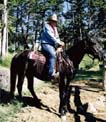
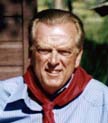
Hi. I’m Ben Benton from Flagstaff, Arizona. I believe that you will enjoy my daily journal from Yellowstone National Park during the summer of 1999. I left downtown Flagstaff with my saddle and duffel in early July and lighted in the horse corral at Mammoth Hot Springs. My journal will continue through September 20th, unless the weather shuts us down earlier. You’ll read about adventures on the back country trails, Yellowstone history, people I meet, and anything else I can think of to write about. I’m the author of “National Park Employment Data,” a guide to working in national parks, which is available for purchase on my web site at www.gorp.com/nped/. I’ve been working in national parks and ski areas off and on for over twenty years. Because I want the data in my book to always be fresh, I continually test the concepts, employers, and tips that I provide. Right now, I’m working for Amfac Parks and Resorts. They are a top notch concession company because they place employee training, morale, and amenities first. |
 |
|
Previous |
Monday, 7-26-99The Fires of Yellowstone in 1988“In the so-called age of ecology we have acquired a veneer of enlightenment that allows us to feel good about our awareness of nature. But scratch through the veneer and we still react with visceral, simplistic emotions, and we still try to apply our value system to natural processes that simply will not accept the application.” —Superintendent Robert Barbee, Yellowstone National Park Succinctly stated, that’s what happened in 1988 when wild fires raged through Yellowstone. A whopping 720,000 acres burned — 32.4 percent of the park’s acreage — giving Yellowstone more press coverage and notoriety than it’s ever received in 127 years of existence. One of the natural processes Superintendent Barbee refers to is the historical cycle of high elevation fires in Yellowstone. Going back to 1690 using tree rings, it is determined that small fires occurred every year, moderate fires every ten years or so, and extensive fires only occurred during a few key periods: from 1690 to 1709, when 19 percent burned; 1730 to 1749, when 15 percent burned; 1850 to 1869, when 9 percent burned; and 1988, when 26 percent of the high elevation burned. Stages of succession, hinging largely on lodgepole pine, bring the forest to a climax about every 250 to 300 years. As the 300-year-old lodgepoles begin to die, large gaps create an uneven canopy and a change in the species composition. By 1930 and 1940, Yellowstone high country had the greatest amount of old growth, flammable forest since the early 1700s. Fire suppression and “normal” weather from the 40s to the 80s delayed the inevitable until 1988, which turned out to be the driest summer since Dust Bowl days. As I ride the Mammoth horse trails, I point out to the dudes the fire scars on Bunson Peak. The burn pattern is erratic because the wind shifted often during the fire, often reaching 100 miles per hour. A forest fire creates it’s own weather system because of the extreme heat rising and meeting the surrounding cooler air. Regeneration is slow because the burn area is spruce. The Mammoth area didn’t get hit too badly in the fires of 1988 because our elevation is around 6,000 — much lower than the lodgepole forests that burned. Lodgepoles have serotinous cones which open and release their seeds only after they have been burned, so Lodgepoles regenerated in the spring of 1989 and are now ten years old, which translates to five feet in height. I worked in Yellowstone twenty years ago and didn’t return
until this year. I hardly notice the burn areas. When I do,
I see not the scarred logs, but the vast grasses and wild flowers
which host an even larger ecosystem than the old closed canopy
forest did. In the grand scheme of things, in the big picture,
the fires of 1988 were just a blip on the radar screen. |
|
|