 |
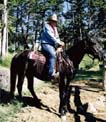
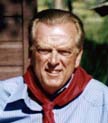
Hi. I’m Ben Benton from Flagstaff, Arizona. I believe that you will enjoy my daily journal from Yellowstone National Park during the summer of 1999. I left downtown Flagstaff with my saddle and duffel in early July and lighted in the horse corral at Mammoth Hot Springs. My journal will continue through September 20th, unless the weather shuts us down earlier. You’ll read about adventures on the back country trails, Yellowstone history, people I meet, and anything else I can think of to write about. I’m the author of “National Park Employment Data,” a guide to working in national parks, which is available for purchase on my web site at www.gorp.com. I’ve been working in national parks and ski areas off and on for over twenty years. Because I want the data in my book to always be fresh, I continually test the concepts, employers, and tips that I provide. Right now, I’m working for Amfac Parks and Resorts. They are a top notch concession company because they place employee training, morale, and amenities first. |
 |
|
Previous |
Sunday, 7-25-99The U.S. Army literally ran Yellowstone Park from 1886 to 1917. It became clear that the park superintendents from the park’s inception in 1872 to 1886, with neither adequate laws nor funds, could manage or protect the resources. Next door to my dorm is an old rock building with the following inscription over the front door: United States Engineer Office. It was built in 1903 and housed the Army Corps of Engineers, who took on the task of continuing the road building projects started by Superintendent Norris in 1878. The first roads were crude wagon trails. The Corps created the world’s first standardized road system of any size. They built 400 miles of roads and created the famous Figure 8 pattern with junctions every 14 to 20 miles. Today, that’s a drive of a few minutes. When created, that was a day’s journey (with frequent stops to rubberneck). The shortest tour was five days and most were ten. The Wakefield Stages traveled at roughly 6 miles per hour and riders often had to get out and walk short distances on steep downgrades. Stage drivers were also the tour guides, who told tall tales and worked for tips. They also swore like the devil but tried to keep it down in the presence of tourists. Each driver was issued a ditty bag with a curry comb and brush for the team, a bar of Castile soap, a can of axle grease, a hatchet, nails to fix the brake shoes, an 8-ounce bottle of potassium permanganate crystals for doctoring horses, and a bar of Rising Sun stove polish for drying up open sores on the horses. Drivers would shave the polish from the bar to make a black powder that was applied to the sore. Just as every livelihood has jargon, the early employees in
Yellowstone had colorful job titles. The barn men were called
“barn dogs,” waitresses were “heavers,” dishwashers
were “pearl divers,” and chambermaids were “admirals,”
because they were thought to have one arm longer than the other
from reaching under beds for vessels (the admiral from having
saluted his way to the top). The drivers’ mess hall was
“Mulligan’s Dump,” and the waitress there was
the “Queen of the Mulligan.” Tourists in the stagecoaches
were “dudes,” a handle still given inexperienced horse
and mule riders on vacation. Stage drivers were called “savages,”
a term that has also survived and come to generally mean any
employee in Yellowstone now. |
|
|