 |
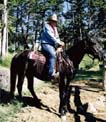
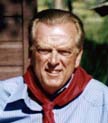
Hi. I’m Ben Benton from Flagstaff, Arizona. I believe that you will enjoy my daily journal from Yellowstone National Park during the summer of 1999. I left downtown Flagstaff with my saddle and duffel in early July and lighted in the horse corral at Mammoth Hot Springs. My journal will continue through September 20th, unless the weather shuts us down earlier. You’ll read about adventures on the back country trails, Yellowstone history, people I meet, and anything else I can think of to write about. I’m the author of “National Park Employment Data,” a guide to working in national parks, which is available for purchase on my web site at www.gorp.com. I’ve been working in national parks and ski areas off and on for over twenty years. Because I want the data in my book to always be fresh, I continually test the concepts, employers, and tips that I provide. Right now, I’m working for Amfac Parks and Resorts. They are a top notch concession company because they place employee training, morale, and amenities first. |
 |
|
Previous |
Wednesday, 7-21-99Tonight I’m sitting in the Map Room off the main lobby of the Mammoth Hot Springs Hotel. It’s eight miles north of Gardiner, Montana, and a quarter mile south of the Mammoth Hot Springs Horse Corral. There’s a gentleman playing the grand piano from 5:00 until 8:00 P.M. I can close my eyes and pretend that it’s one hundred years ago. The first hotel in Yellowstone, a crude wooden shack, was build a few hundred yards from here in 1871. The hotel standing today, at least a few parts of it, were built in 1911 and faced the military parade ground across the street, since the first construction in Yellowstone was “Fort Yellowstone.” After exploration trips in 1870 and 1871 to confirm or refute the unbelievable stories that trappers told of steaming geysers, Congress created Yellowstone in 1872. I didn’t mention stories of grizzlies, moose, and trout-filled lakes, because there was nothing unusual about that anywhere in the United States in the early part of the 19th Century. It was really the thermal activity that saved this fascinating area for generations to come. In 1883, President Chester A. Arthur made an appearance “on the second floor of the hotel around thge lobby that was open to the roof.” The National Hotel, as it was named, was designed by architect L. F. Buffington, father of the modern skyscraper. The massive wood structure was painted green with a red roof, giving it an “air of discomfort” according to one guest, since the surrounding landscape is dominated by greys and browns. Not to be outdone, Yellowstone’s Lake Hotel, which I heard is the largest remaining wood frame structure in the United States, is painted bright yellow. When I worked at West Thumb twenty years ago, they used to say that the Lake Hotel is so large that they never stop painting it. When the crew gets to the end, they start over. There are nine hotels in Yellowstone. The Snow Lodge, Old Faithful Inn, and Old Faithful Lodge are all at, you guessed it, Old Faithful. The Inn is truly an historic building — the world’s largest A-frame. You have to see it to believe it. There are also hotels and lodges at Lake, Canyon, Grants Village and Mammoth. There is quite a story about the original hotel at Canyon, built in 1911. Despite clear evidence that the site was unstable, construction began on Canyon Hotel in 1910 and continued throughout the winter in -40 degree temperatures. Horse-drawn sleighs carried materials from the railhead in Gardiner, Montana. Architect Robert Reamer said the distance around the new hotel was “exactly one mile.” The lounge was 200 feet long and 100 feet wide, with polished oak and birch, French plate glass, pillared porches, and a stage for the orchestra. There were thousands of rugs, cushioned wicker chairs, 2000 electric lights, writing desks, and tea tables. Along came 1956 and the National Park Service embarked upon “Mission 66,” a plan to improve visitor facilities. Since Canyon Hotel was on the brink of the Upper Falls parking area, plans were made for a new Canyon Village. Yellowstone Park Company was required (against their wishes) to build the new $2.5 million Canyon Lodge, which sent them into debt, leaving the magnificent Canyon Hotel in need of extensive and costly repairs just two years later. Since guests preferred the old hotel, the new facility went empty, causing even greater financial problems. The only solution was to close the Canyon Hotel and sell it to wreckers for $25 (a formality) who began dismantling it. But it burned to the ground in the summer of 1960, ending the legacy of the largest structure ever to stand in Yellowstone National Park. It’s nearly 8:00 P.M. and there’s a local talent
show in the employee recreation hall I want to see. See you later. |
|
|