 |
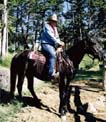
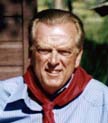
Hi. I’m Ben Benton from Flagstaff, Arizona. I believe that you will enjoy my daily journal from Yellowstone National Park during the summer of 1999. I left downtown Flagstaff with my saddle and duffel in early July and lighted in the horse corral at Mammoth Hot Springs. My journal will continue through September 20th, unless the weather shuts us down earlier. You’ll read about adventures on the back country trails, Yellowstone history, people I meet, and anything else I can think of to write about. I’m the author of “National Park Employment Data,” a guide to working in national parks, which is available for purchase on my web site at www.gorp.com/nped/. I’ve been working in national parks and ski areas off and on for over twenty years. Because I want the data in my book to always be fresh, I continually test the concepts, employers, and tips that I provide. Right now, I’m working for Amfac Parks and Resorts. They are a top notch concession company because they place employee training, morale, and amenities first. |
 |
|
Previous 7/16 |
Thursday, 8-5-99Oh, give me a home where the buffalo roam, It amazes me how close the tourists get to the animals. No amount of warning seems to work. I toured the “Where the Buffalo Roam” exhibit in the Visitor Center at Canyon. There’s a continuous video playing which splices together three bison gorings from around 1992. Actually it’s hard to tell if the three different persons hit by the bison were gored or if they were just tossed. The head of a bison is over 200 pounds and has horns, but the surface that hits an individual is probably best compared to the front of a car. The hump over the shoulders of a bison is a huge muscle that enables it to hold its head up. In each of the three segments, a touron (tourist moron) is getting closer and closer, or holding a camera and encouraging a family member to get closer. Suddenly the bison paws the ground and charges at a speed three times what a person can run. When an elk jam (an elk-caused traffic jam) forms somewhere in the park, rangers try to arrive quickly to keep people back. I see it several times a week on the lawn of my dorm across the street from the Post Office and Visitor Center. Back to the buffalo exhibit. Do you know the difference between a buffalo and a bison? The correct term is bison and the species name is Bison bison. The term buffalo was used in the nineteenth century thinking it is related to the water buffalo of Asia. It is not. Tens of millions of bison once roamed North America in great herds as far as the eye could see. By 1902 only 23 wild bison were counted in Yellowstone’s Pelican Valley. In the 1930s bison were bred and ranched like cattle to restore the great symbol of America. By the 1960s Yellowstone’s bison population was finally allowed to increase and decrease in response to environmental conditions and the bison were truly wild again. In the winter of 1996-1997 the bison herd numbered about 3,500. Right now it is numbered at 2,500. A thousand bison have been slaughtered by Montana ranchers as they left the northern boundary of the park because nearly all bison have brucellosis, a bacterium that can infect domestic cattle causing cows to spontaneously abort. Montana is currently designated “brucellosis-free” and doesn’t want to lose its status. Ironically, bison are thought to have acquired brucellosis from domestic cattle.  |
Previous |
|