 |
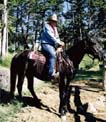
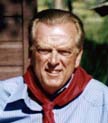
Hi. I’m Ben Benton from Flagstaff, Arizona. I believe that you will enjoy my daily journal from Yellowstone National Park during the summer of 1999. I left downtown Flagstaff with my saddle and duffel in early July and lighted in the horse corral at Mammoth Hot Springs. My journal will continue through September 20th, unless the weather shuts us down earlier. You’ll read about adventures on the back country trails, Yellowstone history, people I meet, and anything else I can think of to write about. I’m the author of “National Park Employment Data,” a guide to working in national parks, which is available for purchase on my web site at www.gorp.com/nped/. I’ve been working in national parks and ski areas off and on for over twenty years. Because I want the data in my book to always be fresh, I continually test the concepts, employers, and tips that I provide. Right now, I’m working for Amfac Parks and Resorts. They are a top notch concession company because they place employee training, morale, and amenities first. |
 |
|
Previous 7/16 |
Saturday, 8-7-99The trail is still wet and slick so no horse rides went out again today. I spent the morning repairing fences and cleaning up around the barn. As I fixed the fence in the wrangler horse corral, I looked around and began to really appreciate this area of Yellowstone. The corral is on a sloping meadow between the road to Norris and the road to Roosevelt. Just to the west of the corral is Yellowstone’s first cemetery, a military cemetery called Fort Yellowstone Army Cemetery. About 58 people were buried there, some military and some civilians. It was in use from 1888 to 1925. When the Army left Yellowstone in 1918, they disinterred the 20 soldiers buried there and transferred them to Custer National Cemetery at Little Big Horn Battlefield National Monument. The Army maintains fastidious records of military cemeteries and this is no exception. There is a touching story of three people buried there. Sarah Clark, daughter of Eugene and Jeannett Clark died in infancy and was buried there in 1905. Her father committed suicide a year later and was buried there. Many years later the Park Service received word from San Francisco that Jeannett died and asked in her will that she be buried next to her husband and daughter. By special dispensation the Park Service honored her request and she was buried there in May 1957. To the south from the corral is Bunsen Peak, named for the Bunsen of Bunsen Burner fame. He studied geysers in Iceland and posited the first plausible theory of why and how geysers erupt. To the east from the corral is Mt. Everts, named for the old guy with the Washburn Expedition in 1870 who got lost and survived on elk thistle for 37 days. To the north of the corral is Sheep Mountain, which is outside the park, so it is 15 or 20 miles away. The park entrance is five miles north of Mammoth, then the town of Gardiner, then Sheep Mountain. Below the peak is Capitol Hill, a spot where the first superintendent of Yellowstone, Philetus Norris, built a tiny fort. It was his office from 1877 until 1882 and a place where he would feel safe sleeping at night since the Indian wars in the west were still in progress. He decided to place the park headquarters in Mammoth Hot Springs, a decision that all subsequent superintendents have agreed with, because it stays a little warmer and is easier to get to in the winter. To the west is Terrace Mountain and Snow Pass, where J.C. and I went riding last week. I think the one-hour trail at our corral is the prettiest
trail in Yellowstone, and I’ve seen a lot of Yellowstone
trails. We see wildlife often, wild flowers everyday, and grand
vistas on the four compass points I’ve described above.  |
Previous |
|