 |
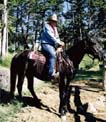
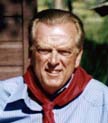
Hi. I’m Ben Benton from Flagstaff, Arizona. I believe that you will enjoy my daily journal from Yellowstone National Park during the summer of 1999. I left downtown Flagstaff with my saddle and duffel in early July and lighted in the horse corral at Mammoth Hot Springs. My journal will continue through September 20th, unless the weather shuts us down earlier. You’ll read about adventures on the back country trails, Yellowstone history, people I meet, and anything else I can think of to write about. I’m the author of “National Park Employment Data,” a guide to working in national parks, which is available for purchase on my web site at www.gorp.com/nped/. I’ve been working in national parks and ski areas off and on for over twenty years. Because I want the data in my book to always be fresh, I continually test the concepts, employers, and tips that I provide. Right now, I’m working for Amfac Parks and Resorts. They are a top notch concession company because they place employee training, morale, and amenities first. |
 |
|
Previous 7/16 |
Sunday, 8-15-99Yellowstone National Park is 127 years old. It was America’s first national park, signed into being by President Ulysses S. Grant on March 1, 1872. The park officially begins at the confluence of the Yellowstone and Gardner Rivers about five miles north of here. That’s two and one half miles north of the Wyoming state line, which accounts for the unusual boundary that includes a sliver of Montana and Idaho. The states were only territories in those days, so no confidence was placed in political lines. The testimony before Congress relied on the accounts of the Washburn Expedition which explored Yellowstone in the summers of 1870 and 1871. It was the geysers and hot springs that convinced Congress to create the park as a “pleasuring ground.” Natural resources were thought to be limitless and conservation was considered wasteful. Wildlife was everywhere in 1872. The opposition in Congress thought that these 3,300 square miles should be opened to settlement; only upon being convinced that this was uninhabitable did they cave in. Yellowstone is a “U.N. Biosphere Reserve,” whatever that means, and a “World Heritage Site.” A sign in the breezeway of the Norris Geyser Basin Museum reads “Yellowstone has been designated a U.S. Biosphere Reserve, a World Heritage Site, and is one of the largest national parks in the lower 48 states.” So far, that is the only reference I have seen anywhere in the park about the biosphere designation. The reference to “U.S. Biosphere” instead of “U.N. Biosphere” could be a typo on the sign or it could be to deflect criticism. I remember hearing about Yellowstone being “given away by Clinton to the U.N.” Supposedly, there were signs at every entrance announcing the U.N. designation. I asked Leslie Quinn, Amfac’s Information Specialist and Historian, if he had heard about the U.N. initiative. He said the federal government and the Department of Interior still very much run the park and the designation was simply acknowledged by Clinton. If there were signs at the entrance stations announcing the
designation, they have prudently been taken down.  |
Previous |
|