 |
|
|
|
|
|
|
|
|
|
|
|
|
|
|
|
|
|
|
|
|
|
|
|
|
|
|
|
|
|
|
|
|
|
|
|
|
|
|
|
|
|
|
|
|
|
|
|
|
|
|
|
|
|
|
|
|
|
|
|
|
|
|
|
|
|
|
Gettysburg (continued) |
|
|
|
For a closer look at each picture, simply click on it. Then click the "Back" button at the top left of your browser screen to return to this page. Enjoy! |
|
|
|
 |
|
 |
|
|
|
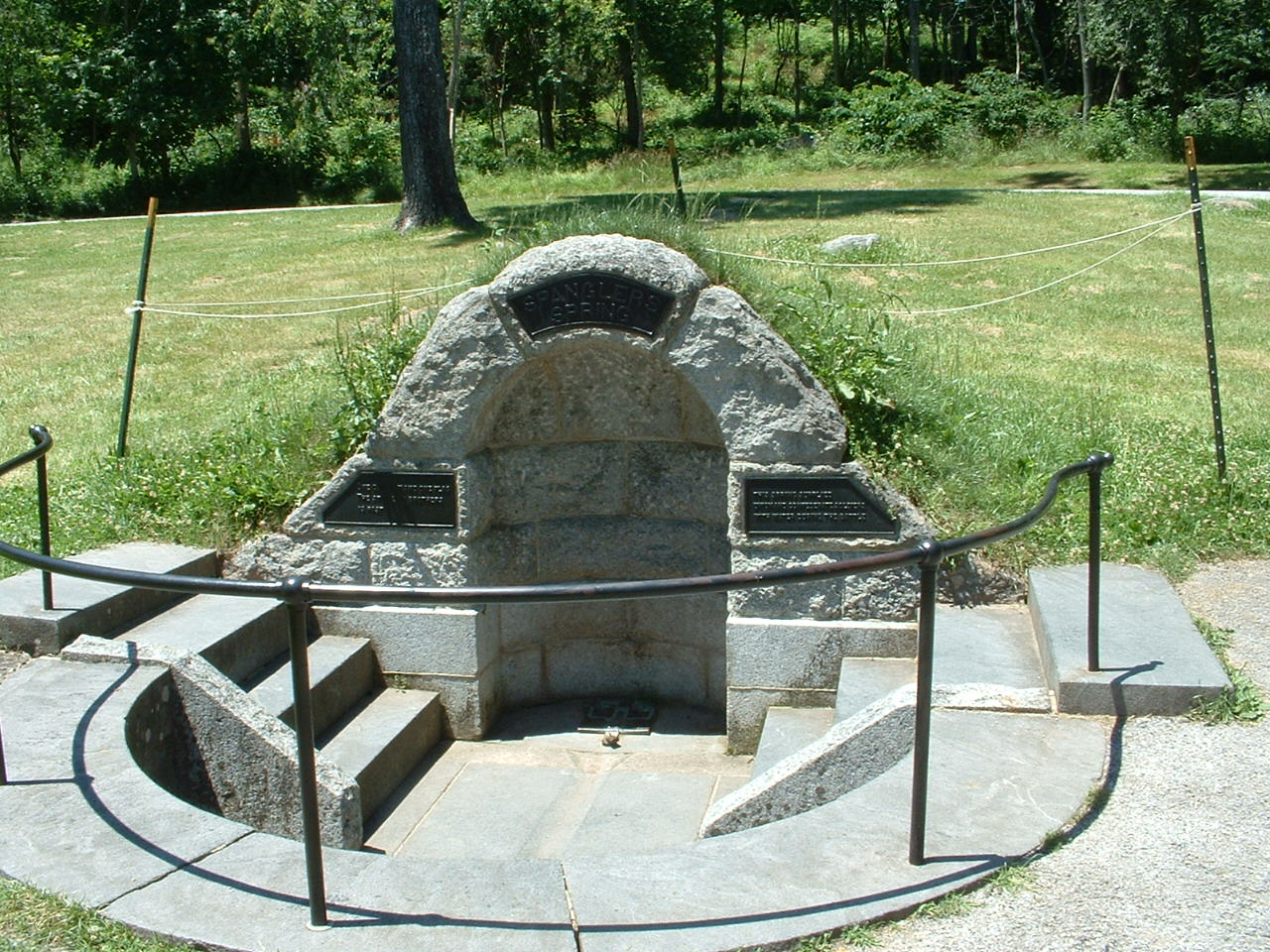
Spangler's Spring. Located at the southern end of Culp's Hill, Spangler's Spring is adjacent to one of the few open pasture areas in this part of the battlefield. This natural spring provided a steady supply of clear water to refresh farmer and animal alike for many years prior to the battle. With throats parched after their long trek to Gettysburg, Union soldiers of the Twelfth Army Corps relished the water of Spangler's Spring as they gathered on the wooded slopes of Culp's Hill on July 2. These thirsty troops constructed log and earthen barricades on the hillside before they were marched away to support the crumbling Union left flank at the Peach Orchard. Later that same night, the Confederates of Brig. General "Maryland" Steuart's Brigade occupied those abandoned breastworks and also used the spring to fill their canteens. The Union counterattack early the following morning placed the spring in no man's land. Because it lay in front of the reversed line, the thirsty southerners could not get back to it without running the risk of being shot by Union infantrymen who lay not more that 50 feet away. The spring site was reoccupied by Union troops late on the morning of July 3rd, finally denying it's use to the southerners. The fame of Spangler's Spring and its legend (that truces were called so that men from both sides could get water) eventually led to damage from so many visitors who trampled its banks and destroyed the stone covers. To preserve the spring, the United States War Department constructed a permanent stone and concrete cover over it in 1895, with a small metal trap door to gain access to its waters. A metal dipper was provided for visitors to quench their thirst as the soldiers had done years before. This practice was halted soon after administration of the battlefield was assigned to the National Park Service. Due to the possibility of ground water contamination, the waters of Spangler's Spring are no longer available for public consumption. (National Park Service) |
|
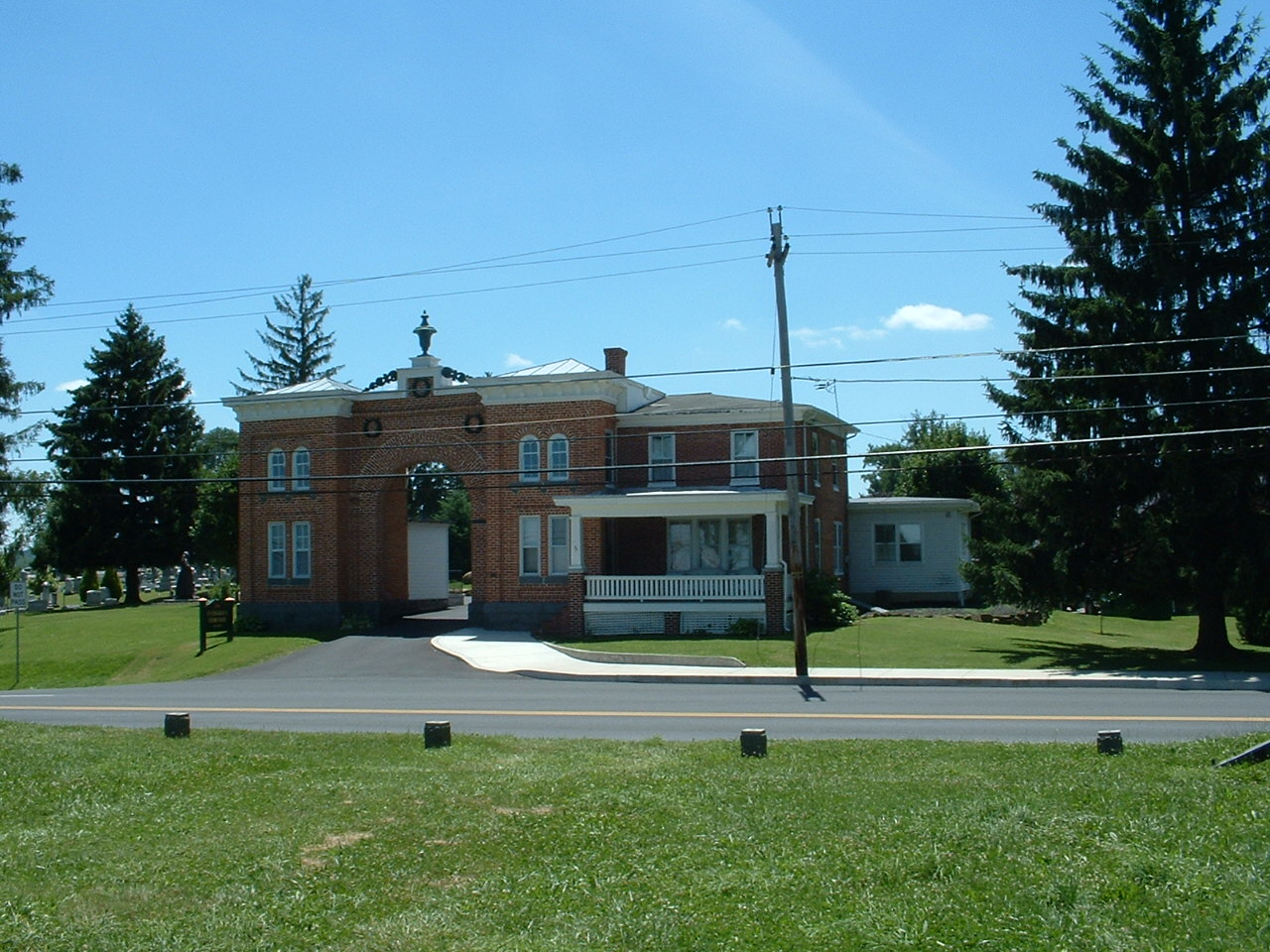
Evergreen Cemetery, site of the Gettysburg Address. It was a bright, crisp Pennsylvania morning in November, 1863 when Abraham Lincoln mounted a tiny horse and proceeded for the Diamond in the center of Gettysburg, down Baltimore Street, to the Evergreen Cemetery. Lincoln on horseback, with long legs dangling and coat tails flopping, was far from an inspiring sight. But whatever sense of the comical may have made itself felt, it disappeared completely when the first strong words of his address rolled out on the still fall air. "I was so close to the President," Mrs. John T. Myers describes the moment, "and heard all of the address, but it seemed short. Then there was an impressive silence, like our Menallen Friends' Meeting. There was no applause when he stopped speaking." Few knew it at the time, but Lincoln had just uttered what would become the most revered speech in American history. Four months earlier, shortly after the Battle of Gettysburg, Pennsylvania Governor Andrew Curtin asked David Wills of Gettysburg to oversee the cleanup of the battle. Rather than simply hastily burying the dead where they lay, Wills acquired 17 acres of land for a national cemetery so that permanent resting places would be available. Burial, or more accurately reburial, began not long after. On September 23, wishing to formally dedicate the cemetery, Wills invited the highly respected Edward Everett to give a speech. On November 2, 1863, almost as an afterthought, Wills invited President Lincoln to also make a "few appropriate remarks." (There is speculation that Lincoln was actually asked informally about a month earlier). Lincoln accepted the invitation, and gave a speech that lasted only a few minutes, as opposed to Everett's two-hour oration. Everett later wrote Lincoln saying "I should be glad if I could flatter myself that I came as near to the central idea of the occasion, in two hours, as you did in two minutes." Of the five known manuscript copies of the Gettysburg Address, two are held by the Library of Congress. President Lincoln gave one of these to each of his two private secretaries, John Nicolay and John Hay. The copy on exhibit, which belonged to Nicolay, is often called the "first draft" because it is believed to be the earliest copy that exists. The "second draft" was given to John Hay. His descendants donated both it and the Nicolay copy to the Library of Congress in 1916. The other three copies were written by Lincoln for charitable purposes well after November 19. One copy was given to the other speaker that day, Edward Everett. It is housed at the Illinois State Historical Library at Springfield. A copy given to historian George Bancroft is at Cornell University. A fifth copy was made for Bancroft's stepson, Colonel Alexander Bliss. This is the copy presently kept in the Lincoln Room of the White House. (virtualgettysburg.com) |
|
|
|
|
 |
|
|
|
|
|
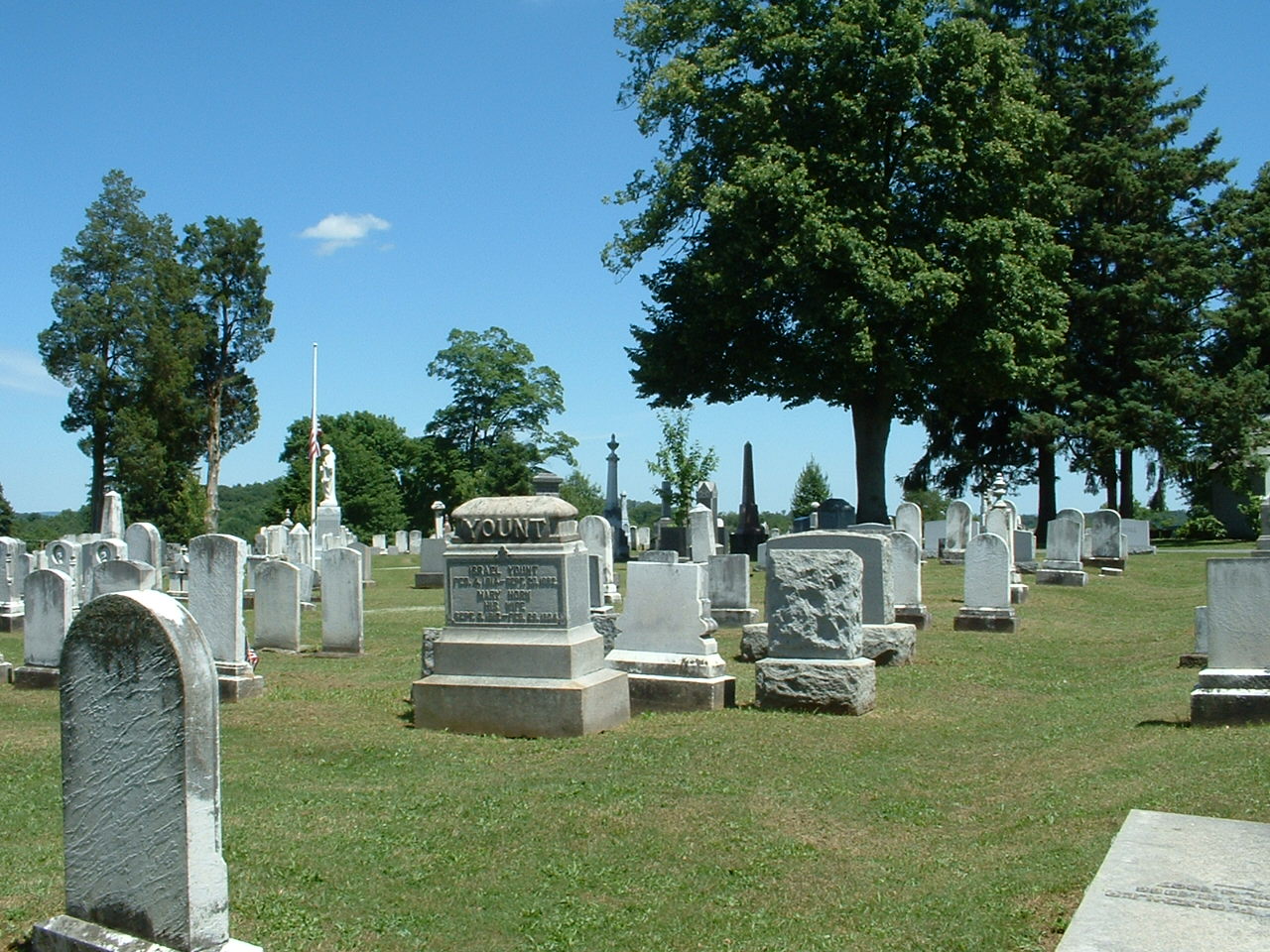
Evergreen Cemetery. The exact location from which Lincoln gave the Gettysburg Address has never been determined. The guides I talked to were all in agreement that it most likely was from the highest point in the cemetery, now occupied by the trees in the far right of this photo. There was only one photo taken of Lincoln that day and it gives us no clue of where the platform was from which he spoke. In the left of this picture is a grave with a large statue on top and a flagpole next to it. That is the Jenny Wade grave. See the next picture for a full description. |
|
|
|
|
|
|
 |
|
|
|
|
 |
|
|
|
|
|
|
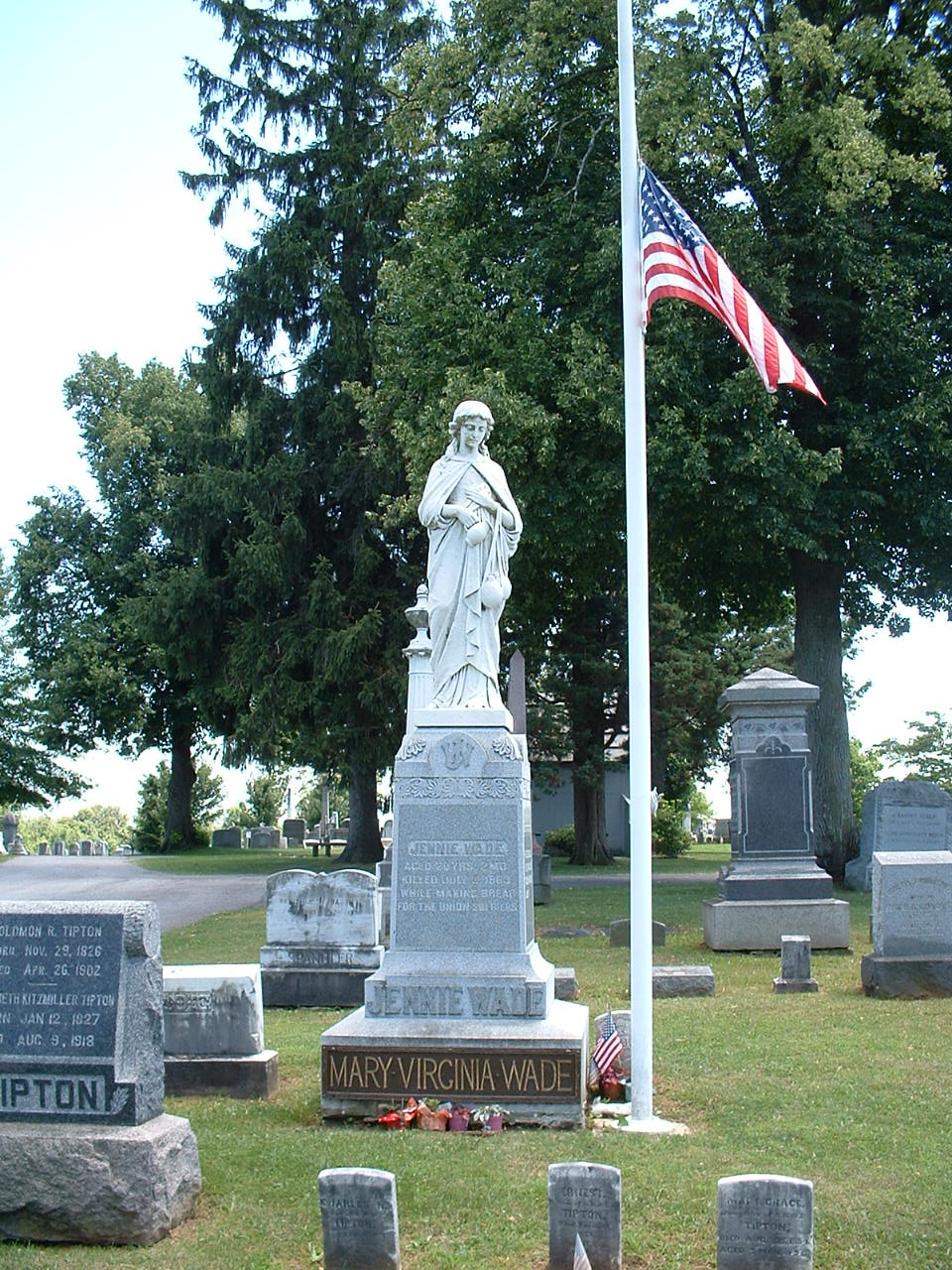
Jenny Wade grave. James McPherson: "Most residents of Gettysburg hid in their cellars to get out of the line of fire. One who did not was Mary Virginia Wade, known as Jenny, a comely twenty-year-old lass who was at her sister's house on Baltimore Street that day to help take care of her sister's newborn baby. Jenny Wade was engaged to Corporal Johnston Skelly of the Eighty-seventh Pennsylvania, which she knew was somewhere in Virginia. She too wanted to do her part for the war effort, so, despite warnings, she went to the kitchen that morning to bake biscuits for Union skirmishers. Suddenly, a bullet from a Confederate rifle smashed through two doors and lodged in Jenny's back. She died not knowing that a few days earlier her fiance had also died of a wound he received in the battle of Winchester on June 15th. Jenny Wade was the only civilian death in the battle of Gettysburg." (Note: The flag is at half staff due to the death of President Reagan. The Gettysburg Address most likely was delivered from the area where the trees are in the background.) |
|
|
|
|
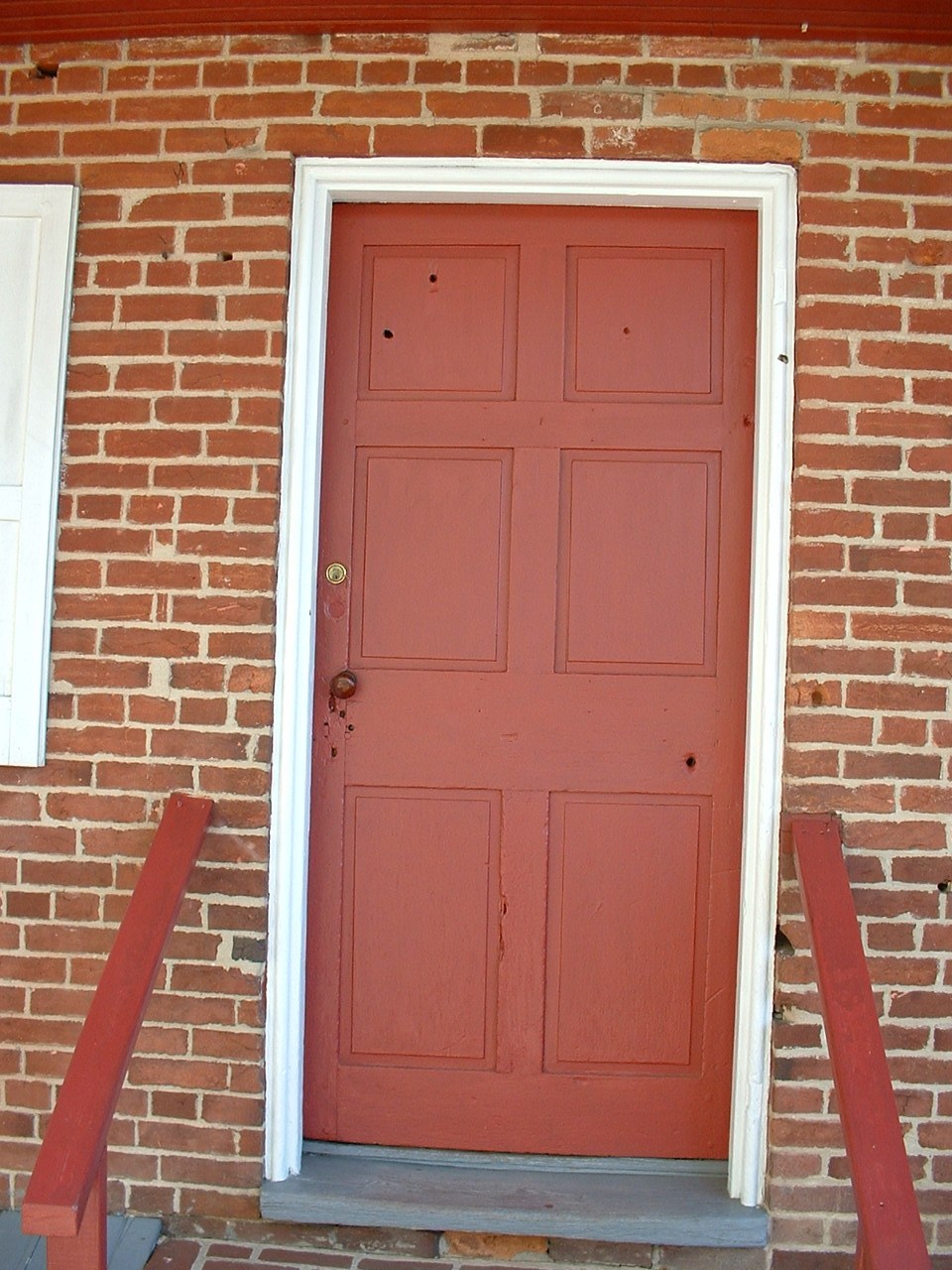
The door to Jenny Wade's sister's house. There are three bullet holes in the door. One of those was the bullet that passed through a second door and struck Jenny Wade, making her the only civilian casualty of the battle. |
|
|
|
|
|
 |
|
|
|
|
|
|
 |
|
|
|
|
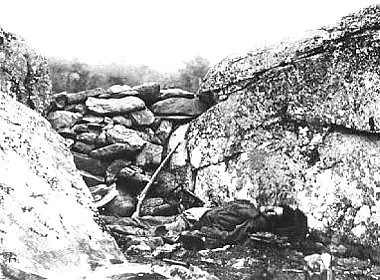
One of the most widely recognized and often published photographs on the subject of Gettysburg, this melancholy view of a dead Confederate youth laying behind a stone barricade at Devil's Den was taken on July 5 or 6, 1863 by photographer Alexander Gardner and two of his associates. Gardner later published the photograph in his "Photographic Sketchbook of the Civil War" accompanied by a lavish description of his discovery of the dead soldier who he described as a sharpshooter killed at his post. Gardner also speculated on the dead soldier's final moments in the sniper's nest, adding that he found his bleached bones still lying in the nest while on a later visit to the site. It was not until 1975 when Gettysburg: A Journey In Time by author-historian William Frassanito was published, that this apparent hoax by Gardner was uncovered. This scene was actually posed by Gardner and his associates who carried the corpse into this position and dressed up the scene with relics of war scattered about the area. A final touch was the rifle standing against the barricade, placed by Gardner who had used the weapon in previous photos. Gardner's assistants, James Gibson and his chief photographer Timothy O'Sullivan, took two photographs of the scene, the clearest of which is shown here. They then moved on to photograph other scenes in the adjacent "Slaughter Pen&", leaving the body in the sharpshooter's nest. Though this scene was contrived by Gardner and his men, it does not detract from the fact that this young soldier died on a battlefield far away from a home where his relatives and loved ones were possibly wondering at the very moment this picture was taken, whether he was alive and well or killed in battle. This soldier's identity has been lost in time, his youthful remains forever preserved in a photographer's image that has haunted historians and the curious for over a hundred and thirty five years. Yet, the use of his body as a photographer's prop should not detract from the tragedy of a life snuffed out in battle. The true facts of his death on the rocky slopes of Devil's Den are better known today, but cannot dim the feeling of loss Americans should feel when we gaze upon this scene and realize that he once had a name, a family, and a home. (National Park Service) |
|
|
|
|
|
|
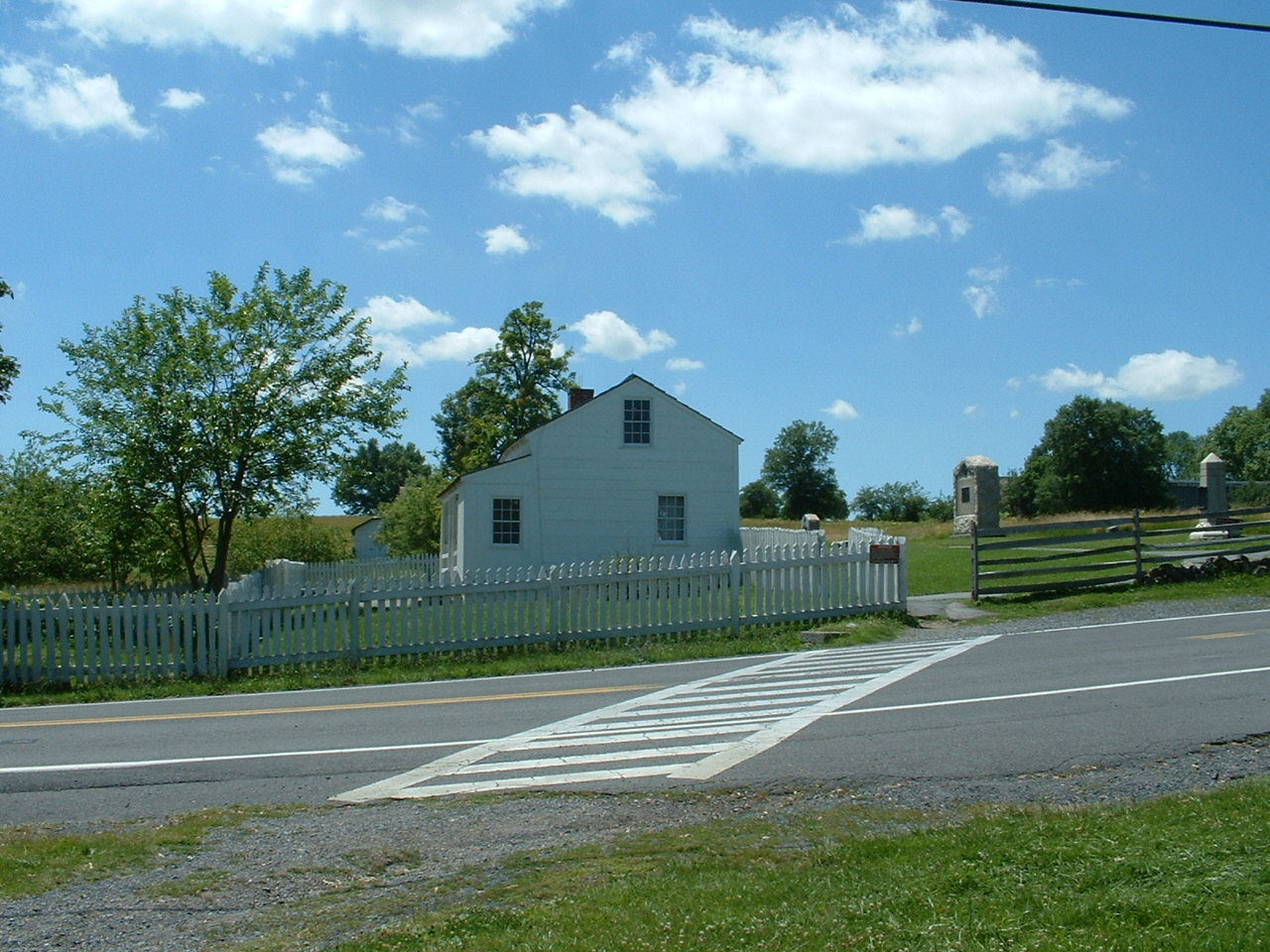
As the last shots of the day faded that night, a contingent of weary officers rode into the yard of Lydia Leister's home. Situated on the Taneytown Road behind Cemetery Ridge, this humble two-room house served as headquarters for the Army of the Potomac. A modest, wood frame building with a single fireplace, the widow Leister made her living by working a small farm that included a small log barn, orchard, and vegetable garden. By the evening of July 2, the widow's fences had been partially knocked over and the garden trampled by the passage of courier's horses. Leister's food stores had been raided by hungry staff officers and headquarters guards, and some of her furniture dragged into the yard for use as writing desks. Now her home was host to one of the most important meetings that would take place during the battle. (National Park Service) |
|
|
|
|
|
 |
|
|
|
|
|
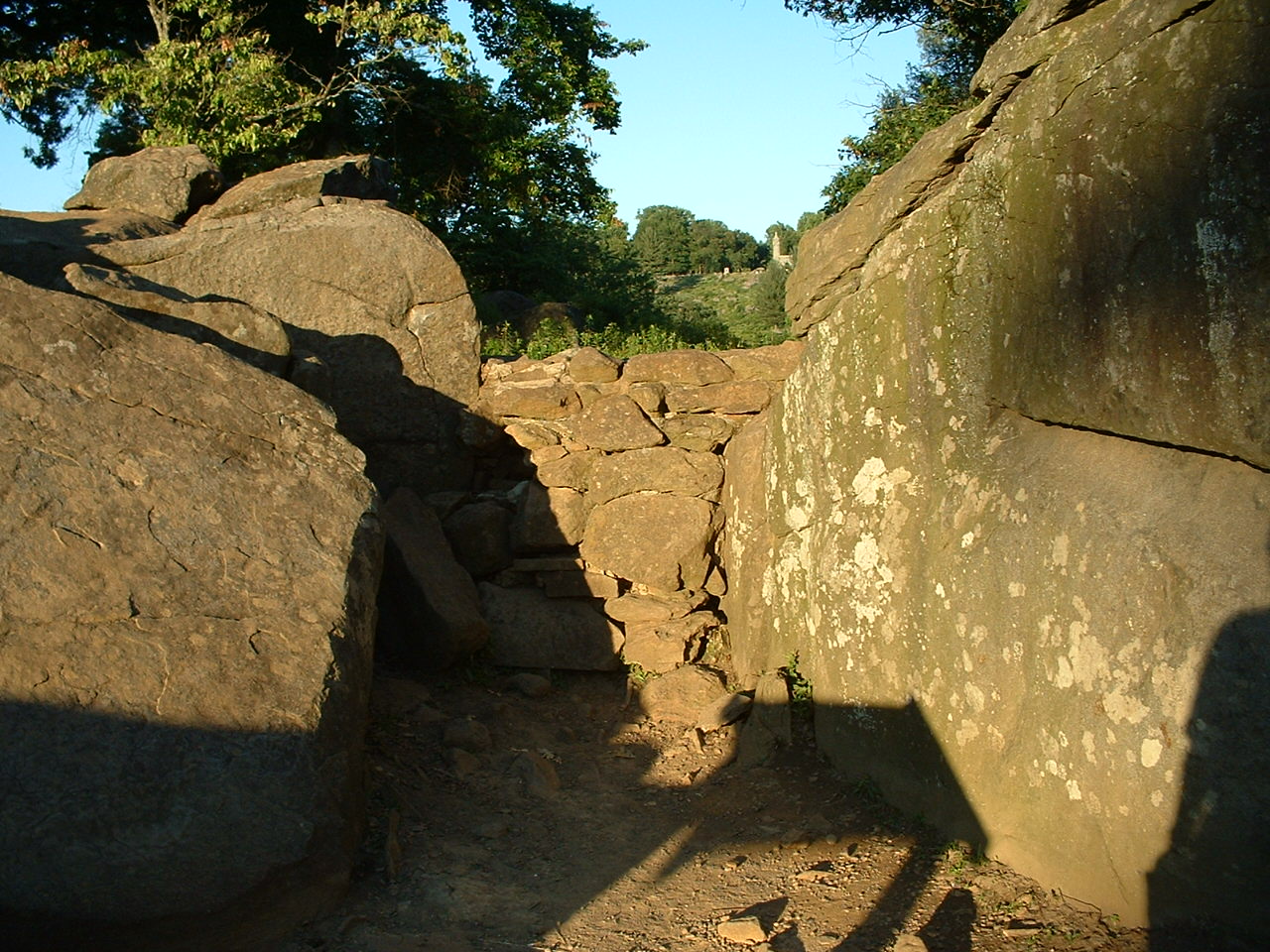
The scene, today, of Gardner's photo above left. |
|
|
|
|
|
This concludes our tour of the Gettysburg battlefield. I hope you enjoyed it and, possibly, learned something along the way. Be sure to click on the links below for tours of other battlefields. Thank you. |
|
|
|
E-mail me with your comments and suggestions! |
|
|
|
Be sure to sign the GuestBook by clicking here. |
|
|
|
Page 1 |
|
Page 2 |
|
Page 3 |
|
Page 4 |
|
Page 5 |
|
Page 6 |
|
Page 7 |
|
Page 8 |
|
Page 9 |
|
|
|
 |
|
|
|
Take the tour of another battlefield: Antietam Manassas |
|
|
|