
Click here to continue your tour!
|
|
|
|
|
|
|
|
|
|
|
|
|
|
|
|
|
|
|
|
|
|
|
|
|
|
|
|
|
|
|
|
|
|
|
|
|
|
|
|
|
|
| Gettysburg (continued) | |||||||||||||||||||||||||||||||||||||||||
| For a closer look at each picture, simply click on it. Then click the "Back" button at the top left of your browser screen to return to this page. Enjoy! | |||||||||||||||||||||||||||||||||||||||||
|
|
||||||||||||||||||||||||||||||||||||||||
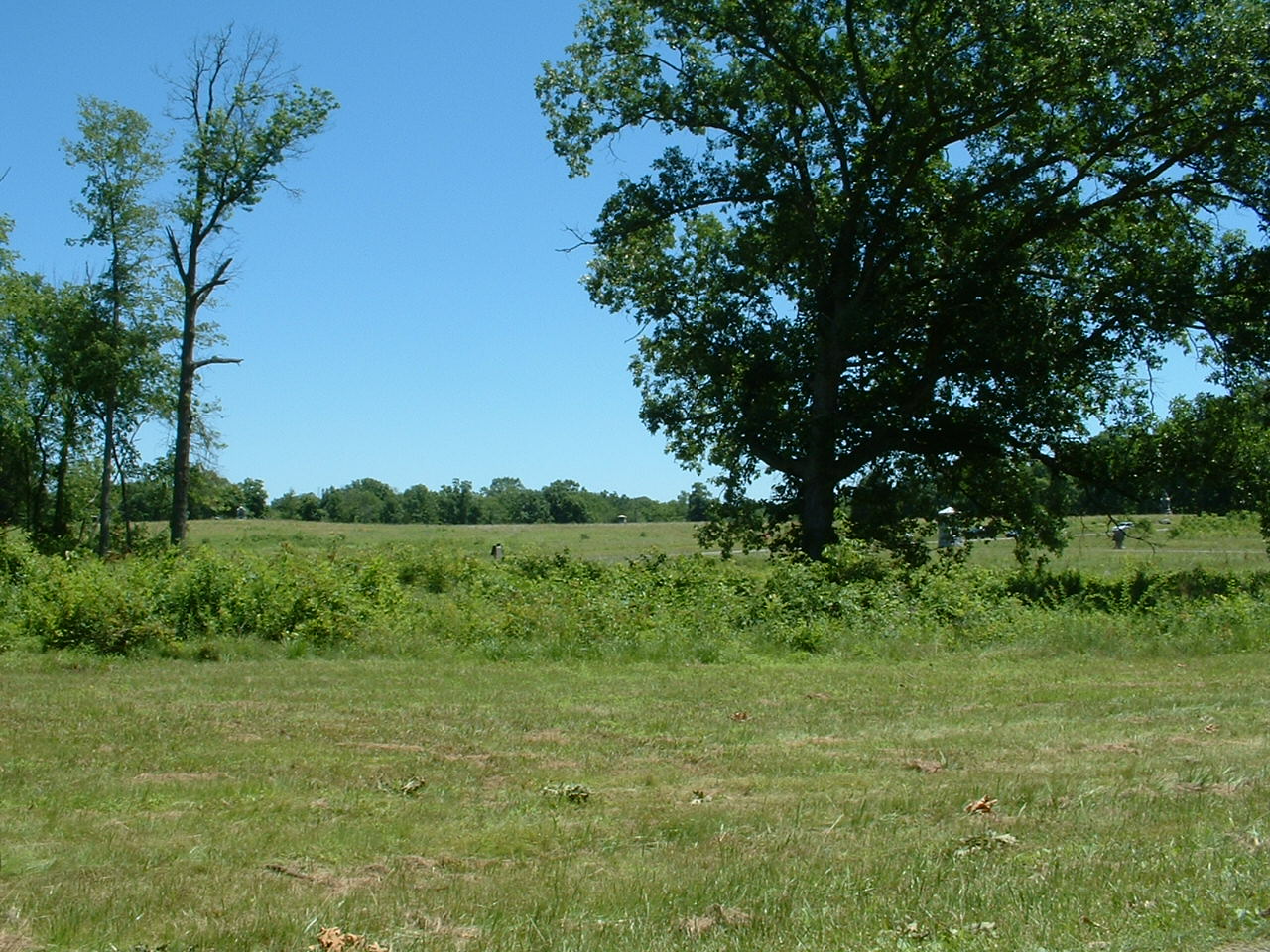
| The Wheatfield (right half). As the men of de Trobriand, Sweitzer, and Tilton's brigades came across the Wheatfield towards the protection of Trostle's woods, Winslow and his guns were busy firing away. Anderson's skirmishers were beginning to venture into the field itself, but the main body of Anderson's brigade stayed in the woods for protection from Winslow's rapid firing gunners and their case and solid shot. As Kershaw's regiment worked their way down the east slope of the Stony Hill, however, they were now able to put some well-placed fire on Winslow's guns. To avoid having his guns captured, Winslow limbered them up, using some stray horses he found from Smith's battery (positioned on top of Devil's Den and in the Plum Run Valley) to replace those horses of his that had been killed. As the men of the 17th Maine crossed the field and got to the Wheatfield road, they were met by General Birney, who was on the scene trying to correct things. Birney, according to Lt. Col. Merrill, rode in front of the regiment and ordered a charge upon the enemy as a delaying action. "With cheers for our gallant commander" the regiment charged into the Wheatfield and checked the advance of Anderson. The 115th Pennsylvania, which had been standing by Winslow's guns all this time, now withdrew as the men from Maine relieved them. (militaryhistoryonline.com) | The Wheatfield from the Confederate position. July 2nd, 5:30 p.m. The Rose Woods are behind you and the Stony Hill is to the left of the photo. The fighting in this area was intense and confusing. It started with Winslow's Union battery in the field and the 17th Maine positioned near this spot. Confederates under Anderson were repulsed, then Kershaw joined the battle and the Confederates overtook the field. A Union division under Caldwell retook the field. However, Confederates charged from the area of the Peach Orchard (left of photo) and pushed Caldwell to the east (right of photo). | ||||||||||||||||||||||||||||||||||||||||
|
|||||||||||||||||||||||||||||||||||||||||
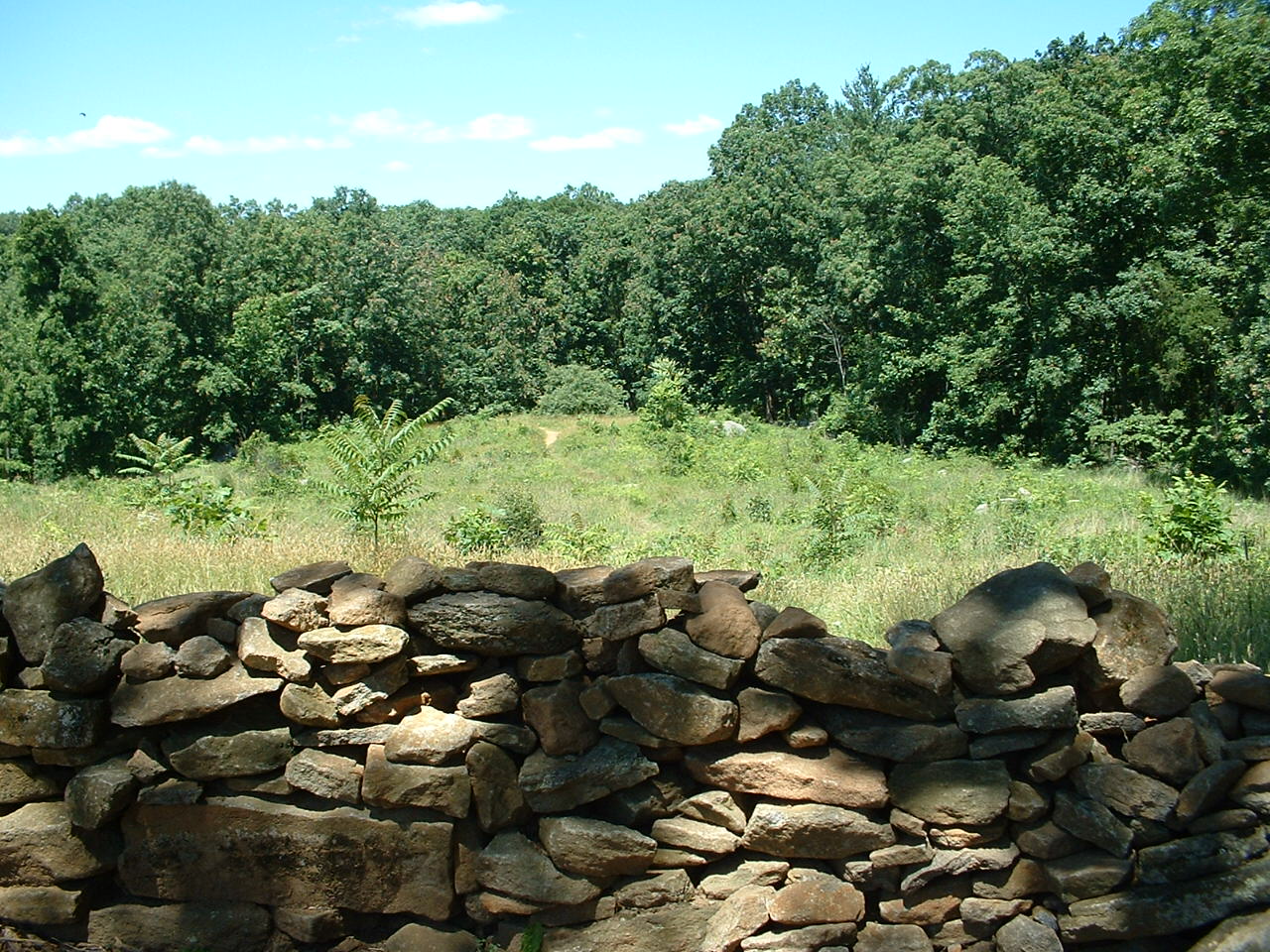
| The "Triangular Field". The field is too rocky to have been used for crop cultivation. It was probably a cattle or hog pen. Action here was at 5 p.m. on July 2nd. The 124th New York ("Orange Blossoms") fought off repeated attacks by the 1st Texas. Major James Cromwell of the Orange Blossoms thought the best way to stop the Confederates was by counterattacking. Sword in hand, Cromwell screamed, "Charge!" and the Orange Blossoms swept forward down the slope with bayonets fixed. They broke the Texans' line and forced them to within a hundred feet of the far end of the triangular field. Then the Texans turned and fired, killing or wounding about one-quarter of the men in the 124th, including Cromwell, who fell dead from his saddle. (Gettysburg: A Battlefield Guide) | |||||||||||||||||||||||||||||||||||||||||
|
|||||||||||||||||||||||||||||||||||||||||
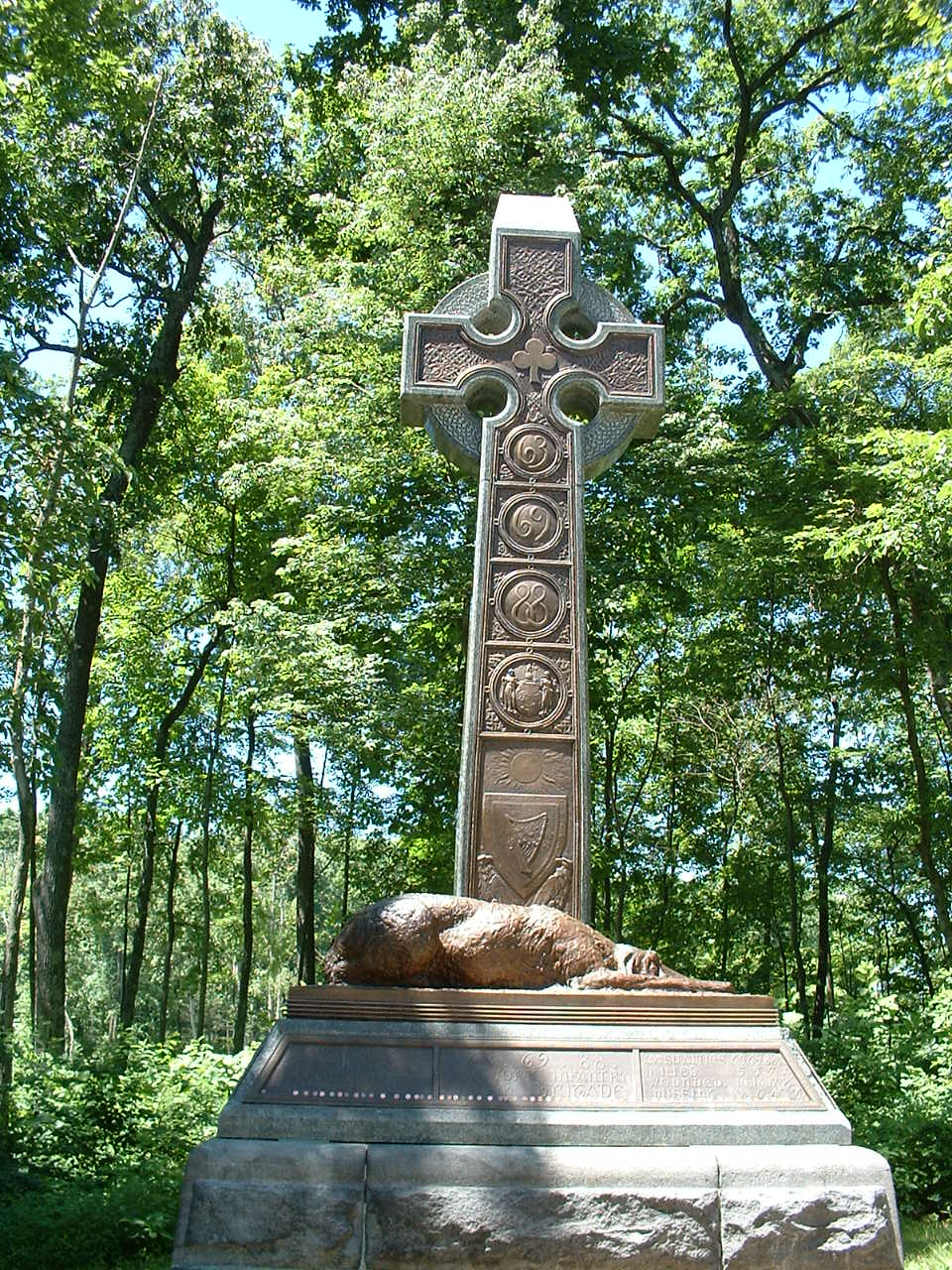
| The Irish Brigade monument at Gettysburg stands as a magnificent reminder that Irish emigrants have fought and died in America's wars, with courage and honor, throughout our history. Many believe that this polished granite and inset bronze monument, dedicated to the three New York regiments of the brigade, is the most beautiful on the field. Upon the Celtic Cross, representing faith and devotion, is engraved the 2nd Army Corp trefoil symbol, the three regiment numbers, the state seal of New York, and the Irish harp. At the base of the cross lies the sadly posed Irish Wolfhound, forever mourning his fallen master. "Apparition" depicts that reunion that never occurred for many brave soldiers of the Irish Brigade. (irishbrigadegiftshop.com) | |||||||||||||||||||||||||||||||||||||||||
|
|||||||||||||||||||||||||||||||||||||||||
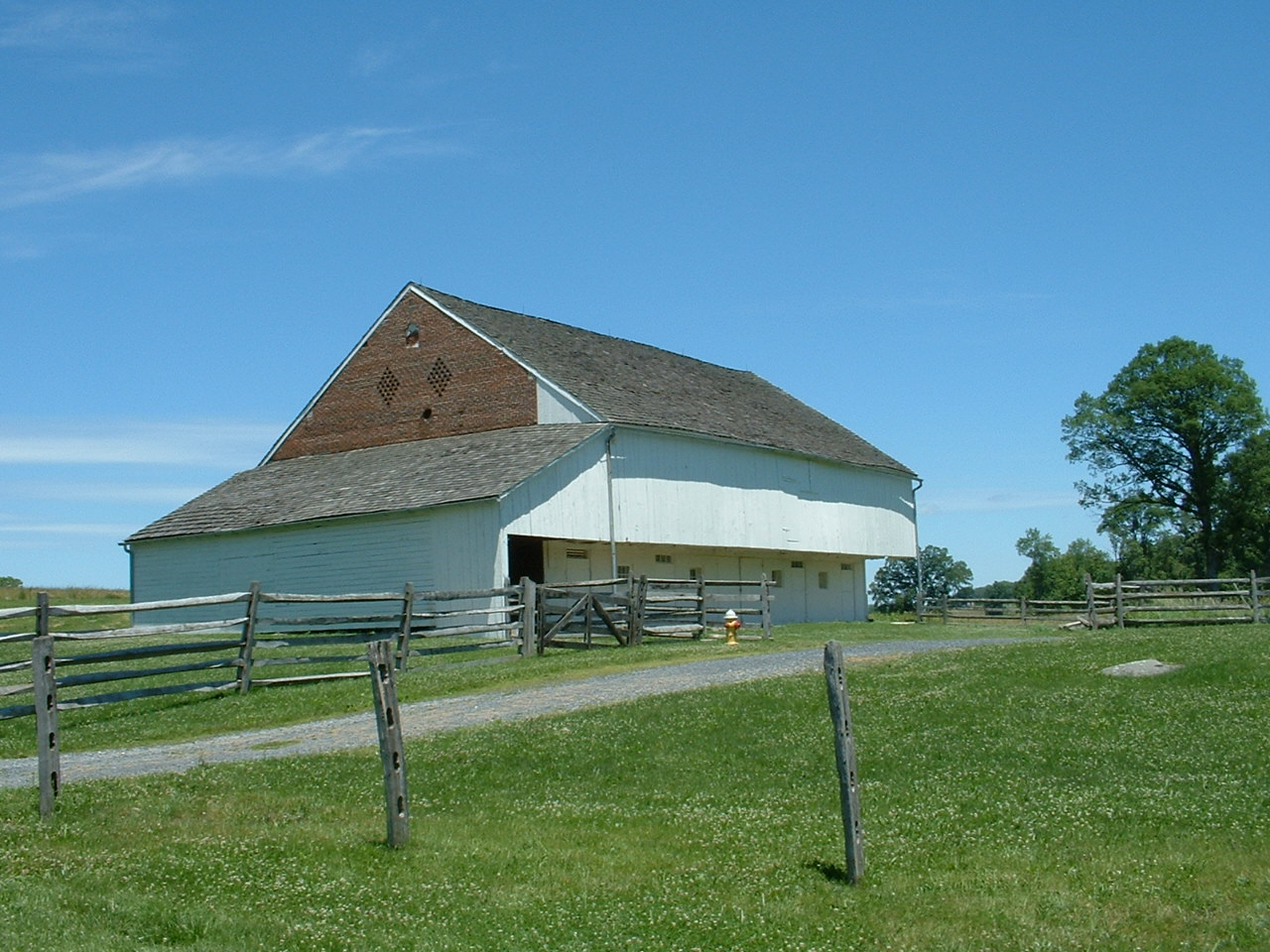
| The Trostle Farm. Notice the artillery shell holes at the top of the barn. After moving a part of his Third Corps out to the Peach Orchard from Cemetery Ridge, General Sickles established his headquarters in the yard of the house and waited for the arrival of General Meade while his staff officers helped themselves to the remains of the noon day meal left behind on the dining room table. General Sickles' advanced battle line stretched from Devil's Den to the Peach Orchard, and then northward on the Emmitsburg Road- a very wide area to cover and Sickles barely had enough troops to do so. Once the Confederate attack had begun at 4 o'clock and Meade ordered Sickles to keep his troops where they were so that they could be reenforced, the general remained in the Trostle yard where he passed orders to shore up the weaker parts of his line and hurry forward reinforcements from other commands as they arrived on the field. Confederate artillery zeroed in on Sickles' line and shots that missed the front fell around the headquarters group. Iron fragments from shell bursts clipped branches from the trees and rattled against the stone walls of the nearby barn as orderlies rushed to and fro. At the height of the battle, Sickles was mounted on his horse watching the battle when he seriously wounded by a Confederate shell. Pale and in shock, the general was helped down from his horse by aides who saw that one of Sickles' legs had been crushed by the shell. Placed on a stretcher and carried back to the Union rear in terrible pain, the daunting officer was not to be outdone. Sickles ordered his bearers to halt while he gathered his wits, propped himself up on his stretcher and asked one of his orderlies to light a cigar for him. Countless Union soldiers marching toward the sound of battle encountered the general on his stretcher, calmly smoking his cigar and saluting them with a wave of his hat as he was carried along the Baltimore Pike- an inspiring sight to those who about to go into battle. The shattered leg was removed by an army surgeon later that evening and General Sickles' career as a corps commander was over. (National Park Service) | |||||||||||||||||||||||||||||||||||||||||
|
|||||||||||||||||||||||||||||||||||||||||
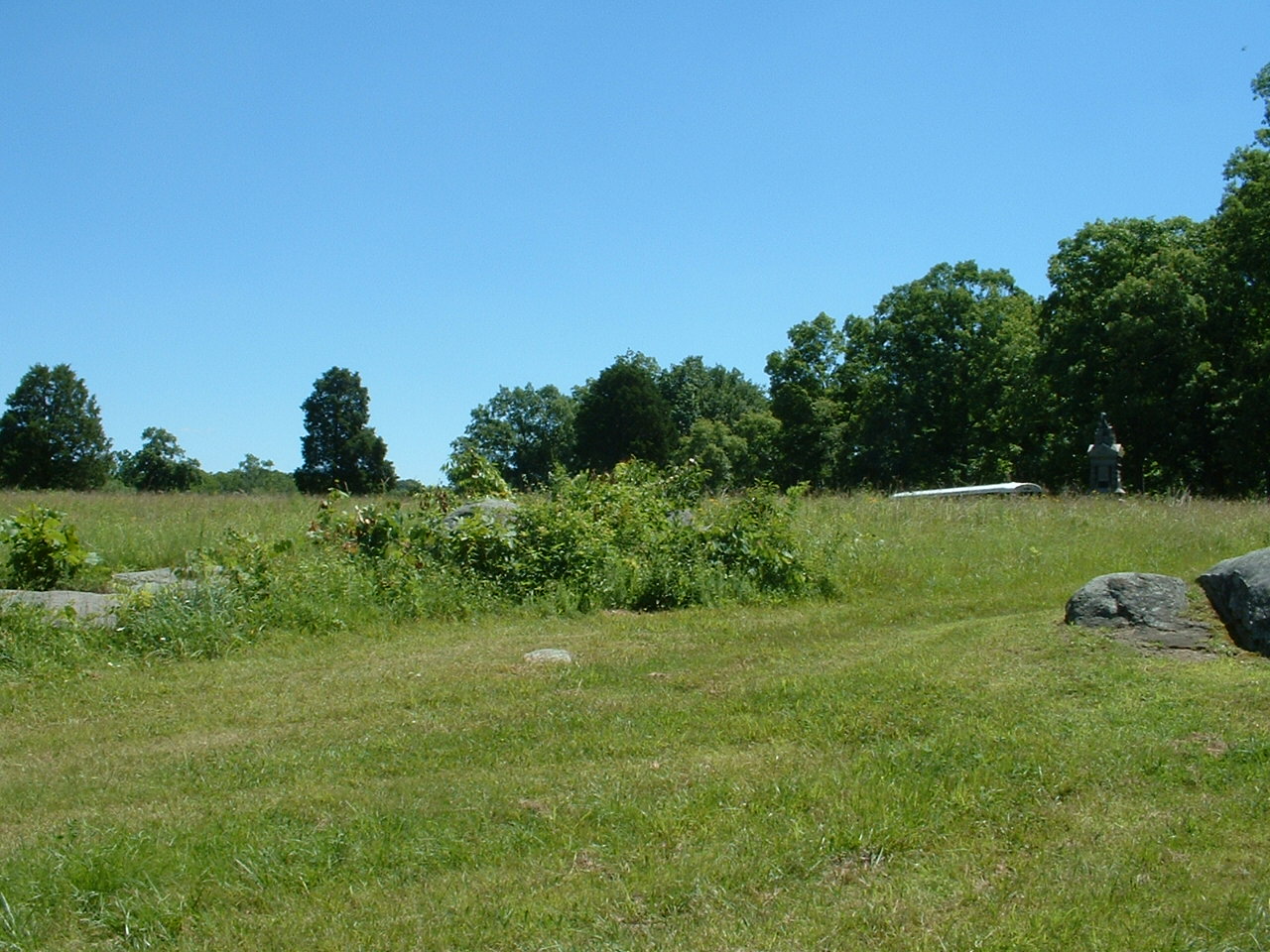
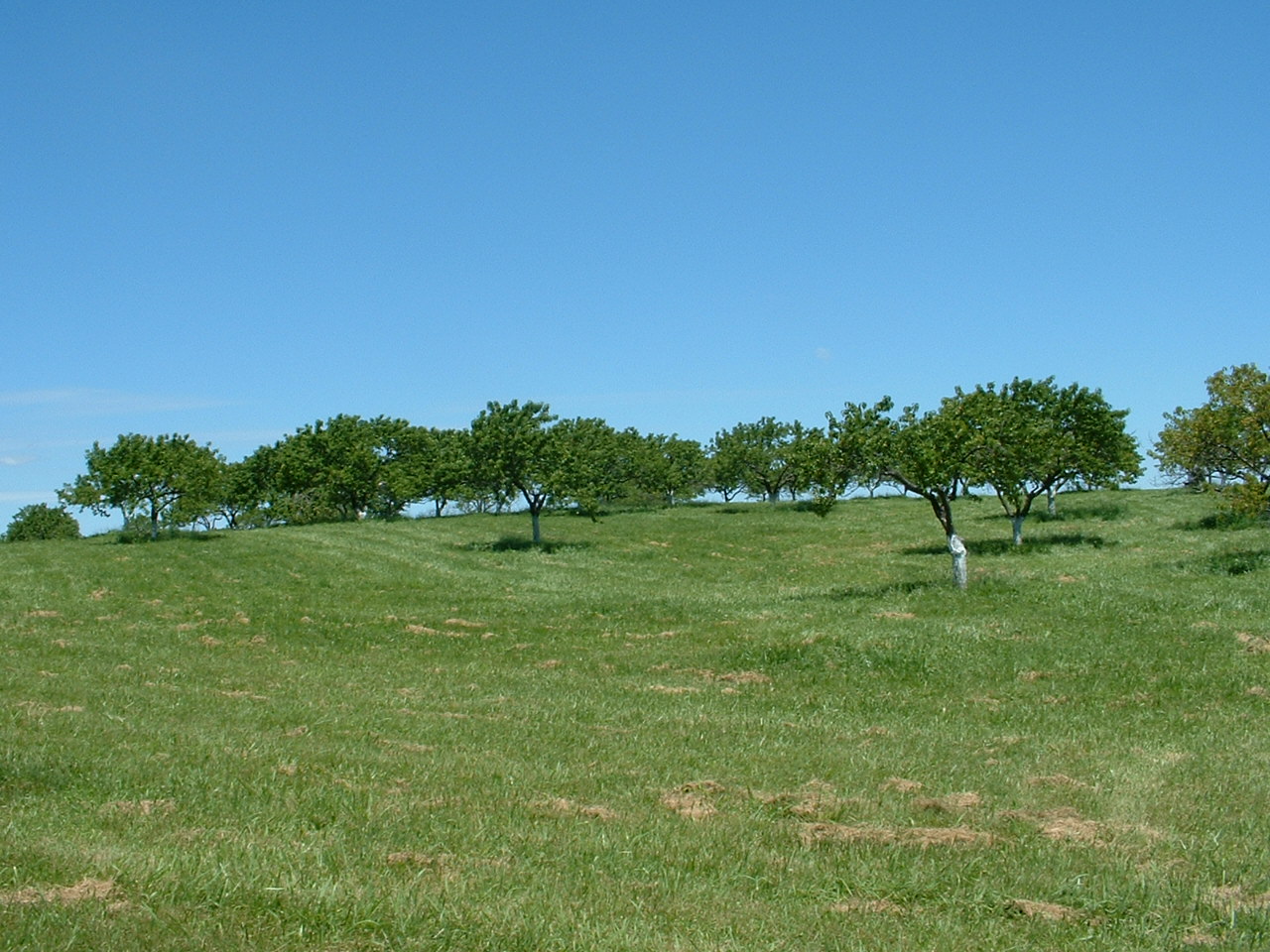
| The Peach Orchard. The Peach Orchard today is on the same ground where part of the original orchard stood. The orchard was much larger in 1863, the bulk extending northward of the Wheatfield Road in front of the Sherfy House. Sherfy's orchard was heavily damaged by the fighting, the trees broken and cut. Sherfy repaired and salvaged as many of the trees as possible, then planted new ones to replace those lost. He also sold canned peaches from his orchard with an advertisement authenticating them from his original peach trees on the battleground. Strategically, the southern capture of the Peach Orchard and Emmitsburg Road gave Confederate artillerists an excellent position to fire on the Union line on Cemetery Ridge. Yet there was also a disadvantage- cannon, gunners, and horses alike were exposed on the top of the ridge and vulnerable to accurate Union artillery. On July 3rd, the Washington Artillery of New Orleans was positioned in the northern section of the orchard and fired two signal guns to open the cannonade prior to "Pickett's Charge". (National Park Service) | |||||||||||||||||||||||||||||||||||||||||
|
|||||||||||||||||||||||||||||||||||||||||
|
|||||||||||||||||||||||||||||||||||||||||
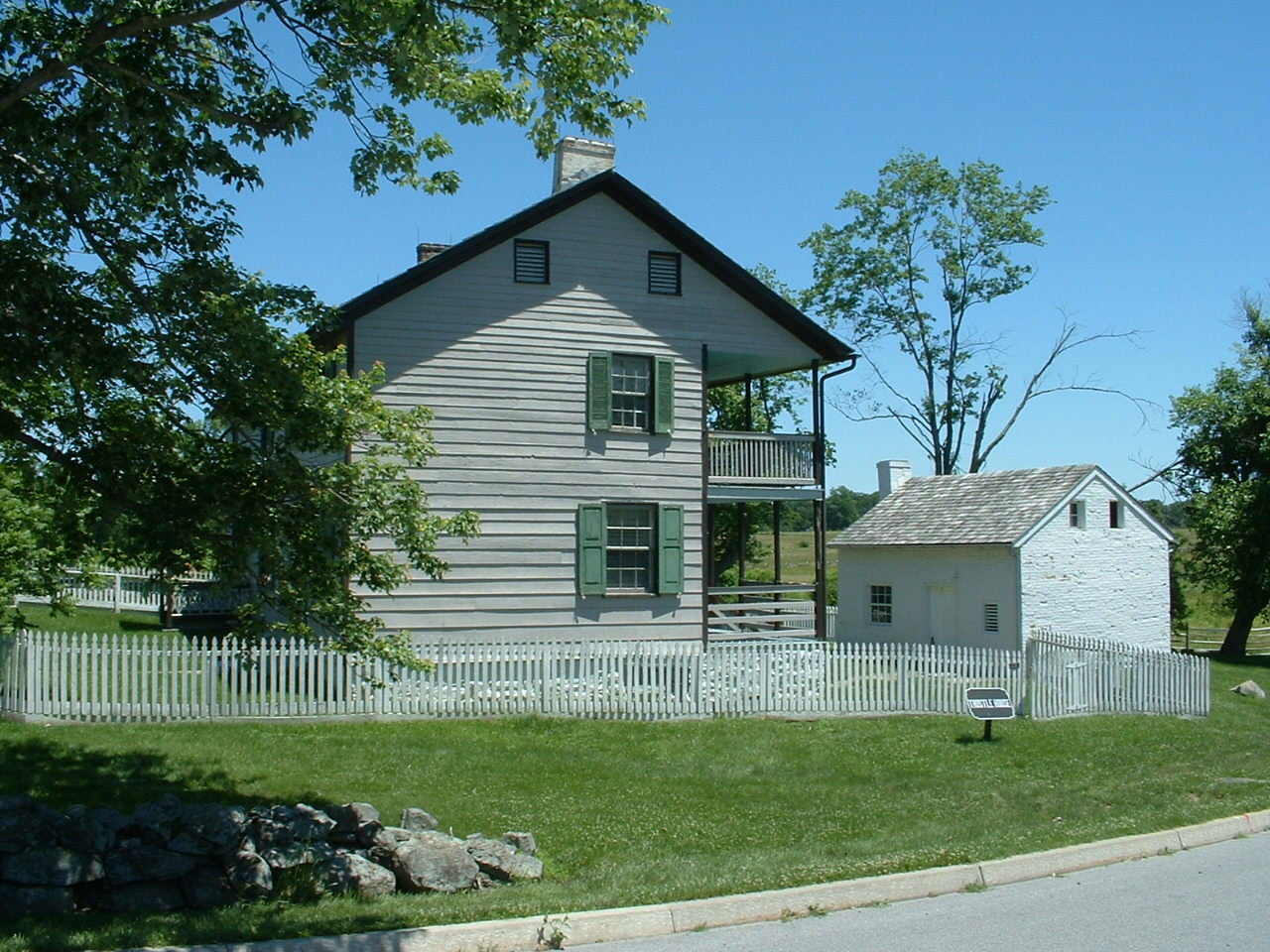
| The Trostle House. The Union artillery placed in the Peach Orchard was forced to limber and retreat along with the guns placed behind Wheatfield Road. The pieces were unlimbered near the Trostle House and ordered to hold on until Union artillery could be placed on Cemetery Ridge. These guns were also soon overrun and had 3 of its guns captured. (militaryhistoryonline.com) | |||||||||||||||||||||||||||||||||||||||||
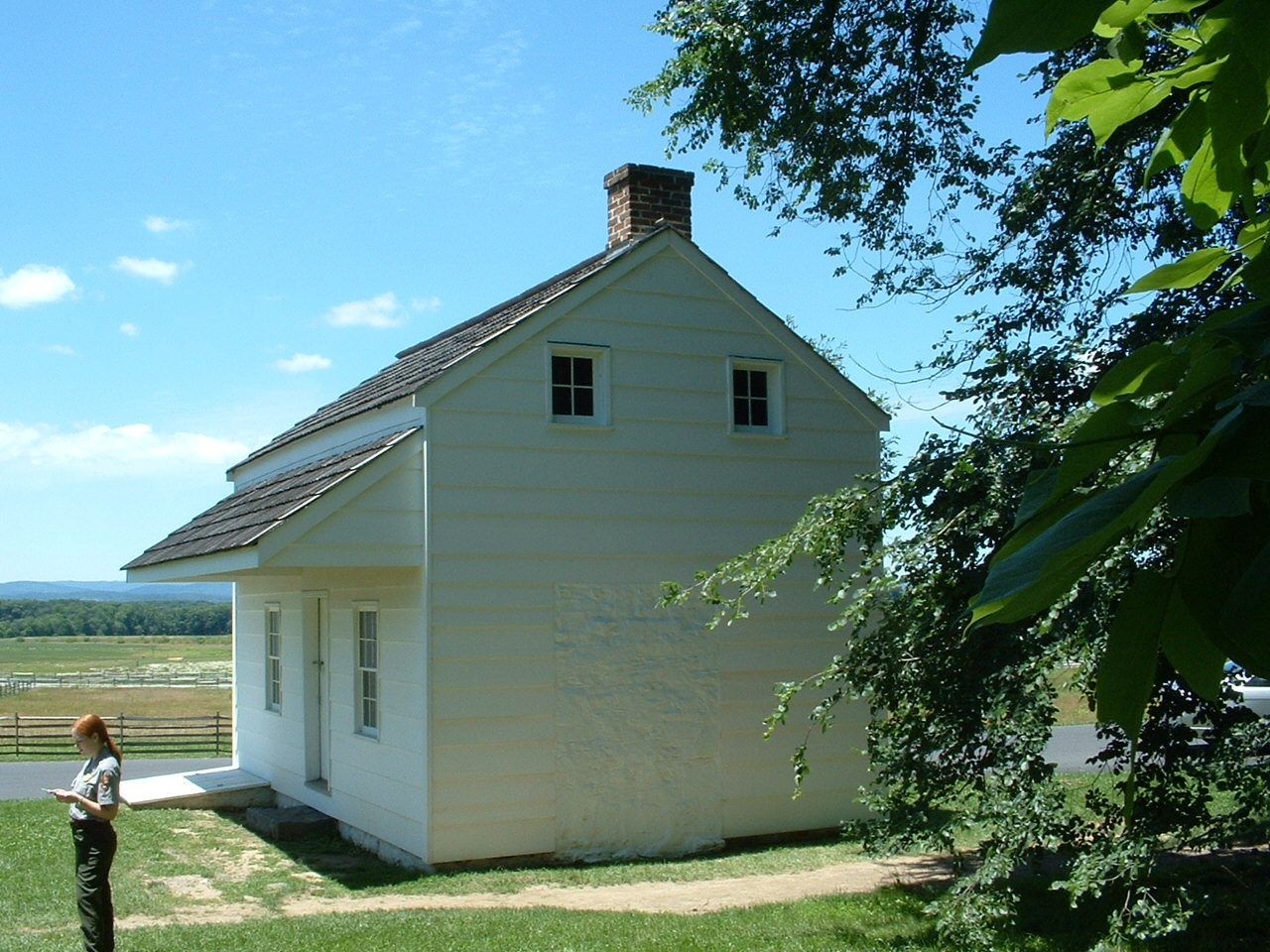
| This modest abode on Cemetery Ridge was the home of Abraham Bryan. He owned this house along with a 12 acre farm on what became part of the now hallowed battlefield. Mr. Bryan left the area during the battle as Union Major General Hancock's Second Corp occupied his lands located just north of the Angle, the target of a significant portion of the Confederates during Pickett's Charge. His home nearly destroyed, he petitioned the government for $1,028 in restitution, receiving only $15. A plaque on the battlefield notes that he and James Warfield, who lived near the southern end of Seminary Ridge, were a part of a "small, unique group of farmers" who were free black men who also owned property. Despite the barriers, Mr. Bryan rebuilt and prospered until his death in 1879. (brotherswar.com) | |||||||||||||||||||||||||||||||||||||||||
| Be sure to sign the GuestBook by clicking here. Click here to continue your tour! |
|||||||||||||||||||||||||||||||||||||||||
| E-mail me with your comments and suggestions! | |||||||||||||||||||||||||||||||||||||||||
| Page 1 | Page 2 | Page 3 | Page 4 | Page 5 | Page 6 | Page 7 | Page 8 | Page 9 | |||||||||||||||||||||||||||||||||